With the US-Iran ceasefire agreement nearing its end, crude oil prices are under pressure, gold is cautious, and the market is focused on Trump's final approval.
2026-05-29 14:16:02
Commodity markets are being weighed down by optimism surrounding a ceasefire between the US and Iran. According to US media reports on Thursday (May 28), the two sides have reached a memorandum of understanding to extend the ceasefire for 60 days and reopen the Strait of Hormuz, but the agreement still requires President Trump's approval, and Iran has not yet made a clear statement.
In the crude oil market, the ceasefire will bring initial relief, but the recovery of supply will be a gradual process – Persian Gulf crude oil supply in April was down 10 million barrels per day compared to pre-war levels, and ship owners may hesitate to send ships into the strait for fear of the ceasefire breaking down.
EIA data showed that U.S. commercial crude oil inventories fell by 3.3 million barrels last week, while refinery utilization rose to 94.5%.
In the gold market, hopes for a ceasefire have helped prices recover some losses, but the market remains cautious about the sustainability of geopolitical developments.
Reports indicate that the US and Iran are close to extending their ceasefire agreement and reopening the Strait of Hormuz, fueling market optimism. However, the agreement still requires President Trump's signature for approval.
Fueled by optimism over a potential trade deal between the US and Iran, US crude oil futures initially rose over 4% to around $92.50 per barrel on Thursday (May 28), before fluctuating and falling back below $90 per barrel. In Asian trading on Friday, US crude oil futures are currently down over 1% at $87.80 per barrel.
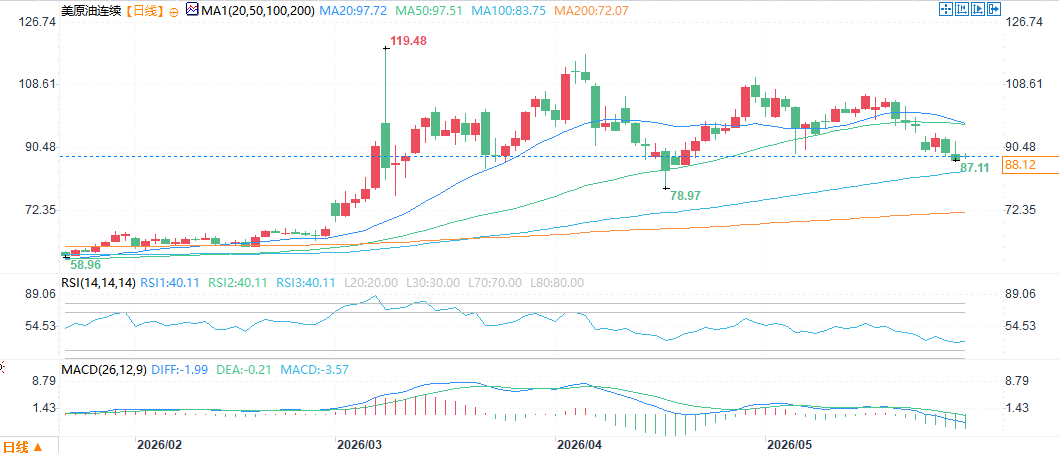
(US crude oil futures daily chart, source: FX678)
A research report released by Citigroup stated that if the protracted peace negotiations between the US and Iran remain thorny, leading to a prolonged blockade of the Strait of Hormuz, Brent crude oil prices may rise further, and could even reach a new high.
The reopening of the strait will provide initial relief to the oil market, allowing tankers to leave the Persian Gulf. However, uncertainty remains regarding the recovery of supply.
First, ship owners may hesitate to send their vessels into the Persian Gulf for fear of the ceasefire breaking down (leading to the vessels being trapped again).
Secondly, since the outbreak of the war, upstream oil production has declined significantly, and producers have shut down some production to manage inventory constraints.
The recovery of upstream production will be gradual, not instantaneous. By April 2026, Persian Gulf crude oil supplies (excluding Qatar) were down 10 million barrels per day from pre-war levels. The flow of refined products will also take time to recover, and refineries in the region will need to increase production – a process that will take time given that some refining infrastructure was attacked in the early stages of the conflict.
ADNOC CEO Sultan Jaber warned that even if the conflict is resolved, the Strait of Hormuz will be unlikely to return to full capacity for crude oil transport before next year. He predicts it will take at least four months to restore 80% of pre-conflict capacity, and full resumption of shipping will not be possible until the first or even second quarter of 2027 at the earliest.
This week, the market is increasingly pricing in a resolution to the situation. Therefore, any confirmed agreement to reopen the Straits implies that further significant downside potential may be limited, especially in the initial stages of the ceasefire.
The significant inventory decline over the past three months has made the market more vulnerable than before the war. Tightening markets mean prices will remain volatile. The slow recovery in supply suggests the oil market is unlikely to return to a state of surplus in the short term.
The latest weekly inventory data from the EIA shows that U.S. commercial crude oil inventories fell by 3.3 million barrels last week. However, considering the release of strategic petroleum reserves, total crude oil inventories fell by 12.39 million barrels.
Meanwhile, crude oil exports fell sharply by 1.16 million barrels per day to 4.44 million barrels per day as domestic refinery utilization rates rose by 2.9 percentage points to 94.5%. This is largely consistent with the seasonal rebound in demand as the US enters its summer peak season. Despite increased refinery activity, gasoline and distillate fuel inventories fell by 2.57 million barrels and 2.11 million barrels, respectively.
In Europe, the latest data from Insights Global shows that refined product inventories in the ARA region fell by 39,000 tons to 3.42 million tons weekly. Naphtha and jet fuel inventories saw the largest declines, decreasing by 55,000 tons and 27,000 tons respectively.
Aviation fuel inventories remain tight at 563,000 tons, compared to a five-year average of 913,000 tons. Despite the tight market, aviation fuel crack spreads have weakened significantly since peaking in early April.
If an agreement is reached, the market is somewhat optimistic about the normalization of supply, while pricing dynamics have prompted refineries to adjust yields to increase aviation fuel production.
Gold prices initially fell nearly 2% to around $4,367 after opening on Thursday as the US and Iran worked to extend the temporary ceasefire and restart negotiations, before recovering their earlier losses. A weaker dollar and declining Treasury yields also provided support for gold prices. Currently, spot gold is up slightly by 0.35% to around $4,511 per ounce.
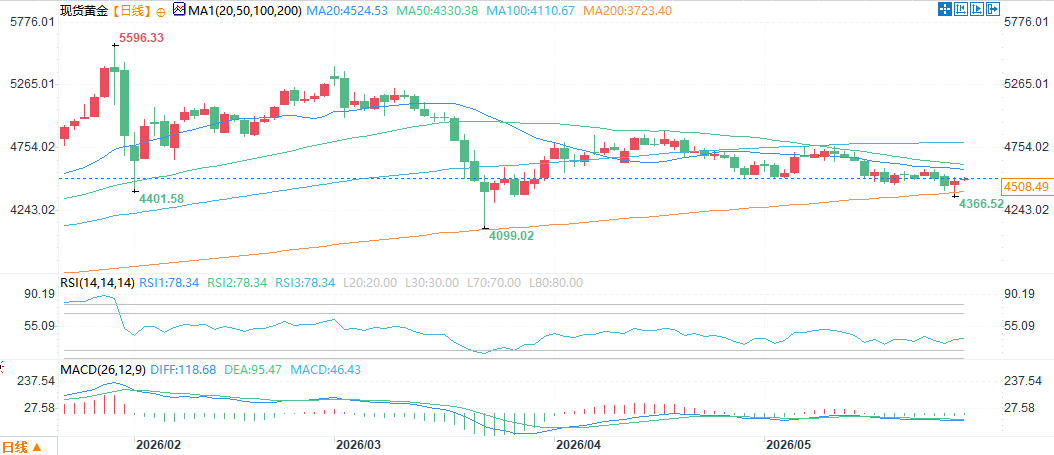
(Spot gold daily chart, source: FX678)
Markets remain cautious about the sustainability of geopolitical progress, while concerns about rising energy prices continue to exacerbate inflation risks. This could reinforce market expectations that interest rates will remain high for an extended period—a negative impact on non-yielding assets such as gold.
Since the outbreak of the conflict in Iran at the end of February, gold prices have fallen by about 15%. Gold is expected to remain range-bound in the short term as the market balances improved risk sentiment with macroeconomic and geopolitical uncertainties.
Gold price increases depend on falling energy prices, cooling inflation, and a Federal Reserve rate cut in the second half of the year. Central bank purchases and a recovery in ETF inflows provide additional support. The main downside risks are a breakdown in peace talks, leading to persistently high energy prices, and the Fed remaining on hold until the end of the year.
The commodities market is being weighed down by optimism surrounding a potential ceasefire between the US and Iran. Regarding crude oil, the reopening of the Strait of Hormuz will provide initial relief, but supply recovery will be gradual – Persian Gulf crude oil supply is down by 10 million barrels per day compared to pre-war levels, and shipowners and refineries will need time to recover. EIA data shows that US commercial crude oil inventories fell by 3.3 million barrels, and refinery utilization rates rose to 94.5%. As for gold, the ceasefire is expected to help prices recover lost ground, but high energy prices continue to support inflation risks, and prices are expected to remain range-bound in the short term. The core variables in the market remain whether Trump signs an agreement and whether the ceasefire can be sustained.
At 14:15 Beijing time on May 29, US crude oil futures were trading at $87.82 per barrel, and spot gold was trading at $4514.30 per ounce.
In the crude oil market, the ceasefire will bring initial relief, but the recovery of supply will be a gradual process – Persian Gulf crude oil supply in April was down 10 million barrels per day compared to pre-war levels, and ship owners may hesitate to send ships into the strait for fear of the ceasefire breaking down.
EIA data showed that U.S. commercial crude oil inventories fell by 3.3 million barrels last week, while refinery utilization rose to 94.5%.
In the gold market, hopes for a ceasefire have helped prices recover some losses, but the market remains cautious about the sustainability of geopolitical developments.
Energy Market: Ceasefire Optimism Suppresses Oil Prices
Reports indicate that the US and Iran are close to extending their ceasefire agreement and reopening the Strait of Hormuz, fueling market optimism. However, the agreement still requires President Trump's signature for approval.
Fueled by optimism over a potential trade deal between the US and Iran, US crude oil futures initially rose over 4% to around $92.50 per barrel on Thursday (May 28), before fluctuating and falling back below $90 per barrel. In Asian trading on Friday, US crude oil futures are currently down over 1% at $87.80 per barrel.
(US crude oil futures daily chart, source: FX678)
A research report released by Citigroup stated that if the protracted peace negotiations between the US and Iran remain thorny, leading to a prolonged blockade of the Strait of Hormuz, Brent crude oil prices may rise further, and could even reach a new high.
The recovery of supply after the strait reopens will be a gradual process.
The reopening of the strait will provide initial relief to the oil market, allowing tankers to leave the Persian Gulf. However, uncertainty remains regarding the recovery of supply.
First, ship owners may hesitate to send their vessels into the Persian Gulf for fear of the ceasefire breaking down (leading to the vessels being trapped again).
Secondly, since the outbreak of the war, upstream oil production has declined significantly, and producers have shut down some production to manage inventory constraints.
The recovery of upstream production will be gradual, not instantaneous. By April 2026, Persian Gulf crude oil supplies (excluding Qatar) were down 10 million barrels per day from pre-war levels. The flow of refined products will also take time to recover, and refineries in the region will need to increase production – a process that will take time given that some refining infrastructure was attacked in the early stages of the conflict.
ADNOC CEO Sultan Jaber warned that even if the conflict is resolved, the Strait of Hormuz will be unlikely to return to full capacity for crude oil transport before next year. He predicts it will take at least four months to restore 80% of pre-conflict capacity, and full resumption of shipping will not be possible until the first or even second quarter of 2027 at the earliest.
The market has already partially priced in the price, limiting further downside potential.
This week, the market is increasingly pricing in a resolution to the situation. Therefore, any confirmed agreement to reopen the Straits implies that further significant downside potential may be limited, especially in the initial stages of the ceasefire.
The significant inventory decline over the past three months has made the market more vulnerable than before the war. Tightening markets mean prices will remain volatile. The slow recovery in supply suggests the oil market is unlikely to return to a state of surplus in the short term.
EIA inventory data: Crude oil inventories declined, refinery utilization rates increased.
The latest weekly inventory data from the EIA shows that U.S. commercial crude oil inventories fell by 3.3 million barrels last week. However, considering the release of strategic petroleum reserves, total crude oil inventories fell by 12.39 million barrels.
Meanwhile, crude oil exports fell sharply by 1.16 million barrels per day to 4.44 million barrels per day as domestic refinery utilization rates rose by 2.9 percentage points to 94.5%. This is largely consistent with the seasonal rebound in demand as the US enters its summer peak season. Despite increased refinery activity, gasoline and distillate fuel inventories fell by 2.57 million barrels and 2.11 million barrels, respectively.
European refined product inventories: Inventories in the ARA region declined, while jet fuel remained tight.
In Europe, the latest data from Insights Global shows that refined product inventories in the ARA region fell by 39,000 tons to 3.42 million tons weekly. Naphtha and jet fuel inventories saw the largest declines, decreasing by 55,000 tons and 27,000 tons respectively.
Aviation fuel inventories remain tight at 563,000 tons, compared to a five-year average of 913,000 tons. Despite the tight market, aviation fuel crack spreads have weakened significantly since peaking in early April.
If an agreement is reached, the market is somewhat optimistic about the normalization of supply, while pricing dynamics have prompted refineries to adjust yields to increase aviation fuel production.
Metals Market: Ceasefire Hopes to Help Gold Recover Losses
Gold prices initially fell nearly 2% to around $4,367 after opening on Thursday as the US and Iran worked to extend the temporary ceasefire and restart negotiations, before recovering their earlier losses. A weaker dollar and declining Treasury yields also provided support for gold prices. Currently, spot gold is up slightly by 0.35% to around $4,511 per ounce.
(Spot gold daily chart, source: FX678)
Markets remain cautious about the sustainability of geopolitical progress, while concerns about rising energy prices continue to exacerbate inflation risks. This could reinforce market expectations that interest rates will remain high for an extended period—a negative impact on non-yielding assets such as gold.
Since the outbreak of the conflict in Iran at the end of February, gold prices have fallen by about 15%. Gold is expected to remain range-bound in the short term as the market balances improved risk sentiment with macroeconomic and geopolitical uncertainties.
Gold price increases depend on falling energy prices, cooling inflation, and a Federal Reserve rate cut in the second half of the year. Central bank purchases and a recovery in ETF inflows provide additional support. The main downside risks are a breakdown in peace talks, leading to persistently high energy prices, and the Fed remaining on hold until the end of the year.
The commodities market is being weighed down by optimism surrounding a potential ceasefire between the US and Iran. Regarding crude oil, the reopening of the Strait of Hormuz will provide initial relief, but supply recovery will be gradual – Persian Gulf crude oil supply is down by 10 million barrels per day compared to pre-war levels, and shipowners and refineries will need time to recover. EIA data shows that US commercial crude oil inventories fell by 3.3 million barrels, and refinery utilization rates rose to 94.5%. As for gold, the ceasefire is expected to help prices recover lost ground, but high energy prices continue to support inflation risks, and prices are expected to remain range-bound in the short term. The core variables in the market remain whether Trump signs an agreement and whether the ceasefire can be sustained.
At 14:15 Beijing time on May 29, US crude oil futures were trading at $87.82 per barrel, and spot gold was trading at $4514.30 per ounce.
- Risk Warning and Disclaimer
- The market involves risk, and trading may not be suitable for all investors. This article is for reference only and does not constitute personal investment advice, nor does it take into account certain users’ specific investment objectives, financial situation, or other needs. Any investment decisions made based on this information are at your own risk.