Crude Oil Trading Alert: Iran's suspension of negotiations exacerbates supply concerns, causing oil prices to rebound from lows.
2026-06-02 09:22:29
International crude oil markets remained high on Tuesday. Although WTI crude oil prices retreated slightly to around $91.80 per barrel during Asian trading hours, the previous day's nearly 5% surge indicates that market concerns about energy supply risks in the Middle East continue to escalate. Iran has suspended indirect negotiations with the United States. Meanwhile, Iran and its regional allies are considering further restrictions on key energy transport routes, including the Strait of Hormuz and the Bab el-Mandeb Strait, a vital shipping route connecting the Red Sea. Market concerns are that such actions could further destabilize the global energy transport system.

As one of the world's most important energy transportation chokepoints, the Strait of Hormuz handles approximately 20% of global seaborne crude oil shipments and nearly 25% of liquefied natural gas exports. Currently, the market widely believes that any restrictions on the region's transportation capacity could lead to new tensions in the global energy supply chain.
At the same time, investors are concerned that even if the conflict does not escalate further, the increased transportation risks alone could lead to a comprehensive increase in insurance costs, transportation costs, and energy procurement costs, thereby keeping international oil prices high.
However, US President Trump released a relatively optimistic signal. He stated that communication channels between the US and Iran have not been completely severed, and the two sides are still advancing relevant negotiations. A memorandum of understanding to restore normal navigation in the Strait of Hormuz may be reached within the next week. The market believes that if substantial progress is made in these negotiations, it could ease the current supply-side tensions and exert some downward pressure on oil prices.
Besides supply-side risks, the demand outlook has also become a key focus for the market. Recent manufacturing data released by Asian countries show signs of slowing industrial activity growth, reflecting a weakening of the global economic recovery. As one of the world's largest crude oil importers, changes in demand in Asian countries have a significant impact on international oil prices. Goldman Sachs analysts stated that weak crude oil demand in Asian countries and Europe remains a significant downside risk for oil prices in the coming months.
Goldman Sachs projects an average Brent crude price of around $90 and an average WTI crude price of around $83 in the fourth quarter. However, the firm also notes that if supply disruptions in the Middle East continue to widen, the market may reassess the size of the global crude oil supply gap, potentially driving oil prices further up.
From a market sentiment perspective, the current trading logic has clearly shifted from demand-driven to supply-risk-driven. Investors generally believe that even with a global economic slowdown, any new supply disruptions in the Middle East would be sufficient to offset the negative impact of weak demand. Therefore, energy market volatility is likely to remain high in the short term.
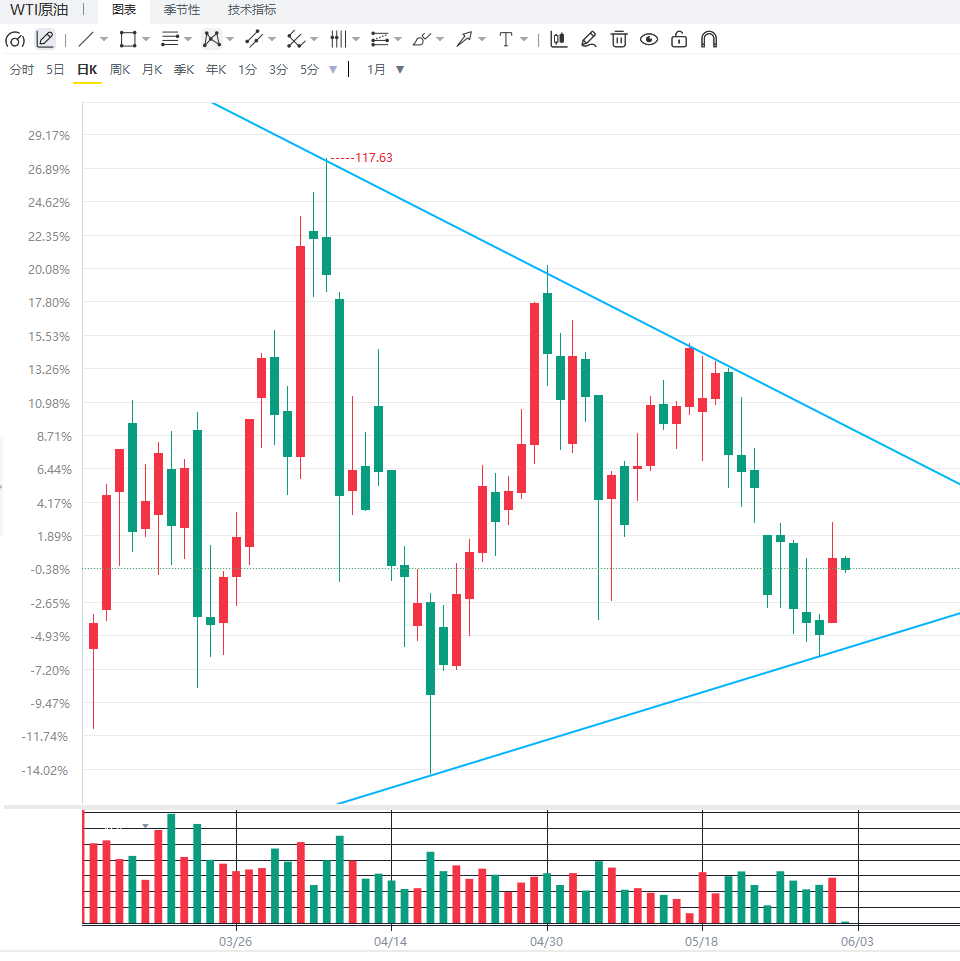
From the daily chart, WTI crude oil has successfully broken through the previous key resistance area of $85 and stabilized above the $90 mark, further strengthening the overall upward trend. The MACD indicator maintains a golden cross structure, with the red bars continuing to expand, indicating that the medium-term bullish momentum still holds the upper hand. The RSI indicator has risen to around 70, indicating that the market is in a relatively strong state but is also approaching overbought territory. Currently, the key resistance levels to watch are $92, $95, and the psychological level of $100; the support levels are located in the $88, $85, and $82 area. If the situation in the Middle East escalates further, oil prices may challenge even higher levels.
Observing the 4-hour chart, WTI crude oil is maintaining a strong upward channel in the short term. The moving average system is arranged in a bullish pattern, indicating that the short-term trend is still biased towards upward movement. However, with the rapid rise in prices, some technical indicators have shown overbought signals, and a profit-taking trend in the short term cannot be ruled out. If the price can effectively break through the $92 resistance area, it is expected to open up further upside potential; conversely, if it falls below the $88 support, it may trigger a technical correction, but the overall trend will still remain bullish.
Editor's Note:
The core driver of current international oil price increases remains supply risks in the Middle East, rather than improved demand growth. The Strait of Hormuz, a vital global energy transport artery, directly impacts global crude oil supply expectations due to its security situation. While slowing economic activity in Asian countries and Europe is weakening demand-side support, the market generally believes that the impact of supply disruption risks is more direct and destructive. In the coming weeks, progress in negotiations to restore navigation in the Strait of Hormuz, changes in the regional situation, and global inventory data will be key variables influencing oil price trends. If supply risks persist, the probability of WTI crude oil remaining above $90 will significantly increase; conversely, if a breakthrough in diplomatic negotiations is achieved, oil prices may return to a demand-driven logic.
As one of the world's most important energy transportation chokepoints, the Strait of Hormuz handles approximately 20% of global seaborne crude oil shipments and nearly 25% of liquefied natural gas exports. Currently, the market widely believes that any restrictions on the region's transportation capacity could lead to new tensions in the global energy supply chain.
At the same time, investors are concerned that even if the conflict does not escalate further, the increased transportation risks alone could lead to a comprehensive increase in insurance costs, transportation costs, and energy procurement costs, thereby keeping international oil prices high.
However, US President Trump released a relatively optimistic signal. He stated that communication channels between the US and Iran have not been completely severed, and the two sides are still advancing relevant negotiations. A memorandum of understanding to restore normal navigation in the Strait of Hormuz may be reached within the next week. The market believes that if substantial progress is made in these negotiations, it could ease the current supply-side tensions and exert some downward pressure on oil prices.
Besides supply-side risks, the demand outlook has also become a key focus for the market. Recent manufacturing data released by Asian countries show signs of slowing industrial activity growth, reflecting a weakening of the global economic recovery. As one of the world's largest crude oil importers, changes in demand in Asian countries have a significant impact on international oil prices. Goldman Sachs analysts stated that weak crude oil demand in Asian countries and Europe remains a significant downside risk for oil prices in the coming months.
Goldman Sachs projects an average Brent crude price of around $90 and an average WTI crude price of around $83 in the fourth quarter. However, the firm also notes that if supply disruptions in the Middle East continue to widen, the market may reassess the size of the global crude oil supply gap, potentially driving oil prices further up.
From a market sentiment perspective, the current trading logic has clearly shifted from demand-driven to supply-risk-driven. Investors generally believe that even with a global economic slowdown, any new supply disruptions in the Middle East would be sufficient to offset the negative impact of weak demand. Therefore, energy market volatility is likely to remain high in the short term.
From the daily chart, WTI crude oil has successfully broken through the previous key resistance area of $85 and stabilized above the $90 mark, further strengthening the overall upward trend. The MACD indicator maintains a golden cross structure, with the red bars continuing to expand, indicating that the medium-term bullish momentum still holds the upper hand. The RSI indicator has risen to around 70, indicating that the market is in a relatively strong state but is also approaching overbought territory. Currently, the key resistance levels to watch are $92, $95, and the psychological level of $100; the support levels are located in the $88, $85, and $82 area. If the situation in the Middle East escalates further, oil prices may challenge even higher levels.
Observing the 4-hour chart, WTI crude oil is maintaining a strong upward channel in the short term. The moving average system is arranged in a bullish pattern, indicating that the short-term trend is still biased towards upward movement. However, with the rapid rise in prices, some technical indicators have shown overbought signals, and a profit-taking trend in the short term cannot be ruled out. If the price can effectively break through the $92 resistance area, it is expected to open up further upside potential; conversely, if it falls below the $88 support, it may trigger a technical correction, but the overall trend will still remain bullish.
Editor's Note:
The core driver of current international oil price increases remains supply risks in the Middle East, rather than improved demand growth. The Strait of Hormuz, a vital global energy transport artery, directly impacts global crude oil supply expectations due to its security situation. While slowing economic activity in Asian countries and Europe is weakening demand-side support, the market generally believes that the impact of supply disruption risks is more direct and destructive. In the coming weeks, progress in negotiations to restore navigation in the Strait of Hormuz, changes in the regional situation, and global inventory data will be key variables influencing oil price trends. If supply risks persist, the probability of WTI crude oil remaining above $90 will significantly increase; conversely, if a breakthrough in diplomatic negotiations is achieved, oil prices may return to a demand-driven logic.
- Risk Warning and Disclaimer
- The market involves risk, and trading may not be suitable for all investors. This article is for reference only and does not constitute personal investment advice, nor does it take into account certain users’ specific investment objectives, financial situation, or other needs. Any investment decisions made based on this information are at your own risk.