The continued weakness of the yen pushed the pound to a one-month high against the yen.
2026-06-02 16:20:16
On Tuesday during the European session, the British pound continued its recent strong upward trend against the Japanese yen (GBP/JPY), successfully breaking through the 215.00 level and reaching a high of around 215.21, a new high since April 30. As the US dollar approached the 160 level again, the yen remained under significant pressure, while the pound benefited from improved market risk sentiment, further extending its gains.

One of the recent focal points in the foreign exchange market remains the evolving situation in the Middle East. With news of a ceasefire in Lebanon, market concerns about a further escalation of the conflict have eased. Meanwhile, the United States continues to push forward with related negotiations, giving investors some hope that the situation will be resolved diplomatically.
Improved risk sentiment typically weakens demand for safe-haven currencies, and the Japanese yen, as a traditional safe-haven asset, has become less attractive in the current environment. Conversely, risk-sensitive currencies such as the British pound have gained favor, driving the pound sterling up against the yen.
Since rebounding from around 211.30 against the Japanese yen in mid-May, the pound has risen by more than 3% and successfully broken through the important psychological level of 215. Besides changes in risk appetite, interest rate differentials remain the core factor driving the exchange rate appreciation.
While Japanese long-term government bond yields have rebounded somewhat, they remain significantly lower than those of the UK and other major economies. Global capital tends to flow to markets with higher yields, putting continued pressure on the yen to flow out. Meanwhile, considerable uncertainty remains regarding the Bank of Japan's future policy path. Although the market widely expects the Bank of Japan to gradually normalize its policy in the future, the pace of interest rate hikes and the final interest rate level still lack clear guidance.
In contrast, while the Bank of England has recently signaled caution, its overall interest rates remain significantly higher than Japan's. This interest rate differential continues to support carry trades in the pound. The Japanese government has recently reiterated its concerns about exchange rate volatility. On Tuesday, May 15th, Japanese Finance Minister Katayama stated that Tokyo is prepared to take necessary measures in the foreign exchange market and warned against speculative activities.
However, judging from market performance, investors are already quite familiar with this type of verbal intervention. Since it is not accompanied by actual market operations, the impact of these statements on exchange rate movements is limited. Market analysts believe that as long as the USD/JPY exchange rate remains below the 160 level, Japanese authorities will likely continue to prioritize verbal intervention to stabilize market expectations.
It is worth noting that the 160 level has long been regarded by the market as an important psychological threshold for the Japanese government to tolerate yen depreciation. If the USD/JPY exchange rate effectively breaks through this area in the future, the probability of actual intervention by the Japanese authorities may increase significantly.
This week, the market will also see the release of US job openings data and the non-farm payroll report. While these data do not directly affect the GBP/JPY exchange rate, their impact on global risk appetite, the dollar's performance, and market interest rate expectations could still indirectly influence cross-currency performance.
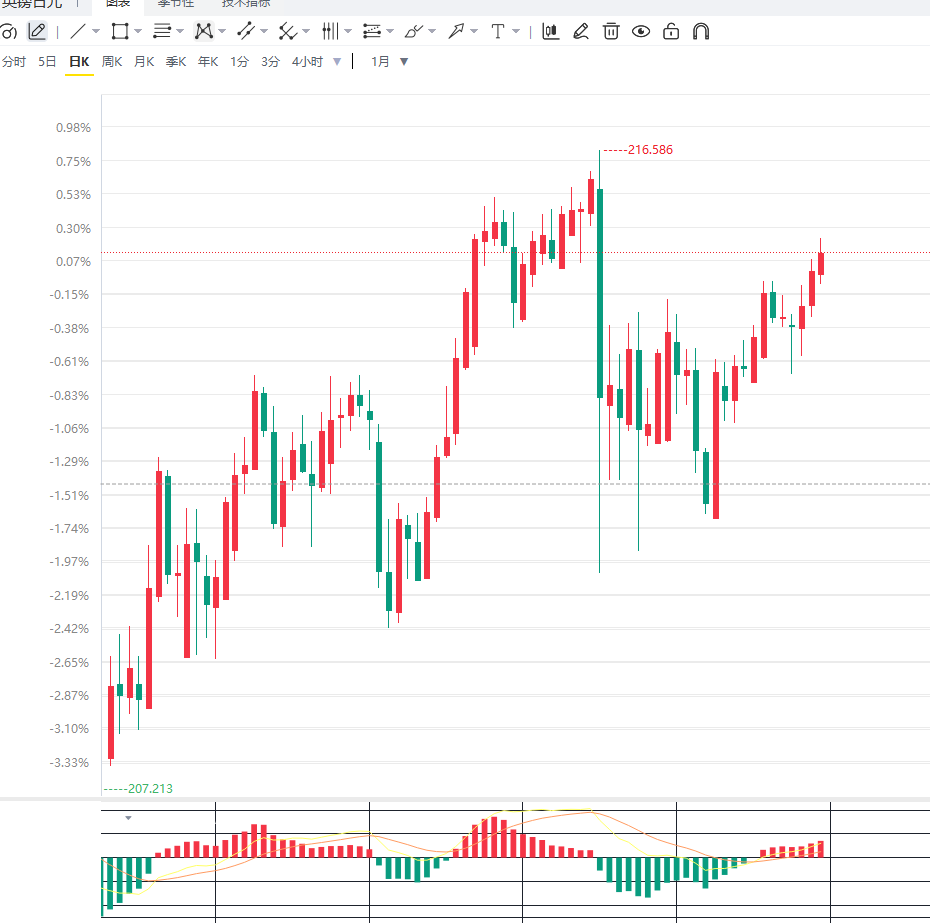
From the daily chart, the GBP/JPY pair has maintained an upward trend since its May lows. The price is steadily trading above major moving averages, indicating that the medium-term bullish trend remains intact. The MACD indicator maintains a golden cross, with the red histogram bars continuing to expand, reflecting ample upward momentum. The RSI indicator has risen to around 67, approaching overbought territory but has not yet issued a clear reversal signal. Key resistance levels to watch are 215.50, 216.60, and 218.00; support levels are around 214.50, 214.00, and 212.80. The overall trend remains one of fluctuating upward movement.
Observing the 4-hour chart, the exchange rate is moving within a clear upward channel. The RSI indicator is approaching the 70 level, indicating strong short-term bullish momentum, but the market has some technical pullback potential. The MACD indicator remains above the zero line, and the histogram continues to release positive momentum, indicating that the upward trend has not yet ended. Technically, the area around 215.50 corresponds to the 161.8% Fibonacci extension of the previous pullback, which may form short-term resistance. If the price breaks through this area effectively, it may further challenge the high of 216.60; if a pullback occurs, the 214.50 and 214.00 areas will become important support levels.
Editor's Summary : The current upward trend in GBP/JPY remains clear: improved risk sentiment coupled with a widening interest rate differential between the two countries. The temporary easing of tensions in the Middle East has weakened safe-haven demand, while the uncertain policy outlook of the Bank of Japan continues to suppress the yen's performance. Although the Japanese government has issued repeated verbal warnings, the market tends to follow the current trend until actual intervention occurs. In the short term, 215.50 and 216.60 will be important target areas for the bulls in the next phase. However, as technical indicators gradually approach overbought levels, investors should also be wary of the risk of profit-taking in the short term.
One of the recent focal points in the foreign exchange market remains the evolving situation in the Middle East. With news of a ceasefire in Lebanon, market concerns about a further escalation of the conflict have eased. Meanwhile, the United States continues to push forward with related negotiations, giving investors some hope that the situation will be resolved diplomatically.
Improved risk sentiment typically weakens demand for safe-haven currencies, and the Japanese yen, as a traditional safe-haven asset, has become less attractive in the current environment. Conversely, risk-sensitive currencies such as the British pound have gained favor, driving the pound sterling up against the yen.
Since rebounding from around 211.30 against the Japanese yen in mid-May, the pound has risen by more than 3% and successfully broken through the important psychological level of 215. Besides changes in risk appetite, interest rate differentials remain the core factor driving the exchange rate appreciation.
While Japanese long-term government bond yields have rebounded somewhat, they remain significantly lower than those of the UK and other major economies. Global capital tends to flow to markets with higher yields, putting continued pressure on the yen to flow out. Meanwhile, considerable uncertainty remains regarding the Bank of Japan's future policy path. Although the market widely expects the Bank of Japan to gradually normalize its policy in the future, the pace of interest rate hikes and the final interest rate level still lack clear guidance.
In contrast, while the Bank of England has recently signaled caution, its overall interest rates remain significantly higher than Japan's. This interest rate differential continues to support carry trades in the pound. The Japanese government has recently reiterated its concerns about exchange rate volatility. On Tuesday, May 15th, Japanese Finance Minister Katayama stated that Tokyo is prepared to take necessary measures in the foreign exchange market and warned against speculative activities.
However, judging from market performance, investors are already quite familiar with this type of verbal intervention. Since it is not accompanied by actual market operations, the impact of these statements on exchange rate movements is limited. Market analysts believe that as long as the USD/JPY exchange rate remains below the 160 level, Japanese authorities will likely continue to prioritize verbal intervention to stabilize market expectations.
It is worth noting that the 160 level has long been regarded by the market as an important psychological threshold for the Japanese government to tolerate yen depreciation. If the USD/JPY exchange rate effectively breaks through this area in the future, the probability of actual intervention by the Japanese authorities may increase significantly.
This week, the market will also see the release of US job openings data and the non-farm payroll report. While these data do not directly affect the GBP/JPY exchange rate, their impact on global risk appetite, the dollar's performance, and market interest rate expectations could still indirectly influence cross-currency performance.
From the daily chart, the GBP/JPY pair has maintained an upward trend since its May lows. The price is steadily trading above major moving averages, indicating that the medium-term bullish trend remains intact. The MACD indicator maintains a golden cross, with the red histogram bars continuing to expand, reflecting ample upward momentum. The RSI indicator has risen to around 67, approaching overbought territory but has not yet issued a clear reversal signal. Key resistance levels to watch are 215.50, 216.60, and 218.00; support levels are around 214.50, 214.00, and 212.80. The overall trend remains one of fluctuating upward movement.
Observing the 4-hour chart, the exchange rate is moving within a clear upward channel. The RSI indicator is approaching the 70 level, indicating strong short-term bullish momentum, but the market has some technical pullback potential. The MACD indicator remains above the zero line, and the histogram continues to release positive momentum, indicating that the upward trend has not yet ended. Technically, the area around 215.50 corresponds to the 161.8% Fibonacci extension of the previous pullback, which may form short-term resistance. If the price breaks through this area effectively, it may further challenge the high of 216.60; if a pullback occurs, the 214.50 and 214.00 areas will become important support levels.
Editor's Summary : The current upward trend in GBP/JPY remains clear: improved risk sentiment coupled with a widening interest rate differential between the two countries. The temporary easing of tensions in the Middle East has weakened safe-haven demand, while the uncertain policy outlook of the Bank of Japan continues to suppress the yen's performance. Although the Japanese government has issued repeated verbal warnings, the market tends to follow the current trend until actual intervention occurs. In the short term, 215.50 and 216.60 will be important target areas for the bulls in the next phase. However, as technical indicators gradually approach overbought levels, investors should also be wary of the risk of profit-taking in the short term.
- Risk Warning and Disclaimer
- The market involves risk, and trading may not be suitable for all investors. This article is for reference only and does not constitute personal investment advice, nor does it take into account certain users’ specific investment objectives, financial situation, or other needs. Any investment decisions made based on this information are at your own risk.