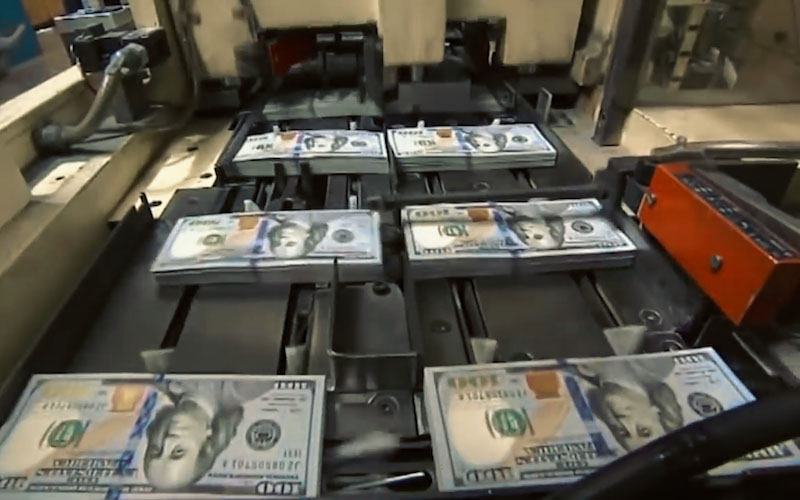
Bond price movements suggest inflation is under control, with long-term funds betting on the return of interest rate cuts.
2026-06-02 17:22:06
When the 30-year U.S. Treasury yield ruthlessly broke through 5.2% in mid-May, setting a record high since the 2007 global financial crisis, Wall Street should have been thrown into panic, according to historical experience.
The market has shifted from expecting the Federal Reserve to continue its rate-cutting cycle to having to passively accept that interest rates will remain high for a long time due to the war.
However, the current financial market is exhibiting an intriguing calm – there is no sell-off, no liquidity crunch, and volatility indicators such as the VIX are even still below their historical averages.
This is not because the market is slow to react to the risks, but because global investors are reaching a new consensus: the market has accepted and is adapting in an orderly manner to a higher-for-longer interest rate trend, rather than in an out-of-control crisis.
Looking ahead to interest rate trends, the market's core view can be broken down into the following three keywords:
In the early stages of the US Treasury yield approaching its peak of 5.2%, the driving force was mainly the "term premium"—that is, investors' demand for higher risk compensation for future uncertainty.
However, recently, the baton of long-term interest rate changes has been passed to "policy interest rate expectations".
This means that the market has fully priced in the resilience of the US economy.
The ongoing conflict in the Middle East, high oil prices, robust economic activity, and the Federal Reserve's frequent hawkish signals are all reinforcing the fact that the Fed is in no hurry to loosen monetary policy and that high interest rates will become the norm.
The core underlying logic for predicting future interest rate trends lies in whether inflation will spiral out of control. And the current bond market's answer is: inflation remains under control.
A strong piece of evidence is that the spread between 30-year and 10-year US Treasury yields remains relatively narrow.
This "flat" curve structure suggests that despite high long-term interest rates, investors are not worried about hyperinflation in the United States, nor do they perceive a substantial threat to the long-term privileges of the dollar.
The market believes the Federal Reserve has the ability to suppress inflation, which is the basis for the confidence that interest rates can remain "orderly" at high levels.
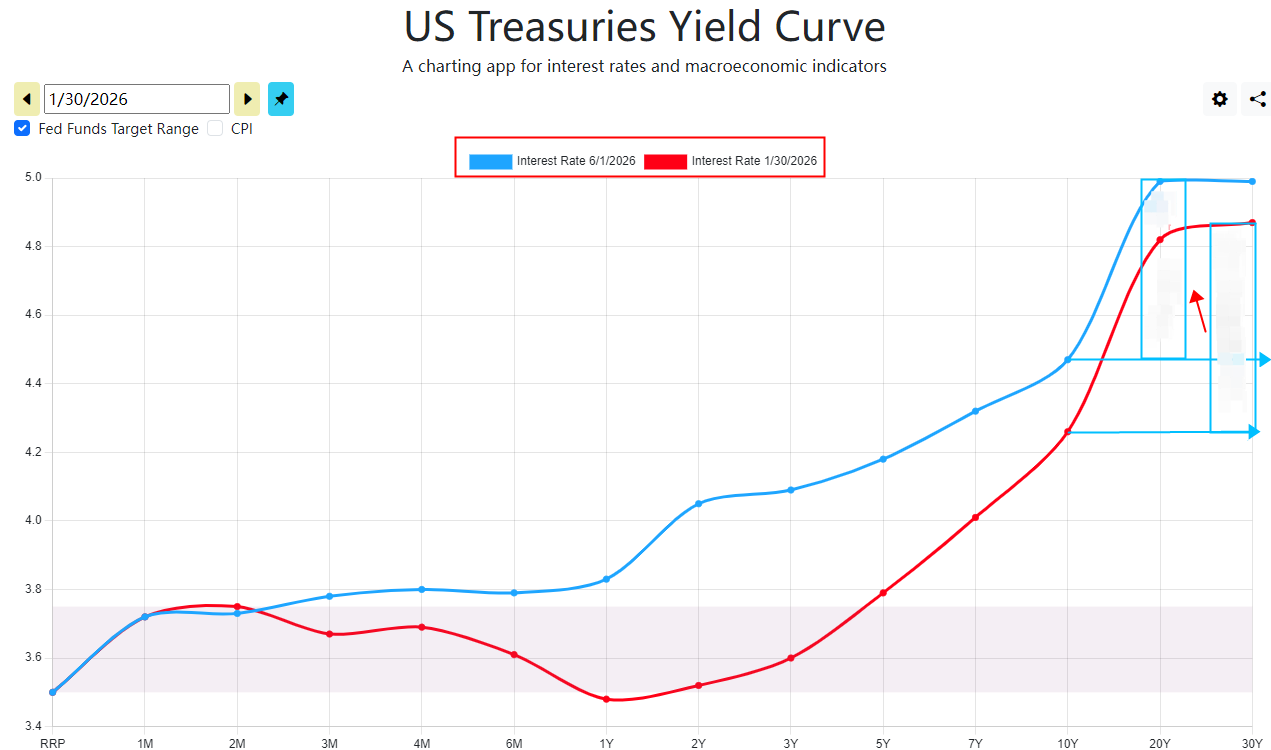
(The narrowing spread between 10-year and 30-year US Treasury yields suggests that the market believes inflation is under control)
Regarding the specific path of interest rates going forward, a delicate "cat-and-mouse game" has emerged between short-term market pricing and professional forecasters:
The market's short-term "hawkish" pricing: Stimulated by geopolitics and oil prices, the expectations implied by the 2-year US Treasury yield show that the market is even pricing in the possibility of "further tightening (interest rate hikes)".
This is also a major reason why mortgage rates have recently surged to record highs.
The "rational" baseline of professional forecasters: The May survey of professional forecasters fully accepted the "higher and longer" narrative and revised upward the expected path of yields in both the short and long term (the 10-year US Treasury yield is expected to remain around 4.3% for the remainder of the year, up from the current 4.42%).
However, they still adhere to a fundamental principle—the Fed's ultimate goal remains to resume the rate-cutting cycle, and the current aggressive pricing is merely a temporary setback.
Balance sheets don't lie. Despite high mortgage rates, both the spread between investment-grade corporate bonds and U.S. Treasuries (which is near its historical average) and the Federal Reserve's financial stress index indicate that the real economy and credit markets are far more tolerant of high interest rates than expected.
Supported by the Federal Reserve's continued reserve management and purchase operations, the money market also remained rock solid.
Going forward, interest rates will likely remain high with slight fluctuations.
Is the market prepared for a "protracted war"? As long as inflation does not spiral out of control a second time, this balance of "high interest rates but orderly" will not be broken.
Investors are expressing their attitude with real money: high interest rates are painful, but the market still believes that the Federal Reserve can control the situation.
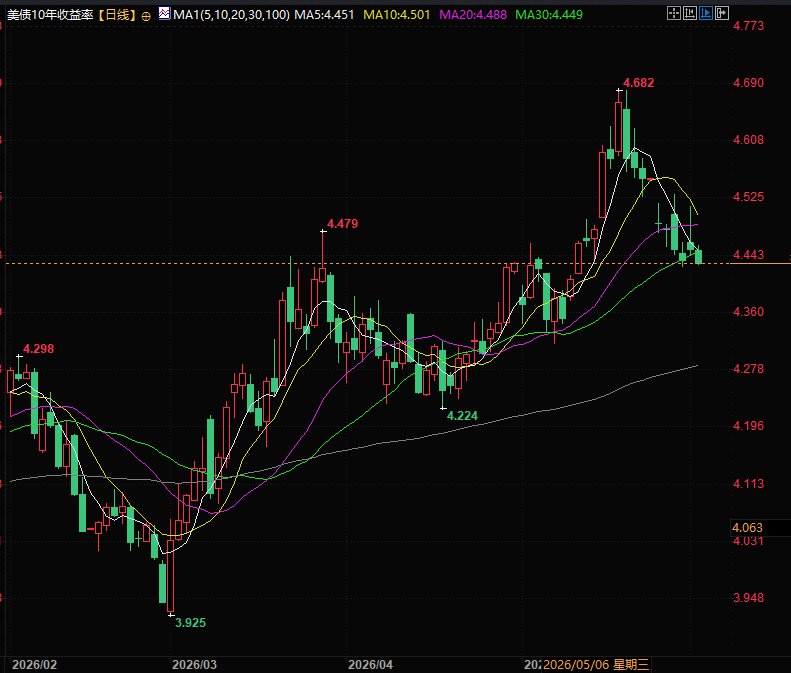
(Daily chart of 10-year US Treasury yield, source: EasyForex)
The market has shifted from expecting the Federal Reserve to continue its rate-cutting cycle to having to passively accept that interest rates will remain high for a long time due to the war.
However, the current financial market is exhibiting an intriguing calm – there is no sell-off, no liquidity crunch, and volatility indicators such as the VIX are even still below their historical averages.
This is not because the market is slow to react to the risks, but because global investors are reaching a new consensus: the market has accepted and is adapting in an orderly manner to a higher-for-longer interest rate trend, rather than in an out-of-control crisis.
Looking ahead to interest rate trends, the market's core view can be broken down into the following three keywords:
Keyword 1: The handover of leadership, with "policy expectations" becoming the new engine.
In the early stages of the US Treasury yield approaching its peak of 5.2%, the driving force was mainly the "term premium"—that is, investors' demand for higher risk compensation for future uncertainty.
However, recently, the baton of long-term interest rate changes has been passed to "policy interest rate expectations".
This means that the market has fully priced in the resilience of the US economy.
The ongoing conflict in the Middle East, high oil prices, robust economic activity, and the Federal Reserve's frequent hawkish signals are all reinforcing the fact that the Fed is in no hurry to loosen monetary policy and that high interest rates will become the norm.
Keyword 2: Anchored to inflation, the dollar's "tree" remains solid.
The core underlying logic for predicting future interest rate trends lies in whether inflation will spiral out of control. And the current bond market's answer is: inflation remains under control.
A strong piece of evidence is that the spread between 30-year and 10-year US Treasury yields remains relatively narrow.
This "flat" curve structure suggests that despite high long-term interest rates, investors are not worried about hyperinflation in the United States, nor do they perceive a substantial threat to the long-term privileges of the dollar.
The market believes the Federal Reserve has the ability to suppress inflation, which is the basis for the confidence that interest rates can remain "orderly" at high levels.
(The narrowing spread between 10-year and 30-year US Treasury yields suggests that the market believes inflation is under control)
Key phrase three: Short-term speculation on interest rate hikes, long-term anticipation of a return to interest rate cuts.
Regarding the specific path of interest rates going forward, a delicate "cat-and-mouse game" has emerged between short-term market pricing and professional forecasters:
The market's short-term "hawkish" pricing: Stimulated by geopolitics and oil prices, the expectations implied by the 2-year US Treasury yield show that the market is even pricing in the possibility of "further tightening (interest rate hikes)".
This is also a major reason why mortgage rates have recently surged to record highs.
Institutional forecasts:
The "rational" baseline of professional forecasters: The May survey of professional forecasters fully accepted the "higher and longer" narrative and revised upward the expected path of yields in both the short and long term (the 10-year US Treasury yield is expected to remain around 4.3% for the remainder of the year, up from the current 4.42%).
However, they still adhere to a fundamental principle—the Fed's ultimate goal remains to resume the rate-cutting cycle, and the current aggressive pricing is merely a temporary setback.
Outlook and Summary: The "stress test" continues
Balance sheets don't lie. Despite high mortgage rates, both the spread between investment-grade corporate bonds and U.S. Treasuries (which is near its historical average) and the Federal Reserve's financial stress index indicate that the real economy and credit markets are far more tolerant of high interest rates than expected.
Supported by the Federal Reserve's continued reserve management and purchase operations, the money market also remained rock solid.
Going forward, interest rates will likely remain high with slight fluctuations.
Is the market prepared for a "protracted war"? As long as inflation does not spiral out of control a second time, this balance of "high interest rates but orderly" will not be broken.
Investors are expressing their attitude with real money: high interest rates are painful, but the market still believes that the Federal Reserve can control the situation.
(Daily chart of 10-year US Treasury yield, source: EasyForex)
- Risk Warning and Disclaimer
- The market involves risk, and trading may not be suitable for all investors. This article is for reference only and does not constitute personal investment advice, nor does it take into account certain users’ specific investment objectives, financial situation, or other needs. Any investment decisions made based on this information are at your own risk.