Escalating tensions in the Middle East have driven a return of safe-haven buying, keeping the US dollar index at high levels.
2026-06-03 15:37:19
The US dollar index maintained its strength during Wednesday's Asian trading session, rising to around 99.30, approaching its high for the week. Over the past three trading days, the dollar index has risen by approximately 0.4%, indicating a continued flow of funds into safe-haven assets like the US dollar. The primary factor driving the dollar's rise is the renewed deterioration of the situation in the Middle East. Recent peace talks between the US and Iran have stalled, significantly increasing market concerns about an escalation of regional conflict. Although the US has stated that the ceasefire agreement remains in effect, Iran previously announced a suspension of related negotiations and accused the US and Israel of violating the ceasefire agreement.

Meanwhile, regional military tensions have escalated again. Market concerns are growing that the already fragile ceasefire could deteriorate further, impacting global energy supply security. Against this backdrop, international investors' risk appetite has noticeably declined, with safe-haven funds flowing back into the US dollar market. In the energy market, shipping risks in the Strait of Hormuz continue to be a major concern. As one of the world's most important energy transport routes, market estimates indicate that approximately 20% of global seaborne crude oil shipments and a significant amount of liquefied natural gas exports pass through this region. If these shipments are continued to be disrupted, international energy prices could rise further.
In fact, international oil prices have rebounded significantly recently. The market generally believes that rising energy prices will not only increase global economic cost pressures but may also push up inflation again. For central banks, rising inflation risks mean limited room for monetary policy adjustments. Data from the United States has further strengthened market expectations for a continued high-interest-rate environment. The latest data shows that JOLTS job openings in the US rose to their highest level in nearly two years in April, reflecting continued strong hiring demand and a resilient labor market.
Meanwhile, the U.S. ISM Manufacturing Purchasing Managers' Index (PMI) rose to 54.0 in May, up from 52.7 previously and reaching its highest level since May 2022. Continued expansion in manufacturing activity indicates that the U.S. economic growth momentum remains robust. Against the backdrop of a strong job market and robust manufacturing performance, investors are beginning to reassess the future path of monetary policy. The market believes that if rising energy prices drive inflation back up, the Federal Reserve may continue its restrictive policy, and even the possibility of further tightening of monetary conditions in the future cannot be ruled out.
High interest rate expectations directly enhance the attractiveness of dollar-denominated assets, prompting global capital inflows into the US market. For the foreign exchange market, a hawkish stance by the Federal Reserve typically means sustained support for the dollar. Currently, market focus has shifted to the upcoming US non-farm payroll report. As a crucial indicator of the US labor market, the non-farm payroll data will directly influence market expectations regarding future interest rate policy.
If job growth continues to be strong while the unemployment rate remains low, it could further strengthen market expectations that the Federal Reserve will maintain high interest rates, thus driving the dollar higher. Conversely, if the job market shows clear signs of cooling, it could limit the dollar's recent gains.
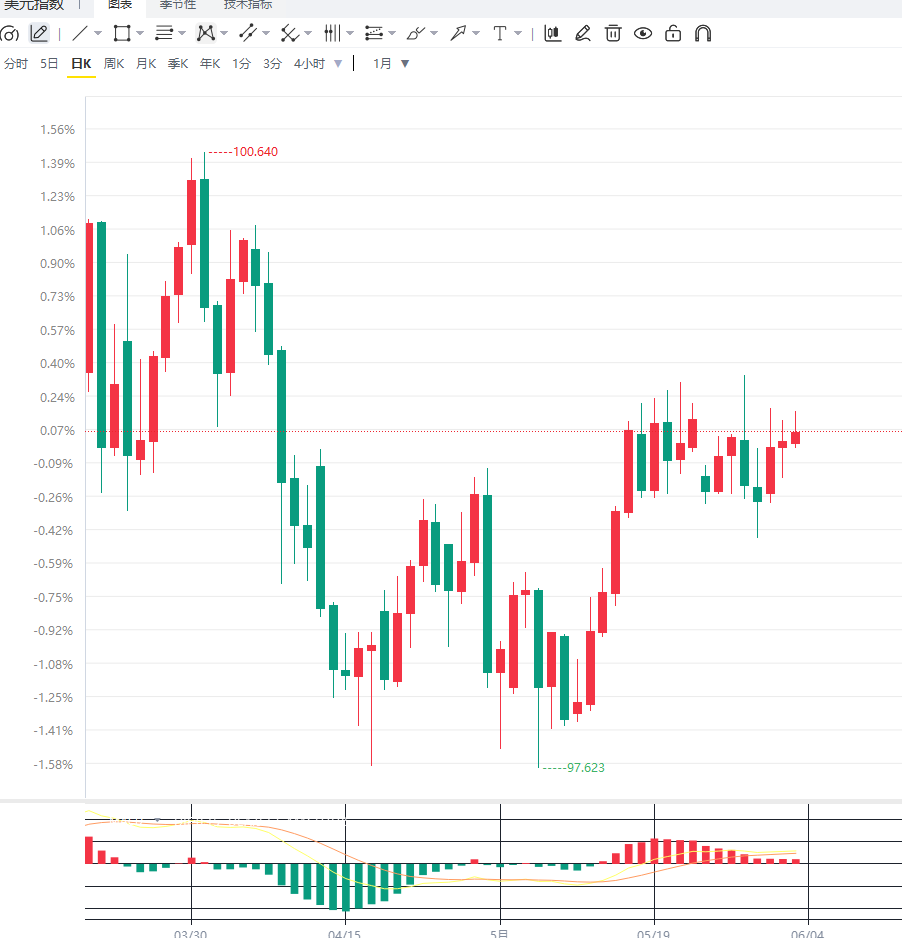
From a technical perspective, the US dollar index daily chart maintains an overall upward trend with fluctuations. Recently, the price has been trading within an expanding wedge pattern, indicating increased market volatility. Traditionally, expanding wedges are considered potential top formations, but current fundamental factors continue to support the dollar. In terms of technical indicators, the 4-hour Relative Strength Index (RSI) remains around 60, indicating a neutral-to-strong market, but it has not yet entered clearly overbought territory. The MACD indicator continues to trade above the zero line, maintaining bullish momentum.
In the short term, the 99.40 area is a key resistance level. If the US dollar index successfully breaks through this level, it is expected to further challenge the two-month high near 99.55. If buying continues to strengthen, the upside target could even be the upper trendline of the wedge near 99.70. On the downside, 99.05 is the first short-term support level. In the event of a technical correction, the 98.75 area will form important support, as this level coincides with the previous low and the lower trendline of the wedge, and is expected to attract strong buying.
Editor's Summary:
The current rise in the US dollar index is primarily driven by a resurgence in safe-haven demand and a robust US economic foundation. Increased uncertainty in the Middle East has strengthened the dollar's safe-haven appeal, while continued strength in the US manufacturing and job markets has further solidified market expectations for the Federal Reserve's high-interest-rate policy. In the short term, 99.40 and 99.55 will be key levels to watch for the dollar index. If US non-farm payroll data continues to improve, the dollar is likely to maintain its strong performance; however, if the data falls short of expectations, it could trigger a period of profit-taking. Overall, the dollar is expected to remain relatively strong in the short term.
Meanwhile, regional military tensions have escalated again. Market concerns are growing that the already fragile ceasefire could deteriorate further, impacting global energy supply security. Against this backdrop, international investors' risk appetite has noticeably declined, with safe-haven funds flowing back into the US dollar market. In the energy market, shipping risks in the Strait of Hormuz continue to be a major concern. As one of the world's most important energy transport routes, market estimates indicate that approximately 20% of global seaborne crude oil shipments and a significant amount of liquefied natural gas exports pass through this region. If these shipments are continued to be disrupted, international energy prices could rise further.
In fact, international oil prices have rebounded significantly recently. The market generally believes that rising energy prices will not only increase global economic cost pressures but may also push up inflation again. For central banks, rising inflation risks mean limited room for monetary policy adjustments. Data from the United States has further strengthened market expectations for a continued high-interest-rate environment. The latest data shows that JOLTS job openings in the US rose to their highest level in nearly two years in April, reflecting continued strong hiring demand and a resilient labor market.
Meanwhile, the U.S. ISM Manufacturing Purchasing Managers' Index (PMI) rose to 54.0 in May, up from 52.7 previously and reaching its highest level since May 2022. Continued expansion in manufacturing activity indicates that the U.S. economic growth momentum remains robust. Against the backdrop of a strong job market and robust manufacturing performance, investors are beginning to reassess the future path of monetary policy. The market believes that if rising energy prices drive inflation back up, the Federal Reserve may continue its restrictive policy, and even the possibility of further tightening of monetary conditions in the future cannot be ruled out.
High interest rate expectations directly enhance the attractiveness of dollar-denominated assets, prompting global capital inflows into the US market. For the foreign exchange market, a hawkish stance by the Federal Reserve typically means sustained support for the dollar. Currently, market focus has shifted to the upcoming US non-farm payroll report. As a crucial indicator of the US labor market, the non-farm payroll data will directly influence market expectations regarding future interest rate policy.
If job growth continues to be strong while the unemployment rate remains low, it could further strengthen market expectations that the Federal Reserve will maintain high interest rates, thus driving the dollar higher. Conversely, if the job market shows clear signs of cooling, it could limit the dollar's recent gains.
From a technical perspective, the US dollar index daily chart maintains an overall upward trend with fluctuations. Recently, the price has been trading within an expanding wedge pattern, indicating increased market volatility. Traditionally, expanding wedges are considered potential top formations, but current fundamental factors continue to support the dollar. In terms of technical indicators, the 4-hour Relative Strength Index (RSI) remains around 60, indicating a neutral-to-strong market, but it has not yet entered clearly overbought territory. The MACD indicator continues to trade above the zero line, maintaining bullish momentum.
In the short term, the 99.40 area is a key resistance level. If the US dollar index successfully breaks through this level, it is expected to further challenge the two-month high near 99.55. If buying continues to strengthen, the upside target could even be the upper trendline of the wedge near 99.70. On the downside, 99.05 is the first short-term support level. In the event of a technical correction, the 98.75 area will form important support, as this level coincides with the previous low and the lower trendline of the wedge, and is expected to attract strong buying.
Editor's Summary:
The current rise in the US dollar index is primarily driven by a resurgence in safe-haven demand and a robust US economic foundation. Increased uncertainty in the Middle East has strengthened the dollar's safe-haven appeal, while continued strength in the US manufacturing and job markets has further solidified market expectations for the Federal Reserve's high-interest-rate policy. In the short term, 99.40 and 99.55 will be key levels to watch for the dollar index. If US non-farm payroll data continues to improve, the dollar is likely to maintain its strong performance; however, if the data falls short of expectations, it could trigger a period of profit-taking. Overall, the dollar is expected to remain relatively strong in the short term.
- Risk Warning and Disclaimer
- The market involves risk, and trading may not be suitable for all investors. This article is for reference only and does not constitute personal investment advice, nor does it take into account certain users’ specific investment objectives, financial situation, or other needs. Any investment decisions made based on this information are at your own risk.