European Central Bank officials signaled a hawkish stance, but easing tensions between the US and Iran may not stem the rise in expectations of interest rate hikes.
2026-06-03 15:50:38
With just days to go before the European Central Bank's (ECB) June monetary policy meeting, several ECB officials continue to send hawkish signals. ECB Governing Council member Pierre Winsch stated that even if the US and Iran reach a peace agreement before the meeting, it would not be enough to fundamentally change the current rationale for supporting an interest rate hike.

Wensch pointed out that if a peace agreement is ultimately reached between the US and Iran, relevant factors will certainly be included in the European Central Bank's decision-making discussions, but policymakers still need to assess the sustainability and credibility of the agreement. He believes that short-term easing of tensions alone is insufficient to ensure the complete disappearance of energy price and inflation risks.
The international market is currently paying close attention to the progress of negotiations between the United States and Iran. As the situation in the Middle East directly impacts the stability of the global energy supply chain, the market remains highly vigilant regarding the security of shipping through the Strait of Hormuz. Market estimates indicate that approximately 20% of global seaborne crude oil shipments pass through the Strait of Hormuz, and any changes in the situation could have a significant impact on international energy prices.
The previous tensions in the Middle East drove a sharp rise in international oil prices and sparked concerns about a resurgence of global inflation. Although there has been some progress in negotiations recently, investors remain cautious about the long-term sustainability of the agreement. Winsch stated that if the Middle East conflict remains unresolved before the European Central Bank meeting, monetary policy discussions will be relatively straightforward, as persistent energy supply risks mean that inflationary pressures will remain high.
However, he also pointed out that even if the US and Iran reach a peace agreement, internal discussions within the European Central Bank might only become "slightly less easy," not that the reasons for raising interest rates have disappeared. On the contrary, the grounds for raising rates still exist, only the support may have weakened. This statement was interpreted by the market as a clear signal of support for a 25 basis point rate hike. Analysts believe that Winsch's remarks reflect that the European Central Bank's focus on inflation risks remains higher than concerns about slowing economic growth.
Latest data shows that the Eurozone's Harmonized Index of Consumer Prices (HICP) rose to 3.2% year-on-year in May, up from 3.0% previously and in line with market expectations. Although inflation has declined from its previous highs, it remains significantly above the European Central Bank's long-term target. Meanwhile, energy price volatility has once again become a focus of market attention. Due to the recent rebound in international crude oil prices, the market is concerned that imported inflationary pressures may strengthen again, thereby affecting price trends in the coming months.
Winsch emphasized that in the current environment, the European Central Bank (ECB) needs to demonstrate a clear stance to the market. He stated that policymakers cannot always rely on the market to adjust itself, but should instead convey policy signals through concrete actions. Analysts point out that these remarks reflect the ECB's current preference for preventative measures to avoid a resurgence of inflation expectations. For central banks, if inflation expectations begin to spiral out of control, more significant policy adjustments may be necessary in the future, thereby increasing economic costs.
Market reactions indicate that expectations for a June rate hike have intensified in the European interest rate market. Most institutions anticipate a 25 basis point rate hike by the European Central Bank (ECB) at its June 11 meeting to address persistent price pressures. In the foreign exchange market, hawkish comments have provided some support for the euro. Although the US dollar has recently been supported by safe-haven demand and strong US economic data, the expectation of an ECB rate hike helps narrow the gap between US and European monetary policies, thus limiting the euro's downside potential.
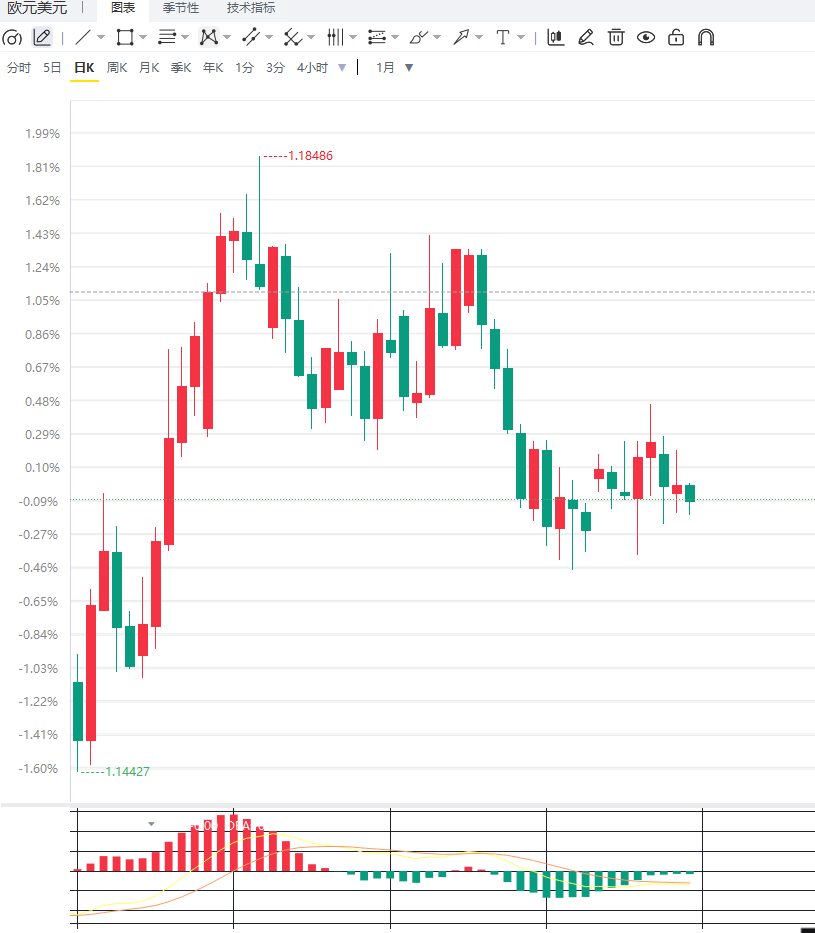
From a technical perspective, the euro remains in a generally bullish, oscillating pattern. On the daily chart, major moving averages maintain a consolidation pattern and are still near the lower support level of the converging range. If the European Central Bank (ECB) releases further hawkish signals, the euro is expected to receive more buying support. The 4-hour chart shows that the market is awaiting the ECB meeting results and subsequent economic data guidance. In the short term, changes in interest rate expectations will remain the core factor influencing the euro's movement.
Editor's Summary:
Winsch's latest remarks indicate that the European Central Bank remains highly vigilant about inflation risks. Even if a peace agreement is reached between the US and Iran and energy prices fall, there is still strong internal support for an interest rate hike within the ECB. Based on current inflation levels and official statements, a 25 basis point rate hike in June has become the mainstream market expectation. Going forward, investors will need to pay close attention to changes in energy prices, Eurozone inflation data, and the ECB's policy statements to determine the subsequent path of monetary policy.
Wensch pointed out that if a peace agreement is ultimately reached between the US and Iran, relevant factors will certainly be included in the European Central Bank's decision-making discussions, but policymakers still need to assess the sustainability and credibility of the agreement. He believes that short-term easing of tensions alone is insufficient to ensure the complete disappearance of energy price and inflation risks.
The international market is currently paying close attention to the progress of negotiations between the United States and Iran. As the situation in the Middle East directly impacts the stability of the global energy supply chain, the market remains highly vigilant regarding the security of shipping through the Strait of Hormuz. Market estimates indicate that approximately 20% of global seaborne crude oil shipments pass through the Strait of Hormuz, and any changes in the situation could have a significant impact on international energy prices.
The previous tensions in the Middle East drove a sharp rise in international oil prices and sparked concerns about a resurgence of global inflation. Although there has been some progress in negotiations recently, investors remain cautious about the long-term sustainability of the agreement. Winsch stated that if the Middle East conflict remains unresolved before the European Central Bank meeting, monetary policy discussions will be relatively straightforward, as persistent energy supply risks mean that inflationary pressures will remain high.
However, he also pointed out that even if the US and Iran reach a peace agreement, internal discussions within the European Central Bank might only become "slightly less easy," not that the reasons for raising interest rates have disappeared. On the contrary, the grounds for raising rates still exist, only the support may have weakened. This statement was interpreted by the market as a clear signal of support for a 25 basis point rate hike. Analysts believe that Winsch's remarks reflect that the European Central Bank's focus on inflation risks remains higher than concerns about slowing economic growth.
Latest data shows that the Eurozone's Harmonized Index of Consumer Prices (HICP) rose to 3.2% year-on-year in May, up from 3.0% previously and in line with market expectations. Although inflation has declined from its previous highs, it remains significantly above the European Central Bank's long-term target. Meanwhile, energy price volatility has once again become a focus of market attention. Due to the recent rebound in international crude oil prices, the market is concerned that imported inflationary pressures may strengthen again, thereby affecting price trends in the coming months.
Winsch emphasized that in the current environment, the European Central Bank (ECB) needs to demonstrate a clear stance to the market. He stated that policymakers cannot always rely on the market to adjust itself, but should instead convey policy signals through concrete actions. Analysts point out that these remarks reflect the ECB's current preference for preventative measures to avoid a resurgence of inflation expectations. For central banks, if inflation expectations begin to spiral out of control, more significant policy adjustments may be necessary in the future, thereby increasing economic costs.
Market reactions indicate that expectations for a June rate hike have intensified in the European interest rate market. Most institutions anticipate a 25 basis point rate hike by the European Central Bank (ECB) at its June 11 meeting to address persistent price pressures. In the foreign exchange market, hawkish comments have provided some support for the euro. Although the US dollar has recently been supported by safe-haven demand and strong US economic data, the expectation of an ECB rate hike helps narrow the gap between US and European monetary policies, thus limiting the euro's downside potential.
From a technical perspective, the euro remains in a generally bullish, oscillating pattern. On the daily chart, major moving averages maintain a consolidation pattern and are still near the lower support level of the converging range. If the European Central Bank (ECB) releases further hawkish signals, the euro is expected to receive more buying support. The 4-hour chart shows that the market is awaiting the ECB meeting results and subsequent economic data guidance. In the short term, changes in interest rate expectations will remain the core factor influencing the euro's movement.
Editor's Summary:
Winsch's latest remarks indicate that the European Central Bank remains highly vigilant about inflation risks. Even if a peace agreement is reached between the US and Iran and energy prices fall, there is still strong internal support for an interest rate hike within the ECB. Based on current inflation levels and official statements, a 25 basis point rate hike in June has become the mainstream market expectation. Going forward, investors will need to pay close attention to changes in energy prices, Eurozone inflation data, and the ECB's policy statements to determine the subsequent path of monetary policy.
- Risk Warning and Disclaimer
- The market involves risk, and trading may not be suitable for all investors. This article is for reference only and does not constitute personal investment advice, nor does it take into account certain users’ specific investment objectives, financial situation, or other needs. Any investment decisions made based on this information are at your own risk.