USD/JPY's surge followed by a pullback exposes weaknesses; is this a reversal in the yen's trend or a consolidation of bullish momentum?
2026-06-08 19:37:09
On Monday (June 8), during the Asian and European sessions, the USD/JPY pair experienced a surge followed by a pullback. The USD/JPY pair rebounded strongly after intervention by the Bank of Japan, but its recent upward momentum has weakened, with some negative news failing to drive it up, although the overall trend remains upward.

Japan's first-quarter economic data was better than expected, but it failed to reverse the yen's depreciation trend.
According to data from Japan's Statistics Bureau, GDP grew by 1.8% quarter-on-quarter in the first quarter, a significant increase from the 0.7% growth rate in the fourth quarter of last year, and higher than the market consensus of 1.3%. The economic growth was mainly driven by the recovery in external demand and the boost in consumer spending, with personal consumption expenditure rising by 0.3% quarter-on-quarter.
However, capital expenditure fell slightly by 0.7% month-on-month, which dragged down the overall growth rate. More importantly, market concerns triggered by the escalation of geopolitical conflicts in the Middle East completely suppressed the short-term positive impact of the economic data.
The US dollar continues to strengthen against the trend against the Japanese yen, with the core logic being that the market is betting that the Middle East conflict will put significant pressure on Japan's economy in the second quarter.
Israel's multiple strikes against Iran have brought the already fragile ceasefire agreement to the brink of collapse, while the conflict along the Israeli-Lebanese border has also escalated, leading to a comprehensive escalation of regional tensions, which is beneficial to the US dollar.
More alarmingly, the US plans to use the frozen Iranian assets for the reconstruction of its Gulf allies. This move could lead to a prolonged confrontation between the US and Iran, directly pushing up oil prices and exacerbating global inflationary pressures.
As a country heavily reliant on Middle Eastern crude oil imports, Japan is at the forefront of facing imported inflation and energy supply risks, forcing it to adjust its procurement structure and seek crude oil supplies from non-Middle Eastern regions such as the United States. This has further weakened the safe-haven appeal of the yen.
The continued sharp depreciation of the yen has triggered intervention warnings from the Bank of Japan, significantly increasing the sense of urgency for policy. The market has long regarded the 160 level as a key defense line for the USD/JPY exchange rate, and the central bank is highly vigilant about this. At the end of April, it decisively injected more than $35 billion into the market, which pushed the yen to rebound sharply in the short term, demonstrating the central bank's determination to stabilize the exchange rate.
The market generally expects that if the yen exchange rate continues to approach the 160 mark, the central bank may intervene again, and even restart interest rate hikes cannot be ruled out, in order to increase the attractiveness of the yen and alleviate the pressure of currency depreciation by raising interest rates.
Judging from the Bank of Japan's latest policy direction, its April outlook report explicitly mentioned that rising oil prices may push up energy and commodity prices, and that it will continue to raise policy interest rates and adjust the degree of monetary easing according to changes in economic, price and financial conditions. This lays the policy foundation for potential interest rate hikes.
However, the economic uncertainty brought about by the Middle East conflict still makes the market doubt the pace of interest rate hikes this year. Next week's monetary policy meeting will be a key window to observe the central bank's attitude, and the market's expectations for an interest rate hike at this meeting have not changed.
The US dollar should have appreciated significantly against the Japanese yen, primarily supported by the stronger-than-expected resilience of the US economy.
The US non-farm payroll data released last week for May far exceeded expectations, with 172,000 new jobs added, far exceeding the market expectation of 85,000. The April data was even revised upward from 115,000 to 179,000, confirming that the US labor market will continue to tighten in 2026.
Coupled with the upcoming May CPI data expected to rise across the board, rising energy prices will directly push up overall and core inflation, thus reinforcing market expectations that the Federal Reserve will raise interest rates at least once this year. This expectation further consolidates the strong position of the US dollar.
It is worth noting that the Fed's interest rate hikes may trigger policy disagreements between Trump and Fed Chairman Warsh, exacerbating policy uncertainty, but it is unlikely to change the strong trend of the US dollar in the short term.
The current broad-based strengthening of the US dollar is supported by both strong US economic data and escalating geopolitical risks in the Middle East. Oil prices have jumped by about $4 from last Friday's low, with Brent crude touching around $96.40, which has both boosted US inflation expectations and put additional pressure on the Japanese economy, which is highly dependent on energy imports.
The net positions in USD/JPY clearly show that the bulls have loosened their grip, or rather, the short positions have increased significantly. Compared to the bulls in the US dollar, USD/JPY even faces the risk of a trend reversal. However, if the Bank of Japan decides to raise interest rates later, but the yen does not fall and fails to trigger stop-loss orders for the bulls, it may cause the yen bulls to cover their positions or the shorts to close their positions, ultimately leading to a significant breakout above the key price level of 160.
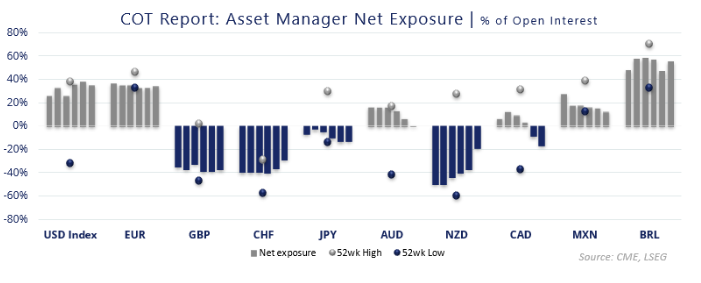
(A summary of net positions against major currencies, source: CME Group)
The US dollar has recently surged, but the USD/JPY pair has not followed suit. Meanwhile, the recent appreciation of the USD/JPY pair has been markedly more volatile, indicating a hesitation in the upward movement due to a divergence between bulls and bears. Faced with the Bank of Japan's simultaneous interest rate hikes and interventions, the strength of the bulls is currently weakening.
From a technical perspective, the USD/JPY pair is moving along an upward channel, but has recently fallen slightly below the 5-day moving average. At the same time, there are clear signs of intervention on the intraday chart, which may affect the bulls' willingness to push higher.
Support is found at the lower channel line at 159, and around 158.
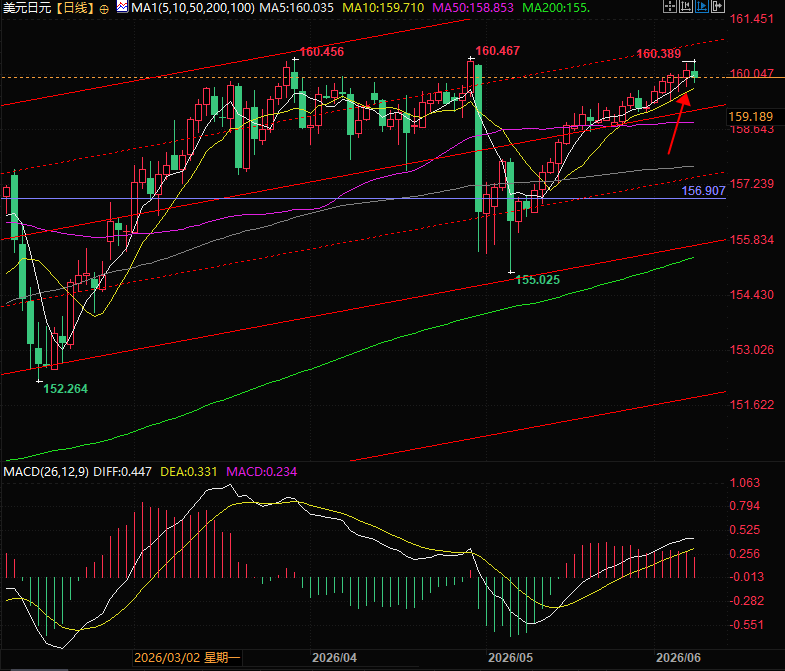
(USD/JPY daily chart, source: FX678)
At 19:35 Beijing time, the USD/JPY exchange rate was 159.81/82.
Strong GDP growth is one of the reasons for the recent stagflation in the US and Japan.
Japan's first-quarter economic data was better than expected, but it failed to reverse the yen's depreciation trend.
According to data from Japan's Statistics Bureau, GDP grew by 1.8% quarter-on-quarter in the first quarter, a significant increase from the 0.7% growth rate in the fourth quarter of last year, and higher than the market consensus of 1.3%. The economic growth was mainly driven by the recovery in external demand and the boost in consumer spending, with personal consumption expenditure rising by 0.3% quarter-on-quarter.
However, capital expenditure fell slightly by 0.7% month-on-month, which dragged down the overall growth rate. More importantly, market concerns triggered by the escalation of geopolitical conflicts in the Middle East completely suppressed the short-term positive impact of the economic data.
Escalating geopolitical conflicts continue to enhance the attractiveness of the US dollar.
The US dollar continues to strengthen against the trend against the Japanese yen, with the core logic being that the market is betting that the Middle East conflict will put significant pressure on Japan's economy in the second quarter.
Israel's multiple strikes against Iran have brought the already fragile ceasefire agreement to the brink of collapse, while the conflict along the Israeli-Lebanese border has also escalated, leading to a comprehensive escalation of regional tensions, which is beneficial to the US dollar.
More alarmingly, the US plans to use the frozen Iranian assets for the reconstruction of its Gulf allies. This move could lead to a prolonged confrontation between the US and Iran, directly pushing up oil prices and exacerbating global inflationary pressures.
As a country heavily reliant on Middle Eastern crude oil imports, Japan is at the forefront of facing imported inflation and energy supply risks, forcing it to adjust its procurement structure and seek crude oil supplies from non-Middle Eastern regions such as the United States. This has further weakened the safe-haven appeal of the yen.
The central bank's intervention warning has been sounded, and the game of interest rate hike expectations has intensified, putting pressure on the USD/JPY currency pair.
The continued sharp depreciation of the yen has triggered intervention warnings from the Bank of Japan, significantly increasing the sense of urgency for policy. The market has long regarded the 160 level as a key defense line for the USD/JPY exchange rate, and the central bank is highly vigilant about this. At the end of April, it decisively injected more than $35 billion into the market, which pushed the yen to rebound sharply in the short term, demonstrating the central bank's determination to stabilize the exchange rate.
The market generally expects that if the yen exchange rate continues to approach the 160 mark, the central bank may intervene again, and even restart interest rate hikes cannot be ruled out, in order to increase the attractiveness of the yen and alleviate the pressure of currency depreciation by raising interest rates.
Judging from the Bank of Japan's latest policy direction, its April outlook report explicitly mentioned that rising oil prices may push up energy and commodity prices, and that it will continue to raise policy interest rates and adjust the degree of monetary easing according to changes in economic, price and financial conditions. This lays the policy foundation for potential interest rate hikes.
However, the economic uncertainty brought about by the Middle East conflict still makes the market doubt the pace of interest rate hikes this year. Next week's monetary policy meeting will be a key window to observe the central bank's attitude, and the market's expectations for an interest rate hike at this meeting have not changed.
Strong US jobs data, but USD/JPY currency pair shows signs of stagflation.
The US dollar should have appreciated significantly against the Japanese yen, primarily supported by the stronger-than-expected resilience of the US economy.
The US non-farm payroll data released last week for May far exceeded expectations, with 172,000 new jobs added, far exceeding the market expectation of 85,000. The April data was even revised upward from 115,000 to 179,000, confirming that the US labor market will continue to tighten in 2026.
Coupled with the upcoming May CPI data expected to rise across the board, rising energy prices will directly push up overall and core inflation, thus reinforcing market expectations that the Federal Reserve will raise interest rates at least once this year. This expectation further consolidates the strong position of the US dollar.
It is worth noting that the Fed's interest rate hikes may trigger policy disagreements between Trump and Fed Chairman Warsh, exacerbating policy uncertainty, but it is unlikely to change the strong trend of the US dollar in the short term.
The current broad-based strengthening of the US dollar is supported by both strong US economic data and escalating geopolitical risks in the Middle East. Oil prices have jumped by about $4 from last Friday's low, with Brent crude touching around $96.40, which has both boosted US inflation expectations and put additional pressure on the Japanese economy, which is highly dependent on energy imports.
Position verification indicates that long positions in USD/JPY are beginning to withdraw.
The net positions in USD/JPY clearly show that the bulls have loosened their grip, or rather, the short positions have increased significantly. Compared to the bulls in the US dollar, USD/JPY even faces the risk of a trend reversal. However, if the Bank of Japan decides to raise interest rates later, but the yen does not fall and fails to trigger stop-loss orders for the bulls, it may cause the yen bulls to cover their positions or the shorts to close their positions, ultimately leading to a significant breakout above the key price level of 160.
(A summary of net positions against major currencies, source: CME Group)
Summary and Technical Analysis:
The US dollar has recently surged, but the USD/JPY pair has not followed suit. Meanwhile, the recent appreciation of the USD/JPY pair has been markedly more volatile, indicating a hesitation in the upward movement due to a divergence between bulls and bears. Faced with the Bank of Japan's simultaneous interest rate hikes and interventions, the strength of the bulls is currently weakening.
From a technical perspective, the USD/JPY pair is moving along an upward channel, but has recently fallen slightly below the 5-day moving average. At the same time, there are clear signs of intervention on the intraday chart, which may affect the bulls' willingness to push higher.
Support is found at the lower channel line at 159, and around 158.
(USD/JPY daily chart, source: FX678)
At 19:35 Beijing time, the USD/JPY exchange rate was 159.81/82.
- Risk Warning and Disclaimer
- The market involves risk, and trading may not be suitable for all investors. This article is for reference only and does not constitute personal investment advice, nor does it take into account certain users’ specific investment objectives, financial situation, or other needs. Any investment decisions made based on this information are at your own risk.