The uncertainty surrounding the ECB's July meeting is intensifying; is the euro market's real fear not an interest rate hike?
2026-06-12 14:44:45
On Friday, June 12, the core variable in the European interest rate market shifted from "whether to raise interest rates" to "whether a second rate hike is needed in July." The European Central Bank (ECB) raised its three key interest rates by 25 basis points on June 11: the deposit facility rate rose to 2.25%, the main refinancing rate to 2.40%, and the marginal lending facility rate to 2.65%. The new rates will take effect on June 17. This is the ECB's first rate hike since 2023, not against the backdrop of strong demand, but rather due to renewed upward pressure on inflation expectations and real prices following the Middle East conflict which pushed up energy costs. On June 12, the euro remained around 1.1565 against the dollar, the yield on German 10-year bonds was around 2.99%, and although Brent crude oil fell from its high to around $88 a barrel, the market has not yet fully removed the energy supply risk premium.
The most important signal from this meeting wasn't the 25 basis points themselves, but rather the return of an upward slope to the policy path. Previously, the market preferred to postpone the next rate hike until September, as the ECB would update its quarterly economic forecasts then and observe whether the energy shock had spread to core inflation. However, the latest news indicates that some policymakers do not rule out taking action again at the July meeting.
This means the ECB is shifting its policy response function from "waiting for confirmation of forecasts" to "preventing second-degree transmission." If energy prices only experience a short-term spike, holding rates steady in July remains a reasonable option; however, if crude oil prices approach $100 a barrel again, or service prices and wage indicators continue to show stickiness, further rate hikes will become a negotiable option. The key is not the outcome of a single meeting, but whether the overnight index swap curve continues to push the year-to-date terminal interest rate towards 2.75%.
European Central Bank President Christine Lagarde emphasized at a recent press conference that rising energy prices will further boost inflation this summer and keep it significantly above target in the first half of 2027. She also pointed out that the Middle East conflict is dragging down economic activity, with surveys showing signs of a slowdown particularly concentrated in the service sector. These statements convey two messages: inflationary constraints are hardening, and the margin for error in growth is shrinking.
Eurozone inflation rose to 3.2% in May, up from 3.0% in April and significantly deviating from the 2% medium-term target. On the surface, energy is the triggering factor, but more concerning is that once energy costs are factored into the prices of transportation, food, industrial goods, and services, policymakers' tolerance for "temporary shocks" will rapidly decline.
The service sector is currently a weak link in pricing. The Eurozone's services purchasing managers' index (PMI) for May was 47.7, still below the 50-point threshold separating expansion from contraction, indicating weak demand. Normally, weakening growth would reduce the need for interest rate hikes; however, if service prices remain supported by wages, rents, energy bills, and corporate pass-throughs, the European Central Bank faces not the traditional problem of overheated demand, but rather the dilemma of weak growth coexisting with high costs.
This type of environment is particularly challenging for the bond market. Short-term yields are driven by policy rates, while long-term yields trade on both slowing growth and inflation risks. The German 10-year bond yield has fallen to around 2.99%, indicating that the market is balancing between easing energy risks, downward revisions to growth expectations, and rising policy rates.
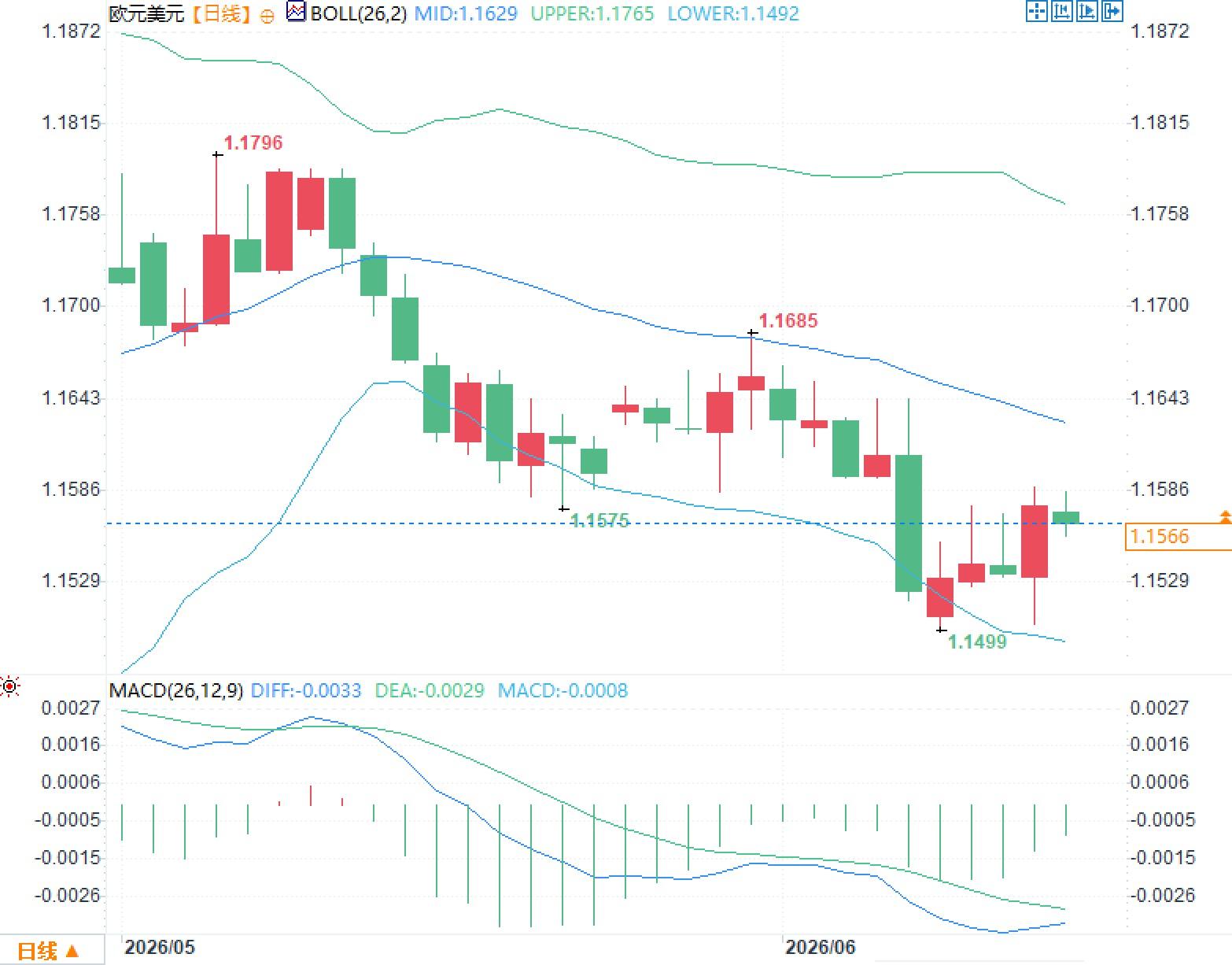
The euro traded near 1.1565 against the dollar on June 12, close to its weekly high. The exchange rate reacted supportively to the ECB's rate hike, but its sustainability depends on two variables: whether the ECB includes July in its real policy options and whether energy prices continue to erode the eurozone's terms of trade.
If oil prices remain around $90 a barrel, the European Central Bank can use July as a verbal deterrent, suppressing inflation expectations by increasing reliance on data. If oil prices return to $100 a barrel, the market will more quickly price in consecutive interest rate hikes. Conversely, if the situation in the Middle East eases and energy prices continue to fall, the euro's interest rate differential support may weaken, and the focus will return to growth pressures and corporate profit margins.
This is also the most complex aspect of current euro asset pricing. Interest rate hikes do not necessarily mean pressure on risk assets, nor do they necessarily mean a unilateral strengthening of the euro. If an interest rate hike is interpreted as the central bank actively maintaining price stability, the exchange rate may receive support; if an interest rate hike is interpreted as being forced by energy shocks, and the economy weakens simultaneously, the correlation between stocks, bonds, and the currency will become unstable.
The European Central Bank's latest interest rate hike is essentially aimed at maintaining the credibility of its inflation target. European inflation returned to a relatively moderate range in 2025, but the energy shock in 2026 altered its trajectory. If policymakers react too slowly, they may allow inflation expectations to rise again; if they react too quickly, they may amplify downward pressure on the economy.
For the market, the next three types of data are crucial. First, energy prices, especially whether Brent crude continues to fall below $90 a barrel. Second, core inflation and service inflation; if these fail to follow the decline in energy prices, the probability of a July rate hike will increase again. Third, the labor market and business surveys; if employment and new orders weaken simultaneously, the resistance to further action by the ECB before September will rise.
The most important signal from this meeting wasn't the 25 basis points themselves, but rather the return of an upward slope to the policy path. Previously, the market preferred to postpone the next rate hike until September, as the ECB would update its quarterly economic forecasts then and observe whether the energy shock had spread to core inflation. However, the latest news indicates that some policymakers do not rule out taking action again at the July meeting.
This means the ECB is shifting its policy response function from "waiting for confirmation of forecasts" to "preventing second-degree transmission." If energy prices only experience a short-term spike, holding rates steady in July remains a reasonable option; however, if crude oil prices approach $100 a barrel again, or service prices and wage indicators continue to show stickiness, further rate hikes will become a negotiable option. The key is not the outcome of a single meeting, but whether the overnight index swap curve continues to push the year-to-date terminal interest rate towards 2.75%.
European Central Bank President Christine Lagarde emphasized at a recent press conference that rising energy prices will further boost inflation this summer and keep it significantly above target in the first half of 2027. She also pointed out that the Middle East conflict is dragging down economic activity, with surveys showing signs of a slowdown particularly concentrated in the service sector. These statements convey two messages: inflationary constraints are hardening, and the margin for error in growth is shrinking.
Eurozone inflation rose to 3.2% in May, up from 3.0% in April and significantly deviating from the 2% medium-term target. On the surface, energy is the triggering factor, but more concerning is that once energy costs are factored into the prices of transportation, food, industrial goods, and services, policymakers' tolerance for "temporary shocks" will rapidly decline.
The service sector is currently a weak link in pricing. The Eurozone's services purchasing managers' index (PMI) for May was 47.7, still below the 50-point threshold separating expansion from contraction, indicating weak demand. Normally, weakening growth would reduce the need for interest rate hikes; however, if service prices remain supported by wages, rents, energy bills, and corporate pass-throughs, the European Central Bank faces not the traditional problem of overheated demand, but rather the dilemma of weak growth coexisting with high costs.
This type of environment is particularly challenging for the bond market. Short-term yields are driven by policy rates, while long-term yields trade on both slowing growth and inflation risks. The German 10-year bond yield has fallen to around 2.99%, indicating that the market is balancing between easing energy risks, downward revisions to growth expectations, and rising policy rates.
The euro traded near 1.1565 against the dollar on June 12, close to its weekly high. The exchange rate reacted supportively to the ECB's rate hike, but its sustainability depends on two variables: whether the ECB includes July in its real policy options and whether energy prices continue to erode the eurozone's terms of trade.
If oil prices remain around $90 a barrel, the European Central Bank can use July as a verbal deterrent, suppressing inflation expectations by increasing reliance on data. If oil prices return to $100 a barrel, the market will more quickly price in consecutive interest rate hikes. Conversely, if the situation in the Middle East eases and energy prices continue to fall, the euro's interest rate differential support may weaken, and the focus will return to growth pressures and corporate profit margins.
This is also the most complex aspect of current euro asset pricing. Interest rate hikes do not necessarily mean pressure on risk assets, nor do they necessarily mean a unilateral strengthening of the euro. If an interest rate hike is interpreted as the central bank actively maintaining price stability, the exchange rate may receive support; if an interest rate hike is interpreted as being forced by energy shocks, and the economy weakens simultaneously, the correlation between stocks, bonds, and the currency will become unstable.
The European Central Bank's latest interest rate hike is essentially aimed at maintaining the credibility of its inflation target. European inflation returned to a relatively moderate range in 2025, but the energy shock in 2026 altered its trajectory. If policymakers react too slowly, they may allow inflation expectations to rise again; if they react too quickly, they may amplify downward pressure on the economy.
For the market, the next three types of data are crucial. First, energy prices, especially whether Brent crude continues to fall below $90 a barrel. Second, core inflation and service inflation; if these fail to follow the decline in energy prices, the probability of a July rate hike will increase again. Third, the labor market and business surveys; if employment and new orders weaken simultaneously, the resistance to further action by the ECB before September will rise.
- Risk Warning and Disclaimer
- The market involves risk, and trading may not be suitable for all investors. This article is for reference only and does not constitute personal investment advice, nor does it take into account certain users’ specific investment objectives, financial situation, or other needs. Any investment decisions made based on this information are at your own risk.