Geopolitical risks have subsided, causing gold to rebound from its lows; a reversal opportunity is gradually brewing.
2026-06-15 10:42:29
The gold market has been weak recently, with prices briefly falling into bear market territory, putting significant pressure on investors. However, the market landscape has reached a crucial turning point. Over the weekend, the US and Iran successfully reached a memorandum of understanding, significantly easing geopolitical tensions in the Middle East and directly driving a rebound in gold prices.
Looking at the current market, short-term negative sentiment for gold has been quickly released, while the underlying macroeconomic logic continues to improve. With the short-term market recovery underway, opportunities for a medium- to long-term trend reversal are gradually brewing.
Previously, the ongoing geopolitical conflicts in the Middle East had disrupted global markets and fueled risk aversion, which was a significant factor influencing gold price fluctuations.
With the successful implementation of the US-Iran memorandum of understanding, regional uncertainty has significantly subsided, and market risk appetite has rebounded rapidly, providing direct upward momentum for gold. Stimulated by this major news, gold prices quickly moved out of their low range, ending the previous prolonged bear market and initiating a clear recovery. Simultaneously, the easing of geopolitical tensions effectively alleviated upward pressure on energy prices, cooled market inflation expectations, and further weakened expectations that the Federal Reserve would maintain a prolonged period of high-intensity tightening policies, creating a favorable market environment for gold price stabilization and recovery.
Inflation trends have consistently been the core driver of this round of gold price movements. Traditionally, rising inflation typically boosts demand for gold as an inflation hedge, supporting higher prices. However, in this current environment of high inflation, market trends have diverged. Persistent inflationary pressures have reinforced market expectations of Federal Reserve tightening, becoming the primary negative factor suppressing gold prices.
Gold prices had previously been declining, briefly approaching the key support level of $4,000 per ounce. Although this support level held temporarily, market sentiment remained cautious, with insufficient willingness to buy. Coupled with strong US employment data and the Federal Reserve's firm stance on maintaining a tight monetary policy, gold, as a non-interest-bearing asset, faces a high opportunity cost of holding in a high-interest-rate environment, further limiting its upside potential.
Most investors focus too much on nominal interest rate fluctuations, while ignoring the core indicator affecting gold trends: real yield.
Market analysts say that the key to judging the medium- to long-term trend of gold lies in observing changes in real yields. With inflation consistently outpacing interest rate increases, real yields will continue to decline, significantly weakening the attractiveness of US Treasuries and simultaneously enhancing the investment value of gold. Even during a rate hike cycle, accelerating inflation can easily push real yields into negative territory, and historical data shows that negative real yields have historically been a significant support for strong precious metal prices.
While the Federal Reserve may raise interest rates this year, it is unlikely to eradicate persistent inflation at its root. The US currently faces multiple challenges, including a widening fiscal deficit, high government debt, and sticky inflation, putting the Fed chairman in a policy dilemma. Aggressive rate hikes could impact highly indebted economies, while allowing inflation to run rampant would weaken the credibility of fiat currencies. This period of policy deliberation often presents a window of opportunity for gold to demonstrate its advantages.
The recent rebound in gold prices has been primarily driven by the easing of geopolitical risks, resulting in a considerable short-term recovery. However, a stable, one-sided upward trend has not yet formed. The market still needs to await further clarification from inflation data, the Federal Reserve's policy direction, and economic fundamentals; therefore, the probability of continued market volatility remains high.
Overall , the gold market is currently at a critical juncture of shifting logic. Short-term inflationary tightening expectations still exert downward pressure, but the long-term positive logic of fading geopolitical headwinds and rising real yields continues to take hold.
The current short-term fluctuations are essentially a consolidation phase before a trend reversal. As the macroeconomic environment continues to evolve, inflation will eventually transform from a negative factor suppressing gold prices into a core catalyst driving a reversal in the gold market.
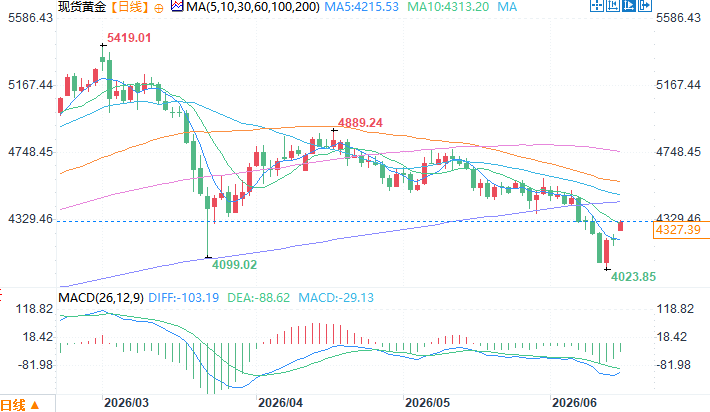
Spot gold daily chart source: EasyForex
At 10:42 AM Beijing time on June 15, spot gold was trading at $4329.39 per ounce.
Looking at the current market, short-term negative sentiment for gold has been quickly released, while the underlying macroeconomic logic continues to improve. With the short-term market recovery underway, opportunities for a medium- to long-term trend reversal are gradually brewing.
The settlement between the US and Iran led to a strong rebound in gold prices.
Previously, the ongoing geopolitical conflicts in the Middle East had disrupted global markets and fueled risk aversion, which was a significant factor influencing gold price fluctuations.
With the successful implementation of the US-Iran memorandum of understanding, regional uncertainty has significantly subsided, and market risk appetite has rebounded rapidly, providing direct upward momentum for gold. Stimulated by this major news, gold prices quickly moved out of their low range, ending the previous prolonged bear market and initiating a clear recovery. Simultaneously, the easing of geopolitical tensions effectively alleviated upward pressure on energy prices, cooled market inflation expectations, and further weakened expectations that the Federal Reserve would maintain a prolonged period of high-intensity tightening policies, creating a favorable market environment for gold price stabilization and recovery.
High inflation is suppressing gold prices; the short-term market structure has not yet reversed.
Inflation trends have consistently been the core driver of this round of gold price movements. Traditionally, rising inflation typically boosts demand for gold as an inflation hedge, supporting higher prices. However, in this current environment of high inflation, market trends have diverged. Persistent inflationary pressures have reinforced market expectations of Federal Reserve tightening, becoming the primary negative factor suppressing gold prices.
Gold prices had previously been declining, briefly approaching the key support level of $4,000 per ounce. Although this support level held temporarily, market sentiment remained cautious, with insufficient willingness to buy. Coupled with strong US employment data and the Federal Reserve's firm stance on maintaining a tight monetary policy, gold, as a non-interest-bearing asset, faces a high opportunity cost of holding in a high-interest-rate environment, further limiting its upside potential.
The changing logic of real yield lays the foundation for a long-term positive outlook for gold.
Most investors focus too much on nominal interest rate fluctuations, while ignoring the core indicator affecting gold trends: real yield.
Market analysts say that the key to judging the medium- to long-term trend of gold lies in observing changes in real yields. With inflation consistently outpacing interest rate increases, real yields will continue to decline, significantly weakening the attractiveness of US Treasuries and simultaneously enhancing the investment value of gold. Even during a rate hike cycle, accelerating inflation can easily push real yields into negative territory, and historical data shows that negative real yields have historically been a significant support for strong precious metal prices.
While the Federal Reserve may raise interest rates this year, it is unlikely to eradicate persistent inflation at its root. The US currently faces multiple challenges, including a widening fiscal deficit, high government debt, and sticky inflation, putting the Fed chairman in a policy dilemma. Aggressive rate hikes could impact highly indebted economies, while allowing inflation to run rampant would weaken the credibility of fiat currencies. This period of policy deliberation often presents a window of opportunity for gold to demonstrate its advantages.
Be cautious about short-term rebounds; medium- to long-term reversal opportunities are emerging.
The recent rebound in gold prices has been primarily driven by the easing of geopolitical risks, resulting in a considerable short-term recovery. However, a stable, one-sided upward trend has not yet formed. The market still needs to await further clarification from inflation data, the Federal Reserve's policy direction, and economic fundamentals; therefore, the probability of continued market volatility remains high.
Overall , the gold market is currently at a critical juncture of shifting logic. Short-term inflationary tightening expectations still exert downward pressure, but the long-term positive logic of fading geopolitical headwinds and rising real yields continues to take hold.
The current short-term fluctuations are essentially a consolidation phase before a trend reversal. As the macroeconomic environment continues to evolve, inflation will eventually transform from a negative factor suppressing gold prices into a core catalyst driving a reversal in the gold market.
Spot gold daily chart source: EasyForex
At 10:42 AM Beijing time on June 15, spot gold was trading at $4329.39 per ounce.
- Risk Warning and Disclaimer
- The market involves risk, and trading may not be suitable for all investors. This article is for reference only and does not constitute personal investment advice, nor does it take into account certain users’ specific investment objectives, financial situation, or other needs. Any investment decisions made based on this information are at your own risk.