













Gold Trading Alert: Gold Prices Retreat to $4100 Level! Bulls Encounter Strongest Chill Ahead of PCE Data Release
2026-06-24 07:06:13
The global gold market is undergoing a sharp correction. On Tuesday (June 22), spot gold prices fell sharply by 1.9%, hitting $4,110.05 per ounce, while US August gold futures also closed down 1.3% at $4,149.40. This decline is not an isolated event, but rather a result of a strong rebound in the US dollar, an unexpected easing of geopolitical tensions in the Middle East, and a hawkish shift in the Federal Reserve's monetary policy. Gold, once considered a safe haven, is now facing multiple pressures, and investor confidence has clearly wavered. On Wednesday (June 23) in early Asian trading, spot gold fluctuated narrowly around the $4,100 level.
The US dollar index surged 0.38% on Tuesday, reaching a high of 101.43, a more than one-year high. This rise directly suppressed gold's performance. The hawkish signals from newly appointed Federal Reserve Chairman Kevin Warsh at last week's policy meeting became the core driver of market repricing. The CME FedWatch tool shows that traders' expectations for a December rate hike have surged from 61% before the meeting to approximately 86%, the probability of a July rate hike has also significantly increased to 36.3%, and the probability of a September rate hike has reached 70%.
As a non-yielding asset, gold is naturally under pressure in a high-interest-rate environment. When the market anticipates the Federal Reserve will tighten monetary policy more aggressively, the opportunity cost of holding gold rises rapidly. Bob Haberkorn, senior market strategist at StoneX, bluntly stated that the gold and silver markets are currently not paying much attention to the Middle East situation, but rather focusing firmly on the Fed's statements. Officials emphasized that current inflationary pressures still need to be monitored, and the impact of high tariffs and the potential decline in inflation due to the easing of Middle East conflict have not yet been fully confirmed, further solidifying the hawkish stance.
Meanwhile, the sell-off in US stocks, particularly technology stocks, provided additional support for the dollar. The S&P 500 fell 1.44%, the Nasdaq plunged 2.21%, and the semiconductor sector led the decline with a 7.9% drop. As investors sought refuge from risky assets, they opted for the dollar as a safer haven, resulting in a classic negative correlation between gold and the dollar.
Parallel to the pressure from Federal Reserve policy is the unexpected easing of tensions in the Middle East, which has directly diminished gold's appeal as a geopolitical safe-haven asset. Substantial progress has been made in peace talks between the US and Iran, with the US granting Iran a 60-day sanctions waiver under a preliminary agreement, and oil tanker traffic in the Strait of Hormuz is gradually resuming. Three previously stranded supertankers have successfully passed through the strait, and plans for the evacuation of more ships are progressing under the coordination of UN maritime agencies.
Brent crude futures fell 1.1% to $77.08 a barrel, and U.S. crude fell 0.9% to $73.21, both hitting near four-month lows. Oman and Iran will continue consultations on navigation management in the Strait of Hormuz, and U.S. Secretary of State Rubio has made it clear that Iran cannot charge transit fees in the final agreement. Iranian military sources have also confirmed that a certain number of ships pass through the Strait daily under the coordination of the Revolutionary Guard Navy.
These positive signs have significantly eased market concerns about supply disruptions in the Middle East. The premium that gold prices had previously accumulated due to geopolitical conflicts is rapidly fading. Investors are now more focused on the speed at which post-war oil-producing countries are resuming production and exports, as well as the progress in resolving practical obstacles such as port facilities and mine clearance. While the emergence of a glimmer of peace is beneficial to the global economy, it has deprived gold of a crucial supporting factor.
Amid heightened stock market volatility, the U.S. Treasury market exhibited typical risk-averse characteristics. While the two-year Treasury yield remained near high levels, overall yields declined, with the 10-year yield falling to 4.493%. The stock market sell-off drove funds into government bonds, but high short-term yields reflected market caution regarding the Federal Reserve's next moves.
The U.S. Personal Consumption Expenditures (PCE) price index for May, to be released this Thursday, is the focus of market attention. This inflation indicator, favored by the Federal Reserve, is expected to see core PCE rise 0.3% month-over-month and 3.4% year-over-year, while overall PCE may climb to 4.1% year-over-year. Chicago Fed President Goolsby stated that, given the stable labor market, the key focus is whether inflation remains high or declines as external factors ease. If the PCE data exceeds expectations, it will further strengthen bets on interest rate hikes, putting additional downward pressure on gold.
In summary, the current decline in the gold market is the result of a confluence of factors: the Federal Reserve's hawkish shift has boosted the dollar and interest rate expectations; Middle East peace talks have eased geopolitical risk premiums; and stock market corrections have strengthened the flow of safe-haven funds into the dollar. These factors combined have led to a rapid drop in gold prices.
However, from a longer-term perspective, gold has not completely lost support. The global geopolitical landscape remains complex, and the sustainability of the Middle East peace process remains uncertain; major economies have high debt levels, and inflation risks have not been completely eliminated; central banks' gold-buying trend continues, all of which provide potential bottom support for gold. In the short term, gold may continue to be under pressure in an environment of high interest rates and a strong dollar, but if PCE data falls short of expectations or geopolitical tensions resurface, market sentiment could quickly reverse.
Investors need to closely monitor the remaining economic data and statements from Federal Reserve officials this week. With the US dollar index holding firm at high levels and the path of interest rate hikes becoming increasingly clear, gold bulls need to remain patient and wait for clear turning points. The "winter" for gold may not be over yet, but historical experience shows that every period of pressure from both policy and geopolitics often precedes a stronger rebound.
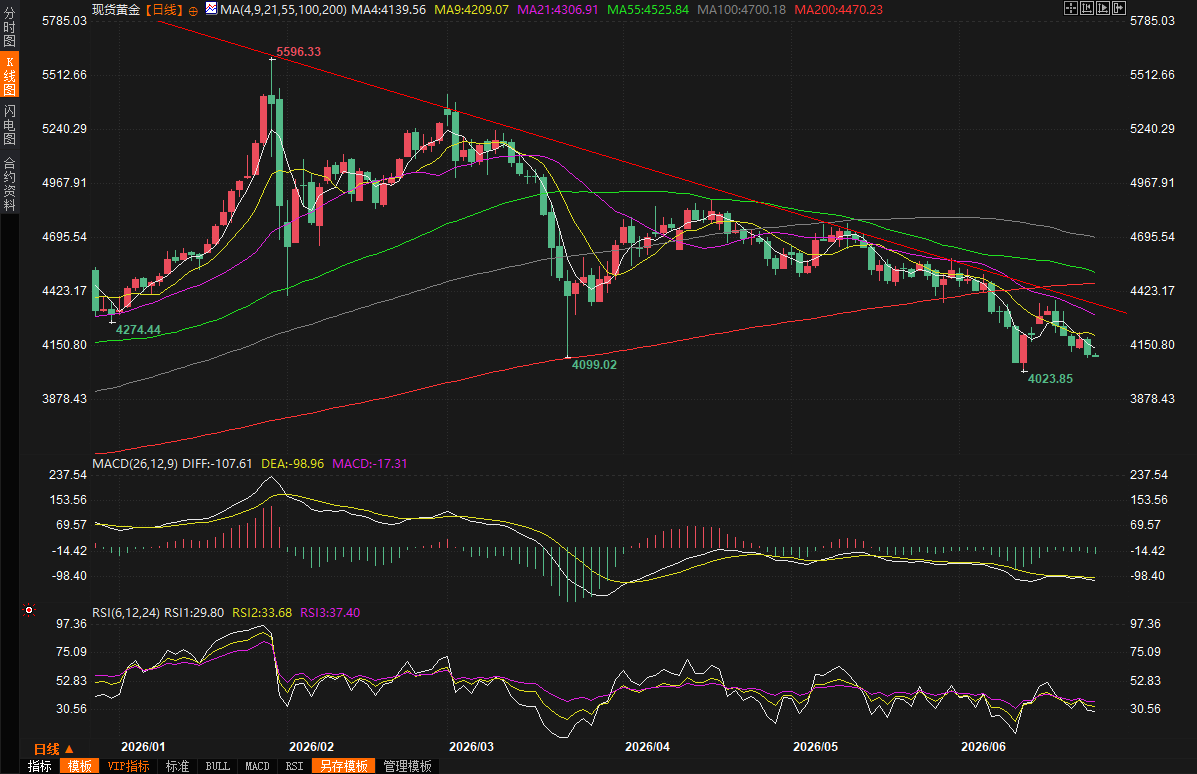
(Spot gold daily chart, source: FX678)
At 07:03 Beijing time, spot gold is currently trading at $4100.53 per ounce.
The dollar surged to a one-year high: Interest rate hike expectations severely hampered the appeal of gold.
The US dollar index surged 0.38% on Tuesday, reaching a high of 101.43, a more than one-year high. This rise directly suppressed gold's performance. The hawkish signals from newly appointed Federal Reserve Chairman Kevin Warsh at last week's policy meeting became the core driver of market repricing. The CME FedWatch tool shows that traders' expectations for a December rate hike have surged from 61% before the meeting to approximately 86%, the probability of a July rate hike has also significantly increased to 36.3%, and the probability of a September rate hike has reached 70%.
As a non-yielding asset, gold is naturally under pressure in a high-interest-rate environment. When the market anticipates the Federal Reserve will tighten monetary policy more aggressively, the opportunity cost of holding gold rises rapidly. Bob Haberkorn, senior market strategist at StoneX, bluntly stated that the gold and silver markets are currently not paying much attention to the Middle East situation, but rather focusing firmly on the Fed's statements. Officials emphasized that current inflationary pressures still need to be monitored, and the impact of high tariffs and the potential decline in inflation due to the easing of Middle East conflict have not yet been fully confirmed, further solidifying the hawkish stance.
Meanwhile, the sell-off in US stocks, particularly technology stocks, provided additional support for the dollar. The S&P 500 fell 1.44%, the Nasdaq plunged 2.21%, and the semiconductor sector led the decline with a 7.9% drop. As investors sought refuge from risky assets, they opted for the dollar as a safer haven, resulting in a classic negative correlation between gold and the dollar.
Progress in Middle East peace talks: Falling oil prices weaken gold's geopolitical premium
Parallel to the pressure from Federal Reserve policy is the unexpected easing of tensions in the Middle East, which has directly diminished gold's appeal as a geopolitical safe-haven asset. Substantial progress has been made in peace talks between the US and Iran, with the US granting Iran a 60-day sanctions waiver under a preliminary agreement, and oil tanker traffic in the Strait of Hormuz is gradually resuming. Three previously stranded supertankers have successfully passed through the strait, and plans for the evacuation of more ships are progressing under the coordination of UN maritime agencies.
Brent crude futures fell 1.1% to $77.08 a barrel, and U.S. crude fell 0.9% to $73.21, both hitting near four-month lows. Oman and Iran will continue consultations on navigation management in the Strait of Hormuz, and U.S. Secretary of State Rubio has made it clear that Iran cannot charge transit fees in the final agreement. Iranian military sources have also confirmed that a certain number of ships pass through the Strait daily under the coordination of the Revolutionary Guard Navy.
These positive signs have significantly eased market concerns about supply disruptions in the Middle East. The premium that gold prices had previously accumulated due to geopolitical conflicts is rapidly fading. Investors are now more focused on the speed at which post-war oil-producing countries are resuming production and exports, as well as the progress in resolving practical obstacles such as port facilities and mine clearance. While the emergence of a glimmer of peace is beneficial to the global economy, it has deprived gold of a crucial supporting factor.
Bond Market and Data Expectations: Inflation Clouds Still Loom Over the Market
Amid heightened stock market volatility, the U.S. Treasury market exhibited typical risk-averse characteristics. While the two-year Treasury yield remained near high levels, overall yields declined, with the 10-year yield falling to 4.493%. The stock market sell-off drove funds into government bonds, but high short-term yields reflected market caution regarding the Federal Reserve's next moves.
The U.S. Personal Consumption Expenditures (PCE) price index for May, to be released this Thursday, is the focus of market attention. This inflation indicator, favored by the Federal Reserve, is expected to see core PCE rise 0.3% month-over-month and 3.4% year-over-year, while overall PCE may climb to 4.1% year-over-year. Chicago Fed President Goolsby stated that, given the stable labor market, the key focus is whether inflation remains high or declines as external factors ease. If the PCE data exceeds expectations, it will further strengthen bets on interest rate hikes, putting additional downward pressure on gold.
Gold Outlook: Short-term pressure, but long-term structural opportunities remain.
In summary, the current decline in the gold market is the result of a confluence of factors: the Federal Reserve's hawkish shift has boosted the dollar and interest rate expectations; Middle East peace talks have eased geopolitical risk premiums; and stock market corrections have strengthened the flow of safe-haven funds into the dollar. These factors combined have led to a rapid drop in gold prices.
However, from a longer-term perspective, gold has not completely lost support. The global geopolitical landscape remains complex, and the sustainability of the Middle East peace process remains uncertain; major economies have high debt levels, and inflation risks have not been completely eliminated; central banks' gold-buying trend continues, all of which provide potential bottom support for gold. In the short term, gold may continue to be under pressure in an environment of high interest rates and a strong dollar, but if PCE data falls short of expectations or geopolitical tensions resurface, market sentiment could quickly reverse.
Investors need to closely monitor the remaining economic data and statements from Federal Reserve officials this week. With the US dollar index holding firm at high levels and the path of interest rate hikes becoming increasingly clear, gold bulls need to remain patient and wait for clear turning points. The "winter" for gold may not be over yet, but historical experience shows that every period of pressure from both policy and geopolitics often precedes a stronger rebound.
(Spot gold daily chart, source: FX678)
At 07:03 Beijing time, spot gold is currently trading at $4100.53 per ounce.
- Risk Warning and Disclaimer
- The market involves risk, and trading may not be suitable for all investors. This article is for reference only and does not constitute personal investment advice, nor does it take into account certain users’ specific investment objectives, financial situation, or other needs. Any investment decisions made based on this information are at your own risk.

