













Crude oil trading alert: Improved navigation in the Strait of Hormuz and temporary exemptions for Iranian crude oil exports pushed oil prices to a three-month low.
2026-06-24 09:23:36
International crude oil prices remained low during Asian trading hours on Wednesday, with WTI crude hovering above $72 per barrel, close to its lowest level since early March. The core factors driving the recent price decline are easing supply risks in the Middle East and a temporary relaxation of restrictions on Iranian crude oil exports. One of the market's key focuses is the shipping situation in the Strait of Hormuz. As one of the world's most important energy transport routes, the Strait of Hormuz handles approximately 20% of global seaborne crude oil traffic , and its operation directly impacts international energy market pricing. Latest reports indicate that, with coordination from Iran, some commercial vessels are gradually resuming passage, suggesting that previous market concerns about shipping bottlenecks have eased.

Meanwhile, the U.S. Treasury Department announced a 60-day temporary sanctions waiver for Iran's energy sector, allowing the continued production, transportation, and sale of some crude oil, petroleum products, and petrochemical products. The waiver will remain in effect until late August. The market widely believes this means that global crude oil supply is likely to increase in the coming weeks, thereby weakening the supply premium previously created by geopolitical tensions.
Furthermore, peace talks between the United States and Iran have made some progress, and tensions in Lebanon have also eased somewhat. With multiple geopolitical risk factors easing simultaneously, investor concerns about disruptions to Middle Eastern oil supplies have significantly decreased. As a result, international oil prices have given back the gains previously made due to the escalation of conflict.
However, the market has not completely abandoned its vigilance regarding supply risks. US President Trump stated that Iran has agreed to a long-term, high-standard inspection mechanism. However, Iranian state media subsequently cited diplomatic sources as saying that Tehran had not made any additional commitments regarding the new inspection arrangements. This clear divergence in statements from both sides has kept the market cautious about the outcome of subsequent negotiations.
Analysts point out that although the current supply environment has improved significantly compared to before, the Iranian nuclear issue remains highly uncertain. Any setbacks in negotiations or renewed tensions in the region could push up market risk premiums again. Therefore, given the already substantial decline in oil prices, some investors are choosing to remain on the sidelines rather than continue building large short positions.
From a global market perspective, the decline in oil prices helps alleviate imported inflationary pressures faced by major economies. Lower energy costs will ease some of the burden on businesses and consumers and may improve market expectations for future economic growth. However, at the same time, a continued decline in oil prices may also reflect growing concerns about slowing global demand growth. Therefore, the future trend of the crude oil market will still depend on the dynamic balance between supply recovery and changes in demand.
From a daily chart perspective, WTI crude oil has been trading within a downward channel recently, with prices falling to the key support area around $72 . The overall moving average system shows a bearish alignment, indicating a continued weak medium-term trend. Notably, oil prices are currently consolidating around the 200-day moving average, a level typically considered a crucial indicator for judging medium- to long-term trends. A decisive break below the $72 support level could lead to further declines towards $70 or even $68. On the upside, the $74.50 to $76.00 resistance zone is key; only a retest of this area could alleviate the current downward pressure.
From a 4-hour chart perspective, oil prices have shown signs of consolidation after a continuous decline, with short-term bearish momentum weakening, but the rebound remains limited. Prices are currently fluctuating between $72 and $74, indicating that the market is still awaiting new fundamental catalysts. A break above the $74 resistance level could trigger a technical correction; conversely, a break below $72 with a decisive downward move could allow bears to further dominate the market, pushing prices towards lower support levels. Overall, while the short-term technical structure suggests a need for oversold correction, the upside potential for oil prices may be relatively limited given the bearish fundamental environment.
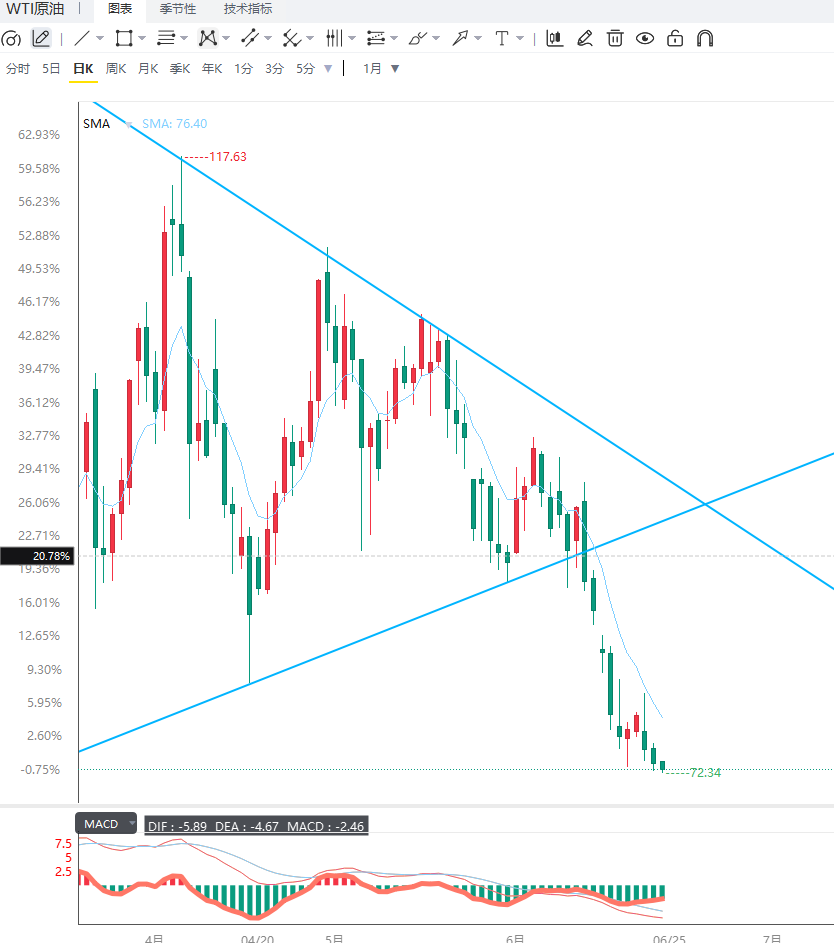
Editor's Summary : The core trading logic of the current international crude oil market is gradually shifting from being driven by geopolitical conflicts to being dominated by expectations of supply recovery. Improved shipping in the Strait of Hormuz, the easing of restrictions on Iranian crude oil exports, and the easing of tensions between the US and Iran have collectively weakened the risk premium that previously supported rising oil prices. Although uncertainty surrounding the Iranian nuclear issue continues, preserving some safe-haven demand, overall supply-side pressure has significantly decreased. From both a technical and fundamental perspective, WTI crude oil still faces downward pressure in the short term. Future developments will depend heavily on changes in the Middle East situation, the scale of Iranian export recovery, and the global demand outlook. If supply continues to increase while demand improvement remains limited, oil prices still face the risk of further decline.
Meanwhile, the U.S. Treasury Department announced a 60-day temporary sanctions waiver for Iran's energy sector, allowing the continued production, transportation, and sale of some crude oil, petroleum products, and petrochemical products. The waiver will remain in effect until late August. The market widely believes this means that global crude oil supply is likely to increase in the coming weeks, thereby weakening the supply premium previously created by geopolitical tensions.
Furthermore, peace talks between the United States and Iran have made some progress, and tensions in Lebanon have also eased somewhat. With multiple geopolitical risk factors easing simultaneously, investor concerns about disruptions to Middle Eastern oil supplies have significantly decreased. As a result, international oil prices have given back the gains previously made due to the escalation of conflict.
However, the market has not completely abandoned its vigilance regarding supply risks. US President Trump stated that Iran has agreed to a long-term, high-standard inspection mechanism. However, Iranian state media subsequently cited diplomatic sources as saying that Tehran had not made any additional commitments regarding the new inspection arrangements. This clear divergence in statements from both sides has kept the market cautious about the outcome of subsequent negotiations.
Analysts point out that although the current supply environment has improved significantly compared to before, the Iranian nuclear issue remains highly uncertain. Any setbacks in negotiations or renewed tensions in the region could push up market risk premiums again. Therefore, given the already substantial decline in oil prices, some investors are choosing to remain on the sidelines rather than continue building large short positions.
From a global market perspective, the decline in oil prices helps alleviate imported inflationary pressures faced by major economies. Lower energy costs will ease some of the burden on businesses and consumers and may improve market expectations for future economic growth. However, at the same time, a continued decline in oil prices may also reflect growing concerns about slowing global demand growth. Therefore, the future trend of the crude oil market will still depend on the dynamic balance between supply recovery and changes in demand.
From a daily chart perspective, WTI crude oil has been trading within a downward channel recently, with prices falling to the key support area around $72 . The overall moving average system shows a bearish alignment, indicating a continued weak medium-term trend. Notably, oil prices are currently consolidating around the 200-day moving average, a level typically considered a crucial indicator for judging medium- to long-term trends. A decisive break below the $72 support level could lead to further declines towards $70 or even $68. On the upside, the $74.50 to $76.00 resistance zone is key; only a retest of this area could alleviate the current downward pressure.
From a 4-hour chart perspective, oil prices have shown signs of consolidation after a continuous decline, with short-term bearish momentum weakening, but the rebound remains limited. Prices are currently fluctuating between $72 and $74, indicating that the market is still awaiting new fundamental catalysts. A break above the $74 resistance level could trigger a technical correction; conversely, a break below $72 with a decisive downward move could allow bears to further dominate the market, pushing prices towards lower support levels. Overall, while the short-term technical structure suggests a need for oversold correction, the upside potential for oil prices may be relatively limited given the bearish fundamental environment.
Editor's Summary : The core trading logic of the current international crude oil market is gradually shifting from being driven by geopolitical conflicts to being dominated by expectations of supply recovery. Improved shipping in the Strait of Hormuz, the easing of restrictions on Iranian crude oil exports, and the easing of tensions between the US and Iran have collectively weakened the risk premium that previously supported rising oil prices. Although uncertainty surrounding the Iranian nuclear issue continues, preserving some safe-haven demand, overall supply-side pressure has significantly decreased. From both a technical and fundamental perspective, WTI crude oil still faces downward pressure in the short term. Future developments will depend heavily on changes in the Middle East situation, the scale of Iranian export recovery, and the global demand outlook. If supply continues to increase while demand improvement remains limited, oil prices still face the risk of further decline.
- Risk Warning and Disclaimer
- The market involves risk, and trading may not be suitable for all investors. This article is for reference only and does not constitute personal investment advice, nor does it take into account certain users’ specific investment objectives, financial situation, or other needs. Any investment decisions made based on this information are at your own risk.

