Iranian Revolutionary Guard strengthens control over the Strait of Hormuz! WTI crude oil falls below $70; freight rates and risk premiums may surge again.
2026-06-25 14:12:31
On Thursday (June 25) during Asian trading hours, US crude oil futures fell by more than 1%, currently trading below $69.50 per barrel.
Just as oil prices were under pressure due to improved supply, the latest developments came from Iran.
On June 25, the Iranian Islamic Revolutionary Guard Corps Navy issued a statement on social media, explicitly requiring all vessels transiting the Strait of Hormuz to coordinate with the Revolutionary Guard Navy in advance. This latest move further exacerbates the uncertainty surrounding global energy transportation.
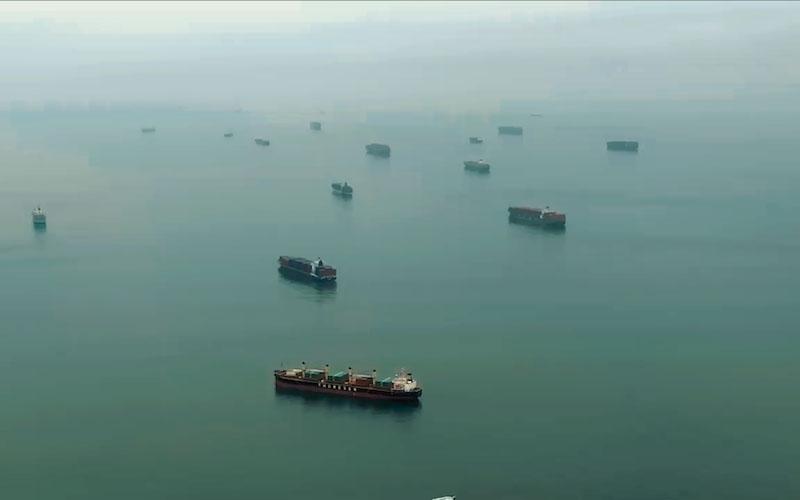
The Iranian Islamic Revolutionary Guard Corps Navy statement emphasized that the offending vessels "will be dealt with" and strongly opposed the new routes unilaterally announced by certain agencies, calling them unacceptable and extremely dangerous.
The statement explicitly states that passage through the Strait of Hormuz is permitted only via routes published by Iran, and any vessels deviating from these routes are prohibited. This move, through the mandatory Channel 16 coordination requirement, effectively grants Iran control over information and consent rights over all transit vessels, providing the navy with a legal basis to intercept, board, or seize non-compliant ships.
This demand escalates the stance on the Strait of Hormuz transit issue and creates potential tension with the "free and safe passage" clause in the initial US-Iran peace agreement.
Shipping industry insiders analyze that whether Iran's move is a response to alternative shipping routes proposed by the US or Gulf countries, or a preemptive strike to safeguard sovereignty before the full reopening of the Strait, it will increase shipowners' compliance costs and security concerns.
Although navigation in the strait has gradually resumed, the new rules may complicate transport processes, leading some ship owners to wait for clearer guidance or take alternative routes. With approximately one-fifth of global oil shipments relying on the strait, any additional administrative obstacles could amplify supply chain vulnerabilities.
Latest shipping data shows that VLCC tanker spot freight rates have rebounded slightly. While conflict risk insurance premiums have fallen from their peak, new control measures may push up premium levels again. There is widespread market concern that if Iran tightens its enforcement, it will directly impact the arrival time and cost of crude oil for major importing countries in Asia and elsewhere.
Overall, this dynamic highlights the real challenges in implementing the peace agreement and will continue to support risk sentiment in the energy market in the short term.
Analysts generally believe that Iran's mandatory coordination demands will immediately drive up risk premiums for tanker freight rates and crude oil prices. Shipowners are required to submit vessel ownership, insurance, cargo details, and precise route information in advance. This process not only increases time costs but may also lead to idle capacity due to approval delays.
Currently, the international tanker market is feeling the pressure, with daily charter rates for VLCCs from the Middle East to East Asia remaining high, and additional insurance costs are expected to rise further.
The latest oil price data shows that WTI crude oil is trading around $69-70 per barrel, and Brent crude oil is around $72-75 per barrel. Although it has fallen significantly from the peak of the conflict, the risk premium has not completely subsided.
Iran's move is seen as a potential negative factor for supply security, providing short-term support for oil prices. However, if the coordination mechanism leads to a decline in actual shipping efficiency, the global energy supply chain may experience renewed tensions, especially given the combination of peak summer demand and low inventory levels. Financial institutions predict that if the Straits shipping bottleneck persists, the crude oil futures curve may exhibit a more pronounced premium structure, pushing up energy costs for end users and transmitting to global inflation expectations.
In contrast, the initial optimism surrounding the agreement is being replaced by disagreements over its practical implementation, and investors need to be wary of the dominant role of geopolitical factors in commodity pricing. This event also reminds the market that the security of the Taiwan Strait is not only a technical issue, but also a focal point of geopolitical competition, and any unilateral strengthening of control could trigger a chain reaction.
A recent report from the International Energy Agency (IEA) shows that, thanks to mature alternative infrastructure such as the Fujairah Port and the West-East Gas Pipeline, the UAE's oil exports had recovered to nearly 85% of pre-conflict levels by early June. Exports jumped dramatically from approximately 1.9 million barrels per day in March to 4.3 million barrels per day, a recovery that even predates the signing of the interim agreement between the US and Iran, fully demonstrating the resilience of Gulf oil-producing nations during the crisis.
As the world's seventh-largest oil producer, the UAE has successfully maintained stable supplies to major customers in Asia and elsewhere by bypassing the Strait of Hormuz in its export routes. The port of Fujairah, as a crucial hub, effectively diverts some of its crude oil transport demand through its pipeline system, reducing reliance on a single strait. This strategy not only alleviates global supply concerns but also provides valuable experience for other Gulf states.
IEA data shows that the use of alternative routes has significantly reduced the potential impact of escalating Iranian controls, helping to stabilize international oil price expectations.
Nevertheless, the Straits remain a crucial passage, and full restoration still depends on diplomatic progress. The UAE's success story highlights the importance of diversified transportation infrastructure; in the current geopolitical environment, investing in pipelines and port construction has become a key measure for oil-producing countries to enhance their resilience.
In the long run, if more countries follow suit, the UAE model could reduce the global energy market's fragile dependence on the Strait of Hormuz. However, in the short term, Iran's new demands still pose an uncertainty, and the market needs to continuously monitor actual export flows and oil price fluctuations.
While Iran's tightening of control over the Strait of Hormuz is within the framework of the peace agreement, its actual implementation could delay the recovery of global energy supplies and increase transportation costs. Alternative routes provided by countries like the UAE offer an effective buffer, but overall uncertainty remains. The medium- to long-term trend of oil prices depends on the effectiveness of diplomatic coordination and the extent to which the agreement is implemented; investors need to be wary of the potential impact of geopolitical fluctuations on the energy chain.
Q1: What are the specific new coordination requirements for the Iranian Revolutionary Guard?
A: Iran requires ships to coordinate with the Revolutionary Guard Navy in advance via Channel 16, submitting information such as their routes, and only allows passage through routes published by Iran. Violations will face interception or penalties, which strengthens Iran's de facto control over the Straits, despite the peace agreement's mandate of free passage.
Q2: What impact will this requirement have on tanker freight rates and oil prices?
A: Analysts believe this will directly push up insurance premiums, charter fees, and risk premiums. Shipowners may reduce traffic due to compliance costs and safety concerns, providing short-term support for oil prices. While oil prices have already fallen from the peak of the conflict, new regulations could reignite volatility and increase global energy transportation costs.
Q3: What are the possible background and motivations behind Iran's move?
A: This could be a response to alternative shipping routes or an attempt to uphold sovereignty in the implementation of the agreement. The statement targets uncoordinated new shipping routes, highlighting Iran's unwillingness to relinquish its influence over the Straits, which potentially conflicts with the "free and safe passage" clause in the US-Iran agreement.
Q4: How is the recovery of UAE oil exports progressing?
A: According to IEA data, UAE exports rebounded from approximately 1.9 million barrels per day in March to 4.3 million barrels per day in early June, reaching nearly 85% of pre-war levels. This reliance on alternative routes bypassing Hormuz, such as the port of Fujairah and pipelines, demonstrates the resilience of Gulf states' infrastructure and helps stabilize global supply.
Q5: What is the overall significance of this event for the global energy market outlook?
A: Iran's hardline stance increases uncertainty regarding the implementation of the agreement, which is a short-term positive for oil price risk premiums; the UAE's resumption of providing a buffer alleviates supply concerns. However, if controls are escalated, it could delay a full recovery and push up inflationary pressures. The market needs to pay attention to subsequent diplomatic developments, actual traffic flow in the Strait of Hormuz, and OPEC+ dynamics. In the long term, it depends on geopolitical stability and the expansion of alternative routes.
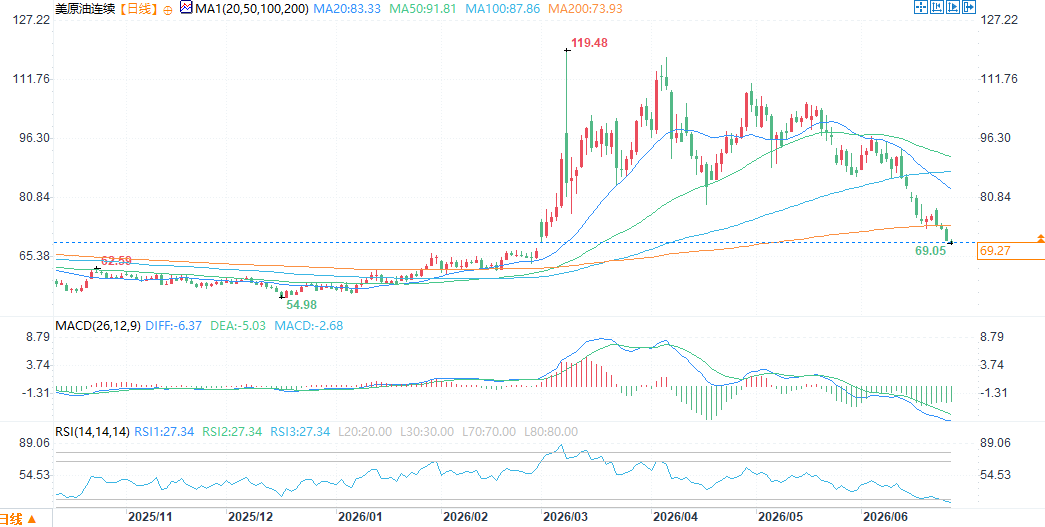
(US crude oil futures daily chart, source: FX678)
At 14:12 Beijing time on June 25, US crude oil futures were trading at $69.41 per barrel.
Just as oil prices were under pressure due to improved supply, the latest developments came from Iran.
On June 25, the Iranian Islamic Revolutionary Guard Corps Navy issued a statement on social media, explicitly requiring all vessels transiting the Strait of Hormuz to coordinate with the Revolutionary Guard Navy in advance. This latest move further exacerbates the uncertainty surrounding global energy transportation.
Iranian Revolutionary Guard strengthens coordination and control over the Strait of Hormuz
The Iranian Islamic Revolutionary Guard Corps Navy statement emphasized that the offending vessels "will be dealt with" and strongly opposed the new routes unilaterally announced by certain agencies, calling them unacceptable and extremely dangerous.
The statement explicitly states that passage through the Strait of Hormuz is permitted only via routes published by Iran, and any vessels deviating from these routes are prohibited. This move, through the mandatory Channel 16 coordination requirement, effectively grants Iran control over information and consent rights over all transit vessels, providing the navy with a legal basis to intercept, board, or seize non-compliant ships.
This demand escalates the stance on the Strait of Hormuz transit issue and creates potential tension with the "free and safe passage" clause in the initial US-Iran peace agreement.
Shipping industry insiders analyze that whether Iran's move is a response to alternative shipping routes proposed by the US or Gulf countries, or a preemptive strike to safeguard sovereignty before the full reopening of the Strait, it will increase shipowners' compliance costs and security concerns.
Although navigation in the strait has gradually resumed, the new rules may complicate transport processes, leading some ship owners to wait for clearer guidance or take alternative routes. With approximately one-fifth of global oil shipments relying on the strait, any additional administrative obstacles could amplify supply chain vulnerabilities.
Latest shipping data shows that VLCC tanker spot freight rates have rebounded slightly. While conflict risk insurance premiums have fallen from their peak, new control measures may push up premium levels again. There is widespread market concern that if Iran tightens its enforcement, it will directly impact the arrival time and cost of crude oil for major importing countries in Asia and elsewhere.
Overall, this dynamic highlights the real challenges in implementing the peace agreement and will continue to support risk sentiment in the energy market in the short term.
Analysts warn of a significant rise in freight and oil price risk premiums.
Analysts generally believe that Iran's mandatory coordination demands will immediately drive up risk premiums for tanker freight rates and crude oil prices. Shipowners are required to submit vessel ownership, insurance, cargo details, and precise route information in advance. This process not only increases time costs but may also lead to idle capacity due to approval delays.
Currently, the international tanker market is feeling the pressure, with daily charter rates for VLCCs from the Middle East to East Asia remaining high, and additional insurance costs are expected to rise further.
The latest oil price data shows that WTI crude oil is trading around $69-70 per barrel, and Brent crude oil is around $72-75 per barrel. Although it has fallen significantly from the peak of the conflict, the risk premium has not completely subsided.
Iran's move is seen as a potential negative factor for supply security, providing short-term support for oil prices. However, if the coordination mechanism leads to a decline in actual shipping efficiency, the global energy supply chain may experience renewed tensions, especially given the combination of peak summer demand and low inventory levels. Financial institutions predict that if the Straits shipping bottleneck persists, the crude oil futures curve may exhibit a more pronounced premium structure, pushing up energy costs for end users and transmitting to global inflation expectations.
In contrast, the initial optimism surrounding the agreement is being replaced by disagreements over its practical implementation, and investors need to be wary of the dominant role of geopolitical factors in commodity pricing. This event also reminds the market that the security of the Taiwan Strait is not only a technical issue, but also a focal point of geopolitical competition, and any unilateral strengthening of control could trigger a chain reaction.
Alternative routes in the UAE have helped oil exports recover rapidly.
A recent report from the International Energy Agency (IEA) shows that, thanks to mature alternative infrastructure such as the Fujairah Port and the West-East Gas Pipeline, the UAE's oil exports had recovered to nearly 85% of pre-conflict levels by early June. Exports jumped dramatically from approximately 1.9 million barrels per day in March to 4.3 million barrels per day, a recovery that even predates the signing of the interim agreement between the US and Iran, fully demonstrating the resilience of Gulf oil-producing nations during the crisis.
As the world's seventh-largest oil producer, the UAE has successfully maintained stable supplies to major customers in Asia and elsewhere by bypassing the Strait of Hormuz in its export routes. The port of Fujairah, as a crucial hub, effectively diverts some of its crude oil transport demand through its pipeline system, reducing reliance on a single strait. This strategy not only alleviates global supply concerns but also provides valuable experience for other Gulf states.
IEA data shows that the use of alternative routes has significantly reduced the potential impact of escalating Iranian controls, helping to stabilize international oil price expectations.
Nevertheless, the Straits remain a crucial passage, and full restoration still depends on diplomatic progress. The UAE's success story highlights the importance of diversified transportation infrastructure; in the current geopolitical environment, investing in pipelines and port construction has become a key measure for oil-producing countries to enhance their resilience.
In the long run, if more countries follow suit, the UAE model could reduce the global energy market's fragile dependence on the Strait of Hormuz. However, in the short term, Iran's new demands still pose an uncertainty, and the market needs to continuously monitor actual export flows and oil price fluctuations.
Editor's Summary
While Iran's tightening of control over the Strait of Hormuz is within the framework of the peace agreement, its actual implementation could delay the recovery of global energy supplies and increase transportation costs. Alternative routes provided by countries like the UAE offer an effective buffer, but overall uncertainty remains. The medium- to long-term trend of oil prices depends on the effectiveness of diplomatic coordination and the extent to which the agreement is implemented; investors need to be wary of the potential impact of geopolitical fluctuations on the energy chain.
Frequently Asked Questions
Q1: What are the specific new coordination requirements for the Iranian Revolutionary Guard?
A: Iran requires ships to coordinate with the Revolutionary Guard Navy in advance via Channel 16, submitting information such as their routes, and only allows passage through routes published by Iran. Violations will face interception or penalties, which strengthens Iran's de facto control over the Straits, despite the peace agreement's mandate of free passage.
Q2: What impact will this requirement have on tanker freight rates and oil prices?
A: Analysts believe this will directly push up insurance premiums, charter fees, and risk premiums. Shipowners may reduce traffic due to compliance costs and safety concerns, providing short-term support for oil prices. While oil prices have already fallen from the peak of the conflict, new regulations could reignite volatility and increase global energy transportation costs.
Q3: What are the possible background and motivations behind Iran's move?
A: This could be a response to alternative shipping routes or an attempt to uphold sovereignty in the implementation of the agreement. The statement targets uncoordinated new shipping routes, highlighting Iran's unwillingness to relinquish its influence over the Straits, which potentially conflicts with the "free and safe passage" clause in the US-Iran agreement.
Q4: How is the recovery of UAE oil exports progressing?
A: According to IEA data, UAE exports rebounded from approximately 1.9 million barrels per day in March to 4.3 million barrels per day in early June, reaching nearly 85% of pre-war levels. This reliance on alternative routes bypassing Hormuz, such as the port of Fujairah and pipelines, demonstrates the resilience of Gulf states' infrastructure and helps stabilize global supply.
Q5: What is the overall significance of this event for the global energy market outlook?
A: Iran's hardline stance increases uncertainty regarding the implementation of the agreement, which is a short-term positive for oil price risk premiums; the UAE's resumption of providing a buffer alleviates supply concerns. However, if controls are escalated, it could delay a full recovery and push up inflationary pressures. The market needs to pay attention to subsequent diplomatic developments, actual traffic flow in the Strait of Hormuz, and OPEC+ dynamics. In the long term, it depends on geopolitical stability and the expansion of alternative routes.
(US crude oil futures daily chart, source: FX678)
At 14:12 Beijing time on June 25, US crude oil futures were trading at $69.41 per barrel.
- Risk Warning and Disclaimer
- The market involves risk, and trading may not be suitable for all investors. This article is for reference only and does not constitute personal investment advice, nor does it take into account certain users’ specific investment objectives, financial situation, or other needs. Any investment decisions made based on this information are at your own risk.