Silver prices have fallen by more than 50%; how far has the bubble cleared?
2026-06-25 17:42:02
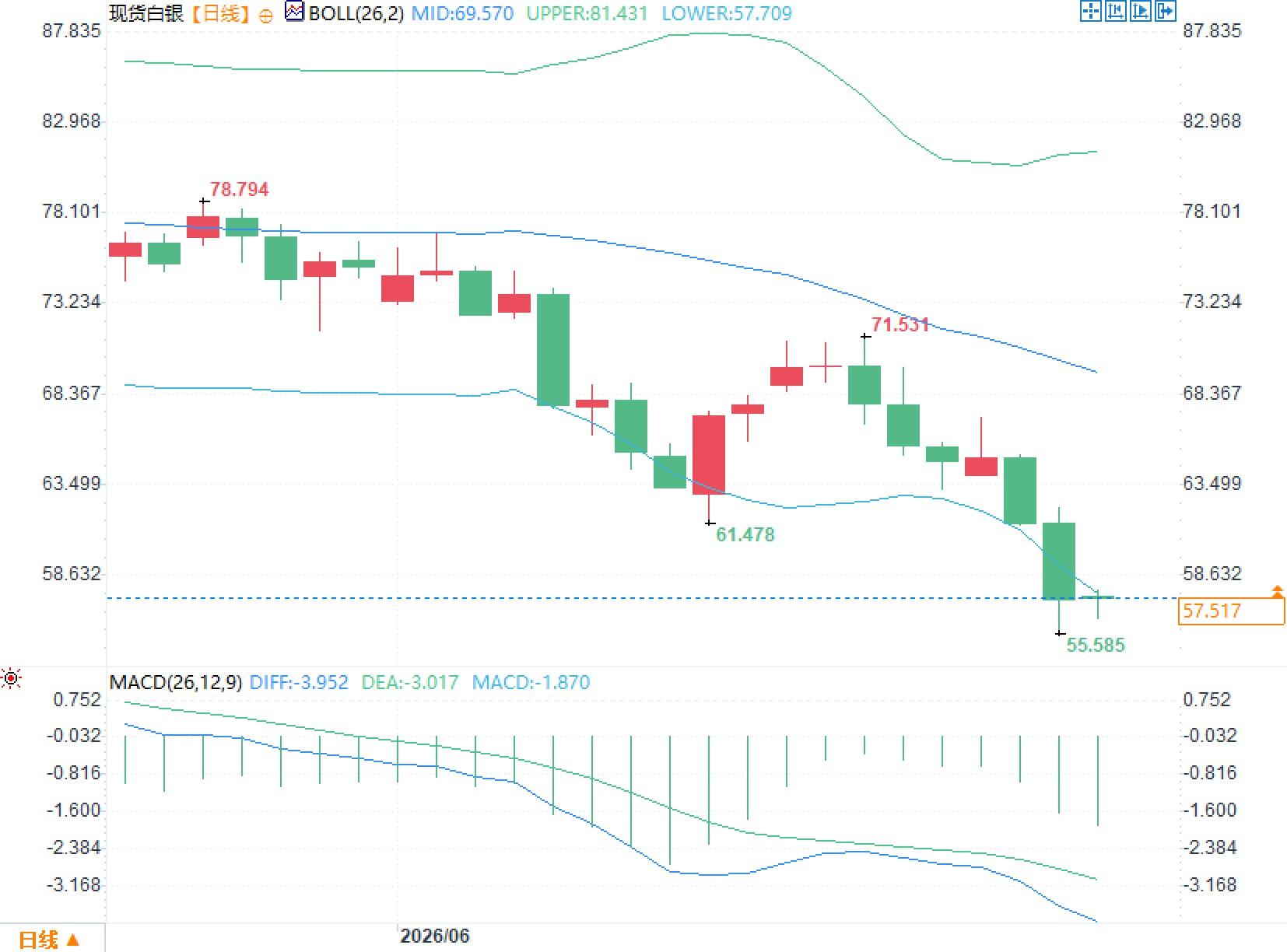
On Thursday, June 25th, the silver market remained in a digestion phase following the hawkish repricing by the Federal Reserve. Spot silver was currently hovering around $57.50 per ounce, a pullback of over 50% from the high of over $121.6 per ounce reached in January. At the same time, the US dollar index remained around 101.5, and the latest daily real yield on 10-year Treasury Inflation-Protected Securities rose to 2.29%. For traders, this round of silver price declines is not simply a matter of supply and demand pricing, but rather a repricing of the simultaneous occurrence of rising real interest rates, a stronger dollar, increased volatility, and compressed valuations of industrial assets.
The core issue for silver has shifted from the previous liquidity expansion trade to a valuation correction following a renewed rise in real interest rates. The Federal Reserve's June meeting maintained the federal funds rate in the 3.50% to 3.75% range, but the policy signal was clearly tightening. Latest interest rate expectations show that the market is no longer just discussing "whether to cut rates," but is now reassessing the probability of a rate hike this year. Maintaining the current interest rate at the July meeting remains the main theme, but a 25 basis point rate hike probability has been given considerable weight; after September, the pricing in at least one rate hike this year has further increased.
This is particularly true for silver. Gold is primarily driven by real interest rates and safe-haven demand, while silver also benefits from industrial and commercial demand and high volatility. When real interest rates rise, the cost of holding non-interest-bearing assets increases; when the US dollar strengthens, dollar-denominated precious metals become less attractive to non-dollar funds; and when volatility in risky assets increases, silver's high elasticity can amplify stop-loss and margin pressures. Therefore, silver typically falls faster than gold, and a rising gold-silver ratio reinforces the market's repricing of it as a "high-beta precious metal."
Newly appointed Federal Reserve Chairman Warsh recently emphasized that financial markets are more efficient at responding to new data than at repeatedly speculating on how the Fed will respond. He also stated that financial market prices are an important source of information guiding central banks. The implication of this statement is not complicated: the weight of forward guidance is decreasing, while the weight of the data itself and market price feedback is increasing.
This will change the pace of trading. Previously, the market was more accustomed to interpreting the Fed's rhetoric first and then working backwards to determine asset prices; now, traders must pay closer attention to the immediate reactions of inflation, employment, consumption, durable goods orders, and the yield curve. The less policy communication there is, the more easily interest rate futures, real yields, and the dollar will react after data releases. For silver, this means that the market doesn't necessarily need new negative news on the commodity side; as long as interest rates continue to maintain a tight pricing mechanism, prices may find a new equilibrium through inertia.
Political statements have also reduced market assumptions about policy resistance. Trump recently stated that an interest rate hike is possible. This doesn't mean the policy direction is locked in, but it's enough to show that short-term trading focus has shifted back to whether inflation will be sufficient to force the Federal Reserve to maintain its hawkish stance.
The May PCE price index, to be released on June 25th during the North American session, is the most important macroeconomic trigger this week. Previously, April's PCE year-on-year growth was 3.8%, and core PCE's was 3.3%; the market expects May's core PCE year-on-year growth to be around 3.4%. If the data continues to show stickiness in service inflation, housing-related prices, or financial service prices, real yields will find it difficult to fall quickly, and silver will lack the macroeconomic foundation for a systemic recovery.
It's important to note that while the decline in oil prices from the previous conflict premium has indeed eased some inflation concerns, this doesn't automatically translate into a bullish outlook for silver. Lower energy prices can only suppress a portion of aggregate inflation; core inflation still depends on wages, service consumption, and demand resilience. In other words, what silver truly needs is not a single day's drop in oil prices, but rather several consecutive sets of data demonstrating a easing of price pressures, prompting the interest rate market to lower the probability of interest rate hikes. Otherwise, the rebound will be more likely to be interpreted as an oversold correction than a reversal of the macroeconomic trend.
Silver enjoys demand from photovoltaic, electronics, medical, and industrial manufacturing sectors, which explains the market's valuation elasticity over the years. However, during periods of tightening and repricing, the industrial narrative is often insufficient to support prices on its own. This is because industrial demand affects the medium- to long-term balance sheet, while real yields and the US dollar affect daily discounting and holding costs. When financial conditions tighten rapidly, deleveraging in the paper market will be reflected in prices before changes in physical demand.
The current focus should be on the trading structure, rather than simply judging whether prices are cheap. After a more than 50% pullback from its highs, silver's valuation pressure has clearly eased, but the monthly decline still exceeds 25%, indicating that funds are still adjusting their positions around interest rate trends. If the US dollar index continues to remain high and the 10-year real yield remains stable above 2%, silver will be more sensitive to any strong data than to a single positive industrial development. Only when both the US dollar and real interest rates decline simultaneously can silver's resilience shift from a source of pressure to a driving force for recovery.
The core issue for silver has shifted from the previous liquidity expansion trade to a valuation correction following a renewed rise in real interest rates. The Federal Reserve's June meeting maintained the federal funds rate in the 3.50% to 3.75% range, but the policy signal was clearly tightening. Latest interest rate expectations show that the market is no longer just discussing "whether to cut rates," but is now reassessing the probability of a rate hike this year. Maintaining the current interest rate at the July meeting remains the main theme, but a 25 basis point rate hike probability has been given considerable weight; after September, the pricing in at least one rate hike this year has further increased.
This is particularly true for silver. Gold is primarily driven by real interest rates and safe-haven demand, while silver also benefits from industrial and commercial demand and high volatility. When real interest rates rise, the cost of holding non-interest-bearing assets increases; when the US dollar strengthens, dollar-denominated precious metals become less attractive to non-dollar funds; and when volatility in risky assets increases, silver's high elasticity can amplify stop-loss and margin pressures. Therefore, silver typically falls faster than gold, and a rising gold-silver ratio reinforces the market's repricing of it as a "high-beta precious metal."
Newly appointed Federal Reserve Chairman Warsh recently emphasized that financial markets are more efficient at responding to new data than at repeatedly speculating on how the Fed will respond. He also stated that financial market prices are an important source of information guiding central banks. The implication of this statement is not complicated: the weight of forward guidance is decreasing, while the weight of the data itself and market price feedback is increasing.
This will change the pace of trading. Previously, the market was more accustomed to interpreting the Fed's rhetoric first and then working backwards to determine asset prices; now, traders must pay closer attention to the immediate reactions of inflation, employment, consumption, durable goods orders, and the yield curve. The less policy communication there is, the more easily interest rate futures, real yields, and the dollar will react after data releases. For silver, this means that the market doesn't necessarily need new negative news on the commodity side; as long as interest rates continue to maintain a tight pricing mechanism, prices may find a new equilibrium through inertia.
Political statements have also reduced market assumptions about policy resistance. Trump recently stated that an interest rate hike is possible. This doesn't mean the policy direction is locked in, but it's enough to show that short-term trading focus has shifted back to whether inflation will be sufficient to force the Federal Reserve to maintain its hawkish stance.
The May PCE price index, to be released on June 25th during the North American session, is the most important macroeconomic trigger this week. Previously, April's PCE year-on-year growth was 3.8%, and core PCE's was 3.3%; the market expects May's core PCE year-on-year growth to be around 3.4%. If the data continues to show stickiness in service inflation, housing-related prices, or financial service prices, real yields will find it difficult to fall quickly, and silver will lack the macroeconomic foundation for a systemic recovery.
It's important to note that while the decline in oil prices from the previous conflict premium has indeed eased some inflation concerns, this doesn't automatically translate into a bullish outlook for silver. Lower energy prices can only suppress a portion of aggregate inflation; core inflation still depends on wages, service consumption, and demand resilience. In other words, what silver truly needs is not a single day's drop in oil prices, but rather several consecutive sets of data demonstrating a easing of price pressures, prompting the interest rate market to lower the probability of interest rate hikes. Otherwise, the rebound will be more likely to be interpreted as an oversold correction than a reversal of the macroeconomic trend.
Silver enjoys demand from photovoltaic, electronics, medical, and industrial manufacturing sectors, which explains the market's valuation elasticity over the years. However, during periods of tightening and repricing, the industrial narrative is often insufficient to support prices on its own. This is because industrial demand affects the medium- to long-term balance sheet, while real yields and the US dollar affect daily discounting and holding costs. When financial conditions tighten rapidly, deleveraging in the paper market will be reflected in prices before changes in physical demand.
The current focus should be on the trading structure, rather than simply judging whether prices are cheap. After a more than 50% pullback from its highs, silver's valuation pressure has clearly eased, but the monthly decline still exceeds 25%, indicating that funds are still adjusting their positions around interest rate trends. If the US dollar index continues to remain high and the 10-year real yield remains stable above 2%, silver will be more sensitive to any strong data than to a single positive industrial development. Only when both the US dollar and real interest rates decline simultaneously can silver's resilience shift from a source of pressure to a driving force for recovery.
- Risk Warning and Disclaimer
- The market involves risk, and trading may not be suitable for all investors. This article is for reference only and does not constitute personal investment advice, nor does it take into account certain users’ specific investment objectives, financial situation, or other needs. Any investment decisions made based on this information are at your own risk.