Oil prices have fallen back to pre-conflict levels, but cracks have just begun to appear within OPEC+.
2026-06-25 19:58:25
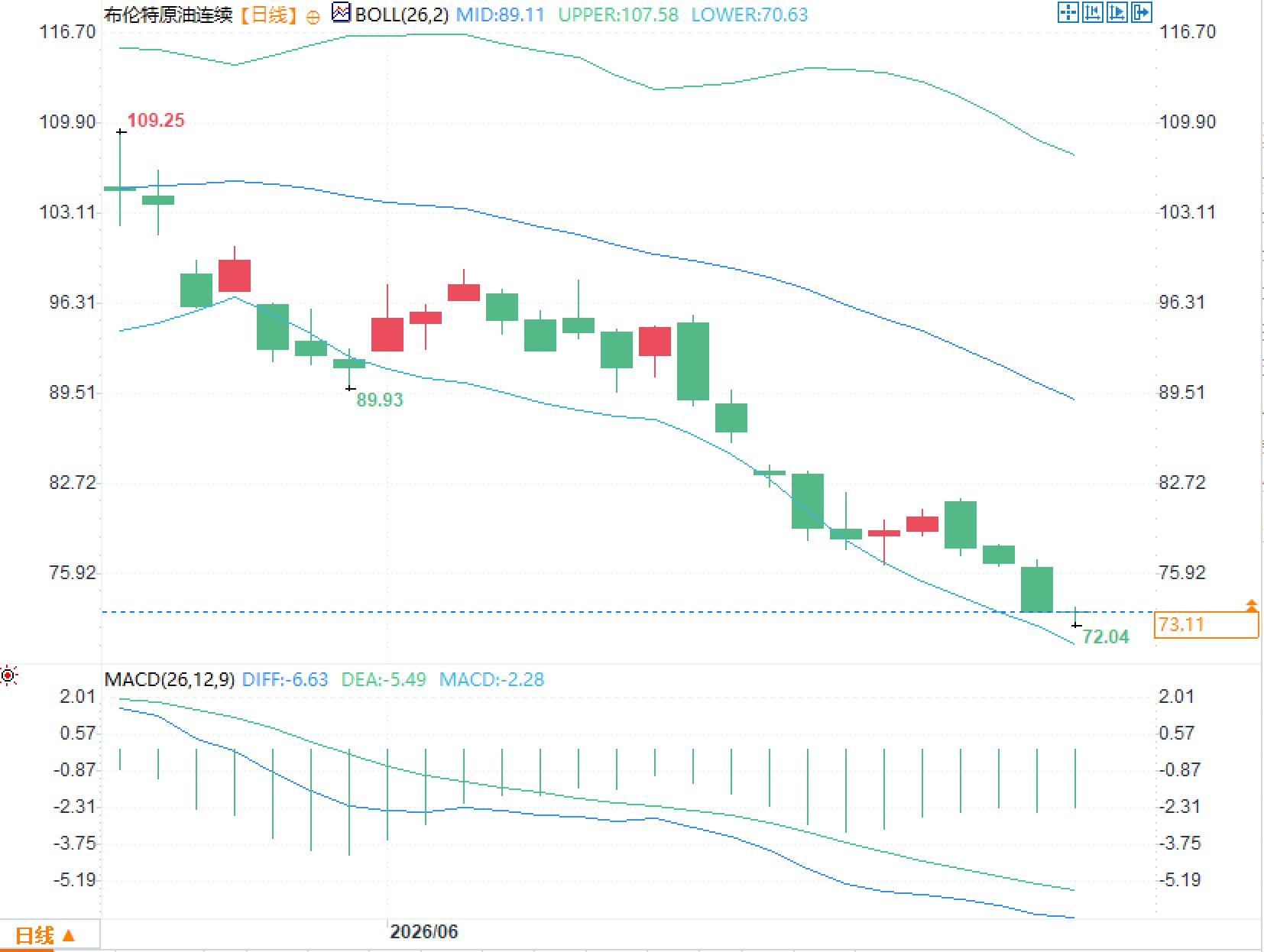
On Thursday, June 25th, the main trading theme in the international crude oil market quickly shifted from geopolitical risk premiums to supply realignment and pricing based on organizational rifts. Currently, Brent crude is around $73 per barrel, and WTI crude is around $69.5 per barrel, essentially returning to the range before the escalation of the US-Iran conflict. However, the price decline does not necessarily indicate a fully relaxed market. Iraq has publicly demanded an increase in OPEC's production ceiling and hinted that it will reassess its position if its demands are not met. This signal pushes short-term oil price volatility towards a deeper institutional issue: whether the quota allocation within OPEC+ can still constrain members with the capacity to expand production.
The direct trigger for this round of oil price decline was the improved shipping order in the Strait of Hormuz, with the recovery of tanker traffic weakening previous expectations of supply disruptions. Brent crude fell nearly 25% in a month, indicating that the risk premium embedded in previous prices is being rapidly compressed. In contrast, the fundamentals are not entirely bearish. The latest weekly data from the US shows that as of the week ending June 19, commercial crude oil inventories were 412.134 million barrels, continuing to decline from the previous week; strategic reserves fell to 331.191 million barrels; gasoline inventories rose to 216.299 million barrels, and distillate fuel inventories rose to 106.116 million barrels. In other words, there are still signs of inventory reduction on the crude oil side, but the pressure on refined product prices has eased. The transmission of effects from crack spreads and refinery operating rates is more worthy of observation than oil prices alone.

The supply side is equally complex. US crude oil production rose to 13.819 million barrels per day, refinery utilization remained at a high level of 96.1%, and crude oil exports reached 4.669 million barrels per day. This data indicates that non-OPEC supply continues to play a stabilizing role. For oil prices, the short-term pricing focus is no longer on a single conflict, but rather on whether OPEC+ members will accelerate the return of spare capacity to the market once transportation resumes.
Iraqi Oil Ministry spokesman Salim al-Rikabi recently stated that Iraq currently has no intention of withdrawing from OPEC, but the organization should increase Iraq's production levels, otherwise it will have to decide whether to remain in the organization. On the surface, this appears to be a member state's expression of dissatisfaction with production limits; however, within the current OPEC+ capacity review framework, it seems more like a bargaining chip in negotiations surrounding next year's quota benchmarks.
The key issue for Iraq is not that its short-term production is already at full capacity, but rather its concern that future quotas will not reflect its investment and reconstruction needs. The June oil market report shows that Iraq's production in May, under monitoring standards, was approximately 1.48 million barrels per day, significantly lower than the implied target of 4.33 million barrels per day, with technically sustainable capacity at approximately 4.87 million barrels per day. In the short term, production recovery is constrained by export access and security costs, but once logistics resume, Iraq hopes to secure fiscal revenue with higher quotas.
This is also something traders need to pay attention to. Iraq is not a marginal member, but one of the founding members of OPEC, with a historical peak production of nearly 4.78 million barrels per day. If its quota negotiations escalate into a question of whether it will remain in the EU or not, the market will not price it based on how many barrels it adds that day, but rather on whether organizational discipline remains effective.
Following the UAE's withdrawal from OPEC in May, the differences among oil-producing countries are no longer implicit conflicts. For members with significant investments in capacity expansion, prolonged production cuts mean a longer capital expenditure recovery period and increased opportunity costs. Iraq's stance is similar to the UAE's previous logic: faced with the expectations of energy transition, fiscal expenditure pressures, and investment in capacity expansion, some oil-producing countries prefer to increase current production rather than wait for high oil prices to compensate in the long term.
On June 7, OPEC+ announced that seven members—Saudi Arabia, Russia, Iraq, Kuwait, Kazakhstan, Algeria, and Oman—would implement a production adjustment of 188,000 barrels per day in July, while retaining the flexibility to suspend, reverse, or continue releasing voluntary production cuts. This wording itself indicates that the organization is unwilling to completely relinquish market management during a period of declining prices, but differing interests among members are increasing coordination costs.
If Iraq continues to exert pressure, OPEC+ faces a dilemma: raising quotas could exacerbate market expectations of increased supply; refusing to raise them could amplify centrifugal forces within the organization. For oil prices, the latter may not immediately translate into more physical supply, but it would reduce confidence in the organization's ability to provide a floor in the futures curve.
The market has not yet fully entered a narrative of oversupply. The June oil market report projects that global oil demand will decline by 1.1 million barrels per day year-on-year in 2026, with global supply at approximately 102.4 million barrels per day. Global observable inventories declined by 143 million barrels in May, indicating that inventory depletion caused by previous conflicts is still impacting the market buffer. In other words, the lingering effects of tightening fundamentals remain in the short term, and the decline in oil prices cannot be simply interpreted as a collapse in demand or an oversupply.
However, long-term risks are changing. If Iraq also considers leaving the OPEC+ as a negotiating option after the UAE's withdrawal, OPEC+'s marginal influence in the market will further decline. In the past, price stability relied on a few core oil-producing countries absorbing supply and demand shocks; in the future, if more members exchange increased production capacity for fiscal autonomy, it will be more difficult for the organization to maintain a price range through unified production cuts.
The direct trigger for this round of oil price decline was the improved shipping order in the Strait of Hormuz, with the recovery of tanker traffic weakening previous expectations of supply disruptions. Brent crude fell nearly 25% in a month, indicating that the risk premium embedded in previous prices is being rapidly compressed. In contrast, the fundamentals are not entirely bearish. The latest weekly data from the US shows that as of the week ending June 19, commercial crude oil inventories were 412.134 million barrels, continuing to decline from the previous week; strategic reserves fell to 331.191 million barrels; gasoline inventories rose to 216.299 million barrels, and distillate fuel inventories rose to 106.116 million barrels. In other words, there are still signs of inventory reduction on the crude oil side, but the pressure on refined product prices has eased. The transmission of effects from crack spreads and refinery operating rates is more worthy of observation than oil prices alone.
The supply side is equally complex. US crude oil production rose to 13.819 million barrels per day, refinery utilization remained at a high level of 96.1%, and crude oil exports reached 4.669 million barrels per day. This data indicates that non-OPEC supply continues to play a stabilizing role. For oil prices, the short-term pricing focus is no longer on a single conflict, but rather on whether OPEC+ members will accelerate the return of spare capacity to the market once transportation resumes.
Iraqi Oil Ministry spokesman Salim al-Rikabi recently stated that Iraq currently has no intention of withdrawing from OPEC, but the organization should increase Iraq's production levels, otherwise it will have to decide whether to remain in the organization. On the surface, this appears to be a member state's expression of dissatisfaction with production limits; however, within the current OPEC+ capacity review framework, it seems more like a bargaining chip in negotiations surrounding next year's quota benchmarks.
The key issue for Iraq is not that its short-term production is already at full capacity, but rather its concern that future quotas will not reflect its investment and reconstruction needs. The June oil market report shows that Iraq's production in May, under monitoring standards, was approximately 1.48 million barrels per day, significantly lower than the implied target of 4.33 million barrels per day, with technically sustainable capacity at approximately 4.87 million barrels per day. In the short term, production recovery is constrained by export access and security costs, but once logistics resume, Iraq hopes to secure fiscal revenue with higher quotas.
This is also something traders need to pay attention to. Iraq is not a marginal member, but one of the founding members of OPEC, with a historical peak production of nearly 4.78 million barrels per day. If its quota negotiations escalate into a question of whether it will remain in the EU or not, the market will not price it based on how many barrels it adds that day, but rather on whether organizational discipline remains effective.
Following the UAE's withdrawal from OPEC in May, the differences among oil-producing countries are no longer implicit conflicts. For members with significant investments in capacity expansion, prolonged production cuts mean a longer capital expenditure recovery period and increased opportunity costs. Iraq's stance is similar to the UAE's previous logic: faced with the expectations of energy transition, fiscal expenditure pressures, and investment in capacity expansion, some oil-producing countries prefer to increase current production rather than wait for high oil prices to compensate in the long term.
On June 7, OPEC+ announced that seven members—Saudi Arabia, Russia, Iraq, Kuwait, Kazakhstan, Algeria, and Oman—would implement a production adjustment of 188,000 barrels per day in July, while retaining the flexibility to suspend, reverse, or continue releasing voluntary production cuts. This wording itself indicates that the organization is unwilling to completely relinquish market management during a period of declining prices, but differing interests among members are increasing coordination costs.
If Iraq continues to exert pressure, OPEC+ faces a dilemma: raising quotas could exacerbate market expectations of increased supply; refusing to raise them could amplify centrifugal forces within the organization. For oil prices, the latter may not immediately translate into more physical supply, but it would reduce confidence in the organization's ability to provide a floor in the futures curve.
The market has not yet fully entered a narrative of oversupply. The June oil market report projects that global oil demand will decline by 1.1 million barrels per day year-on-year in 2026, with global supply at approximately 102.4 million barrels per day. Global observable inventories declined by 143 million barrels in May, indicating that inventory depletion caused by previous conflicts is still impacting the market buffer. In other words, the lingering effects of tightening fundamentals remain in the short term, and the decline in oil prices cannot be simply interpreted as a collapse in demand or an oversupply.
However, long-term risks are changing. If Iraq also considers leaving the OPEC+ as a negotiating option after the UAE's withdrawal, OPEC+'s marginal influence in the market will further decline. In the past, price stability relied on a few core oil-producing countries absorbing supply and demand shocks; in the future, if more members exchange increased production capacity for fiscal autonomy, it will be more difficult for the organization to maintain a price range through unified production cuts.
- Risk Warning and Disclaimer
- The market involves risk, and trading may not be suitable for all investors. This article is for reference only and does not constitute personal investment advice, nor does it take into account certain users’ specific investment objectives, financial situation, or other needs. Any investment decisions made based on this information are at your own risk.