PCE Report: Fed's Preferred Inflation Indicator Hits Three-Year High, Raising Likelihood of Rate Hike
2026-06-26 00:25:33
The personal consumption expenditure price index (PCE) rose 4.1% year-on-year in May, in line with market expectations and higher than the 3.8% increase in April; it rose 0.4% month-on-month, 0.1 percentage points lower than expected, and the same as in April.
When assessing inflation, the Federal Reserve prioritizes core indicators that exclude volatile energy and food prices. Core PCE rose 3.4% year-on-year, in line with market expectations and higher than 3.3% in April. Core PCE rose 0.3% month-on-month, compared with only 0.2% in April, marking the highest level since October 2023.
Rising energy prices have pushed up overall inflation. Even excluding energy products, core inflation continues to rise, meaning that the inflationary pressures across the board that emerged in April will continue to spread in May.
Bill Adams, chief U.S. economist at Fifth Third Commercial Bank, said: "The most crucial signal in this economic data is the rebound in core inflation, which significantly increases the probability of the Federal Reserve raising interest rates in the next 12 months. Inflation data will be a tricky issue for the Fed at the July policy meeting, but the central bank will most likely keep interest rates unchanged."
Officials may choose to wait and see, allowing the short-term price shocks from tariffs and geopolitical conflicts to gradually subside and observe whether inflation shows signs of improvement.
Federal Reserve officials signaled last week that they plan to keep interest rates stable throughout 2026, but may implement one rate hike this year.
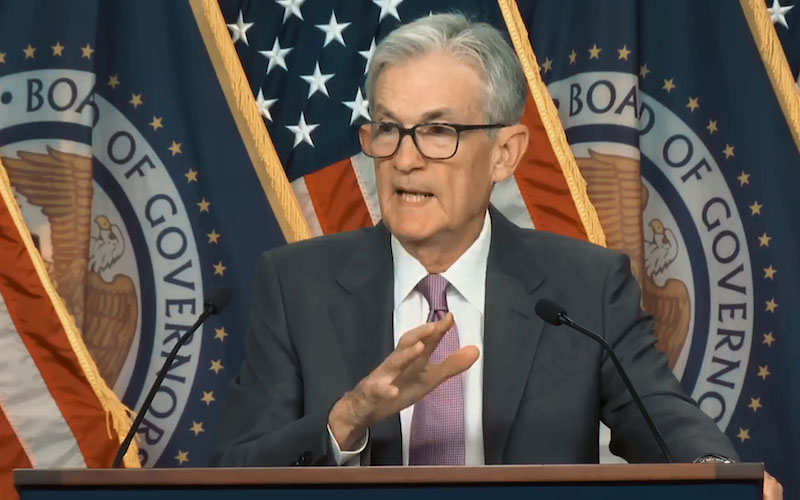
Federal Reserve Chairman Warsh clearly stated that the central bank's goal is to bring inflation back down to 2%. Although he did not offer any new interpretations of monetary policy, the economic outlook, and the path of interest rates outside of the official statement, his nine colleagues predicted at least one rate hike this year; six officials believed there would be two rate hikes this year, and eight others judged that interest rates would remain unchanged throughout the year.
This inflation data is lagging: the Trump administration has now reached a deal with Iran, and oil prices have plummeted. If shipping through the Strait of Hormuz remains unimpeded, inflation has likely peaked, but overall prices will remain high throughout the year.
Federal Reserve officials predict that inflation will remain high throughout 2026 and will not decline until 2027; institutions estimate that the overall PCE year-on-year increase will be 3.6% at the end of the year, and the core PCE excluding food and energy will be 3.3% year-on-year.
RSM Chief Economist Joseph Brusuelas said, "West Texas Intermediate (WTI) crude oil prices have fallen 38.8% from their May peak, making it almost certain that May was the peak of this round of inflation, and inflation data in June will most likely turn negative month-on-month."
However, Joseph Brusuelas believes that core inflation is unlikely to fall quickly, constrained by factors including: sticky inflation in the service sector, tariffs pushing up commodity prices in the long term, continued cost pressures from the expansion of artificial intelligence infrastructure, and a new round of price increases triggered by subsequent expansion of defense spending.
He stated, "With multiple factors combined, the outlook for core inflation is not optimistic. Based on the current inflation trend, the Federal Reserve faces a difficult decision: whether to maintain the current interest rate or raise the federal funds rate."
Capital Economics economist Thomas Ryan holds a different view: With the impact of tariffs gradually fading, coupled with the recent drop in oil prices dragging down several consumer goods categories such as airfares, May is likely to be the peak of core PCE, but core inflation will not decline slowly until August.
Thomas Ryan stated that the U.S. economy and labor market remain strong, leaving the Federal Reserve with virtually no option but to tighten monetary policy. He predicts three rate hikes throughout the year.
Market pricing indicates a 50% probability of the Federal Reserve raising interest rates by 25 basis points in September.
Deutsche Bank predicts the Federal Reserve will raise interest rates twice this year, in September and December. The bank stated that the current inflationary pressures are broad and cannot be fully explained by short-term factors such as tariffs and energy.
"Today's data serves as a reminder to the market that inflation remains well above the policy target," said Ellen Zentner, chief economic strategist at Morgan Stanley Wealth Management.
When assessing inflation, the Federal Reserve prioritizes core indicators that exclude volatile energy and food prices. Core PCE rose 3.4% year-on-year, in line with market expectations and higher than 3.3% in April. Core PCE rose 0.3% month-on-month, compared with only 0.2% in April, marking the highest level since October 2023.
Rising energy prices have pushed up overall inflation. Even excluding energy products, core inflation continues to rise, meaning that the inflationary pressures across the board that emerged in April will continue to spread in May.
Bill Adams, chief U.S. economist at Fifth Third Commercial Bank, said: "The most crucial signal in this economic data is the rebound in core inflation, which significantly increases the probability of the Federal Reserve raising interest rates in the next 12 months. Inflation data will be a tricky issue for the Fed at the July policy meeting, but the central bank will most likely keep interest rates unchanged."
Officials may choose to wait and see, allowing the short-term price shocks from tariffs and geopolitical conflicts to gradually subside and observe whether inflation shows signs of improvement.
Federal Reserve officials signaled last week that they plan to keep interest rates stable throughout 2026, but may implement one rate hike this year.
Federal Reserve Chairman Warsh clearly stated that the central bank's goal is to bring inflation back down to 2%. Although he did not offer any new interpretations of monetary policy, the economic outlook, and the path of interest rates outside of the official statement, his nine colleagues predicted at least one rate hike this year; six officials believed there would be two rate hikes this year, and eight others judged that interest rates would remain unchanged throughout the year.
This inflation data is lagging: the Trump administration has now reached a deal with Iran, and oil prices have plummeted. If shipping through the Strait of Hormuz remains unimpeded, inflation has likely peaked, but overall prices will remain high throughout the year.
Federal Reserve officials predict that inflation will remain high throughout 2026 and will not decline until 2027; institutions estimate that the overall PCE year-on-year increase will be 3.6% at the end of the year, and the core PCE excluding food and energy will be 3.3% year-on-year.
RSM Chief Economist Joseph Brusuelas said, "West Texas Intermediate (WTI) crude oil prices have fallen 38.8% from their May peak, making it almost certain that May was the peak of this round of inflation, and inflation data in June will most likely turn negative month-on-month."
However, Joseph Brusuelas believes that core inflation is unlikely to fall quickly, constrained by factors including: sticky inflation in the service sector, tariffs pushing up commodity prices in the long term, continued cost pressures from the expansion of artificial intelligence infrastructure, and a new round of price increases triggered by subsequent expansion of defense spending.
He stated, "With multiple factors combined, the outlook for core inflation is not optimistic. Based on the current inflation trend, the Federal Reserve faces a difficult decision: whether to maintain the current interest rate or raise the federal funds rate."
Capital Economics economist Thomas Ryan holds a different view: With the impact of tariffs gradually fading, coupled with the recent drop in oil prices dragging down several consumer goods categories such as airfares, May is likely to be the peak of core PCE, but core inflation will not decline slowly until August.
Thomas Ryan stated that the U.S. economy and labor market remain strong, leaving the Federal Reserve with virtually no option but to tighten monetary policy. He predicts three rate hikes throughout the year.
Market pricing indicates a 50% probability of the Federal Reserve raising interest rates by 25 basis points in September.
Deutsche Bank predicts the Federal Reserve will raise interest rates twice this year, in September and December. The bank stated that the current inflationary pressures are broad and cannot be fully explained by short-term factors such as tariffs and energy.
"Today's data serves as a reminder to the market that inflation remains well above the policy target," said Ellen Zentner, chief economic strategist at Morgan Stanley Wealth Management.
- Risk Warning and Disclaimer
- The market involves risk, and trading may not be suitable for all investors. This article is for reference only and does not constitute personal investment advice, nor does it take into account certain users’ specific investment objectives, financial situation, or other needs. Any investment decisions made based on this information are at your own risk.