Strategist: Gold and silver face short-term pressure, but multiple negative factors have shown signs of easing.
2026-06-26 12:27:13
Ole Hansen, Head of Commodity Strategy at Saxo Bank, released his latest market analysis, noting that gold prices recently fell below the key support level of $4,000 per ounce, while silver also slipped below the $60 mark, indicating a significant shift in overall trading sentiment in the precious metals market. The core short-term factor contributing to the price weakness was the continued strengthening of the US dollar, coupled with the hawkish policy signals previously released by the Federal Open Market Committee. However, several other negative factors dragging down precious metals are gradually easing.
Currently, investors are generally reducing their precious metal holdings or even liquidating their positions. Gold prices have seen a significant cumulative pullback from their year-to-date highs, and the technical breakdown has further amplified selling pressure. Weak crude oil prices have provided support by mitigating inflation and interest rate hike expectations. However, the tightening of personal precious metal trading by domestic banks in major Asian countries has brought additional constraints. In the short term, the precious metal market is still dominated by fund positions and technical patterns, and the effects of fundamental improvements have not yet been reflected.
The market analysis report, released on Thursday, stated by Ole Hansen that gold and silver are currently in a completely weak market, with market participants reducing their precious metal holdings and some investors exiting the market entirely.
Hansen stated, "Based on total returns, gold has fallen 8.4% this year, but still rises 18.5% over a 12-month period; silver's correction has been much greater than gold's, with a year-to-date decline of 19%, but still a cumulative increase of 56% over the past twelve months."
This round of decline was driven by a week-long rise in the US dollar, with the dollar index hitting a 13-month high of 101.8000 on Wednesday. Last week, the Federal Open Market Committee (FOMC) released a hawkish monetary policy stance, continuing to provide upward support for the dollar, and the market is again anticipating further interest rate hikes in the US later this year. Gold and silver do not generate interest income, and the expectation of interest rate hikes increases the opportunity cost of holding precious metals. Coupled with already weak investor confidence in the market, this double pressure has suppressed gold and silver prices.

Hansen warned that if gold effectively breaks below the $4,000 mark, long positions will continue to be liquidated. Gold reached a record high of over $5,600 per ounce in January of this year, and has since corrected by 26%. This breach of support will accelerate the selling pressure.
He said, "The breach of key technical levels has further dampened market sentiment. Even though the overall negative macroeconomic environment has eased somewhat over the past week, the market continues to reduce positions. The two main factors currently suppressing precious metals are still the strong US dollar and the continued outflow of funds from gold ETFs. Speculative long positions in the market have already been significantly reduced."
Hansen stated that the impact of several secondary factors that previously dragged down gold prices is gradually weakening.
In his analysis, he wrote: "International crude oil prices have fallen sharply, easing market concerns about persistently high inflation and reducing the perceived need for the Federal Reserve to further tighten monetary policy. This change is clearly reflected in federal funds rate futures, with market expectations for additional rate hikes fading and long-term U.S. Treasury yields declining in tandem."
He further explained that, affected by the recent sharp fluctuations and continuous decline in precious metal prices, many large commercial banks in major Asian countries have tightened their precious metal trading services for ordinary individuals. Control measures include suspending the opening of new precious metal trading accounts, shutting down related intermediary trading channels, and significantly increasing trading margin ratios. These measures aim to restrict ordinary investors from using high leverage for speculative operations and, to some extent, suppress market buying power.
Considering all market conditions, the negative macroeconomic environment for precious metals is easing, but prices remain weak.
Hansen said, "In the short term, the market needs to see the selling of gold ETFs stop and the upward momentum of the dollar subside before funds that are buying on dips will regain confidence to enter the market. Before that, the price movements of gold and silver will be more driven by the position structure and technical patterns, and improvements in fundamentals will hardly reverse the trend immediately."
Overall , the short-term correction in precious metals is expected to continue. Investors need to keep a close eye on three key indicators: the dollar's performance, US Treasury yields, and gold ETF fund flows. A clear window for investment will only emerge after all negative signals have been cleared.
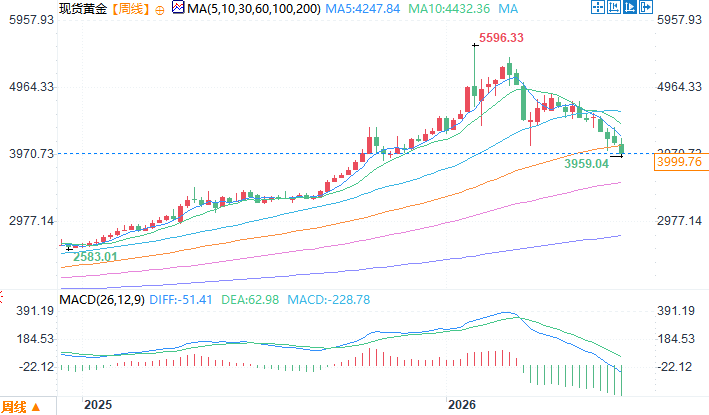
Spot gold weekly chart source: EasyForex
At 12:26 Beijing time on June 26, spot gold was trading at $4006.76 per ounce.
Currently, investors are generally reducing their precious metal holdings or even liquidating their positions. Gold prices have seen a significant cumulative pullback from their year-to-date highs, and the technical breakdown has further amplified selling pressure. Weak crude oil prices have provided support by mitigating inflation and interest rate hike expectations. However, the tightening of personal precious metal trading by domestic banks in major Asian countries has brought additional constraints. In the short term, the precious metal market is still dominated by fund positions and technical patterns, and the effects of fundamental improvements have not yet been reflected.
Gold and silver prices weakened significantly, resulting in a clear divergence in returns throughout the year.
The market analysis report, released on Thursday, stated by Ole Hansen that gold and silver are currently in a completely weak market, with market participants reducing their precious metal holdings and some investors exiting the market entirely.
Hansen stated, "Based on total returns, gold has fallen 8.4% this year, but still rises 18.5% over a 12-month period; silver's correction has been much greater than gold's, with a year-to-date decline of 19%, but still a cumulative increase of 56% over the past twelve months."
This round of decline was driven by a week-long rise in the US dollar, with the dollar index hitting a 13-month high of 101.8000 on Wednesday. Last week, the Federal Open Market Committee (FOMC) released a hawkish monetary policy stance, continuing to provide upward support for the dollar, and the market is again anticipating further interest rate hikes in the US later this year. Gold and silver do not generate interest income, and the expectation of interest rate hikes increases the opportunity cost of holding precious metals. Coupled with already weak investor confidence in the market, this double pressure has suppressed gold and silver prices.
A technical breakdown in gold prices triggered a sustained liquidation of long positions.
Hansen warned that if gold effectively breaks below the $4,000 mark, long positions will continue to be liquidated. Gold reached a record high of over $5,600 per ounce in January of this year, and has since corrected by 26%. This breach of support will accelerate the selling pressure.
He said, "The breach of key technical levels has further dampened market sentiment. Even though the overall negative macroeconomic environment has eased somewhat over the past week, the market continues to reduce positions. The two main factors currently suppressing precious metals are still the strong US dollar and the continued outflow of funds from gold ETFs. Speculative long positions in the market have already been significantly reduced."
As some negative factors gradually subside, expectations for inflation and interest rate hikes cool down.
Hansen stated that the impact of several secondary factors that previously dragged down gold prices is gradually weakening.
In his analysis, he wrote: "International crude oil prices have fallen sharply, easing market concerns about persistently high inflation and reducing the perceived need for the Federal Reserve to further tighten monetary policy. This change is clearly reflected in federal funds rate futures, with market expectations for additional rate hikes fading and long-term U.S. Treasury yields declining in tandem."
He further explained that, affected by the recent sharp fluctuations and continuous decline in precious metal prices, many large commercial banks in major Asian countries have tightened their precious metal trading services for ordinary individuals. Control measures include suspending the opening of new precious metal trading accounts, shutting down related intermediary trading channels, and significantly increasing trading margin ratios. These measures aim to restrict ordinary investors from using high leverage for speculative operations and, to some extent, suppress market buying power.
Market Outlook Summary
Considering all market conditions, the negative macroeconomic environment for precious metals is easing, but prices remain weak.
Hansen said, "In the short term, the market needs to see the selling of gold ETFs stop and the upward momentum of the dollar subside before funds that are buying on dips will regain confidence to enter the market. Before that, the price movements of gold and silver will be more driven by the position structure and technical patterns, and improvements in fundamentals will hardly reverse the trend immediately."
Overall , the short-term correction in precious metals is expected to continue. Investors need to keep a close eye on three key indicators: the dollar's performance, US Treasury yields, and gold ETF fund flows. A clear window for investment will only emerge after all negative signals have been cleared.
Spot gold weekly chart source: EasyForex
At 12:26 Beijing time on June 26, spot gold was trading at $4006.76 per ounce.
- Risk Warning and Disclaimer
- The market involves risk, and trading may not be suitable for all investors. This article is for reference only and does not constitute personal investment advice, nor does it take into account certain users’ specific investment objectives, financial situation, or other needs. Any investment decisions made based on this information are at your own risk.