Gold Trading Alert: The US-Iran Doha talks may be in jeopardy, causing gold prices to retreat below the $4,000 mark again; is the bullish trend completely over?
2026-06-30 07:07:30
The global gold market is experiencing significant volatility. On Monday (June 29), spot gold prices plunged nearly 2% to the $4,000 mark, ultimately closing down 1.58% at approximately $4,016.45 per ounce. August US gold futures also declined by 1.4%, settling at $4,038.9. This decline highlights the severe test gold's role as a traditional safe-haven asset is facing under the triple pressures of geopolitical conflicts, economic data expectations, and monetary policy. On Tuesday (June 30) in early Asian trading, spot gold hovered at lower levels, currently trading around $4,015 per ounce.
Major events over the weekend directly triggered the drop in gold prices. Iran launched missiles and drones at U.S. military facilities in Bahrain and Kuwait, a response to earlier strong statements from U.S. President Trump, who had threatened to take drastic measures to eliminate Iran's leadership if it did not comply with the terms of the peace agreement. This attack quickly boosted international oil prices, with Brent crude futures rising approximately 1.29% and U.S. crude also rising by more than 2% at one point.
While the market still expects energy transport through the Strait of Hormuz to resume, the recurring conflict has undoubtedly exacerbated uncertainty in the global supply chain. Rising oil prices have directly translated into increased inflation expectations, which has dealt a double blow to the gold market. On the one hand, geopolitical risks should theoretically support safe-haven demand for gold; on the other hand, inflation concerns have strengthened market expectations for a Federal Reserve interest rate hike, and a higher interest rate environment typically suppresses the performance of gold, a non-interest-bearing asset.
Meanwhile, the negotiations between the US and Iran in Qatar are fraught with uncertainty. Trump stated that technical teams from both Iran and the US are en route to Doha, but the Iranian Foreign Ministry made it clear that no formal talks with the US would be held in the coming days. The two sides even disagree on the fundamental question of whether to meet, highlighting the extreme fragility of the temporary ceasefire agreement reached on June 17. This agreement was originally intended to suspend the four-month-long conflict and provide a framework for the safety of shipping in the Strait of Hormuz, the Iranian nuclear issue, and the unfreezing of assets. However, while Iranian President Pezechzian called the agreement a "great victory" and mentioned the imminent unfreezing of $6 billion in frozen assets, the lack of mutual trust and repeated attacks in its actual implementation have cast a heavy shadow over the agreement's prospects.
The underlying reasons for the decline in gold prices go far beyond geopolitical conflicts. The Federal Reserve kept interest rates unchanged at its meeting this month, but policymakers have clearly signaled that a rate hike is expected later this year. This shift has been interpreted by the market as more hawkish, especially given that under new Chairman Warsh, the Fed is struggling to address inflationary pressures well above its 2% target.
The US dollar index, though slightly lower by 0.25% to 101.11 on Monday, remains near a 13-month high, with a cumulative gain of 2.2% this month. A strong dollar makes gold more expensive for overseas investors, directly suppressing demand. Traders currently expect a 63% probability of a Fed rate hike in September, with some institutions even giving higher forecasts. This negative correlation between interest rate expectations and gold is significantly amplified in the current environment.
The bond market also reflected this development. U.S. Treasury yields rose slightly, with the 10-year yield climbing a little to around 4.378% and the 2-year yield increasing by 2.5 basis points to 4.113%. Although the recent decline in oil prices had briefly eased inflation expectations, the market believes the Federal Reserve needs more concrete evidence to confirm a decline in inflation. Analysts pointed out that price pressures related to artificial intelligence may continue to pose an upside risk to inflation, further solidifying the hawkish narrative.
For the remainder of the week, investors will be closely watching US labor market data. Wednesday's ADP employment report and Thursday's non-farm payroll data will be key indicators. The market widely expects non-farm payrolls to increase by approximately 110,000 jobs in June, with the unemployment rate remaining at 4.3%. Strong data would further support the Federal Reserve's stance of maintaining higher interest rates for an extended period, potentially putting pressure on gold prices to hit new lows.
Peter Grant, senior metals strategist at Zaner Metals, points out that the market is simultaneously digesting the impact of Middle East tensions and the Federal Reserve's hawkish stance. The strength of the employment data will directly determine whether gold continues to decline. Over the past few months, consecutively stronger-than-expected employment data has repeatedly pushed the Fed towards a more hawkish monetary policy path, and signs of an accelerating recovery in the labor market seem to be alleviating dovish concerns about an economic slowdown.
In summary, the current gold market is in a complex situation where safe-haven demand and interest rate hike pressures are vying for dominance. While the ongoing US-Iran conflict provides short-term support for gold, inflationary concerns stemming from oil prices and a stronger dollar are exerting greater downward pressure. Shipping safety in the Strait of Hormuz, the progress of unfreezing Iranian assets, and the Trump administration's intervention in Federal Reserve personnel appointments (such as the Supreme Court's refusal to dismiss Trump's appointment of Cook as a governor) will continue to influence market sentiment.
In the short term, if this week's employment data exceeds expectations, downside risks for gold prices remain; conversely, if the data is weak or geopolitical conflicts ease, gold may see a rebound. In the medium to long term, the actual path of the Federal Reserve's interest rate hikes, the global economic growth trend, and the final outcome of the Middle East peace agreement will jointly determine the fate of gold.
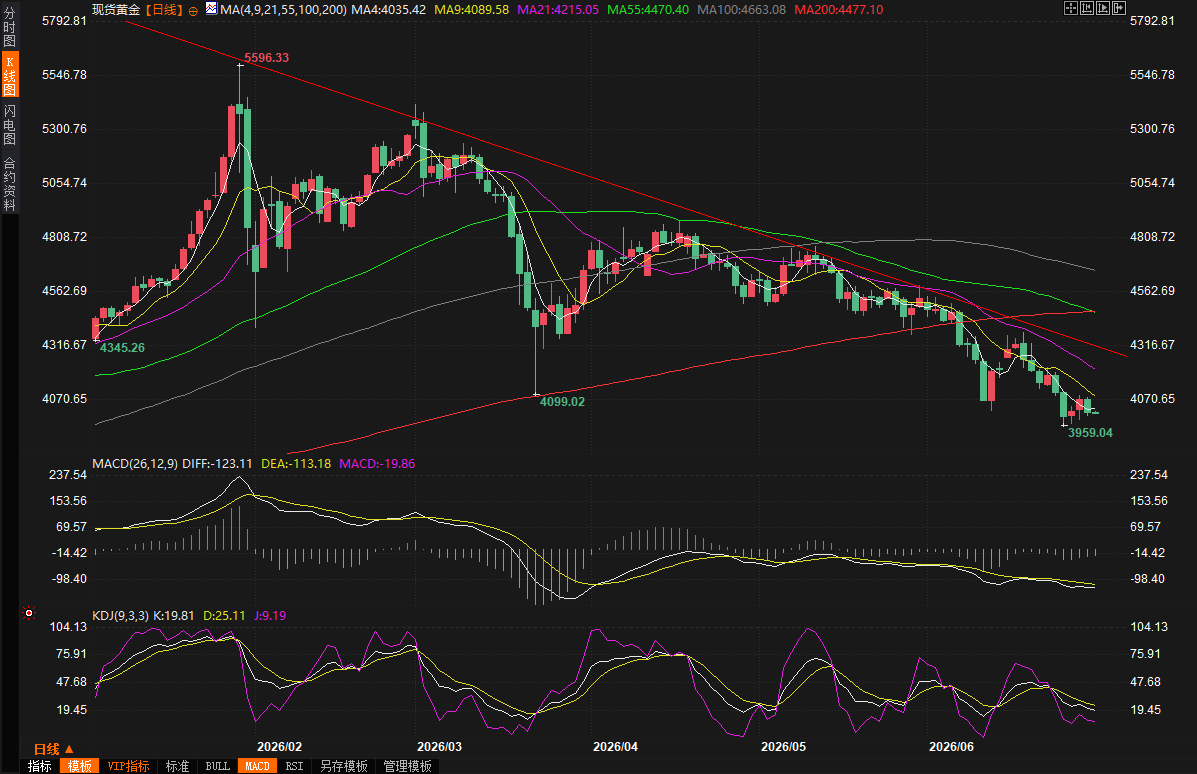
(Spot gold daily chart, source: FX678)
At 07:03 Beijing time, spot gold is currently trading at $4017.51 per ounce.
Escalating US-Iran tensions cast a shadow of oil price inflation over the market.
Major events over the weekend directly triggered the drop in gold prices. Iran launched missiles and drones at U.S. military facilities in Bahrain and Kuwait, a response to earlier strong statements from U.S. President Trump, who had threatened to take drastic measures to eliminate Iran's leadership if it did not comply with the terms of the peace agreement. This attack quickly boosted international oil prices, with Brent crude futures rising approximately 1.29% and U.S. crude also rising by more than 2% at one point.
While the market still expects energy transport through the Strait of Hormuz to resume, the recurring conflict has undoubtedly exacerbated uncertainty in the global supply chain. Rising oil prices have directly translated into increased inflation expectations, which has dealt a double blow to the gold market. On the one hand, geopolitical risks should theoretically support safe-haven demand for gold; on the other hand, inflation concerns have strengthened market expectations for a Federal Reserve interest rate hike, and a higher interest rate environment typically suppresses the performance of gold, a non-interest-bearing asset.
Meanwhile, the negotiations between the US and Iran in Qatar are fraught with uncertainty. Trump stated that technical teams from both Iran and the US are en route to Doha, but the Iranian Foreign Ministry made it clear that no formal talks with the US would be held in the coming days. The two sides even disagree on the fundamental question of whether to meet, highlighting the extreme fragility of the temporary ceasefire agreement reached on June 17. This agreement was originally intended to suspend the four-month-long conflict and provide a framework for the safety of shipping in the Strait of Hormuz, the Iranian nuclear issue, and the unfreezing of assets. However, while Iranian President Pezechzian called the agreement a "great victory" and mentioned the imminent unfreezing of $6 billion in frozen assets, the lack of mutual trust and repeated attacks in its actual implementation have cast a heavy shadow over the agreement's prospects.
The Fed's hawkish stance and a strong dollar: the core logic behind the pressure on gold.
The underlying reasons for the decline in gold prices go far beyond geopolitical conflicts. The Federal Reserve kept interest rates unchanged at its meeting this month, but policymakers have clearly signaled that a rate hike is expected later this year. This shift has been interpreted by the market as more hawkish, especially given that under new Chairman Warsh, the Fed is struggling to address inflationary pressures well above its 2% target.
The US dollar index, though slightly lower by 0.25% to 101.11 on Monday, remains near a 13-month high, with a cumulative gain of 2.2% this month. A strong dollar makes gold more expensive for overseas investors, directly suppressing demand. Traders currently expect a 63% probability of a Fed rate hike in September, with some institutions even giving higher forecasts. This negative correlation between interest rate expectations and gold is significantly amplified in the current environment.
The bond market also reflected this development. U.S. Treasury yields rose slightly, with the 10-year yield climbing a little to around 4.378% and the 2-year yield increasing by 2.5 basis points to 4.113%. Although the recent decline in oil prices had briefly eased inflation expectations, the market believes the Federal Reserve needs more concrete evidence to confirm a decline in inflation. Analysts pointed out that price pressures related to artificial intelligence may continue to pose an upside risk to inflation, further solidifying the hawkish narrative.
Employment data is coming soon: Market focus shifts to clues about Fed policy.
For the remainder of the week, investors will be closely watching US labor market data. Wednesday's ADP employment report and Thursday's non-farm payroll data will be key indicators. The market widely expects non-farm payrolls to increase by approximately 110,000 jobs in June, with the unemployment rate remaining at 4.3%. Strong data would further support the Federal Reserve's stance of maintaining higher interest rates for an extended period, potentially putting pressure on gold prices to hit new lows.
Peter Grant, senior metals strategist at Zaner Metals, points out that the market is simultaneously digesting the impact of Middle East tensions and the Federal Reserve's hawkish stance. The strength of the employment data will directly determine whether gold continues to decline. Over the past few months, consecutively stronger-than-expected employment data has repeatedly pushed the Fed towards a more hawkish monetary policy path, and signs of an accelerating recovery in the labor market seem to be alleviating dovish concerns about an economic slowdown.
Gold Price Outlook: Uncertainty Amidst the Blend of Safe-Haven Demand and Interest Rate Hikes
In summary, the current gold market is in a complex situation where safe-haven demand and interest rate hike pressures are vying for dominance. While the ongoing US-Iran conflict provides short-term support for gold, inflationary concerns stemming from oil prices and a stronger dollar are exerting greater downward pressure. Shipping safety in the Strait of Hormuz, the progress of unfreezing Iranian assets, and the Trump administration's intervention in Federal Reserve personnel appointments (such as the Supreme Court's refusal to dismiss Trump's appointment of Cook as a governor) will continue to influence market sentiment.
In the short term, if this week's employment data exceeds expectations, downside risks for gold prices remain; conversely, if the data is weak or geopolitical conflicts ease, gold may see a rebound. In the medium to long term, the actual path of the Federal Reserve's interest rate hikes, the global economic growth trend, and the final outcome of the Middle East peace agreement will jointly determine the fate of gold.
(Spot gold daily chart, source: FX678)
At 07:03 Beijing time, spot gold is currently trading at $4017.51 per ounce.
- Risk Warning and Disclaimer
- The market involves risk, and trading may not be suitable for all investors. This article is for reference only and does not constitute personal investment advice, nor does it take into account certain users’ specific investment objectives, financial situation, or other needs. Any investment decisions made based on this information are at your own risk.