The US job market remains resilient but is showing signs of slowing; gold prices are constrained by inflation expectations and the interplay between the dollar and the dollar.
2026-07-01 15:20:01
Glenmede, a private wealth management firm, points out that U.S. employment data for June is expected to show a moderate slowdown, but the overall labor market will remain structurally stable. The market generally expects the unemployment rate to remain at 4.3% , with non-farm payrolls increasing by approximately 87,000 , a significant drop from May's 172,000 , but still within a relatively healthy range.

The current US labor market is characterized by a typical "low hiring, low layoffs" scenario, with companies showing a slowdown in hiring but layoff levels remaining low, keeping the unemployment rate stable. The Wells Fargo economist team believes that although job openings and ADP hiring data continue to decline, initial jobless claims remain low, and regional Fed employment PMIs also indicate a slight improvement in hiring activity in June, suggesting that overall labor demand is still in a phase of moderate recovery.
However, the divergence among leading indicators warrants attention. Signals such as declining job vacancies and weakening hiring plans by small businesses suggest that employment momentum is cooling, but has not yet translated into overall weakness. This structure of "marginal cooling but overall stability" makes the job market resilient, but its contribution to economic growth is diminishing.
At the monetary policy level, the Federal Reserve's focus has clearly shifted to the inflation path. Even if employment data slows, policy easing will be delayed as long as inflationary pressures do not subside significantly. This means that future interest rate responses to data will be more "inflation-driven" than simply driven by changes in employment.
Regarding the US dollar: If the non-farm payroll data remains near or slightly stronger than expected, it will reinforce the expectation of "high interest rates lasting longer," supporting the dollar's continued strength. Even if employment slows, as long as there is no significant deterioration, the dollar's downside will be limited. Therefore, the dollar is generally still in a high-level, oscillating, and slightly bullish structure.
Regarding gold: Gold is highly sensitive to real interest rates and the US dollar. With a combination of resilient employment, persistent inflation, and high interest rates, gold's upside potential is limited. If strong data pushes the dollar higher, gold may come under pressure and fall; however, if employment figures significantly fall short of expectations, it could strengthen expectations of interest rate cuts, thereby driving a short-term rebound in gold. Overall, gold remains in a data-driven, highly volatile, and oscillating pattern in the short term.
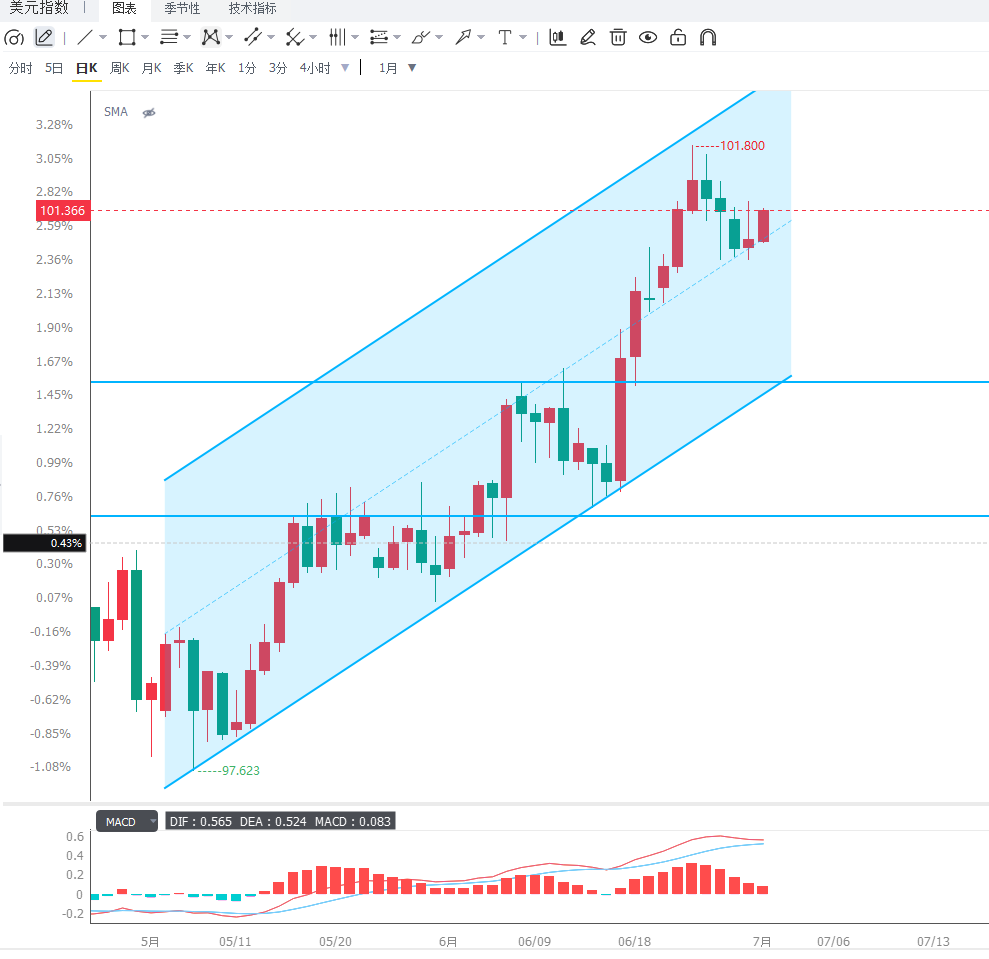
Editor's Summary : The US job market is currently in a critical transitional phase of "resilience slowing but not weakening," a structure that allows the Federal Reserve to maintain a wait-and-see stance while continuing a high-interest-rate environment. For the market, the core contradiction has shifted from the strength of the job market to the interplay between inflation and policy path. The US dollar remains resilient, supported by high interest rate expectations, while gold is exhibiting volatile characteristics due to pressure from real interest rates. Future non-farm payroll data will be a crucial trigger for short-term market direction, but the medium-term trend still requires further confirmation of inflationary trends.
The current US labor market is characterized by a typical "low hiring, low layoffs" scenario, with companies showing a slowdown in hiring but layoff levels remaining low, keeping the unemployment rate stable. The Wells Fargo economist team believes that although job openings and ADP hiring data continue to decline, initial jobless claims remain low, and regional Fed employment PMIs also indicate a slight improvement in hiring activity in June, suggesting that overall labor demand is still in a phase of moderate recovery.
However, the divergence among leading indicators warrants attention. Signals such as declining job vacancies and weakening hiring plans by small businesses suggest that employment momentum is cooling, but has not yet translated into overall weakness. This structure of "marginal cooling but overall stability" makes the job market resilient, but its contribution to economic growth is diminishing.
At the monetary policy level, the Federal Reserve's focus has clearly shifted to the inflation path. Even if employment data slows, policy easing will be delayed as long as inflationary pressures do not subside significantly. This means that future interest rate responses to data will be more "inflation-driven" than simply driven by changes in employment.
Regarding the US dollar: If the non-farm payroll data remains near or slightly stronger than expected, it will reinforce the expectation of "high interest rates lasting longer," supporting the dollar's continued strength. Even if employment slows, as long as there is no significant deterioration, the dollar's downside will be limited. Therefore, the dollar is generally still in a high-level, oscillating, and slightly bullish structure.
Regarding gold: Gold is highly sensitive to real interest rates and the US dollar. With a combination of resilient employment, persistent inflation, and high interest rates, gold's upside potential is limited. If strong data pushes the dollar higher, gold may come under pressure and fall; however, if employment figures significantly fall short of expectations, it could strengthen expectations of interest rate cuts, thereby driving a short-term rebound in gold. Overall, gold remains in a data-driven, highly volatile, and oscillating pattern in the short term.
Editor's Summary : The US job market is currently in a critical transitional phase of "resilience slowing but not weakening," a structure that allows the Federal Reserve to maintain a wait-and-see stance while continuing a high-interest-rate environment. For the market, the core contradiction has shifted from the strength of the job market to the interplay between inflation and policy path. The US dollar remains resilient, supported by high interest rate expectations, while gold is exhibiting volatile characteristics due to pressure from real interest rates. Future non-farm payroll data will be a crucial trigger for short-term market direction, but the medium-term trend still requires further confirmation of inflationary trends.
- Risk Warning and Disclaimer
- The market involves risk, and trading may not be suitable for all investors. This article is for reference only and does not constitute personal investment advice, nor does it take into account certain users’ specific investment objectives, financial situation, or other needs. Any investment decisions made based on this information are at your own risk.