Don't just focus on 162! Japan's real "life-or-death line" is actually at 165, and the US non-farm payrolls may be the final push.
2026-07-01 15:25:06
On Tuesday (June 30), the US dollar broke through the 162 level against the Japanese yen for the first time since 1986, and the exchange rate continued its upward trend on Wednesday (July 1), once again hitting a 40-year high of 162.83. This movement completely erased the impact of the Japanese authorities' intervention in the foreign exchange market, which cost 11.7 trillion yen (approximately US$72.2 billion) between April and May. Although the Bank of Japan raised its benchmark interest rate to 1% on June 16 (the highest level since 1995), this move had almost no effect on the yen, raising new questions in the market about the effectiveness and willingness of official intervention.
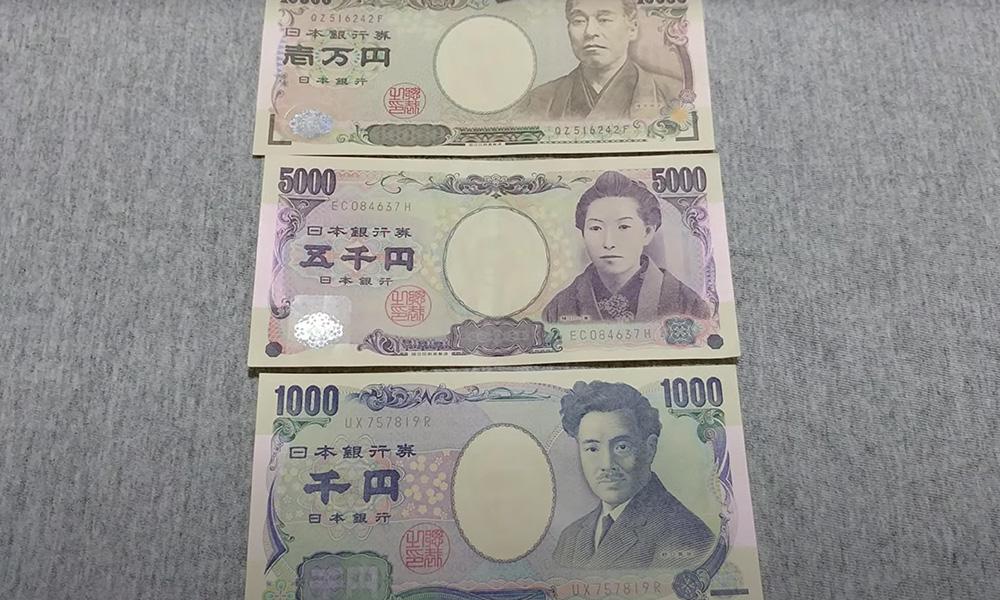
With the 162 level easily breached and the Japanese government not immediately taking new intervention measures, market participants are turning their attention to higher price levels. Multiple institutions believe that the Japanese authorities' actual "tolerance ceiling" has shifted upwards, and the 163-165 range is widely seen as a new potential intervention trigger zone.
State Street Investment Management's senior fixed income strategist, Lu Zhengyan, clearly pointed out that 163 to 165 is the next threshold worth closely monitoring, and emphasized that the authorities are more concerned with the speed and disorder of exchange rate fluctuations than with a certain fixed level.
Mizuho Bank, from a technical perspective, pointed out that the historical level of 164.50 set in 1986 is a key reference point. Once this level is breached, the yen may slide towards the 170 range.
IG analyst Tony Sichammer believes that Japanese Finance Minister Satsuki Katayama may choose to allow the dollar to appreciate slightly against the yen and rebuild its defenses around 165 and 166.
Indosuez Wealth Management also predicts that intervention will follow if the exchange rate breaks through 164 to 165. JPMorgan Chase's Ikue Saito points out that if Japan continues its "covert intervention" strategy, the actual trigger level may have already increased compared to before.
Overall, 165 yen has become a consensus "red line" for the market to gauge the government's next move.
The Japanese authorities' restraint at this juncture stems from profound strategic considerations. First, the record-breaking scale of intervention yielded only a short-term effect, with the yen subsequently resuming its depreciation trend. This clearly demonstrates that unilateral intervention cannot reverse a trend driven by a large interest rate differential. With the yield on 10-year US Treasury bonds still maintaining a gap of approximately 320 basis points with that of comparable Japanese yields, Japanese policymakers are keenly aware that a head-on confrontation around 162 would not only have limited effectiveness but could also rapidly deplete their precious foreign exchange reserves.
Secondly, the strength of the US dollar is supported by multiple factors, including the expectation that the Federal Reserve will maintain high interest rates, geopolitical safe-haven demand, and the resilience of US economic data. These factors are unlikely to change in the short term. Eisuke Sakakibara, a former senior official at Japan's Ministry of Finance and now a global market advisor at Sumitomo Mitsui Banking Corporation, has also publicly stated that when the yen has fallen to such a low level, the Ministry of Finance may not intervene immediately because the market has already fully anticipated and priced in official action.
A more significant change lies in the evolution of strategy. Reports indicate that Jun Mimura, Japan's top foreign exchange official, has refrained from publicly signaling intervention since early June. This "strategic silence" has been interpreted by traders as a deliberate ambiguity tactic—abandoning mechanical defense of specific price levels and instead using "volatility" and "market disorder" as benchmarks for action. Zhengyan Lu of State Street points out that verbal warnings are often pre-emptively priced in by the market, diminishing their effectiveness; therefore, shifting towards strategic ambiguity helps restore the deterrent effect of actual intervention. The market even speculates that authorities may be inducing speculative funds to increase short positions, then choosing to intervene suddenly during a low-liquidity window (such as around the US holiday on July 4th) to achieve maximum impact at minimal cost.
Currently, speculative short positions in the yen remain at their highest level in nearly two years, creating a double-edged sword. On the one hand, excessively crowded short positions, once intervened, will be forced to cover rapidly, which could amplify the upward effect of official actions on the exchange rate, a view held by Hirofumi Suzuki, a foreign exchange strategist at Sumitomo Mitsui Banking Corporation. On the other hand, this positioning structure also indicates a strong market consensus that the yen will continue to weaken, and without strong external catalysts, the downward trend is unlikely to reverse on its own.
In the short term, the most crucial catalyst is the US non-farm payroll data to be released this Thursday. Strong data will reinforce market bets on future Fed rate hikes, further pushing up the dollar, and the yen could quickly test the 163-165 range. Furthermore, the thin trading environment resulting from the US Independence Day holiday could also provide an opportunity for Japanese authorities to intervene – historically, Japan has repeatedly used periods of low liquidity during holidays to intervene. If Tokyo ultimately chooses to act, the possibility of coordinated US-Japan intervention cannot be ruled out. Japanese officials have repeatedly cited the joint statement signed with Washington last September regarding addressing excessive exchange rate volatility, which leaves policy space for joint action.
In summary, Japanese authorities are shifting from the old model of "defending specific levels" to a new framework of "conserving ammunition and acting opportunistically." The 165 yen level is widely seen as the new psychological floor, but actual intervention decisions will depend more on the speed of exchange rate fluctuations and the degree of market disorder than on a rigid figure. The yen's movement will remain highly sensitive ahead of Thursday's non-farm payroll data release, and the official stance of remaining inactive may itself imply waiting for a better opportunity to intervene.
Question 1: Japan has already used a record amount of money to intervene, so why was the effect so short-lived?
A: The fundamental reason is that intervention cannot change the huge interest rate differential between the US and Japan. The Federal Reserve maintains high interest rates, while even with the Bank of Japan raising rates this month, its absolute interest rate level is still far lower than that of the US. This makes dollar assets consistently attractive to global capital due to their interest rate differential. Unilateral selling of dollars and buying of yen can only bring about a short-term, impulsive correction. Once the intervention funds are exhausted, the market will quickly return to the logic of carry trade, continuing to push down the yen. Therefore, unless there is a fundamental reversal in the direction of US and Japanese monetary policy, any isolated intervention is unlikely to sustainably reverse the trend.
Question 2: Why doesn't Japan choose to coordinate intervention or take joint action with the Federal Reserve?
A: Coordinated intervention by Japan and the US is not impossible, but the threshold is extremely high. Last September, the two countries signed a joint statement on addressing excessive exchange rate volatility, providing a political framework for coordinated action. However, the US Treasury typically only agrees to joint intervention when exchange rate fluctuations seriously threaten global financial stability. The current depreciation of the yen reflects more of a difference in economic fundamentals and has not triggered systemic risk. Furthermore, the US itself benefits from the capital inflow attracted by a strong dollar, thus lacking an intrinsic motivation to support the yen. Tokyo is aware of this, and therefore views coordinated intervention as a "backup option" rather than the first choice.
Question 3: Is there any solid basis for using 165 yen as the "red line"?
A: 165 is not an officially announced hard target, but rather a "probability threshold" deduced by analysts based on historical volatility, previous intervention levels, and market psychological barriers. The logic is that if the yen depreciates to 165, it means the cumulative decline since the April intervention has further widened, and market speculative sentiment may have reached extreme levels. At this point, the political pressure for intervention (from domestic import companies and public dissatisfaction with rising prices) will increase sharply, while the potential for short covering will also be greater, significantly improving the cost-effectiveness of intervention. Therefore, it is more like an "action reference line" based on market consensus than a mechanical discipline.
Question 4: Why did the Bank of Japan's interest rate hike fail to prevent the yen from depreciating?
A: Because the magnitude of this interest rate hike was extremely limited (e.g., an increase from 0% to 0.1%), it remains significantly lower than the US benchmark interest rate of over 5%. The market interprets this as the Bank of Japan remaining cautious about exiting its ultra-loose policy and lacking a clear commitment to continuous rate hikes. This "symbolic" rate hike has led speculators to believe that the Bank of Japan "dares not tighten significantly," thus further solidifying their confidence in shorting the yen. To truly support the yen, the Bank of Japan needs to release more hawkish signals and accelerate the pace of rate hikes, but this would harm the country's export competitiveness and debt repayment capacity, putting policymakers in a dilemma.
Question 5: How should ordinary investors deal with the current volatility risk of the Japanese yen?
A: First, avoid overly concentrated positions in a single direction (such as shorting the yen), as sudden intervention could lead to sharp reversals. Second, closely monitor US non-farm payroll data and speeches by Federal Reserve officials, as these are key external factors driving short-term exchange rates. Third, pay attention to changes in the wording of Japanese Ministry of Finance officials; if they escalate from "monitoring trends" to "deeply concerned about unidirectional fluctuations," it is often a strong warning sign of impending intervention. Finally, consider using options to hedge against extreme volatility or reducing leverage to adopt a defensive mindset during this uncertain period. Maintaining contrarian thinking and position discipline is especially important when market sentiment is extremely one-sided.
At 15:23, the USD/JPY exchange rate is currently at 162.68/69.
The upward shift of the intervention "red line": 163-165 becomes the new focus.
With the 162 level easily breached and the Japanese government not immediately taking new intervention measures, market participants are turning their attention to higher price levels. Multiple institutions believe that the Japanese authorities' actual "tolerance ceiling" has shifted upwards, and the 163-165 range is widely seen as a new potential intervention trigger zone.
State Street Investment Management's senior fixed income strategist, Lu Zhengyan, clearly pointed out that 163 to 165 is the next threshold worth closely monitoring, and emphasized that the authorities are more concerned with the speed and disorder of exchange rate fluctuations than with a certain fixed level.
Mizuho Bank, from a technical perspective, pointed out that the historical level of 164.50 set in 1986 is a key reference point. Once this level is breached, the yen may slide towards the 170 range.
IG analyst Tony Sichammer believes that Japanese Finance Minister Satsuki Katayama may choose to allow the dollar to appreciate slightly against the yen and rebuild its defenses around 165 and 166.
Indosuez Wealth Management also predicts that intervention will follow if the exchange rate breaks through 164 to 165. JPMorgan Chase's Ikue Saito points out that if Japan continues its "covert intervention" strategy, the actual trigger level may have already increased compared to before.
Overall, 165 yen has become a consensus "red line" for the market to gauge the government's next move.
Why "Temporarily Hold Off"? — Strategy Evolution and Constraints
The Japanese authorities' restraint at this juncture stems from profound strategic considerations. First, the record-breaking scale of intervention yielded only a short-term effect, with the yen subsequently resuming its depreciation trend. This clearly demonstrates that unilateral intervention cannot reverse a trend driven by a large interest rate differential. With the yield on 10-year US Treasury bonds still maintaining a gap of approximately 320 basis points with that of comparable Japanese yields, Japanese policymakers are keenly aware that a head-on confrontation around 162 would not only have limited effectiveness but could also rapidly deplete their precious foreign exchange reserves.
Secondly, the strength of the US dollar is supported by multiple factors, including the expectation that the Federal Reserve will maintain high interest rates, geopolitical safe-haven demand, and the resilience of US economic data. These factors are unlikely to change in the short term. Eisuke Sakakibara, a former senior official at Japan's Ministry of Finance and now a global market advisor at Sumitomo Mitsui Banking Corporation, has also publicly stated that when the yen has fallen to such a low level, the Ministry of Finance may not intervene immediately because the market has already fully anticipated and priced in official action.
A more significant change lies in the evolution of strategy. Reports indicate that Jun Mimura, Japan's top foreign exchange official, has refrained from publicly signaling intervention since early June. This "strategic silence" has been interpreted by traders as a deliberate ambiguity tactic—abandoning mechanical defense of specific price levels and instead using "volatility" and "market disorder" as benchmarks for action. Zhengyan Lu of State Street points out that verbal warnings are often pre-emptively priced in by the market, diminishing their effectiveness; therefore, shifting towards strategic ambiguity helps restore the deterrent effect of actual intervention. The market even speculates that authorities may be inducing speculative funds to increase short positions, then choosing to intervene suddenly during a low-liquidity window (such as around the US holiday on July 4th) to achieve maximum impact at minimal cost.
Market reaction and potential catalysts
Currently, speculative short positions in the yen remain at their highest level in nearly two years, creating a double-edged sword. On the one hand, excessively crowded short positions, once intervened, will be forced to cover rapidly, which could amplify the upward effect of official actions on the exchange rate, a view held by Hirofumi Suzuki, a foreign exchange strategist at Sumitomo Mitsui Banking Corporation. On the other hand, this positioning structure also indicates a strong market consensus that the yen will continue to weaken, and without strong external catalysts, the downward trend is unlikely to reverse on its own.
In the short term, the most crucial catalyst is the US non-farm payroll data to be released this Thursday. Strong data will reinforce market bets on future Fed rate hikes, further pushing up the dollar, and the yen could quickly test the 163-165 range. Furthermore, the thin trading environment resulting from the US Independence Day holiday could also provide an opportunity for Japanese authorities to intervene – historically, Japan has repeatedly used periods of low liquidity during holidays to intervene. If Tokyo ultimately chooses to act, the possibility of coordinated US-Japan intervention cannot be ruled out. Japanese officials have repeatedly cited the joint statement signed with Washington last September regarding addressing excessive exchange rate volatility, which leaves policy space for joint action.
Summarize
In summary, Japanese authorities are shifting from the old model of "defending specific levels" to a new framework of "conserving ammunition and acting opportunistically." The 165 yen level is widely seen as the new psychological floor, but actual intervention decisions will depend more on the speed of exchange rate fluctuations and the degree of market disorder than on a rigid figure. The yen's movement will remain highly sensitive ahead of Thursday's non-farm payroll data release, and the official stance of remaining inactive may itself imply waiting for a better opportunity to intervene.
Frequently Asked Questions
Question 1: Japan has already used a record amount of money to intervene, so why was the effect so short-lived?
A: The fundamental reason is that intervention cannot change the huge interest rate differential between the US and Japan. The Federal Reserve maintains high interest rates, while even with the Bank of Japan raising rates this month, its absolute interest rate level is still far lower than that of the US. This makes dollar assets consistently attractive to global capital due to their interest rate differential. Unilateral selling of dollars and buying of yen can only bring about a short-term, impulsive correction. Once the intervention funds are exhausted, the market will quickly return to the logic of carry trade, continuing to push down the yen. Therefore, unless there is a fundamental reversal in the direction of US and Japanese monetary policy, any isolated intervention is unlikely to sustainably reverse the trend.
Question 2: Why doesn't Japan choose to coordinate intervention or take joint action with the Federal Reserve?
A: Coordinated intervention by Japan and the US is not impossible, but the threshold is extremely high. Last September, the two countries signed a joint statement on addressing excessive exchange rate volatility, providing a political framework for coordinated action. However, the US Treasury typically only agrees to joint intervention when exchange rate fluctuations seriously threaten global financial stability. The current depreciation of the yen reflects more of a difference in economic fundamentals and has not triggered systemic risk. Furthermore, the US itself benefits from the capital inflow attracted by a strong dollar, thus lacking an intrinsic motivation to support the yen. Tokyo is aware of this, and therefore views coordinated intervention as a "backup option" rather than the first choice.
Question 3: Is there any solid basis for using 165 yen as the "red line"?
A: 165 is not an officially announced hard target, but rather a "probability threshold" deduced by analysts based on historical volatility, previous intervention levels, and market psychological barriers. The logic is that if the yen depreciates to 165, it means the cumulative decline since the April intervention has further widened, and market speculative sentiment may have reached extreme levels. At this point, the political pressure for intervention (from domestic import companies and public dissatisfaction with rising prices) will increase sharply, while the potential for short covering will also be greater, significantly improving the cost-effectiveness of intervention. Therefore, it is more like an "action reference line" based on market consensus than a mechanical discipline.
Question 4: Why did the Bank of Japan's interest rate hike fail to prevent the yen from depreciating?
A: Because the magnitude of this interest rate hike was extremely limited (e.g., an increase from 0% to 0.1%), it remains significantly lower than the US benchmark interest rate of over 5%. The market interprets this as the Bank of Japan remaining cautious about exiting its ultra-loose policy and lacking a clear commitment to continuous rate hikes. This "symbolic" rate hike has led speculators to believe that the Bank of Japan "dares not tighten significantly," thus further solidifying their confidence in shorting the yen. To truly support the yen, the Bank of Japan needs to release more hawkish signals and accelerate the pace of rate hikes, but this would harm the country's export competitiveness and debt repayment capacity, putting policymakers in a dilemma.
Question 5: How should ordinary investors deal with the current volatility risk of the Japanese yen?
A: First, avoid overly concentrated positions in a single direction (such as shorting the yen), as sudden intervention could lead to sharp reversals. Second, closely monitor US non-farm payroll data and speeches by Federal Reserve officials, as these are key external factors driving short-term exchange rates. Third, pay attention to changes in the wording of Japanese Ministry of Finance officials; if they escalate from "monitoring trends" to "deeply concerned about unidirectional fluctuations," it is often a strong warning sign of impending intervention. Finally, consider using options to hedge against extreme volatility or reducing leverage to adopt a defensive mindset during this uncertain period. Maintaining contrarian thinking and position discipline is especially important when market sentiment is extremely one-sided.
At 15:23, the USD/JPY exchange rate is currently at 162.68/69.
- Risk Warning and Disclaimer
- The market involves risk, and trading may not be suitable for all investors. This article is for reference only and does not constitute personal investment advice, nor does it take into account certain users’ specific investment objectives, financial situation, or other needs. Any investment decisions made based on this information are at your own risk.