Eurozone inflation may cool again, suppressing expectations of interest rate hikes and posing a risk of a policy "shutdown" for the euro.
2026-07-01 17:01:41
Monex Europe analysts point out that if Wednesday's Eurozone inflation data falls short of market expectations, and ECB President Lagarde's speech at the Sintra Forum in Portugal further weakens expectations of an interest rate hike, the euro may face a short-term downside risk. The market's core assessment of the ECB's policy path is shifting from "continued tightening" to "long-term wait-and-see approach after the interest rate hike cycle ends."

Regional data shows that recent inflation figures in Germany, France, and Italy have generally fallen short of expectations, indicating that overall price pressures in the Eurozone are rapidly easing. This trend has reinforced market expectations that the European Central Bank may have "ended this rate hike cycle" after raising interest rates by 25 basis points last month.
Monex Europe further points out that if the Eurozone HICP data continues to fall short of expectations, it will significantly reinforce the assessment that the ECB has entered a policy pause phase, rather than continuing to tighten. Such a shift in expectations typically weakens the interest rate advantage of euro assets, thus putting downward pressure on the exchange rate.
On the policy front, European Central Bank Vice President Aleksandar Vujicic stated that the central bank will rely on more data, particularly the latest macroeconomic forecasts to be released at the September meeting, before deciding on its next interest rate move. He emphasized that the June inflation data "did not deliver any surprises," indicating that policymakers are inclined to maintain a wait-and-see approach rather than committing to a future path in advance.
Meanwhile, Lagarde's remarks during the Sintra Forum were also seen by the market as key guidance. If she further reinforces her stance of "no need for aggressive tightening," it could deepen the market's judgment that the Eurozone interest rate cycle has peaked.
From a market perspective, the euro faces two main pressures: first, falling inflation is eroding its real interest rate advantage; second, reduced policy uncertainty is diminishing the attractiveness of euro assets. Given the continued strength of the US dollar, the euro may face relatively greater downward pressure in the short term.
From a daily chart perspective, the euro has gradually come under pressure and fallen back after its recent rebound, remaining in a generally weak and volatile medium-term pattern. The price has been repeatedly rejected near 1.1450, indicating significant selling pressure above. If Eurozone inflation data falls short of expectations, the exchange rate may further test the 1.1360 support area or even lower, while resistance remains concentrated in the 1.1450–1.1500 range.
From a 4-hour chart perspective, the euro's short-term trend is weak, with the moving average system showing a suppressive structure and limited rebound strength, indicating that bears still have the upper hand. The market is currently in a cautious consolidation phase ahead of data releases, with narrowing volatility. Weak inflation data or dovish signals from the ECB could trigger a new round of declines; conversely, favorable data could lead to a technical rebound.
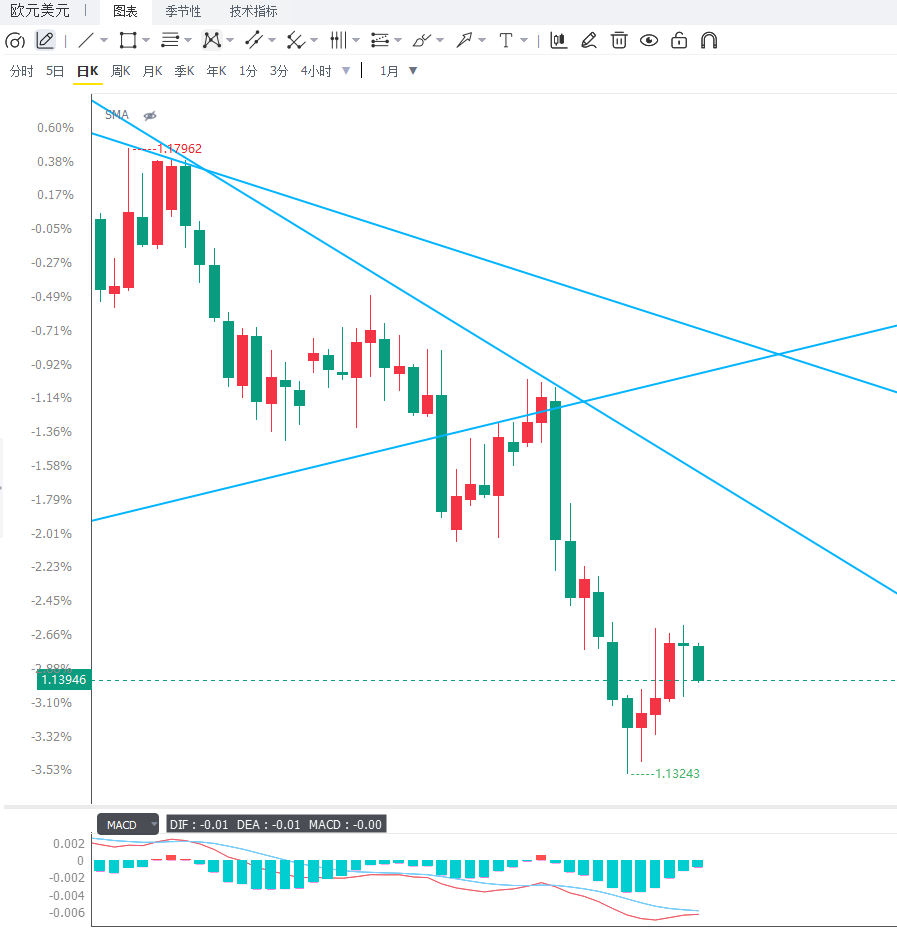
Editor's Summary : The core contradiction in the current euro's trajectory lies in the repricing process between "rapidly declining inflation" and "whether monetary policy has ended its tightening cycle." If eurozone inflation continues to weaken and the ECB enters a wait-and-see phase, the euro will lose significant interest rate differential support, while the relative advantage of the US dollar will further amplify, thus exacerbating short-term pressure on the euro. Against the backdrop of a strong US dollar, the euro as a whole still faces a weak and volatile pattern, and its future trend will highly depend on the verification of inflation data and central bank policy signals.
Regional data shows that recent inflation figures in Germany, France, and Italy have generally fallen short of expectations, indicating that overall price pressures in the Eurozone are rapidly easing. This trend has reinforced market expectations that the European Central Bank may have "ended this rate hike cycle" after raising interest rates by 25 basis points last month.
Monex Europe further points out that if the Eurozone HICP data continues to fall short of expectations, it will significantly reinforce the assessment that the ECB has entered a policy pause phase, rather than continuing to tighten. Such a shift in expectations typically weakens the interest rate advantage of euro assets, thus putting downward pressure on the exchange rate.
On the policy front, European Central Bank Vice President Aleksandar Vujicic stated that the central bank will rely on more data, particularly the latest macroeconomic forecasts to be released at the September meeting, before deciding on its next interest rate move. He emphasized that the June inflation data "did not deliver any surprises," indicating that policymakers are inclined to maintain a wait-and-see approach rather than committing to a future path in advance.
Meanwhile, Lagarde's remarks during the Sintra Forum were also seen by the market as key guidance. If she further reinforces her stance of "no need for aggressive tightening," it could deepen the market's judgment that the Eurozone interest rate cycle has peaked.
From a market perspective, the euro faces two main pressures: first, falling inflation is eroding its real interest rate advantage; second, reduced policy uncertainty is diminishing the attractiveness of euro assets. Given the continued strength of the US dollar, the euro may face relatively greater downward pressure in the short term.
From a daily chart perspective, the euro has gradually come under pressure and fallen back after its recent rebound, remaining in a generally weak and volatile medium-term pattern. The price has been repeatedly rejected near 1.1450, indicating significant selling pressure above. If Eurozone inflation data falls short of expectations, the exchange rate may further test the 1.1360 support area or even lower, while resistance remains concentrated in the 1.1450–1.1500 range.
From a 4-hour chart perspective, the euro's short-term trend is weak, with the moving average system showing a suppressive structure and limited rebound strength, indicating that bears still have the upper hand. The market is currently in a cautious consolidation phase ahead of data releases, with narrowing volatility. Weak inflation data or dovish signals from the ECB could trigger a new round of declines; conversely, favorable data could lead to a technical rebound.
Editor's Summary : The core contradiction in the current euro's trajectory lies in the repricing process between "rapidly declining inflation" and "whether monetary policy has ended its tightening cycle." If eurozone inflation continues to weaken and the ECB enters a wait-and-see phase, the euro will lose significant interest rate differential support, while the relative advantage of the US dollar will further amplify, thus exacerbating short-term pressure on the euro. Against the backdrop of a strong US dollar, the euro as a whole still faces a weak and volatile pattern, and its future trend will highly depend on the verification of inflation data and central bank policy signals.
- Risk Warning and Disclaimer
- The market involves risk, and trading may not be suitable for all investors. This article is for reference only and does not constitute personal investment advice, nor does it take into account certain users’ specific investment objectives, financial situation, or other needs. Any investment decisions made based on this information are at your own risk.