The Strait of Hormuz is in turmoil again: Iran claims cargo ship ran aground, while US-Iran Doha talks proceed simultaneously.
2026-07-01 20:05:52
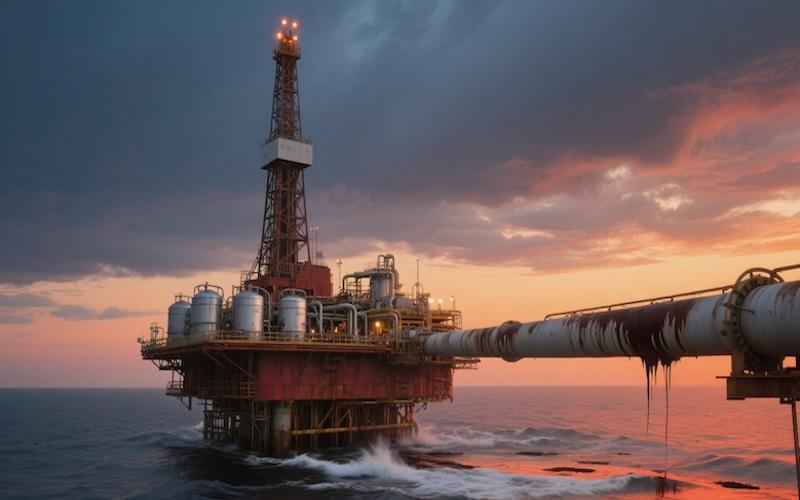
On Wednesday (July 1), a foreign container ship ran aground in the Strait of Hormuz after failing to navigate along the "officially authorized shipping lanes" designated by Iran. The report did not disclose further details such as the ship's nationality or the extent of damage, only emphasizing that the ship "ran aground because the waters of the chosen route were too shallow and could not continue sailing." Iran used this incident to reiterate that all shipping companies must obey navigation orders issued by the Islamic Revolutionary Guard Corps (IRGC) within the strait. The IRGC Navy has repeatedly warned shipowners worldwide that any entry or exit through the strait without following the "officially authorized shipping lanes" could lead to "irreversible maritime accidents."
This is not the first time Iran has strengthened its control over the Strait in a similar manner. Just days earlier, Iran also seized and attacked two ships that attempted to cross the Strait without permission, one of which was carrying Qatari crude oil, but these two incidents were not mentioned in Wednesday's official reports.
The Doha negotiations are progressing in parallel, but there has been no direct meeting between the US and Iran.
As news of the cargo ship's grounding broke, U.S. Special Envoy for the Middle East Steve Vitkov and Jared Kushner, President Trump's son-in-law and senior advisor, were in Doha, Qatar, meeting with Qatari mediators. The focus of their discussions included advancing the implementation of the previously signed U.S.-Iran memorandum of understanding, stabilizing the ceasefire in Lebanon, and pathways to ease tensions in the Strait of Hormuz. Qatari Foreign Ministry spokesman Majid Ansari confirmed that week that no high-level meetings had been scheduled between Iran and the United States according to the established negotiation mechanisms, but technical delegations from both sides were continuing consultations on multiple occasions, with Qatar coordinating to ensure the continuation of the negotiations.
Iranian officials have adopted a cautious stance on this matter. Iranian Parliament Speaker and key negotiator, Ghalibaf, previously stated on Iranian state television that Tehran would only consider further negotiations after the US had fully implemented the terms of the memorandum of understanding. He also emphasized that Iran was willing to continue dialogue, but if the US refused to fulfill the consensus reached, Iran was prepared to fight – a stance consistent with the hardline statements made by Iranian officials after the ceasefire agreement was signed.
A senior U.S. official revealed that the meetings between Vitkov and Kushner with regional leaders were positive, technical consultations were progressing, ship traffic in the Strait of Hormuz was increasing, and oil prices were falling. Meanwhile, Chinese Foreign Minister Wang Yi publicly called on both the U.S. and Iran to maintain diplomatic momentum, emphasizing that "talks are better than fighting, and dialogue is better than confrontation," and believing that dialogue remains the best path to easing tensions in the Middle East.
Background of the agreement: The temporary ceasefire agreement signed at the Palace of Versailles
This round of diplomatic shuttle activities stems from a provisional agreement signed earlier this month between Trump and Iranian President Peschikyan. According to details previously disclosed by both US and Iranian officials, the agreement requires Iran to dilute its stockpile of highly enriched uranium, while the US suspends several sanctions against Iran and allows Iran to immediately and freely sell oil abroad. This agreement, brokered by Pakistani Prime Minister Shebaz Sharif, took effect immediately upon signing, stipulating a permanent cessation of hostilities and initiating a 60-day negotiation period to finalize a long-term agreement on Iran's nuclear program. However, Trump did not commit to abandoning the option of resuming military strikes.
The signing process of the agreement was quite complicated: Trump and Vice President Vance had previously signed the document online, but the White House kept the contents strictly confidential. Later, Trump, taking advantage of the G7 summit in France, signed a paper copy of the agreement at a dinner at the Palace of Versailles, witnessed by French President Macron; Iranian President Pezehikyan also signed the agreement simultaneously in Tehran. The core contents of the agreement include: the Strait of Hormuz will be open to free passage for two months (but the possibility of future tolls is not ruled out); the US will temporarily suspend, rather than completely lift, sanctions against Iran, and promises to gradually lift all sanctions and unfreeze Iranian overseas assets; the International Atomic Energy Agency will be responsible for monitoring Iran's oil refining operations, but specific operational details are yet to be clarified. Compared to the Iran nuclear deal reached during the Obama administration in 2015, which was later withdrawn from by the Trump administration, this new agreement makes greater concessions on easing restrictions on oil exports and the extent of sanctions removal, thus sparking considerable controversy within the United States and in Israel.
Control of the Strait: The Most Toughest Dispute in Negotiations
Although the interim agreement loosens restrictions on passage through the Strait in principle, defining the actual management of this vital international shipping route remains the toughest nut to crack in the US-Iran negotiations. According to details of the agreement recently disclosed by the US, Iran is required to make "maximum efforts" to ensure the safe passage of merchant ships, and a vaguely worded clause in the agreement also mentions that Iran will work with Oman to "determine the future management of the Strait," effectively granting Tehran a formal role in Strait management.
Iran's interpretation is even more forceful: it insists that all vessels must travel along its designated routes and plans to begin collecting tolls in the future, which would overturn the decades-long practice of this waterway being an international public waterway with free passage. The United States and several Gulf Arab states have made it clear that they will not accept the toll arrangement. In May of this year, the U.S. Treasury Department also imposed sanctions on the "Persian Gulf Straits Authority" established by Iran, characterizing it as an act of "extortion" against global maritime trade and warning that it would severely crack down on those involved.
The situation has remained tense for the past two weeks: Around June 20th, the Iranian Revolutionary Guard announced a renewed "closure" of the Strait of Hormuz, citing Israeli military action in Lebanon as a violation of agreements, but the US military denied any breach. Oman and UN agencies subsequently attempted to open new shipping lanes off the coast of Oman as an alternative, a move that triggered a chain of attacks across the Middle East over the weekend, highlighting the continued fragility of the region. The US Navy-led Joint Maritime Information Center then announced on June 27th the widening of shipping lanes near the Strait, effectively challenging Iran's claims to control the waterways. Shipping data shows that although the conflict has de-escalated and ship traffic has recovered somewhat from its wartime lows, it remains far below pre-war levels. Daily crude oil traffic has roughly recovered to half of pre-conflict levels, and tanker insurance rates remain several times higher than before the war.
Regional Situation: The Repercussions of Lebanon, Iraq, and the Kurdish Region
Following the signing of the agreement, the regional situation has not been entirely calm. The Lebanese issue remains a crucial point that cannot be avoided in the final agreement—Iran demands that Israel completely withdraw from the southern Lebanese territory it currently occupies and cease its attacks on Hezbollah militants; Israel, on the other hand, insists on retaining its right to self-defense and continuing to maintain a presence in the relevant areas. During the Doha talks, the two sides also exchanged views on consolidating the ceasefire in Lebanon and maintaining its territorial integrity and sovereignty.
In Iraq, a small drone was shot down by air defenses over Baghdad's Green Zone on Wednesday night, marking the first security incident in Baghdad since the US-Iran ceasefire. Two unnamed Iraqi security officials stated that the drone was unarmed and likely used for reconnaissance; no armed group has yet claimed responsibility. Meanwhile, a new round of violence has recently erupted in the Kurdish-majority western region of Iran. Whether the Kurdish opposition forces, once seen as leverage in pressuring Iran, will escalate their activity as US-Iran diplomatic progresses has become a new focus of international attention.
Shipping recovery remains slow and sluggish.
According to data from the International Maritime Organization (IMO) and multiple shipping monitoring agencies, after the outbreak of the war between the US and Iran, approximately one-fifth of the world's maritime oil and gas trade routes were almost brought to a standstill, with more than 20,000 crew members and about 2,000 ships stranded in the Persian Gulf. Following the signing of the agreement in mid-June, the IMO launched a ship evacuation plan, coordinating the safe evacuation of approximately 11,000 crew members; Thailand, South Korea, and other countries have also confirmed that their stranded vessels have largely been safely evacuated from the strait.
However, there is still a significant gap between the "reopening" of the strait and "actual normal passage": even at the point when daily crude oil traffic volume hit a record high, the actual number of ships passing through only recovered to about one-third of the pre-war level, and insurance companies' war risk rates for the relevant routes remained several times higher than pre-war levels, with several P&I clubs temporarily suspending coverage. Analysts believe that as long as Iran retains actual control over the waterway, traffic volume in the strait is unlikely to fully recover to pre-conflict levels.
Outlook
Currently, both the US and Iran are seeking a delicate balance between "talks" and "fighting": Washington, on the one hand, is maintaining communication with delegations from Qatar and Iran in Doha through its special envoy team, while on the other hand, it emphasizes that "bombing may resume at any time if not satisfied"; Tehran, on the other hand, is strengthening its narrative of control over the Strait of Hormuz through state television, while also signaling its willingness to engage in dialogue through intermediaries such as Pakistan and Qatar. Whether the 60-day negotiation window can produce a long-term solution regarding Iran's nuclear program as scheduled, who will ultimately gain control of the Strait of Hormuz, and whether the situation in Lebanon can truly de-escalate remain key variables that need to be closely monitored in the coming weeks.
This is not the first time Iran has strengthened its control over the Strait in a similar manner. Just days earlier, Iran also seized and attacked two ships that attempted to cross the Strait without permission, one of which was carrying Qatari crude oil, but these two incidents were not mentioned in Wednesday's official reports.
The Doha negotiations are progressing in parallel, but there has been no direct meeting between the US and Iran.
As news of the cargo ship's grounding broke, U.S. Special Envoy for the Middle East Steve Vitkov and Jared Kushner, President Trump's son-in-law and senior advisor, were in Doha, Qatar, meeting with Qatari mediators. The focus of their discussions included advancing the implementation of the previously signed U.S.-Iran memorandum of understanding, stabilizing the ceasefire in Lebanon, and pathways to ease tensions in the Strait of Hormuz. Qatari Foreign Ministry spokesman Majid Ansari confirmed that week that no high-level meetings had been scheduled between Iran and the United States according to the established negotiation mechanisms, but technical delegations from both sides were continuing consultations on multiple occasions, with Qatar coordinating to ensure the continuation of the negotiations.
Iranian officials have adopted a cautious stance on this matter. Iranian Parliament Speaker and key negotiator, Ghalibaf, previously stated on Iranian state television that Tehran would only consider further negotiations after the US had fully implemented the terms of the memorandum of understanding. He also emphasized that Iran was willing to continue dialogue, but if the US refused to fulfill the consensus reached, Iran was prepared to fight – a stance consistent with the hardline statements made by Iranian officials after the ceasefire agreement was signed.
A senior U.S. official revealed that the meetings between Vitkov and Kushner with regional leaders were positive, technical consultations were progressing, ship traffic in the Strait of Hormuz was increasing, and oil prices were falling. Meanwhile, Chinese Foreign Minister Wang Yi publicly called on both the U.S. and Iran to maintain diplomatic momentum, emphasizing that "talks are better than fighting, and dialogue is better than confrontation," and believing that dialogue remains the best path to easing tensions in the Middle East.
Background of the agreement: The temporary ceasefire agreement signed at the Palace of Versailles
This round of diplomatic shuttle activities stems from a provisional agreement signed earlier this month between Trump and Iranian President Peschikyan. According to details previously disclosed by both US and Iranian officials, the agreement requires Iran to dilute its stockpile of highly enriched uranium, while the US suspends several sanctions against Iran and allows Iran to immediately and freely sell oil abroad. This agreement, brokered by Pakistani Prime Minister Shebaz Sharif, took effect immediately upon signing, stipulating a permanent cessation of hostilities and initiating a 60-day negotiation period to finalize a long-term agreement on Iran's nuclear program. However, Trump did not commit to abandoning the option of resuming military strikes.
The signing process of the agreement was quite complicated: Trump and Vice President Vance had previously signed the document online, but the White House kept the contents strictly confidential. Later, Trump, taking advantage of the G7 summit in France, signed a paper copy of the agreement at a dinner at the Palace of Versailles, witnessed by French President Macron; Iranian President Pezehikyan also signed the agreement simultaneously in Tehran. The core contents of the agreement include: the Strait of Hormuz will be open to free passage for two months (but the possibility of future tolls is not ruled out); the US will temporarily suspend, rather than completely lift, sanctions against Iran, and promises to gradually lift all sanctions and unfreeze Iranian overseas assets; the International Atomic Energy Agency will be responsible for monitoring Iran's oil refining operations, but specific operational details are yet to be clarified. Compared to the Iran nuclear deal reached during the Obama administration in 2015, which was later withdrawn from by the Trump administration, this new agreement makes greater concessions on easing restrictions on oil exports and the extent of sanctions removal, thus sparking considerable controversy within the United States and in Israel.
Control of the Strait: The Most Toughest Dispute in Negotiations
Although the interim agreement loosens restrictions on passage through the Strait in principle, defining the actual management of this vital international shipping route remains the toughest nut to crack in the US-Iran negotiations. According to details of the agreement recently disclosed by the US, Iran is required to make "maximum efforts" to ensure the safe passage of merchant ships, and a vaguely worded clause in the agreement also mentions that Iran will work with Oman to "determine the future management of the Strait," effectively granting Tehran a formal role in Strait management.
Iran's interpretation is even more forceful: it insists that all vessels must travel along its designated routes and plans to begin collecting tolls in the future, which would overturn the decades-long practice of this waterway being an international public waterway with free passage. The United States and several Gulf Arab states have made it clear that they will not accept the toll arrangement. In May of this year, the U.S. Treasury Department also imposed sanctions on the "Persian Gulf Straits Authority" established by Iran, characterizing it as an act of "extortion" against global maritime trade and warning that it would severely crack down on those involved.
The situation has remained tense for the past two weeks: Around June 20th, the Iranian Revolutionary Guard announced a renewed "closure" of the Strait of Hormuz, citing Israeli military action in Lebanon as a violation of agreements, but the US military denied any breach. Oman and UN agencies subsequently attempted to open new shipping lanes off the coast of Oman as an alternative, a move that triggered a chain of attacks across the Middle East over the weekend, highlighting the continued fragility of the region. The US Navy-led Joint Maritime Information Center then announced on June 27th the widening of shipping lanes near the Strait, effectively challenging Iran's claims to control the waterways. Shipping data shows that although the conflict has de-escalated and ship traffic has recovered somewhat from its wartime lows, it remains far below pre-war levels. Daily crude oil traffic has roughly recovered to half of pre-conflict levels, and tanker insurance rates remain several times higher than before the war.
Regional Situation: The Repercussions of Lebanon, Iraq, and the Kurdish Region
Following the signing of the agreement, the regional situation has not been entirely calm. The Lebanese issue remains a crucial point that cannot be avoided in the final agreement—Iran demands that Israel completely withdraw from the southern Lebanese territory it currently occupies and cease its attacks on Hezbollah militants; Israel, on the other hand, insists on retaining its right to self-defense and continuing to maintain a presence in the relevant areas. During the Doha talks, the two sides also exchanged views on consolidating the ceasefire in Lebanon and maintaining its territorial integrity and sovereignty.
In Iraq, a small drone was shot down by air defenses over Baghdad's Green Zone on Wednesday night, marking the first security incident in Baghdad since the US-Iran ceasefire. Two unnamed Iraqi security officials stated that the drone was unarmed and likely used for reconnaissance; no armed group has yet claimed responsibility. Meanwhile, a new round of violence has recently erupted in the Kurdish-majority western region of Iran. Whether the Kurdish opposition forces, once seen as leverage in pressuring Iran, will escalate their activity as US-Iran diplomatic progresses has become a new focus of international attention.
Shipping recovery remains slow and sluggish.
According to data from the International Maritime Organization (IMO) and multiple shipping monitoring agencies, after the outbreak of the war between the US and Iran, approximately one-fifth of the world's maritime oil and gas trade routes were almost brought to a standstill, with more than 20,000 crew members and about 2,000 ships stranded in the Persian Gulf. Following the signing of the agreement in mid-June, the IMO launched a ship evacuation plan, coordinating the safe evacuation of approximately 11,000 crew members; Thailand, South Korea, and other countries have also confirmed that their stranded vessels have largely been safely evacuated from the strait.
However, there is still a significant gap between the "reopening" of the strait and "actual normal passage": even at the point when daily crude oil traffic volume hit a record high, the actual number of ships passing through only recovered to about one-third of the pre-war level, and insurance companies' war risk rates for the relevant routes remained several times higher than pre-war levels, with several P&I clubs temporarily suspending coverage. Analysts believe that as long as Iran retains actual control over the waterway, traffic volume in the strait is unlikely to fully recover to pre-conflict levels.
Outlook
Currently, both the US and Iran are seeking a delicate balance between "talks" and "fighting": Washington, on the one hand, is maintaining communication with delegations from Qatar and Iran in Doha through its special envoy team, while on the other hand, it emphasizes that "bombing may resume at any time if not satisfied"; Tehran, on the other hand, is strengthening its narrative of control over the Strait of Hormuz through state television, while also signaling its willingness to engage in dialogue through intermediaries such as Pakistan and Qatar. Whether the 60-day negotiation window can produce a long-term solution regarding Iran's nuclear program as scheduled, who will ultimately gain control of the Strait of Hormuz, and whether the situation in Lebanon can truly de-escalate remain key variables that need to be closely monitored in the coming weeks.
- Risk Warning and Disclaimer
- The market involves risk, and trading may not be suitable for all investors. This article is for reference only and does not constitute personal investment advice, nor does it take into account certain users’ specific investment objectives, financial situation, or other needs. Any investment decisions made based on this information are at your own risk.