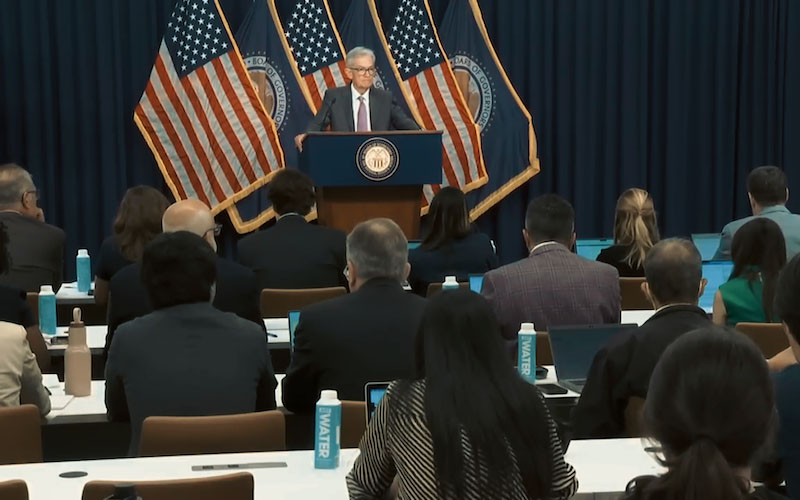
With the easing of US hegemony, interest rates have begun to shift, and gold prices are trending upwards with fluctuations.
2026-07-03 16:05:45
On Friday (July 3), during the Asian and European sessions, gold prices continued to rebound. Previous articles have consistently highlighted the turning point signal for gold. Currently, gold is trading around 4180, following yesterday's 2% surge, which has now increased by 1.38%.
By mid-2026, the complex interplay of the US-Iran ceasefire negotiations, the change of control of the Strait of Hormuz, and the internal political and economic games within the United States is forming a textbook-level macro picture, providing strong underlying logical support for gold, the world's most safe-haven asset.
With the signing of the Islamabad Memorandum of Understanding by the US and Iran and the opening of a 60-day negotiation window, the situation in the Middle East has cooled down after the intense conflict in the spring. President Trump even optimistically stated that Iran "almost agreed to all of its demands."
However, beneath this veil of peace, structural geopolitical rifts are deepening, with the core conflict revolving around control of the Strait of Hormuz, a vital global energy chokepoint.
Although ships are allowed free passage during the 60-day ceasefire, the Iranian armed forces have issued a strong warning, demanding that all merchant ships use routes designated by Iran.
What shocked the international shipping industry even more was that officials from Oman, major European powers, and some Gulf states had privately acknowledged that a return to the pre-war status quo was no longer possible, and that paying "passage fees" or "service fees" to Iran and Oman for the Strait of Hormuz was an inevitable trend.
Currently, the overall shipping volume in the Taiwan Strait is still about 70% lower than before the war. This long-term disruption of the supply chain and change of sovereignty means that although international oil prices have fallen in the short term due to the ceasefire, the premium of geopolitical uncertainty has not subsided.
For gold prices, geopolitical risks have shifted from "acute panic over the outbreak of conflict" to "chronic anxiety over the restoration of order."
The routine charging of fees in the Strait of Hormuz is a sign of the erosion of American maritime hegemony. The structural increase in international shipping costs and long-term inflation expectations will serve as the underlying basis for long-term safe-haven buying, continuously accumulating in the gold market.
Just as unpredictable as the geopolitical situation is the economic fundamentals of the United States, which directly determines the opportunity cost of gold.
The White House is currently pushing hard to create an optimistic narrative of a strong economy.
White House National Economic Council Director Hassett declared that the U.S. employment situation is still "on an upward trend," insisting that the employment data is consistent with a strong economy and that there is no reason to believe that economic growth will lead to inflation.
However, the cold, hard data at the bottom shattered this optimistic narrative: the US added only 57,000 jobs in June, far below market expectations. Worse still, the household survey revealed a deeper weakness in the labor market:
The number of employed people shrank sharply by 507,000, marking the largest decline since population adjustments were made.
The labor force participation rate plummeted to 61.5%, with a significant weakening in the core age group (25 to 54 years old);
The job structure deteriorated, with fewer full-time jobs and more part-time jobs, and the average duration of unemployment extended to 26.0 weeks, indicating a continued weakening of the ability to absorb the unemployed.
This macroeconomic reality—where the unemployment rate appears to be declining but is actually showing signs of underlying turmoil—means that the economy is not as perfect as the White House portrays it to be.
The risk of structural slowdown is accumulating, providing solid macroeconomic support for gold as a recession-resistant asset.
While the significant slowdown in employment reveals economic weakness, in the words of Tim Holland, chief investment officer at Orion Advisor Solutions, "bad news turned out to be good news." It successfully reduced the likelihood of another rate hike due to an overheated economy, giving the Federal Reserve time to observe the situation.
San Francisco Fed President Daly pointed out that current interest rates remain at a slightly restrictive level.
While the US-Iran ceasefire brought "hopes for price easing," the lagged effects of spring tariffs and wartime oil price spikes are still being verified, and vigilance must be maintained against persistent price pressures.
At this critical juncture, the White House's political pressure and personnel shake-ups on the Federal Reserve have reached unprecedented levels.
Hassett publicly criticized former Federal Reserve Chairman Jerome Powell, arguing that his refusal to leave the Federal Reserve Board of Governors hindered the government's nomination of new members.
He even went so far as to make a bombshell accusation, claiming that the majority of Federal Reserve members voted "not out of patriotism, but to remove Trump from office."
Although he later added a remark about "respecting the Fed's independence," the White House's eagerness to purge personnel and urge the Fed back to a rate-cutting path was already blatantly obvious. Currently, only Kevin Warsh, the new chairman, is Trump's nominee on the Federal Reserve Board of Governors.
The White House's blatant interference in the independence of the Federal Reserve and its public calls for interest rate cuts have created a double benefit for gold: on the one hand, the Federal Reserve may find it more difficult to maintain its tight monetary policy in the medium to long term due to economic slowdown and political pressure, and the eventual realization of the expectation of interest rate cuts will directly lower the real interest rate of US Treasury bonds.
On the other hand, the potential politicization of the Federal Reserve's "credibility" has further shaken the foundation of the dollar's credit, and the damage to the credit of fiat currencies is a natural breeding ground for gold.
Based on the above logic, although gold prices may experience a period of valuation deflation and technical fluctuations in the short term due to the US-Iran ceasefire and oil price correction, the underlying logic supporting the gold rebound has undergone a profound transformation.
Looking ahead, gold price movements will be driven by three main factors: geopolitical power struggles, intangible political intervention, and the Federal Reserve's interest rate shift.
The long-term credit premium is becoming increasingly apparent: the political maneuvering between the White House and the Federal Reserve, the withdrawal of the American-style security order from the Persian Gulf (the institutionalization of strait tolls), all point to one direction—the accelerated loss of the global credit dividend of the US dollar, and a new pattern of global discourse power.
Global central banks (especially those in the Gulf and emerging market countries) will continue to maintain strong demand for physical gold due to concerns about de-dollarization and asset security.
Following continuous hints from the White House and the easing of potential inflationary pressures, coupled with the irreversible structural weakening of the US labor market, Federal Reserve Chairman Warsh and Fed officials will ultimately have to compromise with political pressure from the White House and the reality of recession, leading to another rate-cutting cycle.
Final conclusion: Under the macroeconomic backdrop of "continuous political pressure, peaking and declining real interest rates, and shattered international fiat currency credibility," there is a potential strategic window for long-term funds to strategically increase their positions.
In the coming years, gold may become the preferred choice for global capital to combat disorder and credit devaluation.
From a technical perspective, spot gold had been fluctuating below the 0.618 level of 4065, but recently broke through it. Currently, 4065 is a key support level and a dividing point between strong and weak price movements.
The resistance level is located in the triangle formed by the upper rail of the descending channel and the descending trend line. The strength of the recent rebound will mainly depend on the reaction of gold prices within this range.
If gold prices can stabilize near their current levels, they are likely to rebound further and break through this triangle resistance zone.
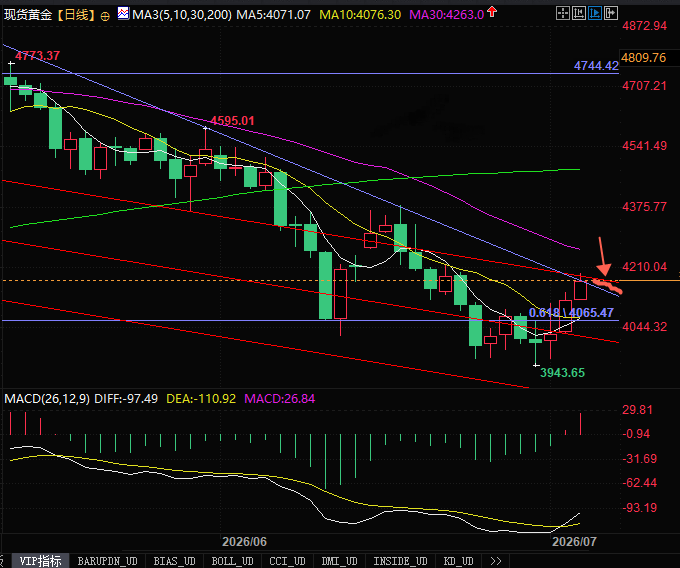
(Spot gold daily chart, source: FX678)
At 16:00 Beijing time, spot gold is trading at $4180.39.
By mid-2026, the complex interplay of the US-Iran ceasefire negotiations, the change of control of the Strait of Hormuz, and the internal political and economic games within the United States is forming a textbook-level macro picture, providing strong underlying logical support for gold, the world's most safe-haven asset.
With the signing of the Islamabad Memorandum of Understanding by the US and Iran and the opening of a 60-day negotiation window, the situation in the Middle East has cooled down after the intense conflict in the spring. President Trump even optimistically stated that Iran "almost agreed to all of its demands."
However, beneath this veil of peace, structural geopolitical rifts are deepening, with the core conflict revolving around control of the Strait of Hormuz, a vital global energy chokepoint.
Although ships are allowed free passage during the 60-day ceasefire, the Iranian armed forces have issued a strong warning, demanding that all merchant ships use routes designated by Iran.
What shocked the international shipping industry even more was that officials from Oman, major European powers, and some Gulf states had privately acknowledged that a return to the pre-war status quo was no longer possible, and that paying "passage fees" or "service fees" to Iran and Oman for the Strait of Hormuz was an inevitable trend.
Currently, the overall shipping volume in the Taiwan Strait is still about 70% lower than before the war. This long-term disruption of the supply chain and change of sovereignty means that although international oil prices have fallen in the short term due to the ceasefire, the premium of geopolitical uncertainty has not subsided.
For gold prices, geopolitical risks have shifted from "acute panic over the outbreak of conflict" to "chronic anxiety over the restoration of order."
The routine charging of fees in the Strait of Hormuz is a sign of the erosion of American maritime hegemony. The structural increase in international shipping costs and long-term inflation expectations will serve as the underlying basis for long-term safe-haven buying, continuously accumulating in the gold market.
The apparent manipulation of economic indicators and the undercurrents in the labor market.
Just as unpredictable as the geopolitical situation is the economic fundamentals of the United States, which directly determines the opportunity cost of gold.
The White House is currently pushing hard to create an optimistic narrative of a strong economy.
White House National Economic Council Director Hassett declared that the U.S. employment situation is still "on an upward trend," insisting that the employment data is consistent with a strong economy and that there is no reason to believe that economic growth will lead to inflation.
However, the cold, hard data at the bottom shattered this optimistic narrative: the US added only 57,000 jobs in June, far below market expectations. Worse still, the household survey revealed a deeper weakness in the labor market:
The number of employed people shrank sharply by 507,000, marking the largest decline since population adjustments were made.
The labor force participation rate plummeted to 61.5%, with a significant weakening in the core age group (25 to 54 years old);
The job structure deteriorated, with fewer full-time jobs and more part-time jobs, and the average duration of unemployment extended to 26.0 weeks, indicating a continued weakening of the ability to absorb the unemployed.
This macroeconomic reality—where the unemployment rate appears to be declining but is actually showing signs of underlying turmoil—means that the economy is not as perfect as the White House portrays it to be.
The risk of structural slowdown is accumulating, providing solid macroeconomic support for gold as a recession-resistant asset.
The Fed storm and the White House's "political pressure" to cut interest rates.
While the significant slowdown in employment reveals economic weakness, in the words of Tim Holland, chief investment officer at Orion Advisor Solutions, "bad news turned out to be good news." It successfully reduced the likelihood of another rate hike due to an overheated economy, giving the Federal Reserve time to observe the situation.
San Francisco Fed President Daly pointed out that current interest rates remain at a slightly restrictive level.
While the US-Iran ceasefire brought "hopes for price easing," the lagged effects of spring tariffs and wartime oil price spikes are still being verified, and vigilance must be maintained against persistent price pressures.
At this critical juncture, the White House's political pressure and personnel shake-ups on the Federal Reserve have reached unprecedented levels.
Hassett publicly criticized former Federal Reserve Chairman Jerome Powell, arguing that his refusal to leave the Federal Reserve Board of Governors hindered the government's nomination of new members.
He even went so far as to make a bombshell accusation, claiming that the majority of Federal Reserve members voted "not out of patriotism, but to remove Trump from office."
Although he later added a remark about "respecting the Fed's independence," the White House's eagerness to purge personnel and urge the Fed back to a rate-cutting path was already blatantly obvious. Currently, only Kevin Warsh, the new chairman, is Trump's nominee on the Federal Reserve Board of Governors.
The White House's blatant interference in the independence of the Federal Reserve and its public calls for interest rate cuts have created a double benefit for gold: on the one hand, the Federal Reserve may find it more difficult to maintain its tight monetary policy in the medium to long term due to economic slowdown and political pressure, and the eventual realization of the expectation of interest rate cuts will directly lower the real interest rate of US Treasury bonds.
On the other hand, the potential politicization of the Federal Reserve's "credibility" has further shaken the foundation of the dollar's credit, and the damage to the credit of fiat currencies is a natural breeding ground for gold.
Long-term outlook for gold prices
Based on the above logic, although gold prices may experience a period of valuation deflation and technical fluctuations in the short term due to the US-Iran ceasefire and oil price correction, the underlying logic supporting the gold rebound has undergone a profound transformation.
Looking ahead, gold price movements will be driven by three main factors: geopolitical power struggles, intangible political intervention, and the Federal Reserve's interest rate shift.
The long-term credit premium is becoming increasingly apparent: the political maneuvering between the White House and the Federal Reserve, the withdrawal of the American-style security order from the Persian Gulf (the institutionalization of strait tolls), all point to one direction—the accelerated loss of the global credit dividend of the US dollar, and a new pattern of global discourse power.
Global central banks (especially those in the Gulf and emerging market countries) will continue to maintain strong demand for physical gold due to concerns about de-dollarization and asset security.
Following continuous hints from the White House and the easing of potential inflationary pressures, coupled with the irreversible structural weakening of the US labor market, Federal Reserve Chairman Warsh and Fed officials will ultimately have to compromise with political pressure from the White House and the reality of recession, leading to another rate-cutting cycle.
Final conclusion: Under the macroeconomic backdrop of "continuous political pressure, peaking and declining real interest rates, and shattered international fiat currency credibility," there is a potential strategic window for long-term funds to strategically increase their positions.
In the coming years, gold may become the preferred choice for global capital to combat disorder and credit devaluation.
From a technical perspective, spot gold had been fluctuating below the 0.618 level of 4065, but recently broke through it. Currently, 4065 is a key support level and a dividing point between strong and weak price movements.
The resistance level is located in the triangle formed by the upper rail of the descending channel and the descending trend line. The strength of the recent rebound will mainly depend on the reaction of gold prices within this range.
If gold prices can stabilize near their current levels, they are likely to rebound further and break through this triangle resistance zone.
(Spot gold daily chart, source: FX678)
At 16:00 Beijing time, spot gold is trading at $4180.39.
- Risk Warning and Disclaimer
- The market involves risk, and trading may not be suitable for all investors. This article is for reference only and does not constitute personal investment advice, nor does it take into account certain users’ specific investment objectives, financial situation, or other needs. Any investment decisions made based on this information are at your own risk.