World Gold Council: Global central banks made net purchases of 41 tons of gold in May, with many countries continuing to increase their reserve build-up.
2026-07-06 12:13:24
Affected by geopolitical conflicts in the Middle East, international gold prices have continued to fall sharply from their highs at the beginning of the year, but the strategic direction of global central banks to allocate gold has not wavered.
The World Gold Council released official reserve data for May, showing that global central banks made net purchases of 41 tons of gold that month, ranking second this year, only lower than February. Major buyers were concentrated in Poland, major Asian countries, and Uzbekistan, countries that have long been increasing their gold holdings. Singapore returned to the buying camp after more than a year's absence. Meanwhile, Russia and Turkey continued to reduce their gold holdings due to liquidity needs.
Survey data shows that over 80% of central banks are bullish on gold reserves in the long term, and many countries in Asia and Latin America are simultaneously expanding their gold asset allocation channels. The logic that official gold purchases will support the bottom of gold prices remains solid.

Marissa Salim, senior research director for Asia Pacific at the World Gold Council, released her monthly reserve analysis report last Thursday (July 2). She said that global central banks resumed large-scale reserve purchases in May, with the purchasing power significantly increasing compared to the previous period.
Poland topped the global list with a net purchase of 18 tons that month, followed closely by a major Asian country with an increase of 10 tons, while Uzbekistan and Kazakhstan continued their regular gold purchases.
Singapore made net purchases of 4 tons of gold this month, marking the country's first monthly net increase since September 2025, bringing its total gold reserves to 197 tons. The Monetary Authority of Singapore also plans to launch central bank gold storage operations in October 2026, aiming to create a regional gold trading hub.
The central banks of the Czech Republic and Jordan purchased 2 tons and 1 ton of gold respectively, becoming supplementary buyers.
On the selling side, a stark contrast emerged, with Russia and Turkey continuing to reduce their holdings. In May, they net sold 6 tons and 3 tons of gold respectively. Since the beginning of the year, the cumulative gold sales of the two countries have reached 34 tons and 81 tons respectively, releasing gold in the short term to obtain foreign exchange liquidity.
Looking at the cumulative data for the whole of 2026, Poland is the world's largest sovereign gold buyer this year, with a cumulative increase of 64 tons. It has achieved a monthly net purchase of more than 10 tons for four consecutive months. Since February, it has purchased a total of 64 tons. Its current official gold reserves are 614 tons, and it continues to move closer to the 700-ton reserve target.
A major Asian nation added 10 tons of gold in May, marking the highest monthly increase since December 2024. This marks the 20th consecutive month of net gold purchases, bringing the total increase this year to 25 tons. The nation's total gold reserves are approximately 2,331 tons, accounting for 9% of its total reserves.
Uzbekistan has purchased a total of 33 tons of gold this year, accounting for 87% of its reserves; Kazakhstan purchased 7 tons in May, with a net increase of 20 tons this year, and currently has 361 tons of gold reserves, accounting for 78% of its total reserves. Both countries regard gold as a core safe-haven reserve asset.
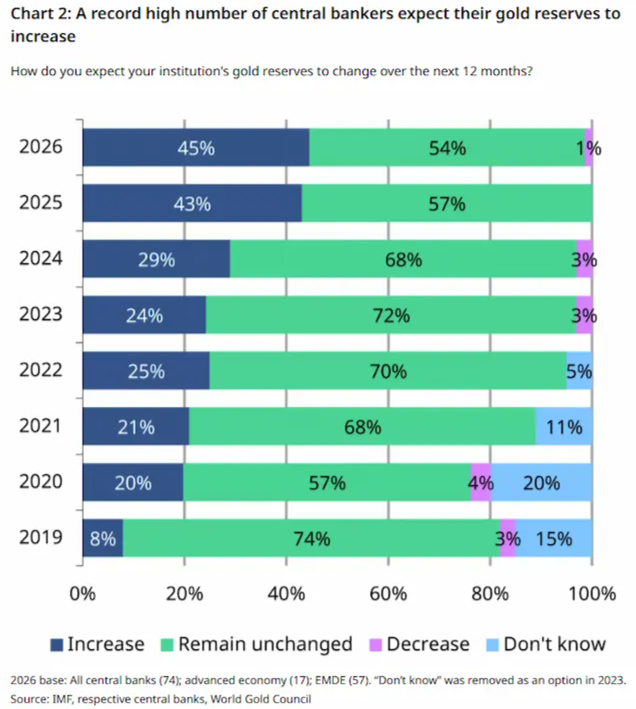
Salim mentioned the results of the Association's ninth central bank reserve survey in 2026. 89% of the surveyed institutions predicted that the total global gold reserves would increase in the next 12 months, and 45% of central banks planned to increase their own gold reserves , the highest proportion in the history of the survey. Even if gold prices fall in stages, the long-term allocation intention of central banks around the world has not diminished.
New changes are emerging in asset allocation methods. The Bank of Korea has completed preparations for investing in overseas gold ETFs, leveraging the product's high liquidity and low storage costs to optimize the diversification of its foreign exchange assets. Currently, Korea's gold reserves account for only 3% of its total reserves, far lower than those of other emerging market countries. Surveys show that only 4% of central banks allocate gold through gold ETFs, indicating significant room for growth in this channel.
Demand for gold in Latin America is also gradually increasing. Chile has increased its holdings by 8 tons this year, while Guatemala, Bolivia, and Uruguay have all completed small-scale purchases, and the trend of regional gold hoarding is beginning to emerge.
Based on monthly reserve data and institutional surveys, short-term gold price fluctuations cannot reverse the long-term strategy of global central banks to diversify their reserves. May's net gold purchases by central banks confirm the resilience of official buying. Poland, major Asian countries, and many Central Asian nations continued to steadily increase their holdings, while Singapore and Latin American countries added to their gold purchasing efforts. Only a few countries temporarily reduced their holdings to realize profits.
Central banks' continued gold hoarding creates stable long-term demand, providing sustained bottom support for gold prices. The pace of reserve expansion by various countries will remain the core variable affecting the medium- to long-term trend of gold prices.
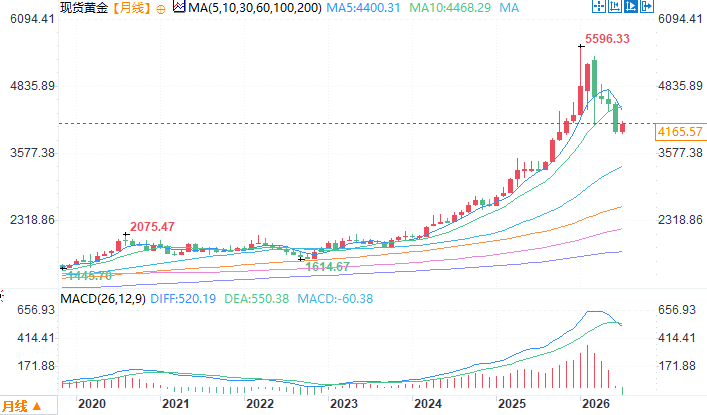
Spot gold monthly chart source: EasyForex
At 12:13 Beijing time on July 6, spot gold was trading at $4162.57 per ounce.
The World Gold Council released official reserve data for May, showing that global central banks made net purchases of 41 tons of gold that month, ranking second this year, only lower than February. Major buyers were concentrated in Poland, major Asian countries, and Uzbekistan, countries that have long been increasing their gold holdings. Singapore returned to the buying camp after more than a year's absence. Meanwhile, Russia and Turkey continued to reduce their gold holdings due to liquidity needs.
Survey data shows that over 80% of central banks are bullish on gold reserves in the long term, and many countries in Asia and Latin America are simultaneously expanding their gold asset allocation channels. The logic that official gold purchases will support the bottom of gold prices remains solid.
The gold market rebounded overall in May, with significant divergence between buying and selling in different countries.
Marissa Salim, senior research director for Asia Pacific at the World Gold Council, released her monthly reserve analysis report last Thursday (July 2). She said that global central banks resumed large-scale reserve purchases in May, with the purchasing power significantly increasing compared to the previous period.
Poland topped the global list with a net purchase of 18 tons that month, followed closely by a major Asian country with an increase of 10 tons, while Uzbekistan and Kazakhstan continued their regular gold purchases.
Singapore made net purchases of 4 tons of gold this month, marking the country's first monthly net increase since September 2025, bringing its total gold reserves to 197 tons. The Monetary Authority of Singapore also plans to launch central bank gold storage operations in October 2026, aiming to create a regional gold trading hub.
The central banks of the Czech Republic and Jordan purchased 2 tons and 1 ton of gold respectively, becoming supplementary buyers.
On the selling side, a stark contrast emerged, with Russia and Turkey continuing to reduce their holdings. In May, they net sold 6 tons and 3 tons of gold respectively. Since the beginning of the year, the cumulative gold sales of the two countries have reached 34 tons and 81 tons respectively, releasing gold in the short term to obtain foreign exchange liquidity.
Major gold-purchasing countries are steadily expanding their reserves, with clear long-term investment goals.
Looking at the cumulative data for the whole of 2026, Poland is the world's largest sovereign gold buyer this year, with a cumulative increase of 64 tons. It has achieved a monthly net purchase of more than 10 tons for four consecutive months. Since February, it has purchased a total of 64 tons. Its current official gold reserves are 614 tons, and it continues to move closer to the 700-ton reserve target.
A major Asian nation added 10 tons of gold in May, marking the highest monthly increase since December 2024. This marks the 20th consecutive month of net gold purchases, bringing the total increase this year to 25 tons. The nation's total gold reserves are approximately 2,331 tons, accounting for 9% of its total reserves.
Uzbekistan has purchased a total of 33 tons of gold this year, accounting for 87% of its reserves; Kazakhstan purchased 7 tons in May, with a net increase of 20 tons this year, and currently has 361 tons of gold reserves, accounting for 78% of its total reserves. Both countries regard gold as a core safe-haven reserve asset.
Global central banks are bullish on gold in the long term, and investment channels continue to expand.
Salim mentioned the results of the Association's ninth central bank reserve survey in 2026. 89% of the surveyed institutions predicted that the total global gold reserves would increase in the next 12 months, and 45% of central banks planned to increase their own gold reserves , the highest proportion in the history of the survey. Even if gold prices fall in stages, the long-term allocation intention of central banks around the world has not diminished.
New changes are emerging in asset allocation methods. The Bank of Korea has completed preparations for investing in overseas gold ETFs, leveraging the product's high liquidity and low storage costs to optimize the diversification of its foreign exchange assets. Currently, Korea's gold reserves account for only 3% of its total reserves, far lower than those of other emerging market countries. Surveys show that only 4% of central banks allocate gold through gold ETFs, indicating significant room for growth in this channel.
Demand for gold in Latin America is also gradually increasing. Chile has increased its holdings by 8 tons this year, while Guatemala, Bolivia, and Uruguay have all completed small-scale purchases, and the trend of regional gold hoarding is beginning to emerge.
Summarize
Based on monthly reserve data and institutional surveys, short-term gold price fluctuations cannot reverse the long-term strategy of global central banks to diversify their reserves. May's net gold purchases by central banks confirm the resilience of official buying. Poland, major Asian countries, and many Central Asian nations continued to steadily increase their holdings, while Singapore and Latin American countries added to their gold purchasing efforts. Only a few countries temporarily reduced their holdings to realize profits.
Central banks' continued gold hoarding creates stable long-term demand, providing sustained bottom support for gold prices. The pace of reserve expansion by various countries will remain the core variable affecting the medium- to long-term trend of gold prices.
Spot gold monthly chart source: EasyForex
At 12:13 Beijing time on July 6, spot gold was trading at $4162.57 per ounce.
- Risk Warning and Disclaimer
- The market involves risk, and trading may not be suitable for all investors. This article is for reference only and does not constitute personal investment advice, nor does it take into account certain users’ specific investment objectives, financial situation, or other needs. Any investment decisions made based on this information are at your own risk.