The series of attacks in the Strait of Hormuz puts pressure on the US-Iran ceasefire agreement.
2026-07-07 18:05:56
On Tuesday (July 7), during the Asian and European sessions, international oil prices rebounded slightly, with WTI crude oil rising 0.95% and trading around 69.23.
As a vital choke point for global energy shipping, the Strait of Hormuz has seen a steady recovery in crude oil exports since the initial ceasefire agreement reached between the US and Iran in mid-June, with overall shipping showing a marginal improvement . However, the recent attacks on ships in the strait over the past two days could lead to a crucial rebound in the US-Iran peace situation tonight, ultimately pushing up oil prices.
In terms of shipping, export data from major Middle Eastern oil-producing countries have shown a significant recovery. Since the ceasefire agreement was implemented, Saudi Arabia has transported a total of 34 million barrels of crude oil through the Strait of Hormuz. The UAE performed even better, with its oil exports through the Strait of Hormuz reaching a record high in June, indicating a continued recovery in the region's crude oil supply and transportation capacity.
However, the overall recovery of navigation is uneven, and there are obvious shortcomings in the industry's recovery. Currently, the average daily number of ships passing through the strait is only one-third of that before the war. Before the war, about 84 ships passed through the strait daily, while on July 4, only 25 ships with AIS signals enabled successfully passed through the strait.
Furthermore, in the preceding trading days, at least eight oil tankers and LNG carriers turned back without cause in the waters off Oman to avoid danger, with some vessels forced to enter Iranian-controlled waterways. This is enough to highlight the long-standing safety hazards in the waterways and the fragile and unstable recovery trend.

Just as shipping in the Strait of Hormuz was slowly recovering, the regional security situation suddenly deteriorated. A series of attacks on merchant ships occurred in the waters near Oman, completely shattering market expectations of stability and exacerbating panic in the global energy shipping industry.
Early Tuesday morning, the Strait of Hormuz suffered its first major attack when the Qatar Energy LNG carrier "Al Rekayyat" was struck by a projectile about 8 nautical miles (15 kilometers) east of Limah, Oman, after leaving the Strait of Hormuz. The ship immediately caught fire.
Security consultancy EOS Risk Group has officially confirmed that the incident was a precision strike by a drone or missile.
It is worth noting that the vessel was not using its transponder at the time of the incident. The UK's Office for Maritime Trade Operations had previously issued a risk warning for the area but did not disclose the vessel's name beforehand. As of now, neither Qatar Energy nor the shipowner, Nakilat, has commented on the attack.
Following the attack on the LNG carrier, another safety incident has occurred in the same sea area. The latest news indicates that a Saudi Arabian-flagged crude oil tanker has suffered hull damage in the waters off Oman near the Strait of Hormuz.
Within just a few days, LNG carriers and crude oil tankers were attacked and damaged in the same core shipping lane, covering the two core energy categories of crude oil and liquefied natural gas. This means that the security risks of energy transportation in the strait have spread comprehensively and are not isolated incidents.
This series of attacks on merchant ships has directly impacted the ceasefire framework agreement reached between the US and Iran in mid-June, causing the previously easing geopolitical situation in the Middle East to become tense again.
The core objective of the previous US-Iran ceasefire agreement was to stop both sides from attacking and intercepting civilian and commercial ships in the Strait of Hormuz, ensure the smooth passage of global energy shipping routes, and help stabilize the export of Middle Eastern crude oil.
Prior to this, the Iranian Revolutionary Guard had intervened in the passage of waterways on multiple occasions, using radio warnings to drive away passing oil tankers and forcing several ships to temporarily change course and turn back to avoid danger.
This escalation from verbal warnings to live-fire strikes and the direct sinking and destruction of civilian energy vessels represents a substantial breach and violation of the ceasefire agreement.
Market analysts generally anticipate that aggressive actions by Iranian armed forces may trigger military countermeasures from the United States, significantly increasing the risk of escalation of regional conflict.
Affected by risk events, the global shipping industry has tightened its risk control sentiment rapidly. Many shipping companies have suspended the entry of new vessels into the Strait of Hormuz, and some routes have adjusted their channels or detoured to avoid risks, which has once again hindered the recovery of navigation.
The current international crude oil price exhibits a clear pattern of bullish and bearish competition, with pricing logic constantly shifting in response to the situation in the Taiwan Strait.
In the short term, marginal improvements in shipping through the Strait of Hormuz, continued increases in Saudi and UAE crude oil exports, a steady recovery in global crude oil supply, and continued expectations of increased OPEC+ production have resulted in ample market supply, which continues to put downward pressure on international oil prices. The oil price premium previously driven by geopolitical risks is gradually declining.
However, the series of attacks on merchant ships has completely reversed the market's optimistic expectations, and potential positive factors are building up.
If the United States launches a cross-border military strike in response to this series of attacks, the confrontation and conflict between the United States and Iran will escalate rapidly. The Strait of Hormuz may once again see large-scale ship stoppages, turns, and detours, drastically reducing the efficiency of the core energy shipping route and posing a risk of disruption to the global crude oil and LNG supply chains.
The market will then reprice geopolitical risks and supply gaps, and oil prices, which have been suppressed in the short term, are expected to rebound quickly. The market's focus will subsequently be on two key signals: the US military response and vessel traffic data in the Strait of Hormuz.
Technically, WTI crude oil's break below the key $70 level did not trigger panic selling and further declines. Oil prices are currently consolidating and choosing a direction. A breakout in either direction could lead to stop-loss orders or aggressive buying from outside funds. However, given the ongoing attacks on merchant ships in the Strait of Hormuz, the probability of an upward move is higher.
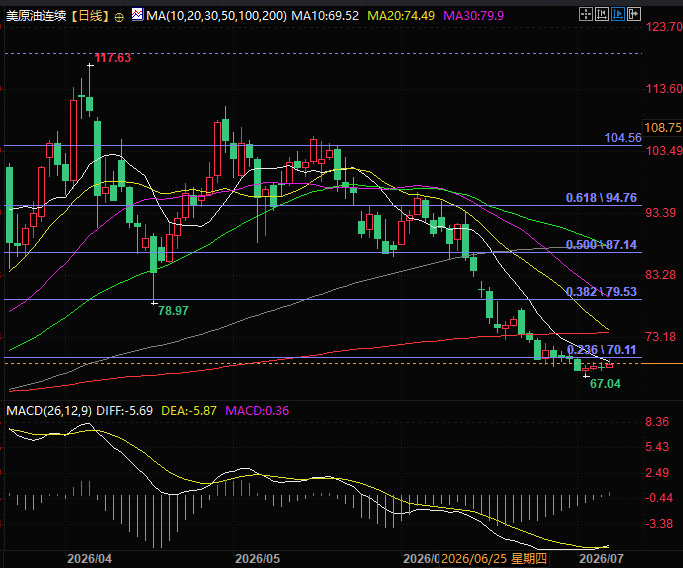
(WTI crude oil futures daily chart, source: EasyForex)
At 18:00 Beijing time, WTI crude oil futures were trading at $69.24 per barrel.
As a vital choke point for global energy shipping, the Strait of Hormuz has seen a steady recovery in crude oil exports since the initial ceasefire agreement reached between the US and Iran in mid-June, with overall shipping showing a marginal improvement . However, the recent attacks on ships in the strait over the past two days could lead to a crucial rebound in the US-Iran peace situation tonight, ultimately pushing up oil prices.
In terms of shipping, export data from major Middle Eastern oil-producing countries have shown a significant recovery. Since the ceasefire agreement was implemented, Saudi Arabia has transported a total of 34 million barrels of crude oil through the Strait of Hormuz. The UAE performed even better, with its oil exports through the Strait of Hormuz reaching a record high in June, indicating a continued recovery in the region's crude oil supply and transportation capacity.
However, the overall recovery of navigation is uneven, and there are obvious shortcomings in the industry's recovery. Currently, the average daily number of ships passing through the strait is only one-third of that before the war. Before the war, about 84 ships passed through the strait daily, while on July 4, only 25 ships with AIS signals enabled successfully passed through the strait.
Furthermore, in the preceding trading days, at least eight oil tankers and LNG carriers turned back without cause in the waters off Oman to avoid danger, with some vessels forced to enter Iranian-controlled waterways. This is enough to highlight the long-standing safety hazards in the waterways and the fragile and unstable recovery trend.
A series of sudden attacks! LNG carriers and Saudi oil tankers were damaged in succession off the coast of Oman.
Just as shipping in the Strait of Hormuz was slowly recovering, the regional security situation suddenly deteriorated. A series of attacks on merchant ships occurred in the waters near Oman, completely shattering market expectations of stability and exacerbating panic in the global energy shipping industry.
Early Tuesday morning, the Strait of Hormuz suffered its first major attack when the Qatar Energy LNG carrier "Al Rekayyat" was struck by a projectile about 8 nautical miles (15 kilometers) east of Limah, Oman, after leaving the Strait of Hormuz. The ship immediately caught fire.
Security consultancy EOS Risk Group has officially confirmed that the incident was a precision strike by a drone or missile.
It is worth noting that the vessel was not using its transponder at the time of the incident. The UK's Office for Maritime Trade Operations had previously issued a risk warning for the area but did not disclose the vessel's name beforehand. As of now, neither Qatar Energy nor the shipowner, Nakilat, has commented on the attack.
Following the attack on the LNG carrier, another safety incident has occurred in the same sea area. The latest news indicates that a Saudi Arabian-flagged crude oil tanker has suffered hull damage in the waters off Oman near the Strait of Hormuz.
Within just a few days, LNG carriers and crude oil tankers were attacked and damaged in the same core shipping lane, covering the two core energy categories of crude oil and liquefied natural gas. This means that the security risks of energy transportation in the strait have spread comprehensively and are not isolated incidents.
The ceasefire agreement is on the verge of collapse, and expectations of US military retaliation continue to rise.
This series of attacks on merchant ships has directly impacted the ceasefire framework agreement reached between the US and Iran in mid-June, causing the previously easing geopolitical situation in the Middle East to become tense again.
The core objective of the previous US-Iran ceasefire agreement was to stop both sides from attacking and intercepting civilian and commercial ships in the Strait of Hormuz, ensure the smooth passage of global energy shipping routes, and help stabilize the export of Middle Eastern crude oil.
Prior to this, the Iranian Revolutionary Guard had intervened in the passage of waterways on multiple occasions, using radio warnings to drive away passing oil tankers and forcing several ships to temporarily change course and turn back to avoid danger.
This escalation from verbal warnings to live-fire strikes and the direct sinking and destruction of civilian energy vessels represents a substantial breach and violation of the ceasefire agreement.
Market analysts generally anticipate that aggressive actions by Iranian armed forces may trigger military countermeasures from the United States, significantly increasing the risk of escalation of regional conflict.
Affected by risk events, the global shipping industry has tightened its risk control sentiment rapidly. Many shipping companies have suspended the entry of new vessels into the Strait of Hormuz, and some routes have adjusted their channels or detoured to avoid risks, which has once again hindered the recovery of navigation.
Oil price logic shifts: Short-term correction suppresses prices, geopolitical risks harbor potential for a rebound.
The current international crude oil price exhibits a clear pattern of bullish and bearish competition, with pricing logic constantly shifting in response to the situation in the Taiwan Strait.
In the short term, marginal improvements in shipping through the Strait of Hormuz, continued increases in Saudi and UAE crude oil exports, a steady recovery in global crude oil supply, and continued expectations of increased OPEC+ production have resulted in ample market supply, which continues to put downward pressure on international oil prices. The oil price premium previously driven by geopolitical risks is gradually declining.
However, the series of attacks on merchant ships has completely reversed the market's optimistic expectations, and potential positive factors are building up.
If the United States launches a cross-border military strike in response to this series of attacks, the confrontation and conflict between the United States and Iran will escalate rapidly. The Strait of Hormuz may once again see large-scale ship stoppages, turns, and detours, drastically reducing the efficiency of the core energy shipping route and posing a risk of disruption to the global crude oil and LNG supply chains.
The market will then reprice geopolitical risks and supply gaps, and oil prices, which have been suppressed in the short term, are expected to rebound quickly. The market's focus will subsequently be on two key signals: the US military response and vessel traffic data in the Strait of Hormuz.
Technically, WTI crude oil's break below the key $70 level did not trigger panic selling and further declines. Oil prices are currently consolidating and choosing a direction. A breakout in either direction could lead to stop-loss orders or aggressive buying from outside funds. However, given the ongoing attacks on merchant ships in the Strait of Hormuz, the probability of an upward move is higher.
(WTI crude oil futures daily chart, source: EasyForex)
At 18:00 Beijing time, WTI crude oil futures were trading at $69.24 per barrel.
- Risk Warning and Disclaimer
- The market involves risk, and trading may not be suitable for all investors. This article is for reference only and does not constitute personal investment advice, nor does it take into account certain users’ specific investment objectives, financial situation, or other needs. Any investment decisions made based on this information are at your own risk.