Gold Trading Alert: Renewed conflict in the Middle East and soaring oil prices are weighing on gold prices; the Fed minutes tonight could trigger a major price movement.
2026-07-08 07:50:00
On Tuesday (July 7), despite a significant escalation of tensions in the Strait of Hormuz region of the Middle East and a sharp rise in oil prices due to attacks on multiple oil tankers, spot gold fell 1.42% to close at $4,105 per ounce, having briefly fallen below the $4,100 mark to $4,092 per ounce during the session. This movement aligns with the trading logic that has emerged in the market over the past four months: escalating tensions in the Middle East often lead to higher oil prices, which in turn increases global inflation expectations, strengthening the probability that the Federal Reserve will maintain higher interest rates, thus putting temporary pressure on gold prices. Investors are currently focusing their attention on the upcoming release of the minutes from the Federal Reserve's June meeting, hoping to gain clear guidance on the future direction of monetary policy. On Wednesday (July 8) in early Asian trading, spot gold traded in a narrow range, currently hovering around the $4,100 level.
The latest developments in the Middle East have become a focus of market attention. A series of attacks on oil tankers have occurred near the Strait of Hormuz, one of the world's most important oil shipping routes. These include a drone attack on the Qatari giant LNG carrier Al Rekayyat, which caused a fire in its engine room; the crew is being safely evacuated. A Saudi-flagged supertanker is also believed to have been affected. These incidents have quickly raised concerns in the market about shipping disruptions and the stability of energy supplies.
In response, U.S. Central Command announced a series of punitive airstrikes against Iranian targets, covering air defense systems, coastal surveillance facilities, missile sites, and port infrastructure in southern Iran. Simultaneously, the U.S. revoked the general license previously granted to Iran to sell oil on the international market, a decision that directly put significant pressure on the fragile ceasefire agreement reached last month. President Trump, in a public statement, emphasized "either a deal or the job is done," demonstrating a tough stance. Iran condemned the move as a violation of the framework agreement and stated it would take necessary measures to safeguard its national interests.
Oil prices reacted strongly, with Brent crude futures rising approximately 5.25% and U.S. crude futures rising 5.4% on Tuesday. The rapid rise in energy prices not only exacerbated market concerns about global supply chains but also directly pushed up inflation expectations, becoming a significant macroeconomic variable affecting the pricing of financial assets, including gold. Recent market experience shows that such escalating geopolitical conflicts often indirectly suppress gold's performance through oil price channels.
The failure of gold to exhibit its traditional safe-haven appeal amid rising oil prices reflects the market's current sensitivity to Federal Reserve policy. Weaker-than-expected US jobs data last week briefly boosted gold prices, with Monday's price hitting a two-week high, but the underlying economic logic subsequently prevailed. The CME FedWatch tool shows traders still expect a roughly 60% probability of a September rate hike, with the probability of a rate hike at the October meeting also remaining high.
Peter Grant, Vice President and Senior Metals Strategist at Zaner Metals, pointed out that the Federal Reserve remains very focused on curbing inflation, so maintaining higher interest rates for an extended period remains its most likely policy path.
The minutes of the Federal Reserve's June meeting, to be released on Wednesday, are highly anticipated. This is the first set of minutes chaired by Chairman Warsh since taking office. Markets hope to glean the latest assessments from policymakers regarding the economic outlook, inflation trends, and forward guidance.
In a television interview, New York Fed President Williams mentioned that the recent decline in energy prices has eased inflationary pressures, but consumer surveys show that concerns about short-term inflation have intensified, adding complexity to the policy debate.
Meanwhile, the US bond market is also reflecting similar pressures. The yield on 10-year US Treasury bonds rose to a four-week high, and the yield on 30-year bonds also increased. The yield curve is showing characteristics of a "bear market steepening," and short-term interest rate expectations have adjusted somewhat, but the overall high-interest-rate environment continues to exert significant downward pressure on non-interest-bearing assets such as gold. The upcoming large-scale supply of Treasury bonds will also test the market's ability to absorb the new bonds.
Despite a pullback in international gold prices, stable demand from China has provided significant support to the gold market. The People's Bank of China announced that gold reserves stood at 75.44 million ounces at the end of June, an increase of 480,000 ounces from the end of the previous month, marking the 20th consecutive month of increases in gold reserves. This long-term action highlights China's strategic resolve as one of the world's largest gold buyers; even as the value of its dollar-denominated reserves fluctuates due to gold price volatility, physical accumulation continues steadily.
At the regional cooperation level, Hong Kong Chief Executive John Lee announced that the Hong Kong Central Gold Clearing System officially commenced trial operation on Tuesday, and launched the first phase of "physical connectivity" in cooperation with the Shanghai Gold Exchange. This move signifies a closer connection between the gold markets of the two places in the clearing and settlement process. Hong Kong is also considering developing new RMB-denominated gold futures contracts, with delivery support provided by the Shanghai Gold Exchange. These developments will not only help enhance Hong Kong's status as an international gold trading center, but will also further promote the use of the RMB in gold trade, injecting new vitality and liquidity into the Asian and even global gold markets.
Looking ahead, gold price movements will continue to depend on the interplay between Middle East geopolitical tensions and the Federal Reserve's monetary policy. If tensions in the Middle East continue to escalate and drive oil prices to prolonged highs, gold prices may face downward pressure. Conversely, if a ceasefire agreement is solidified or negotiations make positive progress, safe-haven demand is expected to regain dominance, driving a gold price rebound. The tone of the Federal Reserve meeting minutes, subsequent economic data, and oil price movements will be the most crucial indicators to watch in the short term.
From a medium- to long-term perspective, the fundamental support for gold remains solid. The People's Bank of China's continued strategic gold purchases, the deepening integration of the Hong Kong and mainland gold markets, and the global trend of reserve asset diversification all provide a strong backing for gold prices. In the current complex geopolitical and macroeconomic environment, gold's value as an important tool for hedging against inflation, currency volatility, and uncertainty risks has not diminished.
Investors should exercise caution and closely monitor the latest developments in the Strait of Hormuz, Federal Reserve policy signals, and global energy market dynamics.
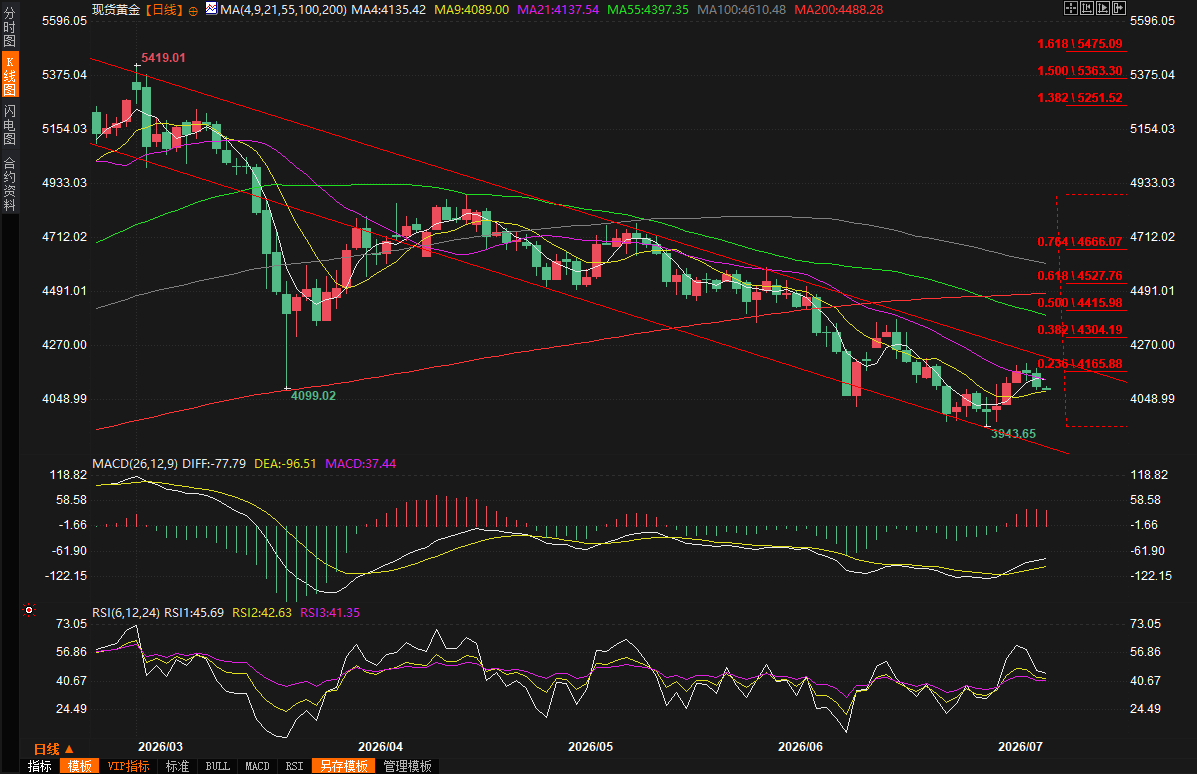
(Spot gold daily chart, source: FX678)
At 07:45 Beijing time, spot gold was trading at $4097.23 per ounce.
Middle East geopolitical conflicts reignite: Tanker attacks and escalating US-Iran confrontation.
The latest developments in the Middle East have become a focus of market attention. A series of attacks on oil tankers have occurred near the Strait of Hormuz, one of the world's most important oil shipping routes. These include a drone attack on the Qatari giant LNG carrier Al Rekayyat, which caused a fire in its engine room; the crew is being safely evacuated. A Saudi-flagged supertanker is also believed to have been affected. These incidents have quickly raised concerns in the market about shipping disruptions and the stability of energy supplies.
In response, U.S. Central Command announced a series of punitive airstrikes against Iranian targets, covering air defense systems, coastal surveillance facilities, missile sites, and port infrastructure in southern Iran. Simultaneously, the U.S. revoked the general license previously granted to Iran to sell oil on the international market, a decision that directly put significant pressure on the fragile ceasefire agreement reached last month. President Trump, in a public statement, emphasized "either a deal or the job is done," demonstrating a tough stance. Iran condemned the move as a violation of the framework agreement and stated it would take necessary measures to safeguard its national interests.
Oil prices reacted strongly, with Brent crude futures rising approximately 5.25% and U.S. crude futures rising 5.4% on Tuesday. The rapid rise in energy prices not only exacerbated market concerns about global supply chains but also directly pushed up inflation expectations, becoming a significant macroeconomic variable affecting the pricing of financial assets, including gold. Recent market experience shows that such escalating geopolitical conflicts often indirectly suppress gold's performance through oil price channels.
The Fed's policy path is key: Market expectations are high as meeting minutes are about to be released.
The failure of gold to exhibit its traditional safe-haven appeal amid rising oil prices reflects the market's current sensitivity to Federal Reserve policy. Weaker-than-expected US jobs data last week briefly boosted gold prices, with Monday's price hitting a two-week high, but the underlying economic logic subsequently prevailed. The CME FedWatch tool shows traders still expect a roughly 60% probability of a September rate hike, with the probability of a rate hike at the October meeting also remaining high.
Peter Grant, Vice President and Senior Metals Strategist at Zaner Metals, pointed out that the Federal Reserve remains very focused on curbing inflation, so maintaining higher interest rates for an extended period remains its most likely policy path.
The minutes of the Federal Reserve's June meeting, to be released on Wednesday, are highly anticipated. This is the first set of minutes chaired by Chairman Warsh since taking office. Markets hope to glean the latest assessments from policymakers regarding the economic outlook, inflation trends, and forward guidance.
In a television interview, New York Fed President Williams mentioned that the recent decline in energy prices has eased inflationary pressures, but consumer surveys show that concerns about short-term inflation have intensified, adding complexity to the policy debate.
Meanwhile, the US bond market is also reflecting similar pressures. The yield on 10-year US Treasury bonds rose to a four-week high, and the yield on 30-year bonds also increased. The yield curve is showing characteristics of a "bear market steepening," and short-term interest rate expectations have adjusted somewhat, but the overall high-interest-rate environment continues to exert significant downward pressure on non-interest-bearing assets such as gold. The upcoming large-scale supply of Treasury bonds will also test the market's ability to absorb the new bonds.
China's gold buying continues to surge: Central bank's continuous increases in holdings and innovations in the Hong Kong market.
Despite a pullback in international gold prices, stable demand from China has provided significant support to the gold market. The People's Bank of China announced that gold reserves stood at 75.44 million ounces at the end of June, an increase of 480,000 ounces from the end of the previous month, marking the 20th consecutive month of increases in gold reserves. This long-term action highlights China's strategic resolve as one of the world's largest gold buyers; even as the value of its dollar-denominated reserves fluctuates due to gold price volatility, physical accumulation continues steadily.
At the regional cooperation level, Hong Kong Chief Executive John Lee announced that the Hong Kong Central Gold Clearing System officially commenced trial operation on Tuesday, and launched the first phase of "physical connectivity" in cooperation with the Shanghai Gold Exchange. This move signifies a closer connection between the gold markets of the two places in the clearing and settlement process. Hong Kong is also considering developing new RMB-denominated gold futures contracts, with delivery support provided by the Shanghai Gold Exchange. These developments will not only help enhance Hong Kong's status as an international gold trading center, but will also further promote the use of the RMB in gold trade, injecting new vitality and liquidity into the Asian and even global gold markets.
Market Outlook: The Value of Gold Investment Amidst Multiple Intertwined Variables
Looking ahead, gold price movements will continue to depend on the interplay between Middle East geopolitical tensions and the Federal Reserve's monetary policy. If tensions in the Middle East continue to escalate and drive oil prices to prolonged highs, gold prices may face downward pressure. Conversely, if a ceasefire agreement is solidified or negotiations make positive progress, safe-haven demand is expected to regain dominance, driving a gold price rebound. The tone of the Federal Reserve meeting minutes, subsequent economic data, and oil price movements will be the most crucial indicators to watch in the short term.
From a medium- to long-term perspective, the fundamental support for gold remains solid. The People's Bank of China's continued strategic gold purchases, the deepening integration of the Hong Kong and mainland gold markets, and the global trend of reserve asset diversification all provide a strong backing for gold prices. In the current complex geopolitical and macroeconomic environment, gold's value as an important tool for hedging against inflation, currency volatility, and uncertainty risks has not diminished.
Investors should exercise caution and closely monitor the latest developments in the Strait of Hormuz, Federal Reserve policy signals, and global energy market dynamics.
(Spot gold daily chart, source: FX678)
At 07:45 Beijing time, spot gold was trading at $4097.23 per ounce.
- Risk Warning and Disclaimer
- The market involves risk, and trading may not be suitable for all investors. This article is for reference only and does not constitute personal investment advice, nor does it take into account certain users’ specific investment objectives, financial situation, or other needs. Any investment decisions made based on this information are at your own risk.