The Australian dollar rebounded slightly against the US dollar but remained under pressure, with the weakening US dollar and cooling Australian inflation both weighing on the exchange rate.
2026-07-09 15:01:53
On Thursday (July 9) during the European trading session, the risk currency Australian dollar rose slightly against the US dollar, with the exchange rate reaching around 0.6940. The main driver of this slight rebound was the temporary weakening of the US dollar.
Despite escalating geopolitical tensions in the Middle East and a hawkish tone in the June Federal Reserve meeting minutes released on Wednesday, the US dollar index remained under pressure, providing short-term support for the Australian dollar. However, from a fundamental and technical perspective, the short-term downward trend of the Australian dollar has not reversed. Cooling domestic inflation data in Australia weakened market expectations for interest rate hikes, and hawkish statements from Reserve Bank of Australia officials alone are unlikely to create sustained positive momentum. Coupled with technical indicators showing that bearish momentum has not been fully cleared, the Australian dollar only has room for short-term correction, and a sustained upward trend is unlikely.
The US dollar index, which measures the overall performance of the US dollar against six major currencies, fell by about 0.25% during the day, with the price near 100.82, directly driving the Australian dollar higher in tandem.
Geopolitically, the US military launched airstrikes against infrastructure in Iran, and the market anticipates that the Middle East standoff may continue for a long time. Theoretically, this would push up oil prices and enhance the safe-haven appeal of the US dollar, but short-term funds have not flowed into US dollar assets.
In terms of monetary policy, the Federal Reserve meeting minutes released clear concerns about inflation, with several policymakers indicating the need to tighten monetary conditions and suppress upward pressure on prices. Theoretically, this would be bullish for the US dollar, but the market had already priced in these expectations, and long positions were taking profits, causing a short-term pullback in the US dollar, which indirectly benefited the risk-averse Australian dollar.
Australian domestic policy expectations have become a key internal variable influencing the Australian dollar's trajectory. Following two consecutive months of declines in Australia's monthly consumer price index, the market significantly reduced its bets on a Reserve Bank of Australia (RBA) rate hike, putting continued pressure on the Australian dollar.
Reserve Bank of Australia (RBA) Deputy Governor Sarah Hunter recently reiterated that the central bank will take necessary measures to push inflation back to the policy target range while ensuring sustainable full employment. This hawkish statement led traders to revise their expectations for further monetary tightening by the RBA, providing some buying support for the Australian dollar and contributing to the recent slight rebound.
However, the reality of cooling inflation data remains unchanged. Officials' verbal statements can only bring short-term sentiment improvement and cannot fundamentally reverse the market's pricing of Australia's easing cycle, thus naturally limiting the upside potential of the Australian dollar.
Although the market has seen a slight recovery, the Australian dollar remains bearish against the US dollar in the short term. The exchange rate continues to trade below the 20-period exponential moving average at 0.6963, which is a key level for short-term trends. The exchange rate has repeatedly tested but failed to break through this level, indicating that the rebound will continue to face pressure.
The Relative Strength Index (RSI) reading is 41.46, which is below the 50 midline, indicating that selling pressure in the market continues, but it has not yet entered the extreme oversold zone.
The resistance and support levels are clearly defined. The primary resistance is at the 20-period exponential moving average (0.6963). Only a decisive break above this level can alleviate the current downward trend. After stabilizing above the moving average, the next psychological resistance level is the psychological 0.7000. The key support level below is the June low of 0.6865. A break below this level would open up significant downside potential, with the price likely to further decline to the March low of 0.6833.
In summary, the recent slight rebound in the Australian dollar is solely based on a short-term pullback in the US dollar and hawkish comments from Reserve Bank of Australia officials, representing a technical correction. Middle East geopolitical risk aversion and long-term expectations of Fed tightening continue to support the US dollar. Cooling Australian inflation weakens the logic for sustained interest rate hikes, and technical indicators have not reversed their bearish trend. These multiple factors limit the upside potential of the Australian dollar. The key focus going forward is whether the exchange rate can break through the short-term moving average resistance at 0.6963. If it continues to face pressure, a further decline to test previous lows is likely.
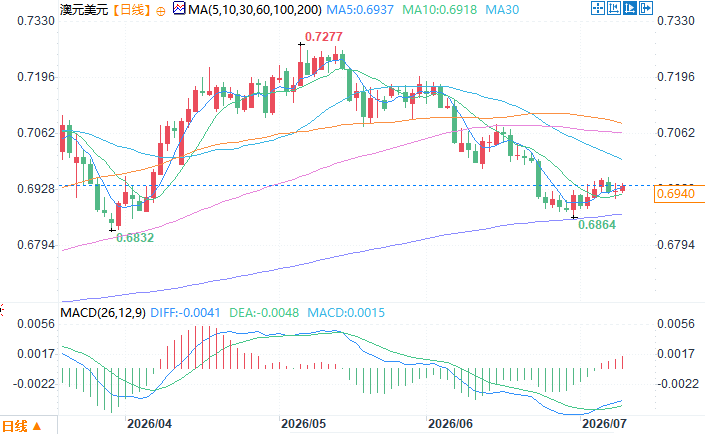
Australian Dollar to US Dollar Daily Chart Source: EasyForex
At 15:01 Beijing time on July 9, the Australian dollar was trading at 0.6939/40 against the US dollar.
Despite escalating geopolitical tensions in the Middle East and a hawkish tone in the June Federal Reserve meeting minutes released on Wednesday, the US dollar index remained under pressure, providing short-term support for the Australian dollar. However, from a fundamental and technical perspective, the short-term downward trend of the Australian dollar has not reversed. Cooling domestic inflation data in Australia weakened market expectations for interest rate hikes, and hawkish statements from Reserve Bank of Australia officials alone are unlikely to create sustained positive momentum. Coupled with technical indicators showing that bearish momentum has not been fully cleared, the Australian dollar only has room for short-term correction, and a sustained upward trend is unlikely.
The US dollar weakened under pressure, with multiple external factors intertwining and affecting the dollar index's movement.
The US dollar index, which measures the overall performance of the US dollar against six major currencies, fell by about 0.25% during the day, with the price near 100.82, directly driving the Australian dollar higher in tandem.
Geopolitically, the US military launched airstrikes against infrastructure in Iran, and the market anticipates that the Middle East standoff may continue for a long time. Theoretically, this would push up oil prices and enhance the safe-haven appeal of the US dollar, but short-term funds have not flowed into US dollar assets.
In terms of monetary policy, the Federal Reserve meeting minutes released clear concerns about inflation, with several policymakers indicating the need to tighten monetary conditions and suppress upward pressure on prices. Theoretically, this would be bullish for the US dollar, but the market had already priced in these expectations, and long positions were taking profits, causing a short-term pullback in the US dollar, which indirectly benefited the risk-averse Australian dollar.
Australian policy expectations fluctuate, with comments from senior central bank officials providing a brief boost to the Australian dollar.
Australian domestic policy expectations have become a key internal variable influencing the Australian dollar's trajectory. Following two consecutive months of declines in Australia's monthly consumer price index, the market significantly reduced its bets on a Reserve Bank of Australia (RBA) rate hike, putting continued pressure on the Australian dollar.
Reserve Bank of Australia (RBA) Deputy Governor Sarah Hunter recently reiterated that the central bank will take necessary measures to push inflation back to the policy target range while ensuring sustainable full employment. This hawkish statement led traders to revise their expectations for further monetary tightening by the RBA, providing some buying support for the Australian dollar and contributing to the recent slight rebound.
However, the reality of cooling inflation data remains unchanged. Officials' verbal statements can only bring short-term sentiment improvement and cannot fundamentally reverse the market's pricing of Australia's easing cycle, thus naturally limiting the upside potential of the Australian dollar.
The technical chart clearly shows a bearish trend, with key support and resistance levels clearly defined.
Although the market has seen a slight recovery, the Australian dollar remains bearish against the US dollar in the short term. The exchange rate continues to trade below the 20-period exponential moving average at 0.6963, which is a key level for short-term trends. The exchange rate has repeatedly tested but failed to break through this level, indicating that the rebound will continue to face pressure.
The Relative Strength Index (RSI) reading is 41.46, which is below the 50 midline, indicating that selling pressure in the market continues, but it has not yet entered the extreme oversold zone.
The resistance and support levels are clearly defined. The primary resistance is at the 20-period exponential moving average (0.6963). Only a decisive break above this level can alleviate the current downward trend. After stabilizing above the moving average, the next psychological resistance level is the psychological 0.7000. The key support level below is the June low of 0.6865. A break below this level would open up significant downside potential, with the price likely to further decline to the March low of 0.6833.
Summarize
In summary, the recent slight rebound in the Australian dollar is solely based on a short-term pullback in the US dollar and hawkish comments from Reserve Bank of Australia officials, representing a technical correction. Middle East geopolitical risk aversion and long-term expectations of Fed tightening continue to support the US dollar. Cooling Australian inflation weakens the logic for sustained interest rate hikes, and technical indicators have not reversed their bearish trend. These multiple factors limit the upside potential of the Australian dollar. The key focus going forward is whether the exchange rate can break through the short-term moving average resistance at 0.6963. If it continues to face pressure, a further decline to test previous lows is likely.
Australian Dollar to US Dollar Daily Chart Source: EasyForex
At 15:01 Beijing time on July 9, the Australian dollar was trading at 0.6939/40 against the US dollar.
- Risk Warning and Disclaimer
- The market involves risk, and trading may not be suitable for all investors. This article is for reference only and does not constitute personal investment advice, nor does it take into account certain users’ specific investment objectives, financial situation, or other needs. Any investment decisions made based on this information are at your own risk.