A massive shift of 293 trillion yen in assets is possible! Can a slight adjustment in domestic bond allocation absorb ultra-long-term supply?
2026-07-14 15:20:11
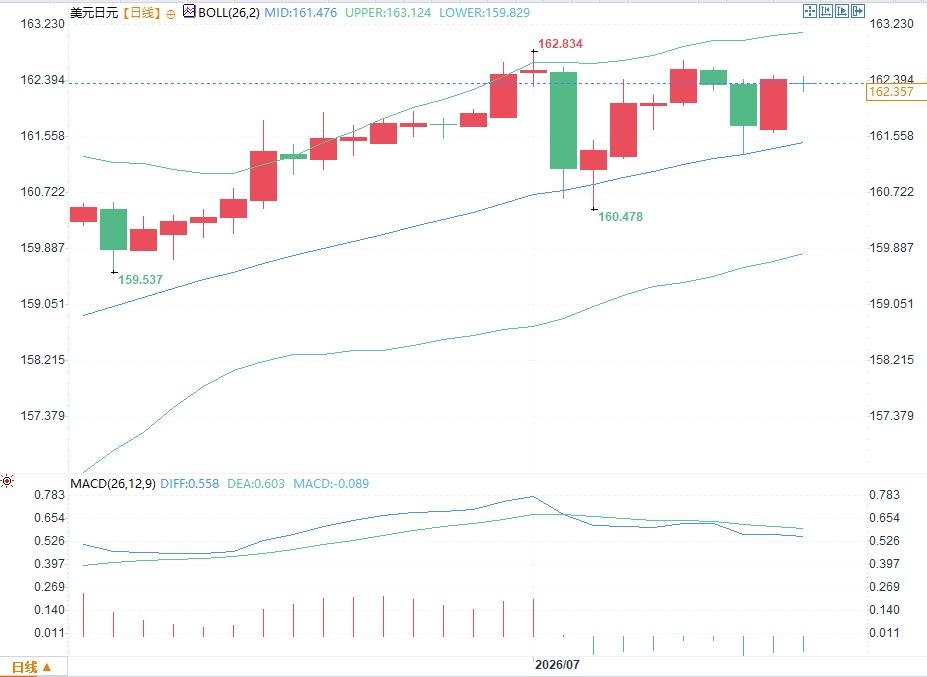
On Tuesday, July 14th, Japanese ultra-long-term government bonds saw a rare rebound in recent times. The yields on 20-year and 30-year bonds fell by as much as 18 basis points to 3.565% and 3.725% respectively during the session, while the 40-year yield fell by about 10 basis points. The direct catalysts for this rally were twofold: improved demand for 20-year government bonds and Finance Minister Satsuki Katayama's proposal to study including government bonds in personal tax-free investment accounts, stating that the Japanese government pension investment fund could adjust its asset portfolio in the event of significant environmental changes. Meanwhile, the USD/JPY exchange rate remained around 162, and international oil prices rebounded, indicating that the current rise in long-term bond prices has not yet eliminated fiscal, exchange rate, and inflation risks. The planned issuance of 20-year government bonds was approximately 700 billion yen, with the bid-to-cover ratio jumping from 2.97 to 4.52, exceeding the average of approximately 3.54 over the past 12 months and approaching the nearly 7-year high reached in April of this year. More importantly, the difference between the average winning bid and the lowest winning bid narrowed from 0.24 yen to 0.00 yen, matching the lowest record since 2010. The increase in the bid-to-cover ratio only indicates an increase in subscription funds, while the zero-margin difference further suggests a significant narrowing of investor disagreements on a reasonable price. In other words, this demand was not driven by a few accounts absorbing the supply at low prices, but rather by a relatively concentrated consensus on pricing. For ultra-long-term instruments that have previously been under pressure due to fiscal expansion, inflation stickiness, and supply constraints, this bidding structure is more valuable than a single-day decline in yield.  However, a single tender cannot directly prove that the term premium has been revalued. On July 9, the yields on 20-year, 30-year, and 40-year bonds rose to 3.890%, 4.030%, and 4.055%, respectively, reflecting the market's demand for higher fiscal and inflation compensation. This market movement is more akin to a combination of short covering and policy expectation correction, rather than a complete reversal of long-term risks. The Government Pension Investment Fund of Japan (GPI), managing approximately ¥293.6 trillion in assets as of the end of March 2026, is one of the most influential potential allocation forces in the Japanese bond market. Its current strategic allocation targets 25% each for domestic bonds, domestic stocks, and overseas bonds and stocks, with certain deviation ranges for each asset class. Even without a comprehensive strategic adjustment, simply reducing overseas bonds and increasing domestic bonds within the existing range could result in marginal changes in funding amounting to trillions of yen. The market's real trading is not about pension funds immediately buying in large quantities, but rather the potential change in the long-term buyer vacuum. With the Bank of Japan continuously reducing its government bond purchases, ultra-long-term bonds will need to be taken over by insurance institutions, pension funds, and household funds. If individual tax-free investment accounts are allowed to allocate government bonds in the future, retail funds can supplement short- to medium-term needs; if pension funds moderately increase the proportion of domestic assets, it is more likely to affect 20- to 40-year maturities. However, policy expectations still have a significant discount. Relevant authorities have stated that the current portfolio and strategic assumptions have not deviated significantly enough to trigger near-term adjustments, and pension fund decisions must be subordinate to long-term returns and the interests of beneficiaries. Therefore, verbal signals can lower short-term risk premiums, but cannot replace formal allocation ratios, implementation timing, and rebalancing rules. The yen exchange rate is currently around 162.30, close to its lowest level in decades. A weaker yen will increase the cost of energy, raw materials, and food imports, which is particularly unfavorable for ultra-long-term government bonds, as 30- to 40-year maturities are more sensitive to long-term inflation expectations and fiscal interest payments.
  Latest official data shows that Japan's overall consumer price index (CPI) rose 1.5% year-on-year in May, 1.4% excluding fresh food, and 1.8% excluding fresh food and energy. While current inflation figures have declined from previous levels, the Bank of Japan (BOJ) still projected in April that CPI growth excluding fresh food would be between 2.5% and 3.0% in fiscal year 2026, with the main risks stemming from oil prices, wage transmission, and import costs. In June, the BOJ raised its policy rate to 1.0%, a 31-year high, noting that energy costs could push underlying inflation back above 2%. This means the long-term bond market faces a complex situation: rising policy rates help stabilize the exchange rate and inflation expectations, but increase bond holding costs; a slow pace of rate hikes could perpetuate yen and import inflation pressures. This recent rebound in ultra-long-term bonds indicates that market assessments of Japanese government bonds are shifting from simply focusing on supply to evaluating who will absorb that supply. Strong tenders, pension fund discussions, and retail account reforms have collectively increased the credibility of potential demand, but fiscal expansion, oil price volatility, a weak yen, and the BOJ's tapering of bond purchases will still determine the central level of the term premium. The key to subsequent pricing lies not in whether policy slogans continue to emerge, but in three verifiable variables: whether the Japanese Government Pension Investment Fund adjusts its domestic bond allocation range, whether individual tax-free investment accounts are formally included in government bonds, and whether the fiscal plan simultaneously clarifies medium- and long-term financing arrangements. Before these details are finalized, ultra-long-term yields may shift from a previous unilateral upward trend to a high-volatility range, but this is not yet sufficient to confirm a structural downward trend.
However, a single tender cannot directly prove that the term premium has been revalued. On July 9, the yields on 20-year, 30-year, and 40-year bonds rose to 3.890%, 4.030%, and 4.055%, respectively, reflecting the market's demand for higher fiscal and inflation compensation. This market movement is more akin to a combination of short covering and policy expectation correction, rather than a complete reversal of long-term risks. The Government Pension Investment Fund of Japan (GPI), managing approximately ¥293.6 trillion in assets as of the end of March 2026, is one of the most influential potential allocation forces in the Japanese bond market. Its current strategic allocation targets 25% each for domestic bonds, domestic stocks, and overseas bonds and stocks, with certain deviation ranges for each asset class. Even without a comprehensive strategic adjustment, simply reducing overseas bonds and increasing domestic bonds within the existing range could result in marginal changes in funding amounting to trillions of yen. The market's real trading is not about pension funds immediately buying in large quantities, but rather the potential change in the long-term buyer vacuum. With the Bank of Japan continuously reducing its government bond purchases, ultra-long-term bonds will need to be taken over by insurance institutions, pension funds, and household funds. If individual tax-free investment accounts are allowed to allocate government bonds in the future, retail funds can supplement short- to medium-term needs; if pension funds moderately increase the proportion of domestic assets, it is more likely to affect 20- to 40-year maturities. However, policy expectations still have a significant discount. Relevant authorities have stated that the current portfolio and strategic assumptions have not deviated significantly enough to trigger near-term adjustments, and pension fund decisions must be subordinate to long-term returns and the interests of beneficiaries. Therefore, verbal signals can lower short-term risk premiums, but cannot replace formal allocation ratios, implementation timing, and rebalancing rules. The yen exchange rate is currently around 162.30, close to its lowest level in decades. A weaker yen will increase the cost of energy, raw materials, and food imports, which is particularly unfavorable for ultra-long-term government bonds, as 30- to 40-year maturities are more sensitive to long-term inflation expectations and fiscal interest payments. Latest official data shows that Japan's overall consumer price index (CPI) rose 1.5% year-on-year in May, 1.4% excluding fresh food, and 1.8% excluding fresh food and energy. While current inflation figures have declined from previous levels, the Bank of Japan (BOJ) still projected in April that CPI growth excluding fresh food would be between 2.5% and 3.0% in fiscal year 2026, with the main risks stemming from oil prices, wage transmission, and import costs. In June, the BOJ raised its policy rate to 1.0%, a 31-year high, noting that energy costs could push underlying inflation back above 2%. This means the long-term bond market faces a complex situation: rising policy rates help stabilize the exchange rate and inflation expectations, but increase bond holding costs; a slow pace of rate hikes could perpetuate yen and import inflation pressures. This recent rebound in ultra-long-term bonds indicates that market assessments of Japanese government bonds are shifting from simply focusing on supply to evaluating who will absorb that supply. Strong tenders, pension fund discussions, and retail account reforms have collectively increased the credibility of potential demand, but fiscal expansion, oil price volatility, a weak yen, and the BOJ's tapering of bond purchases will still determine the central level of the term premium. The key to subsequent pricing lies not in whether policy slogans continue to emerge, but in three verifiable variables: whether the Japanese Government Pension Investment Fund adjusts its domestic bond allocation range, whether individual tax-free investment accounts are formally included in government bonds, and whether the fiscal plan simultaneously clarifies medium- and long-term financing arrangements. Before these details are finalized, ultra-long-term yields may shift from a previous unilateral upward trend to a high-volatility range, but this is not yet sufficient to confirm a structural downward trend.
- Risk Warning and Disclaimer
- The market involves risk, and trading may not be suitable for all investors. This article is for reference only and does not constitute personal investment advice, nor does it take into account certain users’ specific investment objectives, financial situation, or other needs. Any investment decisions made based on this information are at your own risk.