The dollar's position is unshakeable in the short term.
2026-07-16 00:24:12
A key finding in the Official Monetary Forum (OMFIF) 2026 Global Public Investor Report is that none of the central banks surveyed plan to reduce their foreign exchange reserves in the coming years. This confirms a global trend: central banks generally prefer to increase their foreign exchange and gold reserves. 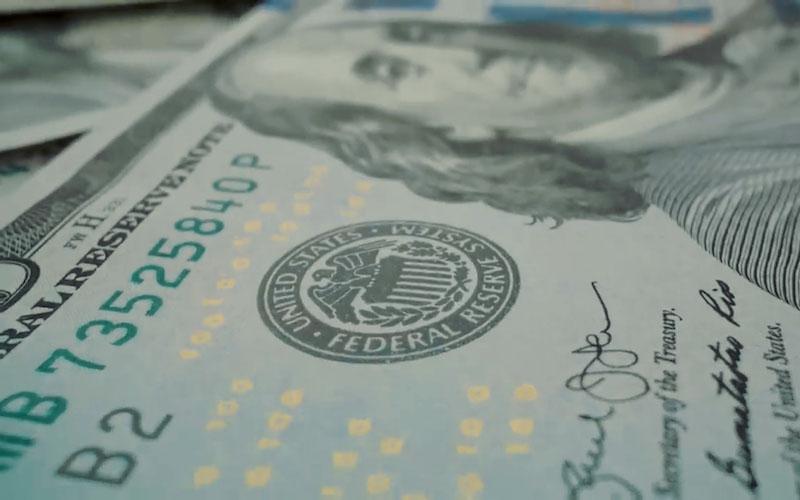 Even though many countries' reserves have long exceeded the traditional adequacy standards set by the International Monetary Fund (IMF), they remain keen to continue accumulating reserves. Decades of successive crises have led to this choice; however, it is now necessary to discuss how central banks should weigh the various challenges that arise when holding massive reserves. This Global Public Investor Report also points out that central banks are reluctant to use their reserves. In the event of a crisis, more than half of the surveyed central banks would not be willing to use more than 10% of their reserves. This contradictory situation—wanting to hold more reserves while being extremely restrained in their actual use—emerged as early as the 1992 British sterling crisis and spread further during the Asian financial crisis of the late 1990s, and is now a deeply entrenched global norm. The Role of the US Dollar in the Foreign Exchange Reserve System Foreign exchange reserves serve as a country's safety net. In times of crisis, all countries rely on reserves to weather the storm. The need for reserves to fulfill this safety net function continues to increase, and the legacy of the 2008 financial crisis and the COVID-19 pandemic have further amplified this trend. Since no one can predict what the next crisis will look like, countries cannot determine the safe bottom line for their reserve sizes. Furthermore, because more and more countries need to use reserves to cope with risks, central banks dare not exhaust their reserves to resolve the current crisis, fearing a new round of turmoil will follow. OMFIF research shows that the only currency for which reserve management institutions plan to reduce their holdings is the US dollar. This is not surprising: according to official foreign exchange reserve currency composition data published by the IMF, the US dollar's share in global reserves has slowly declined over the past 25 years, from approximately 70% to the current 57%. Reserve managers predict that the US dollar's share will fall to 50% in ten years, a view I strongly agree with. However, the key point is that even if the share falls to 50%, the US dollar will still occupy an absolute dominant position in foreign exchange reserve allocation. This share is still far higher than the current levels of the euro (approximately 20%) and the renminbi (approximately 2%). In short, discussing the US dollar's reserve share cannot avoid the fact that the US dollar remains the core pillar of the international monetary system. The underlying reason for the decline in the US dollar's reserve share is that after the terrorist attacks in the United States in 2001, the US frequently instrumentalized the dollar system, which is the trigger for the gradual decline in the US dollar's reserve share. Originally intended to combat terrorist financing, the Patriot Act has evolved into a flexible tool for the United States to achieve its national security goals. On the one hand, the US has a unique advantage, able to leverage financial assets to advance its foreign policy; on the other hand, the more frequently the US uses this privilege, the more other countries want to reduce their dependence on the dollar. Former US Treasury Secretary Jack Lew raised this dilemma as early as 2017. The combination of numerous external forces and internal factors has exacerbated the polarization of the global political and economic landscape, leading countries to increasingly favor nearshore and friendly outsourcing models for key industries. The supply of COVID-19 vaccines during the pandemic, energy shortages following the Russia-Ukraine conflict, and the instability in the Middle East, while driving up commodity prices, have resulted in supply chain security. Udaybil Das defines this as a "sovereign premium." Although the US's global trade, military hard power, and diplomatic influence are gradually weakening, it still leads in the financial sector. The market capitalization-weighted compilation rules of bond indices continue to empower US assets, which is particularly evident in the allocation of foreign exchange reserves. The Implicit Control Brought by the Inherent Advantages of the US Dollar When discussing the long-standing dominance of the US dollar in global finance and the fervent pursuit of dollar reserves by various countries, the positive externalities are often mentioned: the reason people are willing to use the dollar is because it is universally recognized. However, in the context of foreign exchange reserve management, the dollar's advantages extend far beyond this. Iker Suvisareta of the Latin American Reserve Fund calls this the implicit structure behind the dollar's hegemony, with benchmark binding being a major manifestation: all global foreign exchange reserve assets are denominated and accounted for in US dollars, and all currency assets are only entered into the IMF's official foreign exchange reserve currency composition database after being converted to dollar values. The dollar's role as a pricing benchmark itself endows it with powerful influence. Countries facing shifts to other currencies for reserves will encounter numerous difficulties: modifying long-standing pricing benchmarks to include non-dollar currencies is not only time-consuming but also triggers governance controversies. The extremely high threshold for exiting the dollar system solidifies the dollar's status while simultaneously defining the criteria for prudent asset allocation and high-risk investments. As Suvisareta stated, as a pricing currency, the dollar dominates the market's judgment logic. Even with a decline in US global leadership, the US dollar still enjoys uniquely favorable conditions. Future Trends in Foreign Exchange Reserves This global public investor report points out that against the backdrop of a slowly weakening dollar and the absence of a single fiat currency to replace it, gold will continue to be favored due to its geopolitical safe-haven attributes. Gold's return to global attention began in 2008: developed economy central banks stopped selling gold, while emerging market central banks began large-scale purchases; in the same year, Russia intervened militarily in Georgia, and China officially promoted the internationalization of the RMB (in December 2008, the People's Bank of China and the Bank of Korea signed their first currency swap agreement). Following the Crimean crisis in 2014 and the full-scale war between Russia and Ukraine in 2022, Russia's foreign exchange reserves were frozen, and these successive geopolitical events further fueled the enthusiasm of various countries for gold allocation. The trend of geopolitical turmoil driving up gold prices is likely to continue in the long term. However, it is worth noting that the increase in gold holdings by various countries stems from both active buying and valuation appreciation due to rising gold prices, but news reports often fail to distinguish between these two factors. While academia could predict the gradual decline in the dollar's share of reserve assets, it has consistently failed to identify which currency would replace it. This stems from scholars' persistent search for a single successor currency. The reality is that multiple currencies are simultaneously acquiring a portion of reserve assets, a trend expected to continue. The euro's development is limited by several factors: the lack of a unified bond issuer within the Eurozone, persistently negative yields, insufficient technological strength, and recent military weakness, all contributing to a lack of confidence in the euro. A unified currency among BRICS countries is unrealistic. Barry Eichengreen of UC Berkeley bluntly states that the BRICS currency basket concept is mere rhetoric. Based on the past experience of the European Exchange Rate Mechanism, I agree with this view: due to political differences, economic disparities, and institutional issues, a shared currency among BRICS countries is completely unfeasible. While expanded BRICS members may choose a particular member's currency for trade settlement, its impact on the global reserve structure will be negligible. The renminbi's status will steadily improve, and the UAE dirham, as proposed by Herbert Bonish, is also expected to gain some development space. The US Dollar Remains Unyielding In the past, the dollar's status was deeply intertwined with US Treasury bonds, but their future trajectories may gradually diverge. For a long time, countries have primarily relied on purchasing US Treasury bonds to maintain their dollar reserves; however, with the continued loosening of US fiscal discipline and even radical proposals to tax foreign holders of US Treasury bonds, the term premium for long-term US Treasury bonds has risen, increasing the attractiveness of overseas bonds after hedging. The decoupling of dollar reserves from US Treasury bonds is now a foregone conclusion. Although the dollar's massive ship has been breached, the damage is only above the waterline. While the dollar inevitably faces shocks during periods of political turmoil, it will not sink for a long time to come unless it suffers a devastating blow.
Even though many countries' reserves have long exceeded the traditional adequacy standards set by the International Monetary Fund (IMF), they remain keen to continue accumulating reserves. Decades of successive crises have led to this choice; however, it is now necessary to discuss how central banks should weigh the various challenges that arise when holding massive reserves. This Global Public Investor Report also points out that central banks are reluctant to use their reserves. In the event of a crisis, more than half of the surveyed central banks would not be willing to use more than 10% of their reserves. This contradictory situation—wanting to hold more reserves while being extremely restrained in their actual use—emerged as early as the 1992 British sterling crisis and spread further during the Asian financial crisis of the late 1990s, and is now a deeply entrenched global norm. The Role of the US Dollar in the Foreign Exchange Reserve System Foreign exchange reserves serve as a country's safety net. In times of crisis, all countries rely on reserves to weather the storm. The need for reserves to fulfill this safety net function continues to increase, and the legacy of the 2008 financial crisis and the COVID-19 pandemic have further amplified this trend. Since no one can predict what the next crisis will look like, countries cannot determine the safe bottom line for their reserve sizes. Furthermore, because more and more countries need to use reserves to cope with risks, central banks dare not exhaust their reserves to resolve the current crisis, fearing a new round of turmoil will follow. OMFIF research shows that the only currency for which reserve management institutions plan to reduce their holdings is the US dollar. This is not surprising: according to official foreign exchange reserve currency composition data published by the IMF, the US dollar's share in global reserves has slowly declined over the past 25 years, from approximately 70% to the current 57%. Reserve managers predict that the US dollar's share will fall to 50% in ten years, a view I strongly agree with. However, the key point is that even if the share falls to 50%, the US dollar will still occupy an absolute dominant position in foreign exchange reserve allocation. This share is still far higher than the current levels of the euro (approximately 20%) and the renminbi (approximately 2%). In short, discussing the US dollar's reserve share cannot avoid the fact that the US dollar remains the core pillar of the international monetary system. The underlying reason for the decline in the US dollar's reserve share is that after the terrorist attacks in the United States in 2001, the US frequently instrumentalized the dollar system, which is the trigger for the gradual decline in the US dollar's reserve share. Originally intended to combat terrorist financing, the Patriot Act has evolved into a flexible tool for the United States to achieve its national security goals. On the one hand, the US has a unique advantage, able to leverage financial assets to advance its foreign policy; on the other hand, the more frequently the US uses this privilege, the more other countries want to reduce their dependence on the dollar. Former US Treasury Secretary Jack Lew raised this dilemma as early as 2017. The combination of numerous external forces and internal factors has exacerbated the polarization of the global political and economic landscape, leading countries to increasingly favor nearshore and friendly outsourcing models for key industries. The supply of COVID-19 vaccines during the pandemic, energy shortages following the Russia-Ukraine conflict, and the instability in the Middle East, while driving up commodity prices, have resulted in supply chain security. Udaybil Das defines this as a "sovereign premium." Although the US's global trade, military hard power, and diplomatic influence are gradually weakening, it still leads in the financial sector. The market capitalization-weighted compilation rules of bond indices continue to empower US assets, which is particularly evident in the allocation of foreign exchange reserves. The Implicit Control Brought by the Inherent Advantages of the US Dollar When discussing the long-standing dominance of the US dollar in global finance and the fervent pursuit of dollar reserves by various countries, the positive externalities are often mentioned: the reason people are willing to use the dollar is because it is universally recognized. However, in the context of foreign exchange reserve management, the dollar's advantages extend far beyond this. Iker Suvisareta of the Latin American Reserve Fund calls this the implicit structure behind the dollar's hegemony, with benchmark binding being a major manifestation: all global foreign exchange reserve assets are denominated and accounted for in US dollars, and all currency assets are only entered into the IMF's official foreign exchange reserve currency composition database after being converted to dollar values. The dollar's role as a pricing benchmark itself endows it with powerful influence. Countries facing shifts to other currencies for reserves will encounter numerous difficulties: modifying long-standing pricing benchmarks to include non-dollar currencies is not only time-consuming but also triggers governance controversies. The extremely high threshold for exiting the dollar system solidifies the dollar's status while simultaneously defining the criteria for prudent asset allocation and high-risk investments. As Suvisareta stated, as a pricing currency, the dollar dominates the market's judgment logic. Even with a decline in US global leadership, the US dollar still enjoys uniquely favorable conditions. Future Trends in Foreign Exchange Reserves This global public investor report points out that against the backdrop of a slowly weakening dollar and the absence of a single fiat currency to replace it, gold will continue to be favored due to its geopolitical safe-haven attributes. Gold's return to global attention began in 2008: developed economy central banks stopped selling gold, while emerging market central banks began large-scale purchases; in the same year, Russia intervened militarily in Georgia, and China officially promoted the internationalization of the RMB (in December 2008, the People's Bank of China and the Bank of Korea signed their first currency swap agreement). Following the Crimean crisis in 2014 and the full-scale war between Russia and Ukraine in 2022, Russia's foreign exchange reserves were frozen, and these successive geopolitical events further fueled the enthusiasm of various countries for gold allocation. The trend of geopolitical turmoil driving up gold prices is likely to continue in the long term. However, it is worth noting that the increase in gold holdings by various countries stems from both active buying and valuation appreciation due to rising gold prices, but news reports often fail to distinguish between these two factors. While academia could predict the gradual decline in the dollar's share of reserve assets, it has consistently failed to identify which currency would replace it. This stems from scholars' persistent search for a single successor currency. The reality is that multiple currencies are simultaneously acquiring a portion of reserve assets, a trend expected to continue. The euro's development is limited by several factors: the lack of a unified bond issuer within the Eurozone, persistently negative yields, insufficient technological strength, and recent military weakness, all contributing to a lack of confidence in the euro. A unified currency among BRICS countries is unrealistic. Barry Eichengreen of UC Berkeley bluntly states that the BRICS currency basket concept is mere rhetoric. Based on the past experience of the European Exchange Rate Mechanism, I agree with this view: due to political differences, economic disparities, and institutional issues, a shared currency among BRICS countries is completely unfeasible. While expanded BRICS members may choose a particular member's currency for trade settlement, its impact on the global reserve structure will be negligible. The renminbi's status will steadily improve, and the UAE dirham, as proposed by Herbert Bonish, is also expected to gain some development space. The US Dollar Remains Unyielding In the past, the dollar's status was deeply intertwined with US Treasury bonds, but their future trajectories may gradually diverge. For a long time, countries have primarily relied on purchasing US Treasury bonds to maintain their dollar reserves; however, with the continued loosening of US fiscal discipline and even radical proposals to tax foreign holders of US Treasury bonds, the term premium for long-term US Treasury bonds has risen, increasing the attractiveness of overseas bonds after hedging. The decoupling of dollar reserves from US Treasury bonds is now a foregone conclusion. Although the dollar's massive ship has been breached, the damage is only above the waterline. While the dollar inevitably faces shocks during periods of political turmoil, it will not sink for a long time to come unless it suffers a devastating blow.
- Risk Warning and Disclaimer
- The market involves risk, and trading may not be suitable for all investors. This article is for reference only and does not constitute personal investment advice, nor does it take into account certain users’ specific investment objectives, financial situation, or other needs. Any investment decisions made based on this information are at your own risk.