The risk of yen intervention and the expectation of a hawkish Fed are intertwined, and USD/JPY remains in a range above 162.
2026-07-20 13:32:16
The USD/JPY pair traded in a volatile range in Asian trading on Monday, fluctuating around the midpoint of 162.00. Due to the Japanese holiday, overall trading liquidity was low, resulting in relatively limited price movement. However, the current exchange rate remains near the 40-year high reached earlier in July, indicating that the long-term upward trend of the USD/JPY remains intact.  The main factor limiting the recent rebound of the yen is the persistent interest rate differential between Japan and other major economies. Despite repeated signals from the Japanese government that it might intervene in the foreign exchange market, the yen lacks sustained upward momentum due to active carry trades and investors' continued preference for borrowing low-interest yen and allocating to high-yield assets. Japanese Finance Minister Satsuki Katayama previously stated that the government would take decisive action if necessary. This statement increased market attention to potential intervention in the exchange rate, but the market currently believes that verbal warnings alone are insufficient to change the yen's weak trend. Meanwhile, the deteriorating situation in the Middle East is also putting pressure on the yen. Japan is highly dependent on energy imports, with over 90% of its crude oil imports coming from the Middle East. Therefore, the market is concerned that regional conflict could further pressure the Japanese economy through rising energy prices and supply chain risks. The recent escalation of tensions between the US and Iran, with the US conducting military operations for the ninth consecutive night, has further heightened market concerns about the security of energy transport through the Strait of Hormuz. As the region plays a crucial role in global energy transportation, any supply disruption could push up crude oil prices and increase global inflationary pressures. For the yen, the economic pressure from rising energy prices weakens its safe-haven appeal. While the Japanese yen is traditionally considered a safe-haven currency, in the current environment, Japan's high dependence on energy imports has led the market to focus more on the impact of rising oil prices on Japanese corporate costs and economic growth. On the other hand, the US dollar remains supported by safe-haven inflows and expectations of Federal Reserve policy changes. Rising oil prices have reignited concerns about a rebound in inflation, causing investors to lower their expectations for rapid easing. Market surveys show that traders still believe there is a possibility of further interest rate adjustments by the Federal Reserve, providing additional support for the dollar. Expectations of Federal Reserve policy and the interest rate differential between Japan and the US together form an important basis for the rise of the USD/JPY. If US interest rates remain high and the Bank of Japan's policy adjustments are relatively slow, carry trades may continue, thus limiting the yen's appreciation potential. However, the market still needs to be wary of the risk of actual intervention by the Japanese authorities. If USD/JPY breaks through key psychological levels quickly, it may increase the probability of the Japanese government taking action. Therefore, although the USD/JPY is generally strong, caution is advised when chasing the rally at high levels. Going forward, investors will focus on signals from the Japanese government's exchange rate policy, US economic data, speeches by Federal Reserve officials, and changes in the Middle East situation; these factors will collectively determine the next direction of USD/JPY. From a daily chart perspective, USD/JPY remains in a clear uptrend, with prices consistently trading in high-level areas and currently consolidating around 162. The daily chart indicates that the bullish trend remains intact, with short-term moving averages continuing to provide support. Current resistance levels to watch are 163.00 and 164.00; a decisive break above these levels could lead to a further test of the psychological level of 165.00. Support levels to watch are initially around 161.00, with further support in the 159.80-160.00 area. Technically, the MACD remains positive, indicating continued bullish momentum, but the RSI is in high-level territory, suggesting a potential short-term correction. On the 4-hour chart, USD/JPY has entered a high-level consolidation phase, with prices repeatedly consolidating around the 162 area. Short-term moving averages are flattening, indicating a rebalancing of bullish and bearish forces. The RSI remains neutral to slightly bullish, suggesting that buying pressure still holds a certain advantage. If the exchange rate breaks through the 162.80-163.00 area, the upward trend may continue; if it falls below 161.00, a short-term pullback may be triggered, with a target around 160.00. Currently, the 4-hour structure still favors the bulls, but the risk of Japanese intervention may limit the speed of the rise.
 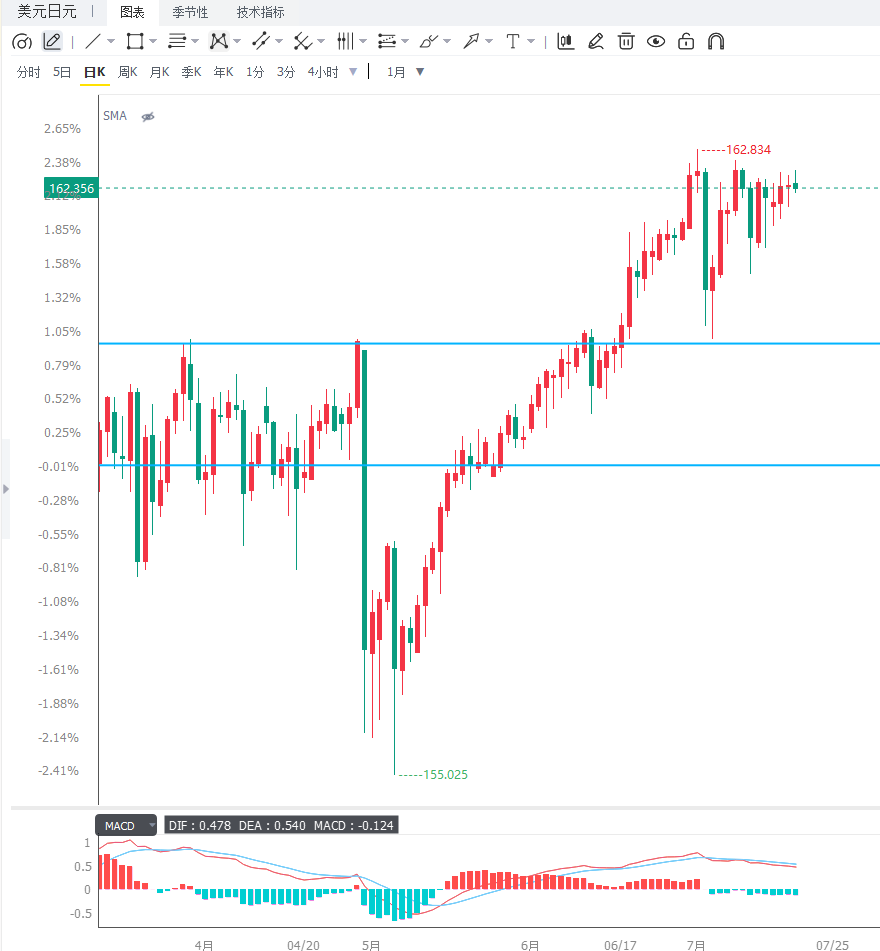 The USD/JPY pair is currently situated in a market environment intertwined with divergent US-Japan policies, energy risks, and expectations of currency intervention. Although Japanese authorities have signaled intervention, the persistent interest rate differential and the safe-haven demand for the US dollar continue to support the USD/JPY pair at high levels. In the short term, the upward trend of USD/JPY remains unchanged, but its proximity to forty-year highs indicates increased market sensitivity to policy risks. If the Japanese government takes actual intervention measures, the exchange rate may experience a rapid correction; however, if the Federal Reserve maintains a hawkish stance while global risk sentiment remains weak, the USD/JPY pair is likely to remain strong. Investors should pay close attention to official Japanese actions, Federal Reserve policy expectations, and changes in the global energy market. The 162-165 area may become a crucial battleground for bulls and bears in the next phase.
The main factor limiting the recent rebound of the yen is the persistent interest rate differential between Japan and other major economies. Despite repeated signals from the Japanese government that it might intervene in the foreign exchange market, the yen lacks sustained upward momentum due to active carry trades and investors' continued preference for borrowing low-interest yen and allocating to high-yield assets. Japanese Finance Minister Satsuki Katayama previously stated that the government would take decisive action if necessary. This statement increased market attention to potential intervention in the exchange rate, but the market currently believes that verbal warnings alone are insufficient to change the yen's weak trend. Meanwhile, the deteriorating situation in the Middle East is also putting pressure on the yen. Japan is highly dependent on energy imports, with over 90% of its crude oil imports coming from the Middle East. Therefore, the market is concerned that regional conflict could further pressure the Japanese economy through rising energy prices and supply chain risks. The recent escalation of tensions between the US and Iran, with the US conducting military operations for the ninth consecutive night, has further heightened market concerns about the security of energy transport through the Strait of Hormuz. As the region plays a crucial role in global energy transportation, any supply disruption could push up crude oil prices and increase global inflationary pressures. For the yen, the economic pressure from rising energy prices weakens its safe-haven appeal. While the Japanese yen is traditionally considered a safe-haven currency, in the current environment, Japan's high dependence on energy imports has led the market to focus more on the impact of rising oil prices on Japanese corporate costs and economic growth. On the other hand, the US dollar remains supported by safe-haven inflows and expectations of Federal Reserve policy changes. Rising oil prices have reignited concerns about a rebound in inflation, causing investors to lower their expectations for rapid easing. Market surveys show that traders still believe there is a possibility of further interest rate adjustments by the Federal Reserve, providing additional support for the dollar. Expectations of Federal Reserve policy and the interest rate differential between Japan and the US together form an important basis for the rise of the USD/JPY. If US interest rates remain high and the Bank of Japan's policy adjustments are relatively slow, carry trades may continue, thus limiting the yen's appreciation potential. However, the market still needs to be wary of the risk of actual intervention by the Japanese authorities. If USD/JPY breaks through key psychological levels quickly, it may increase the probability of the Japanese government taking action. Therefore, although the USD/JPY is generally strong, caution is advised when chasing the rally at high levels. Going forward, investors will focus on signals from the Japanese government's exchange rate policy, US economic data, speeches by Federal Reserve officials, and changes in the Middle East situation; these factors will collectively determine the next direction of USD/JPY. From a daily chart perspective, USD/JPY remains in a clear uptrend, with prices consistently trading in high-level areas and currently consolidating around 162. The daily chart indicates that the bullish trend remains intact, with short-term moving averages continuing to provide support. Current resistance levels to watch are 163.00 and 164.00; a decisive break above these levels could lead to a further test of the psychological level of 165.00. Support levels to watch are initially around 161.00, with further support in the 159.80-160.00 area. Technically, the MACD remains positive, indicating continued bullish momentum, but the RSI is in high-level territory, suggesting a potential short-term correction. On the 4-hour chart, USD/JPY has entered a high-level consolidation phase, with prices repeatedly consolidating around the 162 area. Short-term moving averages are flattening, indicating a rebalancing of bullish and bearish forces. The RSI remains neutral to slightly bullish, suggesting that buying pressure still holds a certain advantage. If the exchange rate breaks through the 162.80-163.00 area, the upward trend may continue; if it falls below 161.00, a short-term pullback may be triggered, with a target around 160.00. Currently, the 4-hour structure still favors the bulls, but the risk of Japanese intervention may limit the speed of the rise. The USD/JPY pair is currently situated in a market environment intertwined with divergent US-Japan policies, energy risks, and expectations of currency intervention. Although Japanese authorities have signaled intervention, the persistent interest rate differential and the safe-haven demand for the US dollar continue to support the USD/JPY pair at high levels. In the short term, the upward trend of USD/JPY remains unchanged, but its proximity to forty-year highs indicates increased market sensitivity to policy risks. If the Japanese government takes actual intervention measures, the exchange rate may experience a rapid correction; however, if the Federal Reserve maintains a hawkish stance while global risk sentiment remains weak, the USD/JPY pair is likely to remain strong. Investors should pay close attention to official Japanese actions, Federal Reserve policy expectations, and changes in the global energy market. The 162-165 area may become a crucial battleground for bulls and bears in the next phase.
- Risk Warning and Disclaimer
- The market involves risk, and trading may not be suitable for all investors. This article is for reference only and does not constitute personal investment advice, nor does it take into account certain users’ specific investment objectives, financial situation, or other needs. Any investment decisions made based on this information are at your own risk.