Vance says shipping through the Strait of Hormuz has "recovered more than halfway," but why is the oil price risk premium lingering?
2026-09-16 08:38:08
Brent crude futures edged lower in Asian trading on Wednesday (September 16), currently trading around $107.70 per barrel. Overnight, Brent crude futures rose more than 2%, reaching a high of $109.40 per barrel. Current oil prices remain in their highest range since May 21. Amidst these high oil prices, recent comments from US Vice President Vance regarding the Iran conflict and shipping in the Strait of Hormuz have become a new variable for the market. Vice President Vance stated that the Iran conflict will enter a "completely different phase" within months and may end after the midterm elections. He claimed that shipping in the Strait of Hormuz has recovered to more than half of normal levels—a claim significantly inconsistent with independent data. Until Vance's figures are confirmed by independent tracking agencies, the market may continue to price based on lower, independently verified flow estimates, and the freight and supply risk premiums in the oil market are unlikely to be alleviated by these comments. 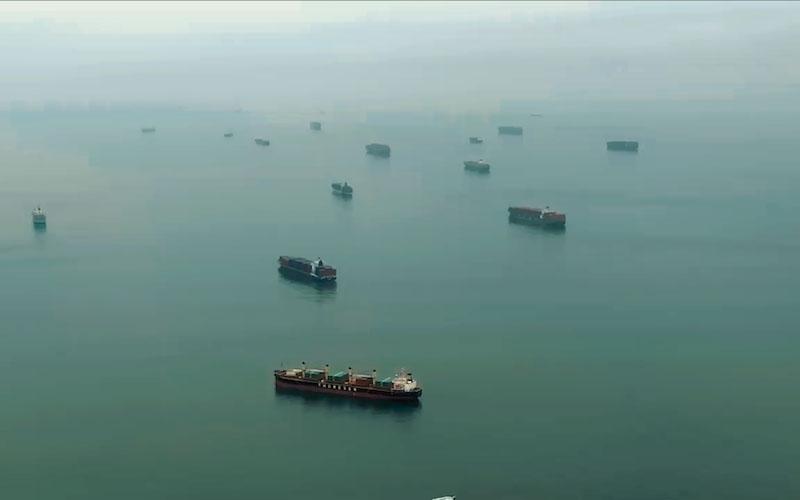
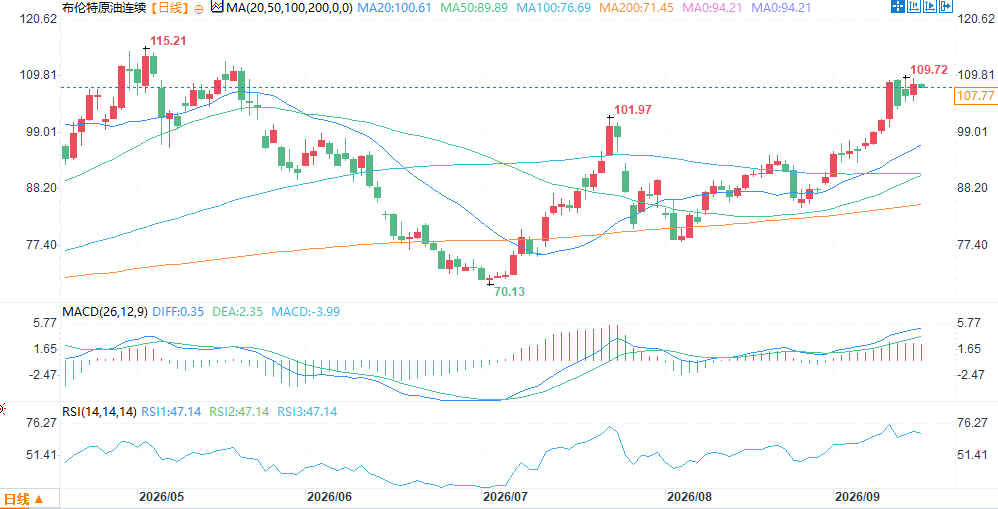 (Brent crude oil futures daily chart, source: EasyTrade) At 8:36 Beijing time, Brent crude oil futures were trading at $107.84 per barrel.
Vance's two-stage theory and Hormuz's restoration theory
Vance recently publicly stated his assessment of the conflict with Iran, explicitly stating that the conflict will enter a "completely different phase" within months, aligning closely with President Trump's assessment that the conflict could gradually de-escalate and come to an end after the November midterm elections. He particularly emphasized the shipping situation in the Strait of Hormuz, stating that the number of ships passing through has now recovered to more than half of normal levels, and based on this, he believes that Iran's actual control over this crucial waterway is significantly weakening. This statement is intended to signal that the conflict is under control and shipping is gradually normalizing, attempting to alleviate continued market concerns about energy supply disruptions. However, this figure differs significantly from data recently cited by several independent shipping tracking agencies and the U.S. Central Command. Before the war, the daily transit volume in the Strait of Hormuz was approximately 130 ships, while the actual flow in recent weeks has been assessed as only 10% to 25% of pre-war levels, far from reaching the "more than half" claimed by Vance. Some analyses indicate that although some ships have resumed passage under escort or detour measures, overall throughput, insurance costs, and shipowners' willingness to seek safe havens have not yet returned to normal. High freight rates, shipping delays, and substantial disruptions to some shipping routes continue to impact the Asian and Gulf oil markets. Vance's description of a rapid recovery in shipping therefore lacks sufficient external data support, making his conclusion about weakened Iranian control difficult to independently verify and raising concerns about the discrepancy between official statements and the actual situation. This statement comes against the backdrop of months of conflict, with the US leadership attempting to define the conflict's progress through a phased narrative, both to send a "controllable" signal domestically and to convey a message of both pressure and room for maneuver to regional parties. The discrepancy in shipping data becomes a key indicator for verifying the validity of this narrative.Current US Actions: Responding, Not Offending
When discussing current U.S. military and related actions, Vance deliberately characterized them as a "response" rather than an "offensive." He explicitly stated that the U.S. is not currently launching any proactive offensive against Iran, but rather taking necessary countermeasures against Iran's attacks on commercial shipping. This statement aims to clarify the nature and boundaries of U.S. actions, emphasizing their defensive and retaliatory nature, rather than an intention to proactively escalate the war. He further systematically elaborated on the two-phase approach to the conflict. The core objective of the first phase is to destroy Iran's nuclear program, while significantly weakening its conventional military capabilities and its ability to project influence in the region, including strikes against related military facilities, command structures, and support networks. The second phase shifts to long-term control: preventing Iran from rapidly rebuilding these capabilities after being attacked, while maintaining basic stability in the Gulf and surrounding areas, and avoiding spillover effects that could lead to broader geopolitical instability. This two-phase design reflects both the U.S.'s intention to alter Iran's capability structure through phased military means and its attempt to reserve space for possible subsequent diplomatic or political arrangements. Vance's statement places the current actions within the framework of "responding to Iran's attacks on commercial shipping," intending to emphasize that the U.S. is not proactively provoking a full-scale war, but rather taking limited and targeted measures within an existing conflict. This statement echoes the Trump administration's overall rhetoric on the nature of the conflict, attempting to reduce domestic political sensitivity to "getting into a new war," while simultaneously sending a message to allies and adversaries that the U.S. still maintains control over the pace of action. However, the intensity of actual action, the choice of targets, and whether it will escalate further still depend on subsequent high-level decisions, rather than being entirely fixed. Shipping security, energy corridor protection, and regional power balance collectively constitute the practical considerations within this "response" framework.How the conflict ends depends on the two decisions that have not yet been made.
Regarding the eventual end of the conflict, Vance offered a highly open and uncertain framework. He pointed out that the outcome will primarily depend on two key variables: whether Trump chooses to escalate US action after the midterm elections, and whether Iran is more willing to seek a solution through negotiations. Neither of these factors has yet been definitively decided, therefore any judgment regarding the duration or manner of the conflict remains at the level of possibility. The core of this framework is that the timeline for resolution rests entirely on the political and strategic choices of both sides. If the Trump administration decides to increase military pressure after the election, it could push the conflict into a more intense phase; conversely, if it chooses restraint and seeks a diplomatic outlet, it could accelerate de-escalation. If Iran determines that continued confrontation is too costly and accepts negotiations, it could also lead to some form of compromise; if it maintains a hardline stance, the conflict could be further prolonged. Vance's statement thus continues the pattern of recent adjustments in the statements of senior US officials on issues such as the duration of the conflict and the characterization of a formal state of war, maintaining flexibility while avoiding prematurely locking in a specific timeline. Meanwhile, the broader economic and shipping costs of the conflict continue to materialize. The Asian and Gulf oil markets are facing problems such as high freight rates, supply route disruptions, and soaring insurance costs, significantly hindering regional trade. Energy price volatility, shipping delays, and the forced adjustment of import sources by some countries are all direct consequences of the conflict's spillover effects. Vance's two-stage and ending conditions theory was proposed against this backdrop, attempting to provide some phased guidance for policymaking and market expectations, but the ultimate outcome still depends on the actual choices made by both Trump and Iran.The discrepancy between official statements and independent data makes it difficult for the risk premium to subside.
There is a significant discrepancy between Vance's claim of a recovery in shipping traffic around the Strait of Hormuz and independent data. If Vance's claim of "more than half of shipping has recovered" is true, it would mean a significant improvement in Gulf outflows, reduced upward pressure on freight rates and crude oil prices, and Brent crude could potentially relinquish some of its geopolitical premium. However, data from independent tracking agencies and the U.S. Central Command shows that daily transit volumes are only 10% to 25% of pre-war levels, a stark contrast to Vance's description. Until official figures are independently verified, the market will likely continue to price based on lower actual flows, meaning that the freight and supply risk premium currently embedded in Brent crude is unlikely to disappear in the short term. Furthermore, while Vance's statement that the conflict "will enter a new phase within months and may end after the midterm elections" carries a conciliatory tone, the end date depends on decisions yet to be made by both sides, and the repeated changes in statements from high-ranking government officials regarding the duration of the conflict make it difficult for the market to make substantial pricing decisions based on this information. In short, this news does not change Brent's immediate direction, but it reinforces a judgment that when there is a significant divergence between official statements and independent data, the oil market will place more trust in verifiable flow data, and the risk premium will therefore remain "sticky". (Brent crude oil futures daily chart, source: EasyTrade) At 8:36 Beijing time, Brent crude oil futures were trading at $107.84 per barrel.
- Risk Warning and Disclaimer
- The market involves risk, and trading may not be suitable for all investors. This article is for reference only and does not constitute personal investment advice, nor does it take into account certain users’ specific investment objectives, financial situation, or other needs. Any investment decisions made based on this information are at your own risk.