Experts: Is the strongest gold rally in decades brewing? Increasing pressure on fiat currencies could push gold prices towards $5,000.
2026-10-01 09:00:15
Nitesh Shah, Head of Commodities and Macroeconomics Research at WisdomTree, believes the gold market is currently battling rising bond yields and tightening global monetary policy, but investors may be overly focused on short-term headwinds, overlooking a broader context that could be one of the most important bullish environments for precious metals in decades. At the heart of this context is the increasing pressure on the fiat currency system, and the market is re-evaluating gold's role as an alternative monetary asset. In other words, the current volatility in gold does not signify the end of the story; the real narrative may have just begun. 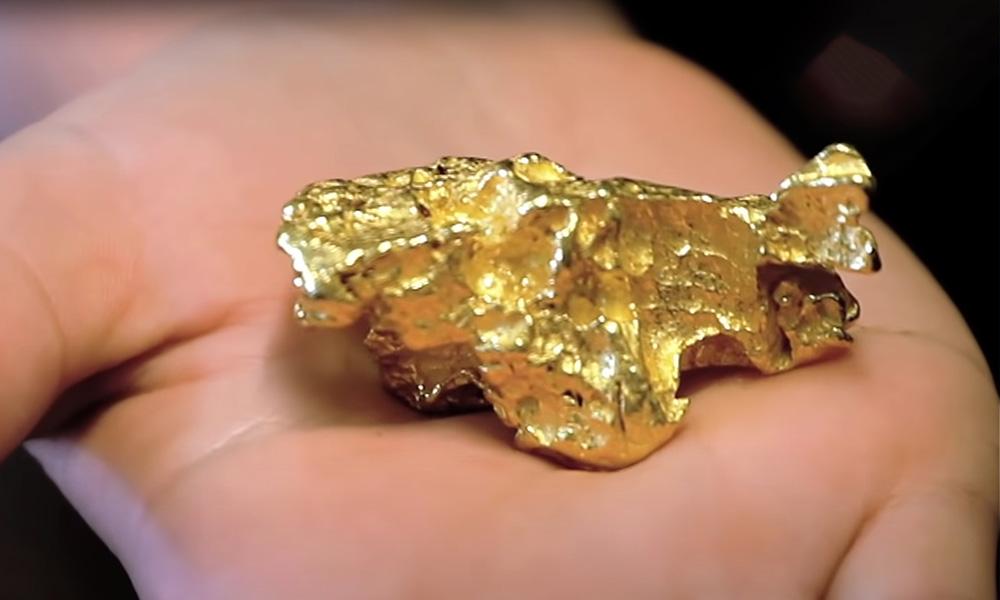
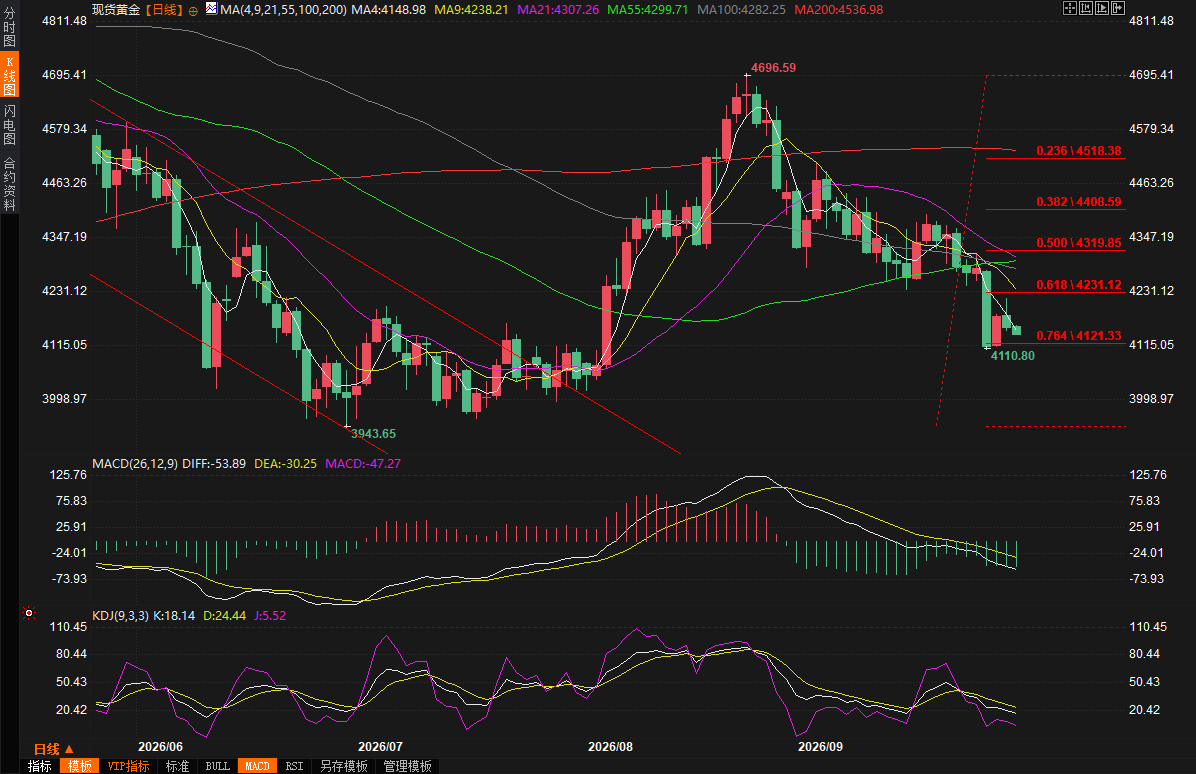 (Spot gold daily chart, source: EasyTrade) At 08:57 Beijing time, spot gold is currently trading at $4143.14 per ounce.
Short-term headwinds persist, but that's not the whole story.
Shah acknowledges that rising interest rates, high bond yields, and a stronger dollar remain significant short-term obstacles for gold. Gold appears to have been battling the bond market for several years now. Traditionally, the relationship between gold and bond yields may re-establish itself over a short period, but it tends to break down when yields fluctuate significantly. Therefore, while short-term bond market pressures can indeed suppress gold's performance, they don't fully explain its longer-term logic. Investors who focus solely on short-term interest rate and yield changes may underestimate gold's place within the larger macroeconomic landscape.Inflationary sentiment is hotter than models suggest, and gold reflects the feelings of ordinary people more closely.
Meanwhile, Shah stated that persistent inflation continues to provide crucial underlying support for gold. Although market-based inflation expectations remain relatively well-anchored, and break-even rates appear stable, consumers have become accustomed to high prices and recurring inflationary shocks. If you talk to ordinary people on the street, they will believe that inflation is high and will remain high for a long time, and they don't believe that prices will soon return to the 2% target level. People have become used to more frequent shocks pushing up prices. Shah believes that the gold market is psychologically closer to the broader consumer market than to the investor market with relatively well-anchored inflation expectations. This psychological difference means that gold reflects not only inflation expectations in models, but also the real feeling of ordinary people about the continuous shrinking purchasing power of money.Central Bank Dilemma: Interest Rate Hikes Cannot Solve Supply Shocks
Shah added that the problem facing central banks is that raising interest rates cannot address many of the current supply shocks driving inflation. Central banks can certainly curb demand by raising interest rates, but monetary policy cannot resolve the geopolitical disruptions to global commodity markets. He also stated that additional supply-side pressures, including potential weather-related disruptions, could keep inflation high. While persistent inflationary pressures may force central banks to maintain tighter monetary policy in the short term, the bigger story for gold goes beyond that. Monetary policy can suppress demand, but it struggles to address structural problems in areas such as supply chains, geopolitical conflicts, and energy and food, which are precisely what could cause recurring inflation.Sovereign debt is unsustainable; the bond market is where the real gold rush begins.
Shah points out that a larger narrative for gold is unfolding in the bond market as the world grapples with an unsustainable rise in sovereign debt. US government debt has been rising for years, and expecting Treasury yields to remain abnormally low indefinitely is unreasonable, especially as the Federal Reserve gradually reduces its massive bond holdings accumulated after the global financial crisis. He says that unsustainable debt is a narrative that has been used to discuss the gold market for the past five years. Investors are overly focused on the negative impacts of higher short-term interest rates, while paying less attention to the effects of fiscal dominance and deteriorating debt sustainability. In the very short term, higher yields are negative for gold; but in the medium term, the same pressure could represent "one of the most bullish stories for gold this decade," and possibly even longer. He describes this as a contest between fiat currency and physical "quasi-currencies," which he believes will be a very strong bullish story for gold.Price Outlook: Constructive in the short term, with a target below $5,000 over the next year.
However, gold still faces challenges from higher bond yields, high short-term interest rates, and a stronger dollar, which Shah describes as short-term headwinds. Despite these pressures, he remains constructive on prices. He expects gold prices to remain above $4,000 per ounce for the remainder of the year. He added that he anticipates gold prices to be near $5,000 per ounce over the next 12 months due to ongoing economic uncertainty, as slowing inflation will push down bond yields and weaken the dollar. Shah says the coming year remains a positive story for gold, but he also cautions that prices could remain relatively flat if bond market headwinds persist and consensus forecasts prove incorrect.In conclusion, the real test for gold lies not in short-term interest rates, but in the credibility of fiat currencies.
Overall, Shah's view doesn't deny the short-term pressure on gold, but rather reminds the market not to be blinded by bond yields, short-term interest rates, and a strong dollar. What truly deserves attention are the entrenched inflationary sentiment, the intractable supply shocks, the unsustainability of sovereign debt, and the continuous erosion of fiat currency credibility. If these forces continue to unfold, gold may become more than just a short-term safe-haven asset; it could become one of the most important macroeconomic trades in decades. The outlook for gold prices remains positive over the next year, but the path will not be smooth; if headwinds in the bond market persist, gold may enter a relatively sideways phase. However, in the medium term, fiat currency pressure and debt-related factors could still open up more room for gold to grow. (Spot gold daily chart, source: EasyTrade) At 08:57 Beijing time, spot gold is currently trading at $4143.14 per ounce.
- Risk Warning and Disclaimer
- The market involves risk, and trading may not be suitable for all investors. This article is for reference only and does not constitute personal investment advice, nor does it take into account certain users’ specific investment objectives, financial situation, or other needs. Any investment decisions made based on this information are at your own risk.