Institutions suggest that December may be the last month for the Fed's current rate hike cycle, but this assessment is highly dependent on subsequent inflation data.
2026-10-30 13:46:27
Following the Federal Reserve's interest rate decision, Natixis economists Christopher Hodge and Selin Aker released their views, believing that falling oil prices, fading tariff effects, and economic slowdown will collectively suppress inflation. They believe that this tightening cycle will likely only have one more rate hike left, namely the widely expected December rate hike. However, this judgment is highly dependent on subsequent inflation data.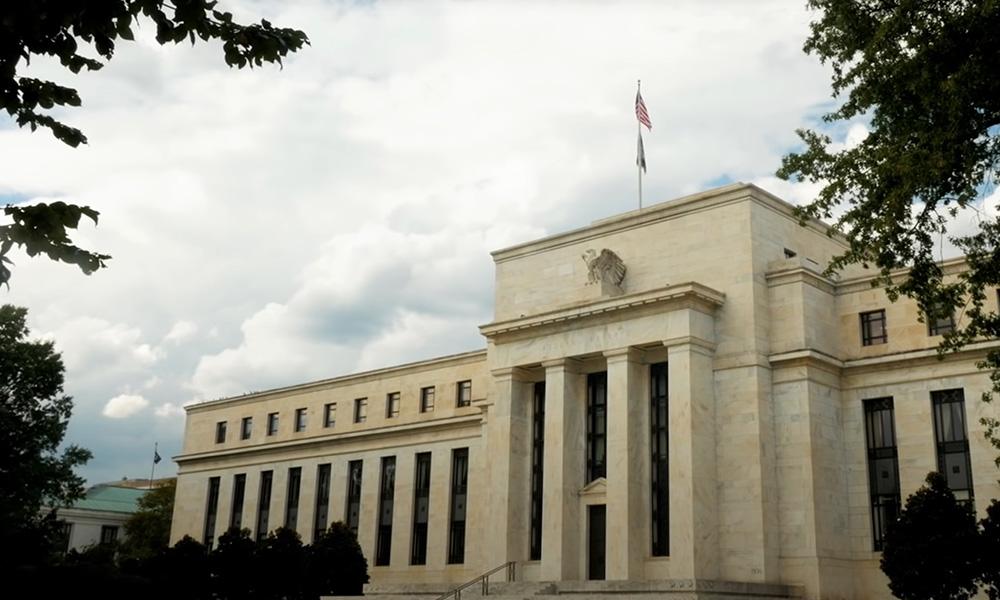
The voting landscape at this interest rate meeting has shifted, with long-time hawks choosing to remain on the sidelines.
The Federal Reserve announced its interest rate decision this week, with the FOMC voting 10-2 to maintain the current interest rate. Two economists highlighted that Lisa Cook was among those who voted against the rate hike, marking her first dissenting vote since taking office in 2022. This contrasts sharply with the voting in July when rate hikes were paused; the fact that staunch hawks Lorie Logan, president of the Dallas Fed, and Neel Kashkari, president of the Minneapolis Fed, did not support a rate hike this time is particularly noteworthy. This result confirms the signals previously released by New York Fed President John Williams and Vice Chairman Jefferson: there is no urgency for consecutive rate hikes at this stage. However, fundamental pressures remain: inflation remains unresolved, economic growth is robust, and the unemployment rate remains stable. Economists believe that unless subsequent data shows a significant shift, a December rate hike is almost a certainty.Policy wording adjusted; awaiting inflation data to identify short-term disturbances.
Two economists, interpreting the policy statement, noted that the Federal Reserve upgraded its assessment of economic growth from "solid" to "strong," and added a new statement emphasizing the continued collection of more information to help the committee determine the appropriate policy stance and ensure that inflation falls back to the target level in a timely manner. In their view, this pause in rate hikes essentially provides the FOMC with a window of opportunity to determine whether the unexpectedly high inflation in September was merely a one-off disturbance or the beginning of a new upward trend in inflation. In the post-meeting press conference, Warsh emphasized the trend of strengthening economic growth, record capital spending, and persistently low unemployment, reiterating the Fed's responsibility to suppress inflation. He also reiterated that while financial conditions have tightened somewhat, they remain generally accommodative.Major institutional reforms unveiled: Warsh adjusts FOMC meeting voting rules.
A key highlight of this press conference was Warsh's announcement of the FOMC meeting mechanism reform plan. The Federal Reserve will still hold eight meetings annually, without reducing the frequency. However, the schedule will be differentiated: one meeting in 2027 will be dedicated to discussing the monetary policy framework and strategy, without interest rate voting or issuing an interest rate statement; two meetings in 2028 will be used for strategy discussions, leaving only six meetings for interest rate policy decisions. During the Q&A session, Warsh did not clearly explain why the decision to postpone interest rate hikes was made this time. Regarding the widely discussed view that AI capital expenditure is insensitive to interest rates, he expressed reservations. He observed that the market's perception of AI-related credit has begun to diverge, with some credit spreads widening, and that the expansion of capital expenditure in recent quarters is not limited to the AI sector.Market Outlook: After one interest rate hike, inflationary pressures are expected to gradually ease.
Natixis's baseline scenario is that the Federal Reserve will complete its final rate hike of the current cycle in December. Subsequently, declining oil prices, the fading effects of tariffs, and a slowdown in economic growth will collectively weaken inflationary momentum. However, economists also caution that this prediction is conditional, requiring sustained positive inflation data over a period of time, coupled with heightened market concerns about the economic growth outlook. If these conditions are not met, the path of rate hikes remains uncertain.Conclusion
A shift in voting trends, reforms to the meeting system, and uncertainty surrounding inflation have brought the current round of Fed tightening to a critical juncture. Natixis's view represents one market expectation: a December rate hike will conclude the cycle, but inflation and growth data will remain the core factors influencing all subsequent judgments.- Risk Warning and Disclaimer
- The market involves risk, and trading may not be suitable for all investors. This article is for reference only and does not constitute personal investment advice, nor does it take into account certain users’ specific investment objectives, financial situation, or other needs. Any investment decisions made based on this information are at your own risk.