Powell's press conference analysis: Employment policy sets the tone for interest rate cuts, and the easing path is becoming stricter.
2025-12-11 04:57:12
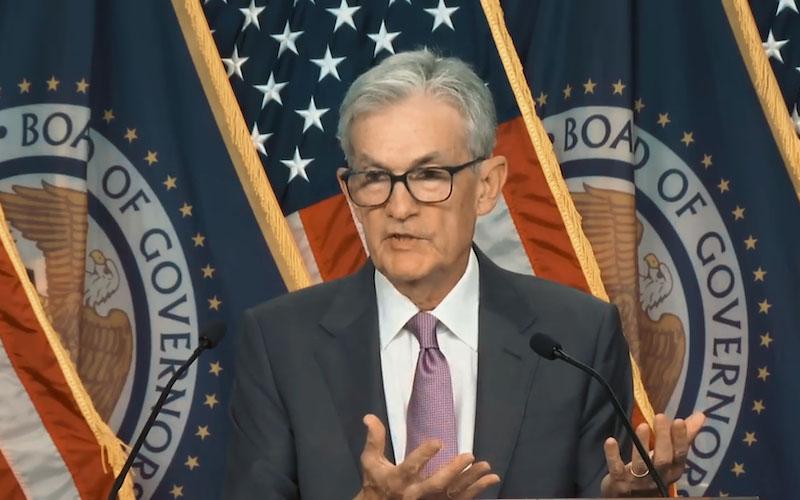
At the press conference, Powell repeatedly emphasized that the US economy is "not overheated," and is still expanding steadily at a "moderate pace," showing no signs of overheating. Looking at the core growth drivers, consumer spending has demonstrated remarkable resilience, becoming a crucial pillar supporting the economic fundamentals; meanwhile, corporate fixed investment, especially capital expenditure related to AI data centers, continues to grow rapidly, becoming a new engine for economic growth. Regarding the upward revision of the 2026 GDP growth forecast, Powell clearly interpreted it as the result of three factors working together: first, the natural rebound in previously suppressed economic activity after the government shutdown; second, the continued surge in AI investment, with related industrial chain investment expanding continuously; and third, continued strong support from fiscal policy, injecting stable momentum into economic growth. Furthermore, Powell specifically mentioned that current US productivity is at a multi-year structural high, and the positive supply shock brought by AI technology is gradually emerging, which will lay a solid foundation for long-term economic growth.
Labor Market: The Core Driver of This Interest Rate Cut
Powell placed the labor market situation at the heart of his speech, explicitly stating that the primary reason for the rate cut was the "gradual cooling of the labor market and significant downside risks." He disclosed key internal Fed analysis data: non-farm payroll data in recent months has been systematically overestimated, with internal estimates showing an average overestimation of about 60,000 jobs per month, meaning the actual number of new jobs added may only be slightly over 100,000 or even lower; if statistical bias corrections are further considered, the actual net increase in jobs per month may be reduced by another 20,000, meaning the actual increase in jobs may only be a lower level of 80,000 to 90,000. Regarding the unemployment rate trend, there are already signs of a slight increase, and Powell expects it to rise by another 0.1-0.2 percentage points in the future, but emphasized that a significant deterioration is not expected.
In analyzing the causes of the weak employment situation, Powell pointed out that the current changes in the labor market are mainly reflected in a significant slowdown in hiring demand, rather than large-scale layoffs, with more companies adopting a cautious strategy of "hiring freeze." Artificial intelligence is one factor contributing to the decline in employment demand, and demand for some traditional positions has decreased due to technological substitution, but this is far from the main reason. The core issue remains the reduction in labor supply (slower immigration inflows) and a moderate cooling of aggregate demand. Powell emphasized: "The downside risks to the labor market have increased significantly, which makes us more inclined to prevent further deterioration of employment in our dual mandate of price stability and maximum employment." This statement directly provides the core logical support for this interest rate cut.
Inflation Trends and the Core Impact of Trump's Tariff Policy
Powell delivered a key signal on inflation, explicitly attributing almost entirely to the Trump administration's import tariff policies to the current inflation slightly exceeding the target. He stated bluntly that if the impact of tariffs were completely eliminated, core inflation in the United States would already be at or slightly below the 2% target level, meeting the Fed's long-term inflation control requirements. Specifically, the recent rise in commodity inflation was entirely caused by the tariff increases, constituting a "one-off price level shock" rather than sustained inflationary pressure. If no new large-scale tariff policies are introduced in the future, commodity inflation is expected to peak in the first quarter of 2026, subsequently falling rapidly back to a reasonable range.
From an inflation structure perspective, service sector inflation (excluding housing) continues to decline. This is the Fed's most closely watched indicator of endogenous inflationary pressures, and significant progress has been made. Meanwhile, long-term inflation expectations remain firmly anchored at the 2% target level, and the market break-even inflation rate is at a "very comfortable level," indicating continued public confidence in the Fed's ability to manage inflation. Powell's additional statement was interpreted by the market as the most hawkish subtext: "If we didn't need to worry about the labor market, the current policy rate would have been higher." This suggests that if the job market remains solid, the Fed's monetary policy stance will be more hawkish.
Monetary policy stance and outlook for the 2025 interest rate cut path
Regarding the current monetary policy stance, Powell clearly stated that the current federal funds rate is already at the "higher end of the reasonable neutral range," and the policy's restrictive effect on the economy is essentially sufficient. In terms of future policy adjustments, he provided clear guidance: "Nobody considers rate hikes as the base case scenario," implying that the rate hike cycle is largely over, but the pace of easing will be extremely cautious.
The internal divisions within the decision-making body are clearly evident: some members believe that interest rate cuts should be paused, and a wait-and-see period should be entered to assess the lagged effects of previous easing policies; others believe that if the job market deteriorates further, one or two more rate cuts may be implemented. More importantly, the statement from this meeting reintroduced the phrase "the extent and timing will depend on subsequent data," a move widely interpreted by the market as a clear signal that the threshold for rate cuts has been significantly raised. Powell emphasized that the Fed has no predetermined policy path and will strictly adhere to the principle of "deciding on a meeting-by-meeting basis," making no predictions about the policy direction of the January 2026 meeting; he also pointed out that the lagged effects of rate cuts are only just beginning to appear, and the Fed is currently fully capable of "wait and see," without rushing to push forward with further easing.
Combining the dot plot forecast with Powell's statements, the path of interest rate cuts in 2025 has clearly shown a "job-triggered" characteristic: if non-farm payrolls remain below 100,000 and the unemployment rate exceeds 4.5% before spring, interest rate cuts may be restarted; if the job market remains relatively stable, there will likely be only 1-2 more cuts throughout the year, far fewer than the 3-4 times previously expected by the market.
Statements on other important issues
Housing Issues: Powell stated bluntly that the small 25bp rate cut would have a negligible impact on housing affordability. He clearly pointed out that the fundamental problem in the US housing market is a long-term undersupply, a structural issue that cannot be resolved by the Fed's monetary policy alone, and requires targeted government policies on the housing supply side.
Long-term US Treasury yield trends: Powell interpreted the recent rise in long-term US Treasury yields as reflecting more the market's expectations for higher US economic growth and productivity improvement than concerns about runaway inflation, indicating that market confidence in the economic fundamentals remains relatively solid.
The economic impact of artificial intelligence: Powell believes that AI technology is bringing a positive productivity shock and may push up the neutral interest rate level in the long term, but it is still in the early stages of technology application and its actual impact on monetary policy has not yet been seen.
Regarding the chairman's term: When repeatedly pressed by reporters about his future after his term ends, Powell consistently responded that "there is no new information to announce," avoiding comments on politically related issues and upholding the Federal Reserve's principle of policy independence.
Summary of the latest comments from market institutions
The most hawkish view: B. Riley Wealth pointed out that the committee members' stance behind the dot plot was more hawkish than the voting results, with 6 members not supporting the rate cut at all. This proportion is far higher than the 3 dissenting votes, which fully demonstrates that the threshold for rate cuts has been significantly raised. Goldman Sachs clearly stated that "precautionary rate cuts are over" and believes that any further easing policies in the future will depend entirely on the further deterioration of the labor market. The easing cycle has entered a strictly controlled "data-dependent" phase.
The most dovish view: Anna Wong of Bloomberg Economics maintains an optimistic outlook, believing that the meeting statement and economic forecasts are generally dovish. The upward revision of growth expectations and the downward revision of inflation expectations are themselves dovish signals. She expects a final 100bp rate cut (i.e., 4 times) in 2025. Informa Global Markets, on the other hand, believes that the meeting tone was moderately dovish, with only 2-3 people in the decision-making body holding a truly hawkish position, and the sentiments of most hawkish members have been effectively appeased.
Neutral mainstream consensus: Most institutions unanimously judge this rate cut as a typical "hawkish rate cut." In the short term, the January and March 2025 policy meetings will likely pause rate cuts; in the long term, the employment data before spring will be a key watershed—if non-farm payrolls continue to fall below 100,000 and the unemployment rate exceeds 4.5%, rate cuts will resume; otherwise, there may only be 1-2 more rate cuts throughout the year, and the number of rate cuts in 2025 is likely to be less than the market's previous expectation of 4.
Labor Market: The Core Driver of This Interest Rate Cut
Powell placed the labor market situation at the heart of his speech, explicitly stating that the primary reason for the rate cut was the "gradual cooling of the labor market and significant downside risks." He disclosed key internal Fed analysis data: non-farm payroll data in recent months has been systematically overestimated, with internal estimates showing an average overestimation of about 60,000 jobs per month, meaning the actual number of new jobs added may only be slightly over 100,000 or even lower; if statistical bias corrections are further considered, the actual net increase in jobs per month may be reduced by another 20,000, meaning the actual increase in jobs may only be a lower level of 80,000 to 90,000. Regarding the unemployment rate trend, there are already signs of a slight increase, and Powell expects it to rise by another 0.1-0.2 percentage points in the future, but emphasized that a significant deterioration is not expected.
In analyzing the causes of the weak employment situation, Powell pointed out that the current changes in the labor market are mainly reflected in a significant slowdown in hiring demand, rather than large-scale layoffs, with more companies adopting a cautious strategy of "hiring freeze." Artificial intelligence is one factor contributing to the decline in employment demand, and demand for some traditional positions has decreased due to technological substitution, but this is far from the main reason. The core issue remains the reduction in labor supply (slower immigration inflows) and a moderate cooling of aggregate demand. Powell emphasized: "The downside risks to the labor market have increased significantly, which makes us more inclined to prevent further deterioration of employment in our dual mandate of price stability and maximum employment." This statement directly provides the core logical support for this interest rate cut.
Inflation Trends and the Core Impact of Trump's Tariff Policy
Powell delivered a key signal on inflation, explicitly attributing almost entirely to the Trump administration's import tariff policies to the current inflation slightly exceeding the target. He stated bluntly that if the impact of tariffs were completely eliminated, core inflation in the United States would already be at or slightly below the 2% target level, meeting the Fed's long-term inflation control requirements. Specifically, the recent rise in commodity inflation was entirely caused by the tariff increases, constituting a "one-off price level shock" rather than sustained inflationary pressure. If no new large-scale tariff policies are introduced in the future, commodity inflation is expected to peak in the first quarter of 2026, subsequently falling rapidly back to a reasonable range.
From an inflation structure perspective, service sector inflation (excluding housing) continues to decline. This is the Fed's most closely watched indicator of endogenous inflationary pressures, and significant progress has been made. Meanwhile, long-term inflation expectations remain firmly anchored at the 2% target level, and the market break-even inflation rate is at a "very comfortable level," indicating continued public confidence in the Fed's ability to manage inflation. Powell's additional statement was interpreted by the market as the most hawkish subtext: "If we didn't need to worry about the labor market, the current policy rate would have been higher." This suggests that if the job market remains solid, the Fed's monetary policy stance will be more hawkish.
Monetary policy stance and outlook for the 2025 interest rate cut path
Regarding the current monetary policy stance, Powell clearly stated that the current federal funds rate is already at the "higher end of the reasonable neutral range," and the policy's restrictive effect on the economy is essentially sufficient. In terms of future policy adjustments, he provided clear guidance: "Nobody considers rate hikes as the base case scenario," implying that the rate hike cycle is largely over, but the pace of easing will be extremely cautious.
The internal divisions within the decision-making body are clearly evident: some members believe that interest rate cuts should be paused, and a wait-and-see period should be entered to assess the lagged effects of previous easing policies; others believe that if the job market deteriorates further, one or two more rate cuts may be implemented. More importantly, the statement from this meeting reintroduced the phrase "the extent and timing will depend on subsequent data," a move widely interpreted by the market as a clear signal that the threshold for rate cuts has been significantly raised. Powell emphasized that the Fed has no predetermined policy path and will strictly adhere to the principle of "deciding on a meeting-by-meeting basis," making no predictions about the policy direction of the January 2026 meeting; he also pointed out that the lagged effects of rate cuts are only just beginning to appear, and the Fed is currently fully capable of "wait and see," without rushing to push forward with further easing.
Combining the dot plot forecast with Powell's statements, the path of interest rate cuts in 2025 has clearly shown a "job-triggered" characteristic: if non-farm payrolls remain below 100,000 and the unemployment rate exceeds 4.5% before spring, interest rate cuts may be restarted; if the job market remains relatively stable, there will likely be only 1-2 more cuts throughout the year, far fewer than the 3-4 times previously expected by the market.
Statements on other important issues
Housing Issues: Powell stated bluntly that the small 25bp rate cut would have a negligible impact on housing affordability. He clearly pointed out that the fundamental problem in the US housing market is a long-term undersupply, a structural issue that cannot be resolved by the Fed's monetary policy alone, and requires targeted government policies on the housing supply side.
Long-term US Treasury yield trends: Powell interpreted the recent rise in long-term US Treasury yields as reflecting more the market's expectations for higher US economic growth and productivity improvement than concerns about runaway inflation, indicating that market confidence in the economic fundamentals remains relatively solid.
The economic impact of artificial intelligence: Powell believes that AI technology is bringing a positive productivity shock and may push up the neutral interest rate level in the long term, but it is still in the early stages of technology application and its actual impact on monetary policy has not yet been seen.
Regarding the chairman's term: When repeatedly pressed by reporters about his future after his term ends, Powell consistently responded that "there is no new information to announce," avoiding comments on politically related issues and upholding the Federal Reserve's principle of policy independence.
Summary of the latest comments from market institutions
The most hawkish view: B. Riley Wealth pointed out that the committee members' stance behind the dot plot was more hawkish than the voting results, with 6 members not supporting the rate cut at all. This proportion is far higher than the 3 dissenting votes, which fully demonstrates that the threshold for rate cuts has been significantly raised. Goldman Sachs clearly stated that "precautionary rate cuts are over" and believes that any further easing policies in the future will depend entirely on the further deterioration of the labor market. The easing cycle has entered a strictly controlled "data-dependent" phase.
The most dovish view: Anna Wong of Bloomberg Economics maintains an optimistic outlook, believing that the meeting statement and economic forecasts are generally dovish. The upward revision of growth expectations and the downward revision of inflation expectations are themselves dovish signals. She expects a final 100bp rate cut (i.e., 4 times) in 2025. Informa Global Markets, on the other hand, believes that the meeting tone was moderately dovish, with only 2-3 people in the decision-making body holding a truly hawkish position, and the sentiments of most hawkish members have been effectively appeased.
Neutral mainstream consensus: Most institutions unanimously judge this rate cut as a typical "hawkish rate cut." In the short term, the January and March 2025 policy meetings will likely pause rate cuts; in the long term, the employment data before spring will be a key watershed—if non-farm payrolls continue to fall below 100,000 and the unemployment rate exceeds 4.5%, rate cuts will resume; otherwise, there may only be 1-2 more rate cuts throughout the year, and the number of rate cuts in 2025 is likely to be less than the market's previous expectation of 4.
- Risk Warning and Disclaimer
- The market involves risk, and trading may not be suitable for all investors. This article is for reference only and does not constitute personal investment advice, nor does it take into account certain users’ specific investment objectives, financial situation, or other needs. Any investment decisions made based on this information are at your own risk.