US troop buildup, Russia and Iran conduct large-scale military exercises, oil prices surge.
2026-02-19 21:44:18
On Thursday (February 19), US crude oil futures rose another 2% after rising more than 5% in the previous trading day, and are on track to reach a new high for the period. They are currently trading around 66.36.
The international crude oil market is currently shrouded in the "eye of the storm" of Middle East geopolitics—the US-Iran nuclear negotiations have stalled, rumors of a military strike by the Trump administration are escalating, Iran is conducting joint naval exercises with Russia and strengthening control over the Strait of Hormuz, and multiple risk factors are intertwined, pushing up the risk premium for oil prices, causing the market to swing violently between "war clouds" and "technical adjustments".
The US-Iran nuclear negotiations have become the core driver of the crude oil market, and the game between the two sides has entered a high-risk stage of "diplomatic tug-of-war + military intimidation".
This week, the US and Iran resumed nuclear negotiations in Geneva, Switzerland, but core differences remain unresolved: US Vice President Vance publicly criticized Iran for not responding to the US's core demands, while the Iranian Foreign Minister only released limited positive signals that "a consensus has been reached on guiding principles for the negotiations."
The White House adopted a "two-pronged approach" to exert pressure: Spokesperson Levitt stated that "there are multiple justifications for military action against Iran," and also mentioned the case of the US military's precise strike on Iranian nuclear facilities during "Operation Midnight Hammer" last June, while emphasizing that "reaching an agreement with Iran is the wise choice that is in its own interests."
What further fueled market panic was a report from US media that the US military had completed preparations for a military strike and could launch an attack on Iran as early as this weekend (around February 21). The Pentagon was reportedly urgently evacuating some personnel from the Middle East in preparation for potential conflict and Iranian retaliation.
The US has simultaneously increased its military deployments, sending two carrier strike groups, hundreds of fighter jets, and multiple air defense systems to the Middle East, and transporting weapons and equipment via more than 150 military transport aircraft. This unprecedented military deterrence has directly fueled market concerns about disruptions to crude oil supplies.
Just as the standoff between the US and Iran was escalating, the collaboration between Iran and Russia further intensified regional tensions.
Iran conducted military exercises in the Strait of Hormuz from February 16 to 17, and launched joint naval exercises with Russia in the Sea of Oman and the northern Indian Ocean on February 19. Both sides emphasized that the exercises were aimed at maintaining regional maritime trade security and opposing unilateralism.
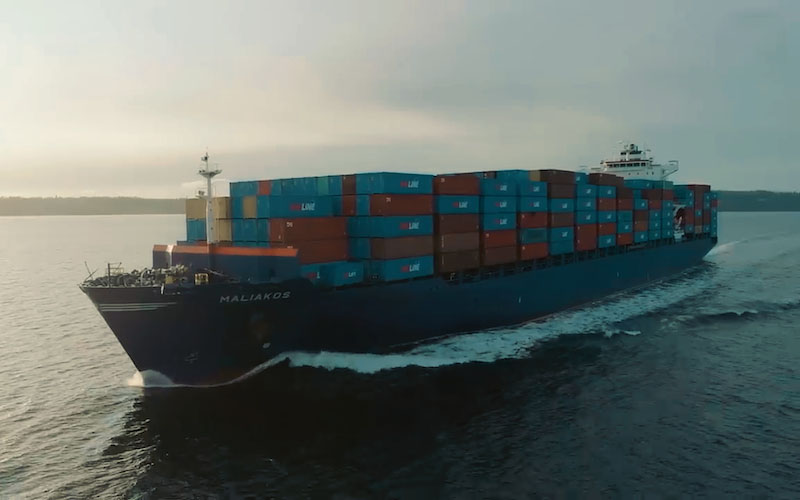
As a vital choke point for global crude oil supply, the Strait of Hormuz handles one-quarter of the world's maritime oil trade and one-fifth of its liquefied natural gas trade, with approximately 20 million barrels of oil transported through it daily.
Iran imposed restrictions on a portion of the strait's shipping lanes on Tuesday, citing security concerns, after repeatedly stating it would "block the strait if attacked." A disruption to shipping lanes would instantly tighten global oil supplies, directly triggering a surge in oil prices.
James, a senior Middle East analyst at Oxford Analytics, pointed out that the US accelerated the deployment of air power in the past 24 hours, which is essentially a form of "deterrence-based pressure." However, the increased scale of military deployment has driven up the cost of deterrence, and Iran is unlikely to meet the US's minimum demands. The probability of a direct conflict between the US and Iran has increased significantly compared to last week.
The continued escalation of geopolitical risks has directly triggered sharp fluctuations in international oil prices. Stimulated by rumors of a conflict between the US and Iran, international oil prices surged by more than 4% on Wednesday, with both Brent crude and WTI crude reaching their highest closing prices since January 30. Geopolitical risk premiums have become the core driver of the price increase.
Traders are currently watching the crude oil inventory data to be released by the U.S. Energy Information Administration (EIA) on Thursday evening – a core indicator for assessing the supply and demand situation in the world's largest oil consumer. If inventories decline more than expected, it will provide further support for oil prices.
If inventories unexpectedly accumulate, it may temporarily suppress the upward momentum. However, in the short term, geopolitical risk premiums have significantly outweighed the impact of fundamentals and become the key variable driving oil price trends.
The current pricing of crude oil is firmly tied to geopolitical developments, with fundamentals taking a backseat. Although oil prices have undergone a technical correction after a continuous surge, the risk premium from the US-Iran standoff, joint Russian-Iranian military exercises, and the control of the Strait of Hormuz continues to support high oil prices.
Of course, there are other long-term reasons, which you can refer to in my previous articles on crude oil. Technically, US crude oil continues to break out of the range, with the current resistance level around the recent high of 66.48.
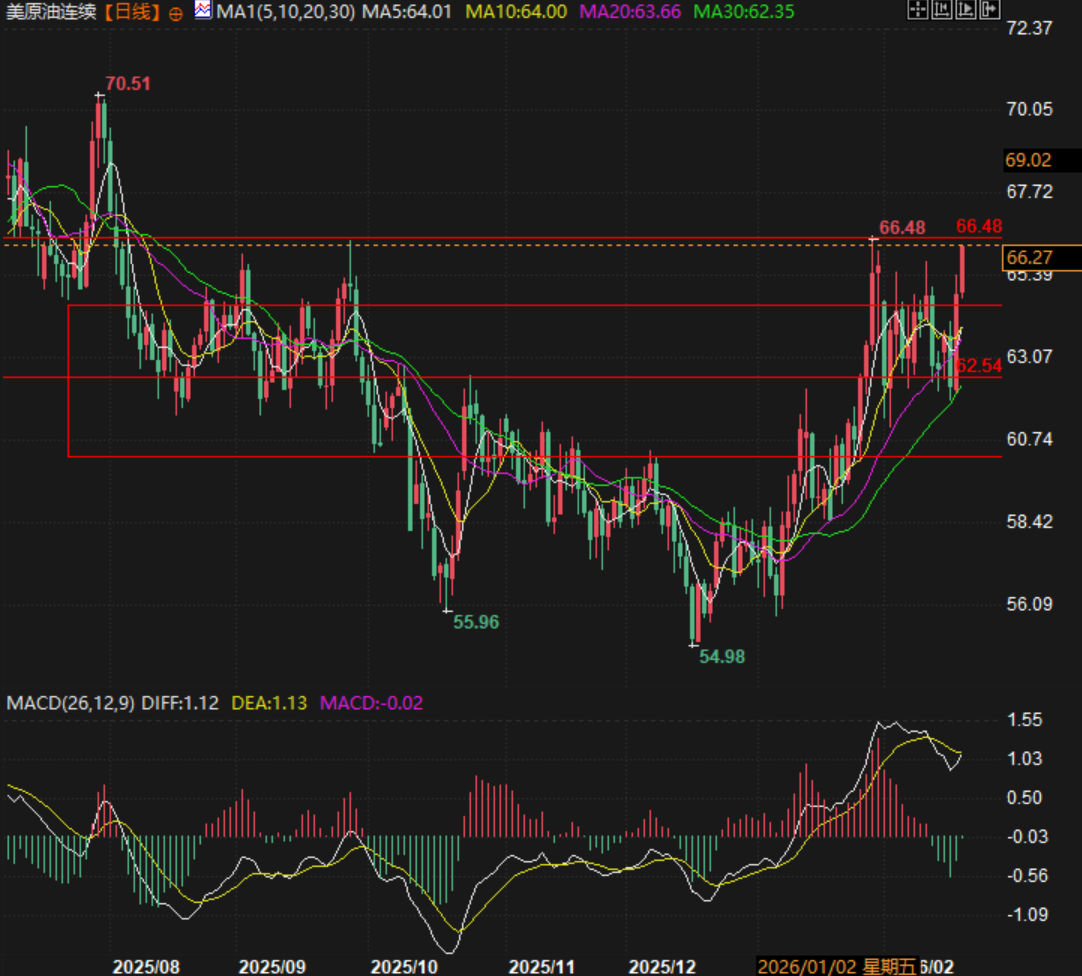
(US crude oil futures daily chart, source: FX678)
At 21:43 Beijing time, US crude oil futures were trading at $66.51 per barrel.
The international crude oil market is currently shrouded in the "eye of the storm" of Middle East geopolitics—the US-Iran nuclear negotiations have stalled, rumors of a military strike by the Trump administration are escalating, Iran is conducting joint naval exercises with Russia and strengthening control over the Strait of Hormuz, and multiple risk factors are intertwined, pushing up the risk premium for oil prices, causing the market to swing violently between "war clouds" and "technical adjustments".
The US-Iran standoff enters a new phase: diplomatic deadlock plus military deterrence exert dual pressure.
The US-Iran nuclear negotiations have become the core driver of the crude oil market, and the game between the two sides has entered a high-risk stage of "diplomatic tug-of-war + military intimidation".
This week, the US and Iran resumed nuclear negotiations in Geneva, Switzerland, but core differences remain unresolved: US Vice President Vance publicly criticized Iran for not responding to the US's core demands, while the Iranian Foreign Minister only released limited positive signals that "a consensus has been reached on guiding principles for the negotiations."
The White House adopted a "two-pronged approach" to exert pressure: Spokesperson Levitt stated that "there are multiple justifications for military action against Iran," and also mentioned the case of the US military's precise strike on Iranian nuclear facilities during "Operation Midnight Hammer" last June, while emphasizing that "reaching an agreement with Iran is the wise choice that is in its own interests."
What further fueled market panic was a report from US media that the US military had completed preparations for a military strike and could launch an attack on Iran as early as this weekend (around February 21). The Pentagon was reportedly urgently evacuating some personnel from the Middle East in preparation for potential conflict and Iranian retaliation.
The US has simultaneously increased its military deployments, sending two carrier strike groups, hundreds of fighter jets, and multiple air defense systems to the Middle East, and transporting weapons and equipment via more than 150 military transport aircraft. This unprecedented military deterrence has directly fueled market concerns about disruptions to crude oil supplies.
Joint Russia-Iran military exercises + Straits control: Adding fuel to the fire of geopolitical risks.
Just as the standoff between the US and Iran was escalating, the collaboration between Iran and Russia further intensified regional tensions.
Iran conducted military exercises in the Strait of Hormuz from February 16 to 17, and launched joint naval exercises with Russia in the Sea of Oman and the northern Indian Ocean on February 19. Both sides emphasized that the exercises were aimed at maintaining regional maritime trade security and opposing unilateralism.
As a vital choke point for global crude oil supply, the Strait of Hormuz handles one-quarter of the world's maritime oil trade and one-fifth of its liquefied natural gas trade, with approximately 20 million barrels of oil transported through it daily.
Iran imposed restrictions on a portion of the strait's shipping lanes on Tuesday, citing security concerns, after repeatedly stating it would "block the strait if attacked." A disruption to shipping lanes would instantly tighten global oil supplies, directly triggering a surge in oil prices.
James, a senior Middle East analyst at Oxford Analytics, pointed out that the US accelerated the deployment of air power in the past 24 hours, which is essentially a form of "deterrence-based pressure." However, the increased scale of military deployment has driven up the cost of deterrence, and Iran is unlikely to meet the US's minimum demands. The probability of a direct conflict between the US and Iran has increased significantly compared to last week.
Oil prices fluctuate wildly: Supported by geopolitical premiums, the market focuses on EIA inventory data.
The continued escalation of geopolitical risks has directly triggered sharp fluctuations in international oil prices. Stimulated by rumors of a conflict between the US and Iran, international oil prices surged by more than 4% on Wednesday, with both Brent crude and WTI crude reaching their highest closing prices since January 30. Geopolitical risk premiums have become the core driver of the price increase.
Traders are currently watching the crude oil inventory data to be released by the U.S. Energy Information Administration (EIA) on Thursday evening – a core indicator for assessing the supply and demand situation in the world's largest oil consumer. If inventories decline more than expected, it will provide further support for oil prices.
If inventories unexpectedly accumulate, it may temporarily suppress the upward momentum. However, in the short term, geopolitical risk premiums have significantly outweighed the impact of fundamentals and become the key variable driving oil price trends.
Summary and Technical Analysis:
The current pricing of crude oil is firmly tied to geopolitical developments, with fundamentals taking a backseat. Although oil prices have undergone a technical correction after a continuous surge, the risk premium from the US-Iran standoff, joint Russian-Iranian military exercises, and the control of the Strait of Hormuz continues to support high oil prices.
Of course, there are other long-term reasons, which you can refer to in my previous articles on crude oil. Technically, US crude oil continues to break out of the range, with the current resistance level around the recent high of 66.48.
(US crude oil futures daily chart, source: FX678)
At 21:43 Beijing time, US crude oil futures were trading at $66.51 per barrel.
- Risk Warning and Disclaimer
- The market involves risk, and trading may not be suitable for all investors. This article is for reference only and does not constitute personal investment advice, nor does it take into account certain users’ specific investment objectives, financial situation, or other needs. Any investment decisions made based on this information are at your own risk.