A false rebound or a real exodus? The final crossroads of dollar hegemony.
2026-02-20 14:58:15
For decades, the US dollar has maintained its position as the world's core safe-haven currency, becoming the absolute leader in international transactions, reserve assets, and cross-border payments.
However, under the triple impact of economic fluctuations, the abuse of sanctions, and the Trump administration's tough tariff policies, this nearly century-old dollar trading system is facing unprecedented challenges. Global investors and sovereign nations are accelerating their flight from dollar assets, driving the international financial landscape toward a more diversified restructuring.
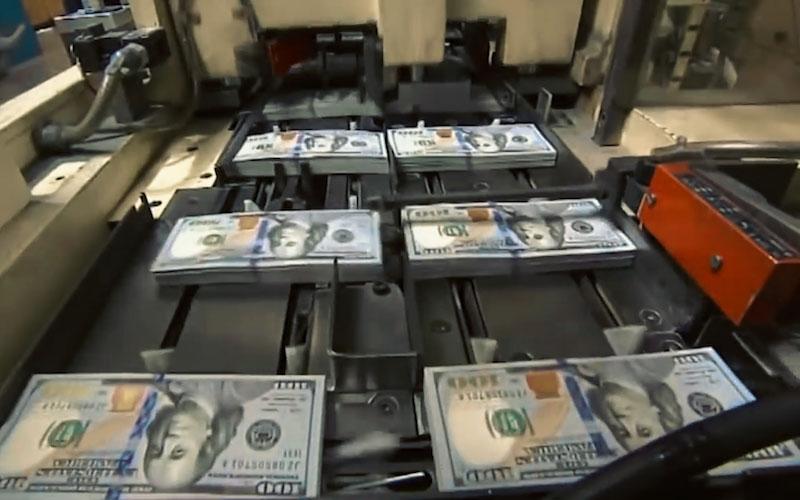
The weakening of the dollar's trading status is first reflected in the crisis of confidence in core assets. Since the Trump administration introduced tough tariff policies in April 2025, the sell-off of dollar assets by overseas investors has continued to spread: as of October last year, the dollar assets held by the Federal Reserve Bank of New York on behalf of foreign central banks fell to $2.7 trillion, the lowest level since August 2012, a significant reduction from the previous peak of $2.9 trillion.
At the same time, central banks around the world have been increasing their gold holdings for more than a year, which has led to an epic bull market for gold, with countries using non-credit assets to hedge against the risks of dollar transactions.
The collapse of market confidence in dollar assets is no accident. The Congressional Budget Office (CBO) estimates that without effective intervention, US debt interest payments will surge by 76% over the next decade, climbing from $1 trillion in 2026 to $1.8 trillion in 2035. The huge debt pressure has cast serious doubt on the safety of dollar-denominated assets.
Legendary investor Jim Rogers recently stated on a program that he has basically liquidated his dollar assets. However, the US is rather strange. Its equity market may still rise, but from the perspective of national fundamentals, the US is in a very bad state. From a debt perspective, it can be said that the US has no fundamentals to speak of.
More seriously, the Trump administration's continued pressure on the Federal Reserve to cut interest rates has severely eroded the central bank's independence. Coupled with the debt repayment pressure under a high-interest-rate environment, this has further exacerbated expectations of dollar depreciation.
Cole Smead, portfolio manager at Smead Capital Management, clearly stated: "From a long-term perspective, the US dollar has entered a bear market cycle. After every US market frenzy, the US dollar has experienced a long-term decline." This judgment has been confirmed by the market—the US dollar index has fallen by more than 10% since January 2025.
The erosion of the dollar-based transaction system is further reflected in the movement to reduce reliance on it in cross-border payments.
For a long time, the global credit card payment market has been monopolized by Visa and Mastercard of the United States. More than 60% of card payments in Europe are completed through these two platforms. This high dependence exposed a fatal risk in the 2022 Russia-Ukraine conflict - the United States ordered the two institutions to cut off Russian payment services, which made Europe realize the threat of the "weaponization" of the dollar payment tool.
To break free from the constraints of dollar-based transactions, European Central Bank President Christine Lagarde explicitly proposed building an independent digital payment system. Several leading EU banks jointly launched the "European Payments Initiative (EPI)" and introduced the cross-border payment tool Wero.
This tool allows users to transfer funds using only their mobile phone number, without relying on a US dollar settlement channel. To date, it has over 47 million registered users in Belgium, France, and Germany, and has processed a total of US$8.5 billion in transfers, becoming an important alternative to the US dollar payment system.
Although the user habits accumulated by Visa and Mastercard still constitute a barrier, Europe is gradually breaking the dollar's monopoly in the payment field by guiding merchants to provide European payment options through policy guidance.
Europe's breakthrough is not an isolated case; other countries around the world have also taken different approaches to strengthen their payment landscape in order to break free from dependence on the US payment system.
Recently, the US dollar index has stopped falling due to better-than-expected US economic data. At the same time, the minutes of the US FOMC meeting also showed that the Federal Reserve is still concerned about US inflation data, which has reduced market expectations for interest rate cuts and boosted the dollar's performance.
Meanwhile, the market is focused on the US PCE price index to be released tonight. The recent rebound of the US dollar is based on market concerns about inflation. However, if the PCE is lower than expected, it will confirm the recent slowdown in US inflation together with the weaker-than-expected CPI released last Friday, causing the US dollar index to pull back quickly.
The weakening of the dollar's dominance in transactions is essentially an erosion of its credit foundation—the unpredictability of US policies, the runaway expansion of debt, and the abuse of dollar tools have led countries to re-examine the security logic of currency transactions.
From asset allocation to payment settlement, from central bank reserves to trade pricing, de-dollarization has evolved from a single country's behavior into a global consensus.
Although the US dollar will remain an important reserve currency in the short term, a decentralized trading system based on the real economy and supported by multiple currencies is taking shape.
In the future, the value of currency will be re-anchored to real trade and resource flows, and the restructuring of the dollar trading system may become the core theme of the transformation of the global financial order.
Meanwhile, the trading approach remains cautiously bearish and data-driven.
From a technical perspective, the US dollar index has slightly broken through the key price level of 97.86. If the PCE data tonight does not exceed expectations, the dollar's rebound is likely to come to a halt. Currently, the dollar index is in a high-price zone, and chasing the price higher carries significant risk. Support and resistance levels should be determined based on the trading range.
(US Dollar Index Daily Chart, Source: FX678)
At 14:54 Beijing time, the US dollar index is currently at 97.95.
However, under the triple impact of economic fluctuations, the abuse of sanctions, and the Trump administration's tough tariff policies, this nearly century-old dollar trading system is facing unprecedented challenges. Global investors and sovereign nations are accelerating their flight from dollar assets, driving the international financial landscape toward a more diversified restructuring.
Overseas investors are selling off large amounts of US Treasury bonds, and core holdings continue to shrink.
The weakening of the dollar's trading status is first reflected in the crisis of confidence in core assets. Since the Trump administration introduced tough tariff policies in April 2025, the sell-off of dollar assets by overseas investors has continued to spread: as of October last year, the dollar assets held by the Federal Reserve Bank of New York on behalf of foreign central banks fell to $2.7 trillion, the lowest level since August 2012, a significant reduction from the previous peak of $2.9 trillion.
At the same time, central banks around the world have been increasing their gold holdings for more than a year, which has led to an epic bull market for gold, with countries using non-credit assets to hedge against the risks of dollar transactions.
Debt pressure and policy intervention exacerbate expectations of dollar depreciation.
The collapse of market confidence in dollar assets is no accident. The Congressional Budget Office (CBO) estimates that without effective intervention, US debt interest payments will surge by 76% over the next decade, climbing from $1 trillion in 2026 to $1.8 trillion in 2035. The huge debt pressure has cast serious doubt on the safety of dollar-denominated assets.
Legendary investor Jim Rogers recently stated on a program that he has basically liquidated his dollar assets. However, the US is rather strange. Its equity market may still rise, but from the perspective of national fundamentals, the US is in a very bad state. From a debt perspective, it can be said that the US has no fundamentals to speak of.
More seriously, the Trump administration's continued pressure on the Federal Reserve to cut interest rates has severely eroded the central bank's independence. Coupled with the debt repayment pressure under a high-interest-rate environment, this has further exacerbated expectations of dollar depreciation.
Cole Smead, portfolio manager at Smead Capital Management, clearly stated: "From a long-term perspective, the US dollar has entered a bear market cycle. After every US market frenzy, the US dollar has experienced a long-term decline." This judgment has been confirmed by the market—the US dollar index has fallen by more than 10% since January 2025.
The Hidden Dangers of the Dollar Payment Monopoly: The Weaponization of Payments in the Russia-Ukraine Conflict Forces Europe to Break Free Independently
The erosion of the dollar-based transaction system is further reflected in the movement to reduce reliance on it in cross-border payments.
For a long time, the global credit card payment market has been monopolized by Visa and Mastercard of the United States. More than 60% of card payments in Europe are completed through these two platforms. This high dependence exposed a fatal risk in the 2022 Russia-Ukraine conflict - the United States ordered the two institutions to cut off Russian payment services, which made Europe realize the threat of the "weaponization" of the dollar payment tool.
To break free from the constraints of dollar-based transactions, European Central Bank President Christine Lagarde explicitly proposed building an independent digital payment system. Several leading EU banks jointly launched the "European Payments Initiative (EPI)" and introduced the cross-border payment tool Wero.
This tool allows users to transfer funds using only their mobile phone number, without relying on a US dollar settlement channel. To date, it has over 47 million registered users in Belgium, France, and Germany, and has processed a total of US$8.5 billion in transfers, becoming an important alternative to the US dollar payment system.
Although the user habits accumulated by Visa and Mastercard still constitute a barrier, Europe is gradually breaking the dollar's monopoly in the payment field by guiding merchants to provide European payment options through policy guidance.
Europe's breakthrough is not an isolated case; other countries around the world have also taken different approaches to strengthen their payment landscape in order to break free from dependence on the US payment system.
The US dollar has rebounded in the short term, and short-term trading will still follow the logic of data-driven transactions.
Recently, the US dollar index has stopped falling due to better-than-expected US economic data. At the same time, the minutes of the US FOMC meeting also showed that the Federal Reserve is still concerned about US inflation data, which has reduced market expectations for interest rate cuts and boosted the dollar's performance.
Meanwhile, the market is focused on the US PCE price index to be released tonight. The recent rebound of the US dollar is based on market concerns about inflation. However, if the PCE is lower than expected, it will confirm the recent slowdown in US inflation together with the weaker-than-expected CPI released last Friday, causing the US dollar index to pull back quickly.
Summary and Technical Analysis:
The weakening of the dollar's dominance in transactions is essentially an erosion of its credit foundation—the unpredictability of US policies, the runaway expansion of debt, and the abuse of dollar tools have led countries to re-examine the security logic of currency transactions.
From asset allocation to payment settlement, from central bank reserves to trade pricing, de-dollarization has evolved from a single country's behavior into a global consensus.
Although the US dollar will remain an important reserve currency in the short term, a decentralized trading system based on the real economy and supported by multiple currencies is taking shape.
In the future, the value of currency will be re-anchored to real trade and resource flows, and the restructuring of the dollar trading system may become the core theme of the transformation of the global financial order.
Meanwhile, the trading approach remains cautiously bearish and data-driven.
From a technical perspective, the US dollar index has slightly broken through the key price level of 97.86. If the PCE data tonight does not exceed expectations, the dollar's rebound is likely to come to a halt. Currently, the dollar index is in a high-price zone, and chasing the price higher carries significant risk. Support and resistance levels should be determined based on the trading range.
(US Dollar Index Daily Chart, Source: FX678)
At 14:54 Beijing time, the US dollar index is currently at 97.95.
- Risk Warning and Disclaimer
- The market involves risk, and trading may not be suitable for all investors. This article is for reference only and does not constitute personal investment advice, nor does it take into account certain users’ specific investment objectives, financial situation, or other needs. Any investment decisions made based on this information are at your own risk.