Trump's tariff weapon has been broken by the US Supreme Court! It not only cuts off his revenue streams but also the lifeline of the US dollar.
2026-02-23 15:30:56
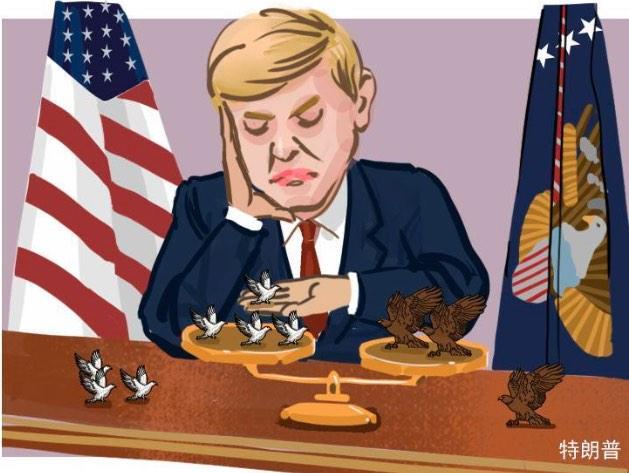
On Friday, February 20, the U.S. Supreme Court, in a 6-3 vote, formally overturned President Trump's massive tariffs imposed on almost all of the world's trading partners under the International Emergency Economic Powers Act (IEEPA). This ruling is seen as a clear limitation imposed by the judicial system on one of Trump's most controversial attempts to expand executive power during his second term, and it has a profound impact on global supply chains, U.S. fiscal revenue, and the landscape of international trade negotiations.
The majority opinion, authored by Chief Justice John Roberts, points out that the U.S. Constitution explicitly grants Congress the power to impose taxes and tariffs, while the International Emergency Economic Powers Act of 1977 only authorizes the president to "regulate" property involving foreign interests after declaring a national emergency, and does not explicitly include the power to impose tariffs.
The court cited the "major issues principle," which has been strongly supported by conservative justices in recent years, and ruled that Trump's interpretation of IEEPA as allowing him to impose tariffs of any rate, scope, and duration on imported goods worldwide constituted an overreach of authority without clear congressional authorization.
In his ruling, Roberts wrote, "The president must specify a clear mandate from Congress to justify such an extraordinary claim to power. In this case, he was unable to do so."
In this 6-3 ruling, the camp supporting the overturning of Trump's tariffs included conservative Justices Neil Gorsuch and Amy Coney Barrett (both appointed during Trump's first term), and three liberal justices. The three dissenting conservative justices were Clarence Thomas, Samuel Alito, and Brett Kavanaugh.
This result shows that even within the Supreme Court, where conservatives hold a 6-3 majority, there are still significant disagreements about the executive branch bypassing Congress on major economic issues.
Since returning to the White House in January 2025, Trump has quickly made tariffs a core economic and diplomatic tool:
February-March 2025: Impose targeted tariffs on Canada and Mexico on the grounds of illegal drug trafficking;
April 2, 2025 (Trump calls it "Liberation Day"): Invoking the long-standing trade deficit as a "national emergency," impose a 10% benchmark "reciprocal" tariff on almost all trading partners, with higher rates in some countries.
According to budget models from the Wharton School of the University of Pennsylvania, tariffs imposed under IEEPA had exceeded $175 billion prior to the ruling. If refunds are required, this would be the largest tariff refund event in U.S. history.
The Trump administration has stated that it will turn to other legal tools to maintain tariffs, including:
Section 232 of the Trade Act of 1974 (National Security Tariffs);
Section 301 (for unfair trade practices);
Article 122 (Provisional Import Surcharge).
However, the aforementioned provisions are far inferior to IEEPA in terms of coverage, speed of implementation, and flexibility, making it difficult to quickly replicate the scale and immediacy of previous global tariffs.
The Congressional Budget Office previously estimated that if all Trump tariffs (including those under IEEPA) continue to be implemented, they could generate approximately $300 billion in revenue annually over the next decade. U.S. Customs net tariff revenue already reached a record $195 billion in fiscal year 2025.
Following the ruling, market volatility intensified in the short term, and several importers are preparing to file a class-action lawsuit for tax refunds. Some analysts believe that this move may alleviate some imported inflationary pressures, but it also weakens the United States' ability to exert immediate pressure in trade negotiations, potentially leading more countries to adopt a tougher stance in future bilateral talks.
Trump himself called the ruling "disappointing and appalling" and stated that he would "develop a second option" to continue advancing the "America First" trade strategy. In the coming months, US trade policy is expected to enter a complex phase characterized by a new round of legal and international maneuvering.
In summary, the US Supreme Court's ruling has had a complex and multifaceted impact on the US dollar. In the short term, it led to a tactical decline in the dollar by eliminating uncertainty about trade policy and boosting market risk appetite. During Monday's European session, the dollar index fluctuated downwards, continuing the previous trading day's decline, and is currently trading around 97.45, with a daily drop of approximately 0.35%.
However, the deeper impact lies in the fact that it cuts off a crucial source of tariff revenue for the US government and could trigger massive tax refunds, thereby severely worsening the outlook for the US fiscal deficit. It is precisely this potential erosion of the dollar's credibility that has led mainstream institutions such as HSBC to interpret this ruling as a key signal reinforcing expectations of a weakening dollar in the medium to long term.
The future trajectory of the US dollar will depend on the actual effectiveness of the Trump administration's alternative tariff policies and the market's repricing of the Federal Reserve's monetary policy and the state of US fiscal health.
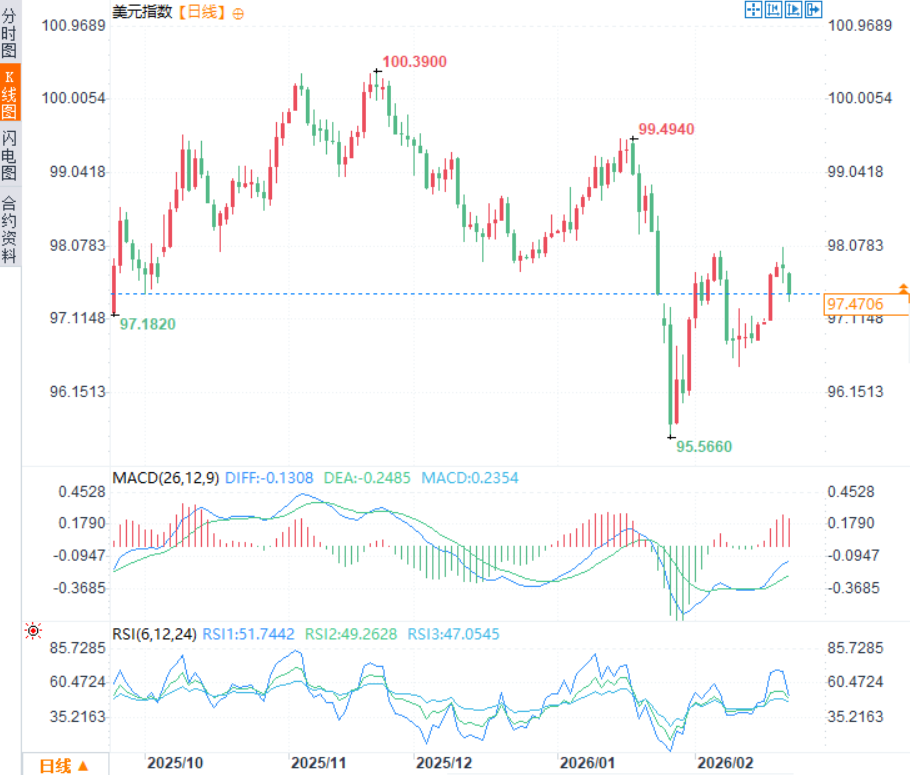
(US Dollar Index Daily Chart, Source: FX678)
At 15:22 Beijing time, the US dollar index is currently at 97.46.
Core of the ruling: IEEPA does not authorize the president to unilaterally impose tariffs.
The majority opinion, authored by Chief Justice John Roberts, points out that the U.S. Constitution explicitly grants Congress the power to impose taxes and tariffs, while the International Emergency Economic Powers Act of 1977 only authorizes the president to "regulate" property involving foreign interests after declaring a national emergency, and does not explicitly include the power to impose tariffs.
The court cited the "major issues principle," which has been strongly supported by conservative justices in recent years, and ruled that Trump's interpretation of IEEPA as allowing him to impose tariffs of any rate, scope, and duration on imported goods worldwide constituted an overreach of authority without clear congressional authorization.
In his ruling, Roberts wrote, "The president must specify a clear mandate from Congress to justify such an extraordinary claim to power. In this case, he was unable to do so."
Supreme Court factionalism and cross-ideological cooperation
In this 6-3 ruling, the camp supporting the overturning of Trump's tariffs included conservative Justices Neil Gorsuch and Amy Coney Barrett (both appointed during Trump's first term), and three liberal justices. The three dissenting conservative justices were Clarence Thomas, Samuel Alito, and Brett Kavanaugh.
This result shows that even within the Supreme Court, where conservatives hold a 6-3 majority, there are still significant disagreements about the executive branch bypassing Congress on major economic issues.
Trump's tariff timeline and implementation scale
Since returning to the White House in January 2025, Trump has quickly made tariffs a core economic and diplomatic tool:
February-March 2025: Impose targeted tariffs on Canada and Mexico on the grounds of illegal drug trafficking;
April 2, 2025 (Trump calls it "Liberation Day"): Invoking the long-standing trade deficit as a "national emergency," impose a 10% benchmark "reciprocal" tariff on almost all trading partners, with higher rates in some countries.
According to budget models from the Wharton School of the University of Pennsylvania, tariffs imposed under IEEPA had exceeded $175 billion prior to the ruling. If refunds are required, this would be the largest tariff refund event in U.S. history.
Alternative Paths and Policy Continuity Challenges
The Trump administration has stated that it will turn to other legal tools to maintain tariffs, including:
Section 232 of the Trade Act of 1974 (National Security Tariffs);
Section 301 (for unfair trade practices);
Article 122 (Provisional Import Surcharge).
However, the aforementioned provisions are far inferior to IEEPA in terms of coverage, speed of implementation, and flexibility, making it difficult to quickly replicate the scale and immediacy of previous global tariffs.
Economic and International Impact Outlook
The Congressional Budget Office previously estimated that if all Trump tariffs (including those under IEEPA) continue to be implemented, they could generate approximately $300 billion in revenue annually over the next decade. U.S. Customs net tariff revenue already reached a record $195 billion in fiscal year 2025.
Following the ruling, market volatility intensified in the short term, and several importers are preparing to file a class-action lawsuit for tax refunds. Some analysts believe that this move may alleviate some imported inflationary pressures, but it also weakens the United States' ability to exert immediate pressure in trade negotiations, potentially leading more countries to adopt a tougher stance in future bilateral talks.
Trump himself called the ruling "disappointing and appalling" and stated that he would "develop a second option" to continue advancing the "America First" trade strategy. In the coming months, US trade policy is expected to enter a complex phase characterized by a new round of legal and international maneuvering.
Analysis of the impact on the US dollar
In summary, the US Supreme Court's ruling has had a complex and multifaceted impact on the US dollar. In the short term, it led to a tactical decline in the dollar by eliminating uncertainty about trade policy and boosting market risk appetite. During Monday's European session, the dollar index fluctuated downwards, continuing the previous trading day's decline, and is currently trading around 97.45, with a daily drop of approximately 0.35%.
However, the deeper impact lies in the fact that it cuts off a crucial source of tariff revenue for the US government and could trigger massive tax refunds, thereby severely worsening the outlook for the US fiscal deficit. It is precisely this potential erosion of the dollar's credibility that has led mainstream institutions such as HSBC to interpret this ruling as a key signal reinforcing expectations of a weakening dollar in the medium to long term.
The future trajectory of the US dollar will depend on the actual effectiveness of the Trump administration's alternative tariff policies and the market's repricing of the Federal Reserve's monetary policy and the state of US fiscal health.
(US Dollar Index Daily Chart, Source: FX678)
At 15:22 Beijing time, the US dollar index is currently at 97.46.
- Risk Warning and Disclaimer
- The market involves risk, and trading may not be suitable for all investors. This article is for reference only and does not constitute personal investment advice, nor does it take into account certain users’ specific investment objectives, financial situation, or other needs. Any investment decisions made based on this information are at your own risk.