Positive data couldn't withstand geopolitical pressure; the euro's 1.17 defenses crumbled.
2026-03-02 18:19:14
The euro is facing multiple pressures against the US dollar in the short term, and the exchange rate has continued to weaken around 1.1750. During the European trading session, it once fell to 1.1740, with a single-day drop of nearly 1%, and the overall trend is weak.
In the Eurozone, the PMIs for France, Germany, and the harmonized Eurozone PMI were better than expected. The UK PMI, however, fell short of expectations, coming in at 51.7. While the overall European manufacturing PMI remained in expansion territory, the positive data did not support the exchange rate of European currencies due to geopolitical risks and rising oil prices. The three major European stock indices all fell, with most experiencing a slight bottoming-out and rebound trend.
The European Central Bank currency was generally suppressed by inflation that could result from rising energy prices.
German retail sales data for January became the core drag on the euro's weakness, with the month-on-month retail sales rate falling by 0.9%, significantly worse than the expected -0.2%, and reversing the upwardly revised 1.2% month-on-month increase in the previous month;
The year-on-year growth rate also slowed to 1.2% from 2.5% in December, with German retail sales projected to grow by 2.7% for the whole of 2025, indicating continued weakness in consumer spending.
Looking back at the Eurozone manufacturing data at the end of 2025, the HCOB Manufacturing PMI fell to 48.8 in December, further dropping below the 50-point threshold separating expansion from contraction. Output declined for the first time since February of that year, and new orders saw the fastest decline in nearly a year.
Despite continued price cuts and promotions by businesses, sales remained weak, while input cost inflation climbed to a 16-month peak and supply chain pressures continued to intensify.
The performance within the region was significantly divergent. Germany's manufacturing sector experienced its largest deterioration since February 2025, while Italy and Spain's PMIs fell below the 50-point mark again, with only France bucking the trend and strengthening.
In February 2026, the Eurozone manufacturing sector saw a significant recovery, with both the German and Eurozone HCOB manufacturing PMIs rebounding into expansion territory and reaching their highest levels in 44 months, providing slight support for the euro.
Geopolitics is the most important variable affecting the euro and European stock markets in the near term.
The joint US-Israeli airstrikes on Iran over the weekend, which resulted in the death of Iran's Supreme Leader, have escalated geopolitical conflicts in the Middle East, causing a rapid rise in market risk aversion and a corresponding strengthening of the US dollar index.
Europe is highly dependent on energy imports, and rising energy prices will quickly translate into increased production costs for businesses and living costs for the public. This not only threatens the nascent manufacturing PMI but could also trigger a new round of inflation, putting the European Central Bank (ECB) in a dilemma of whether to continue cutting interest rates.
When war breaks out, global capital tends to flow not into the euro, but into the US dollar, gold, and the Swiss franc. Compared to the geographically distant United States, Europe has closer ties with the Middle East in terms of energy supply, refugee issues, and security. Historically, when the situation in the Middle East deteriorates, European markets tend to react more sensitively and pessimistically than US stocks.
Due to the closure of Middle Eastern airspace (such as the suspension of operations at Dubai and Doha hubs), the share prices of major European airlines (Air France-KLM, Lufthansa, IAG) generally fell between 7% and 9% today, while aviation and tourism are considered pillar industries in Europe.
The euro, which is risk-sensitive, was heavily sold off, becoming a significant external factor contributing to its weakening.
Overall, the euro is mainly affected by geopolitical factors in the short term, and the euro/dollar exchange rate is more likely to fall than rise. Going forward, we need to pay close attention to the subsequent developments in the Middle East and the US ISM Manufacturing PMI data.
Stronger-than-expected US inflation data led businesses to pass on tariff costs to consumers, further cooling the prospect of a Federal Reserve rate cut and continuing to support the US dollar.
However, there are policy disagreements within the Federal Reserve. Governor Milan called for a significant interest rate cut as soon as possible, arguing that core inflation pressures remain moderate and that the current high interest rates stem from distortions in inflation statistics.
In previous articles, we emphasized the potential overvaluation of the euro and the power of a triple top. I wonder if traders were prepared in advance. Support is at 1.1700, followed by 1.1600, which are the 0.382 and 0.236 Fibonacci retracements of this euro rally.
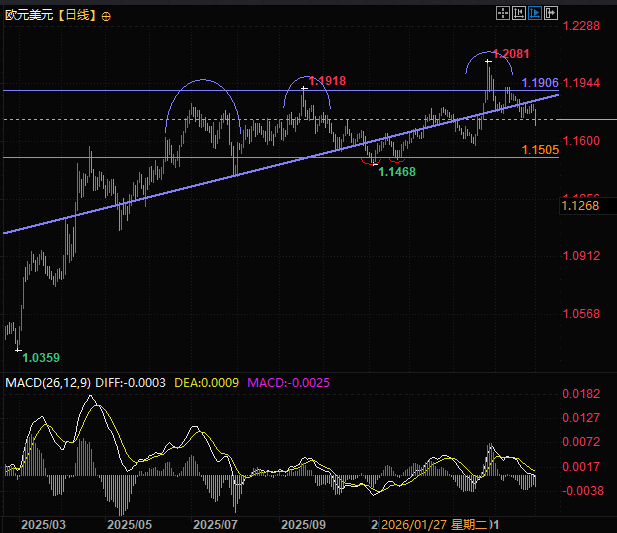
(Euro to US Dollar Daily Chart, Source: FX678)
At 18:17 Beijing time, the euro was trading at 1.1740/41 against the US dollar.
In the Eurozone, the PMIs for France, Germany, and the harmonized Eurozone PMI were better than expected. The UK PMI, however, fell short of expectations, coming in at 51.7. While the overall European manufacturing PMI remained in expansion territory, the positive data did not support the exchange rate of European currencies due to geopolitical risks and rising oil prices. The three major European stock indices all fell, with most experiencing a slight bottoming-out and rebound trend.
The European Central Bank currency was generally suppressed by inflation that could result from rising energy prices.
Economic data: German retail sales fell sharply short of expectations, putting pressure on the euro's fundamentals.
German retail sales data for January became the core drag on the euro's weakness, with the month-on-month retail sales rate falling by 0.9%, significantly worse than the expected -0.2%, and reversing the upwardly revised 1.2% month-on-month increase in the previous month;
The year-on-year growth rate also slowed to 1.2% from 2.5% in December, with German retail sales projected to grow by 2.7% for the whole of 2025, indicating continued weakness in consumer spending.
Manufacturing PMI: Eurozone PMI initially declined before rebounding, with significant regional divergence.
Looking back at the Eurozone manufacturing data at the end of 2025, the HCOB Manufacturing PMI fell to 48.8 in December, further dropping below the 50-point threshold separating expansion from contraction. Output declined for the first time since February of that year, and new orders saw the fastest decline in nearly a year.
Despite continued price cuts and promotions by businesses, sales remained weak, while input cost inflation climbed to a 16-month peak and supply chain pressures continued to intensify.
The performance within the region was significantly divergent. Germany's manufacturing sector experienced its largest deterioration since February 2025, while Italy and Spain's PMIs fell below the 50-point mark again, with only France bucking the trend and strengthening.
In February 2026, the Eurozone manufacturing sector saw a significant recovery, with both the German and Eurozone HCOB manufacturing PMIs rebounding into expansion territory and reaching their highest levels in 44 months, providing slight support for the euro.
External shocks: Escalating geopolitical tensions in the Middle East and a strengthening US dollar lead to a double sell-off of the euro.
Geopolitics is the most important variable affecting the euro and European stock markets in the near term.
The joint US-Israeli airstrikes on Iran over the weekend, which resulted in the death of Iran's Supreme Leader, have escalated geopolitical conflicts in the Middle East, causing a rapid rise in market risk aversion and a corresponding strengthening of the US dollar index.
Europe is highly dependent on energy imports, and rising energy prices will quickly translate into increased production costs for businesses and living costs for the public. This not only threatens the nascent manufacturing PMI but could also trigger a new round of inflation, putting the European Central Bank (ECB) in a dilemma of whether to continue cutting interest rates.
When war breaks out, global capital tends to flow not into the euro, but into the US dollar, gold, and the Swiss franc. Compared to the geographically distant United States, Europe has closer ties with the Middle East in terms of energy supply, refugee issues, and security. Historically, when the situation in the Middle East deteriorates, European markets tend to react more sensitively and pessimistically than US stocks.
Due to the closure of Middle Eastern airspace (such as the suspension of operations at Dubai and Doha hubs), the share prices of major European airlines (Air France-KLM, Lufthansa, IAG) generally fell between 7% and 9% today, while aviation and tourism are considered pillar industries in Europe.
The euro, which is risk-sensitive, was heavily sold off, becoming a significant external factor contributing to its weakening.
Summary and Technical Analysis:
Overall, the euro is mainly affected by geopolitical factors in the short term, and the euro/dollar exchange rate is more likely to fall than rise. Going forward, we need to pay close attention to the subsequent developments in the Middle East and the US ISM Manufacturing PMI data.
Stronger-than-expected US inflation data led businesses to pass on tariff costs to consumers, further cooling the prospect of a Federal Reserve rate cut and continuing to support the US dollar.
However, there are policy disagreements within the Federal Reserve. Governor Milan called for a significant interest rate cut as soon as possible, arguing that core inflation pressures remain moderate and that the current high interest rates stem from distortions in inflation statistics.
In previous articles, we emphasized the potential overvaluation of the euro and the power of a triple top. I wonder if traders were prepared in advance. Support is at 1.1700, followed by 1.1600, which are the 0.382 and 0.236 Fibonacci retracements of this euro rally.
(Euro to US Dollar Daily Chart, Source: FX678)
At 18:17 Beijing time, the euro was trading at 1.1740/41 against the US dollar.
- Risk Warning and Disclaimer
- The market involves risk, and trading may not be suitable for all investors. This article is for reference only and does not constitute personal investment advice, nor does it take into account certain users’ specific investment objectives, financial situation, or other needs. Any investment decisions made based on this information are at your own risk.