Analysts predict that gold prices will rise to the $5,900-$6,200 range by the end of 2026.
2026-03-17 11:42:08
Despite the lackluster performance of gold since the outbreak of the Iran war, with prices struggling to break through the $5,200 per ounce mark, UBS commodities analysts maintained a bullish stance in a report on Friday (March 13). They predict that gold prices will rise to the $5,900-$6,200 range by the end of 2026, representing a further increase of more than 20% from current levels.
This forecast is based on a comprehensive consideration of risk repricing, interest rate policy, inflationary pressures, and strong underlying demand.
The report points out that since the start of the conflict with Iran, gold has failed to demonstrate its safe-haven properties as expected, and instead has entered a period of consolidation.
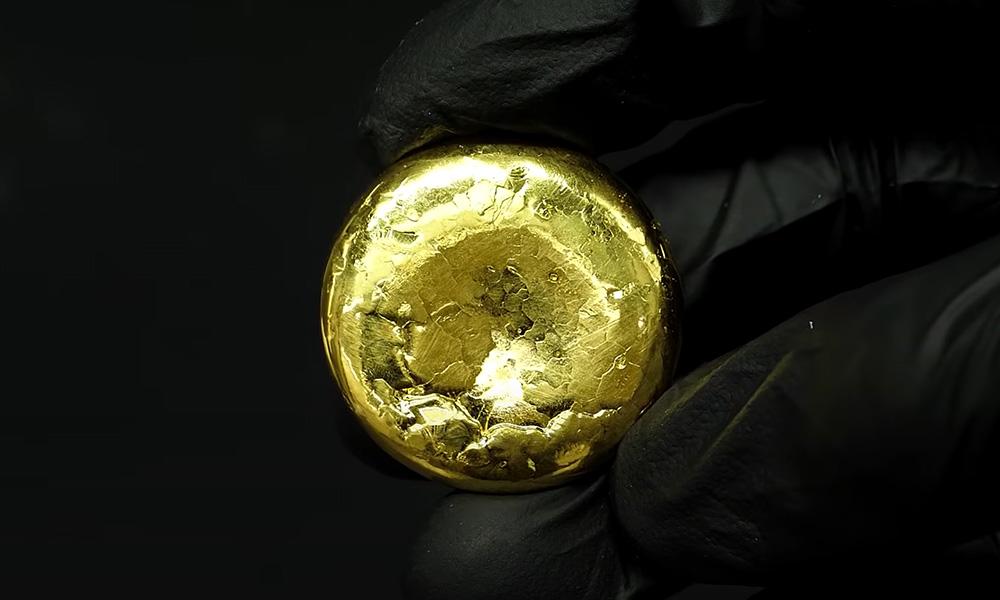
Analysts stated, "This contrasts sharply with last year's 65% increase, when rising geopolitical risks coupled with declining real interest rates and debt concerns fueled gold's rise." They added, "Recent performance is more in line with historical patterns: in the early stages of a conflict, investors tend to seek liquidity and turn to alternatives such as energy assets."
They cited examples: after the outbreak of the Russia-Ukraine conflict in 2022, gold prices rose by 15%, then fell by 15-18% due to the Fed's interest rate hikes; gold prices rose by 17% and 19% respectively in the early stages of the Gulf War and the Iraq War, but quickly fell back after tensions eased.
Analysts acknowledge that in the short term, high energy prices and inflation concerns have boosted the dollar and fueled market anxieties about a potential Federal Reserve rate hike, putting double pressure on gold. They stated, "Higher energy prices and inflation concerns have led to a stronger dollar and raised concerns about potential rate hikes, both of which are detrimental to gold prices."
Nevertheless, they expect central banks to cautiously monitor inflation risks rather than hastily raise interest rates. They added, "The longer the conflict lasts, the greater the negative impact on the economy, which is more likely to support safe-haven demand for gold."
In the long run, gold remains an effective tool against inflation. UBS, citing data from the Global Investment Returns Yearbook, points out that since 1900, the real returns of gold and commodities have been positively correlated with inflation.
They emphasized that "gold primarily hedges against the broad impacts of conflict, rather than the direct threat of war. It mainly protects against currency risks such as currency devaluation, rising deficits, and economic slowdown."
Basic demand remains strong, and although ETF investors slightly reduced their holdings at the beginning of the month, positions have recently stabilized, with hedge funds slightly increasing their net long positions.
Analysts said, "We believe aggregate demand will remain strong, supported by continued central bank gold purchases, rising investment activity, and structural growth in gold jewelry demand driven by income growth in Asia."
UBS points out that structural trends such as high government debt and central banks and global investors continuing to diversify away from the US dollar will continue to support the long-term outlook for gold.
They stated, "Amidst macroeconomic and political uncertainties beyond the US-Iran conflict, we remain bullish on gold, believing it to be an effective portfolio diversification tool. Investors with a preference for gold may consider a mid-single-digit allocation in their diversified portfolios."
UBS maintains its 12-month price target of around $5,500, but believes this target is conservative given the increased macroeconomic risks.
They anticipate continued high geopolitical risks, noting that the scale of US military deployments in the Middle East has already surpassed the actions taken against Venezuela earlier this year. Analysts stated, "The prospects for an agreement with Iran remain uncertain, and military action against Iran seems increasingly likely in the short term."
They added, "Overall, given Trump's foreign policy style, geopolitical uncertainty is unlikely to subside. While geopolitical events typically do not have a lasting impact on global markets, they can trigger spikes in short-term volatility, supporting demand for portfolio hedging strategies such as gold."
UBS expects the Federal Reserve's easing cycle to have room to continue. They stated, "A weaker dollar and lower US real interest rates are both positive for gold. We believe that if this macroeconomic environment remains unchanged, the Fed's easing cycle will continue."
Despite recent strong jobs data and a hawkish FOMC meeting minutes, easing inflationary pressures and a more dovish Fed leadership in the coming months should support further rate cuts. They anticipate two 25-basis-point rate cuts by the end of September.
Data from the World Gold Council shows that global gold demand will exceed 5,000 tons for the first time in 2025, and UBS predicts that demand will rise further in 2026, with central bank gold purchases and investment activities remaining strong. Income growth in Asia will also support structural demand for gold jewelry. Meanwhile, supply growth has stagnated.
UBS concludes that all factors combined create a very strong supporting environment for the continued appreciation of gold prices. They reiterate their "attractive" rating on gold and recommend that investors view it as an effective tool for hedging against various market and economic risks.
Overall , although gold has failed to fully realize its safe-haven function in the short term due to the strong dollar and high interest rates, UBS believes this is more a matter of timing than a fundamental reversal. Central bank gold purchases, the debt crisis, geopolitical uncertainty, demand for inflation hedging, and the ongoing Fed easing cycle are all key driving forces that continue to accumulate. If geopolitical risks remain high and inflation remains sticky in 2026, gold is expected to break through the $5,200 resistance level, return to a strong upward trend, and even reach the $6,200 target. Investors should remain patient during short-term fluctuations; pullbacks may present strategic opportunities to position for a long-term bull market.
UBS's forecast reminds the market that the true value of gold lies not in its immediate safe-haven appeal, but in its ultimate ability to combat long-term structural risks in the global financial system.
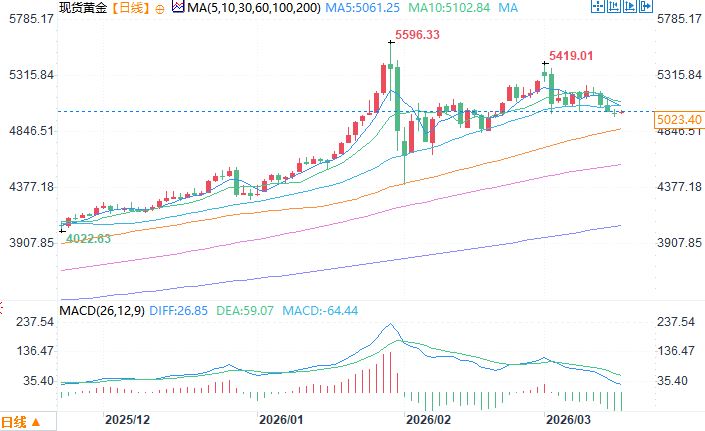
Spot gold daily chart source: EasyForex
At 11:41 AM Beijing time on March 17, spot gold was trading at $5028.40 per ounce.
This forecast is based on a comprehensive consideration of risk repricing, interest rate policy, inflationary pressures, and strong underlying demand.
Gold prices underperformed due to the failure of safe-haven demand in the early stages of the war.
The report points out that since the start of the conflict with Iran, gold has failed to demonstrate its safe-haven properties as expected, and instead has entered a period of consolidation.
Analysts stated, "This contrasts sharply with last year's 65% increase, when rising geopolitical risks coupled with declining real interest rates and debt concerns fueled gold's rise." They added, "Recent performance is more in line with historical patterns: in the early stages of a conflict, investors tend to seek liquidity and turn to alternatives such as energy assets."
They cited examples: after the outbreak of the Russia-Ukraine conflict in 2022, gold prices rose by 15%, then fell by 15-18% due to the Fed's interest rate hikes; gold prices rose by 17% and 19% respectively in the early stages of the Gulf War and the Iraq War, but quickly fell back after tensions eased.
Short-term pressure factors: High energy prices and a strong US dollar
Analysts acknowledge that in the short term, high energy prices and inflation concerns have boosted the dollar and fueled market anxieties about a potential Federal Reserve rate hike, putting double pressure on gold. They stated, "Higher energy prices and inflation concerns have led to a stronger dollar and raised concerns about potential rate hikes, both of which are detrimental to gold prices."
Nevertheless, they expect central banks to cautiously monitor inflation risks rather than hastily raise interest rates. They added, "The longer the conflict lasts, the greater the negative impact on the economy, which is more likely to support safe-haven demand for gold."
Long-term driving forces: Inflation hedging and continued central bank gold purchases
In the long run, gold remains an effective tool against inflation. UBS, citing data from the Global Investment Returns Yearbook, points out that since 1900, the real returns of gold and commodities have been positively correlated with inflation.
They emphasized that "gold primarily hedges against the broad impacts of conflict, rather than the direct threat of war. It mainly protects against currency risks such as currency devaluation, rising deficits, and economic slowdown."
Basic demand remains strong, and although ETF investors slightly reduced their holdings at the beginning of the month, positions have recently stabilized, with hedge funds slightly increasing their net long positions.
Analysts said, "We believe aggregate demand will remain strong, supported by continued central bank gold purchases, rising investment activity, and structural growth in gold jewelry demand driven by income growth in Asia."
Structural trends support long-term gold price increases.
UBS points out that structural trends such as high government debt and central banks and global investors continuing to diversify away from the US dollar will continue to support the long-term outlook for gold.
They stated, "Amidst macroeconomic and political uncertainties beyond the US-Iran conflict, we remain bullish on gold, believing it to be an effective portfolio diversification tool. Investors with a preference for gold may consider a mid-single-digit allocation in their diversified portfolios."
UBS Forecast Path
UBS maintains its 12-month price target of around $5,500, but believes this target is conservative given the increased macroeconomic risks.
They anticipate continued high geopolitical risks, noting that the scale of US military deployments in the Middle East has already surpassed the actions taken against Venezuela earlier this year. Analysts stated, "The prospects for an agreement with Iran remain uncertain, and military action against Iran seems increasingly likely in the short term."
They added, "Overall, given Trump's foreign policy style, geopolitical uncertainty is unlikely to subside. While geopolitical events typically do not have a lasting impact on global markets, they can trigger spikes in short-term volatility, supporting demand for portfolio hedging strategies such as gold."
The Fed's easing cycle is not over; a weaker dollar and lower real interest rates are favorable for gold.
UBS expects the Federal Reserve's easing cycle to have room to continue. They stated, "A weaker dollar and lower US real interest rates are both positive for gold. We believe that if this macroeconomic environment remains unchanged, the Fed's easing cycle will continue."
Despite recent strong jobs data and a hawkish FOMC meeting minutes, easing inflationary pressures and a more dovish Fed leadership in the coming months should support further rate cuts. They anticipate two 25-basis-point rate cuts by the end of September.
Driven by both demand and supply, the long-term bullish logic for gold remains unchanged.
Data from the World Gold Council shows that global gold demand will exceed 5,000 tons for the first time in 2025, and UBS predicts that demand will rise further in 2026, with central bank gold purchases and investment activities remaining strong. Income growth in Asia will also support structural demand for gold jewelry. Meanwhile, supply growth has stagnated.
UBS concludes that all factors combined create a very strong supporting environment for the continued appreciation of gold prices. They reiterate their "attractive" rating on gold and recommend that investors view it as an effective tool for hedging against various market and economic risks.
Overall , although gold has failed to fully realize its safe-haven function in the short term due to the strong dollar and high interest rates, UBS believes this is more a matter of timing than a fundamental reversal. Central bank gold purchases, the debt crisis, geopolitical uncertainty, demand for inflation hedging, and the ongoing Fed easing cycle are all key driving forces that continue to accumulate. If geopolitical risks remain high and inflation remains sticky in 2026, gold is expected to break through the $5,200 resistance level, return to a strong upward trend, and even reach the $6,200 target. Investors should remain patient during short-term fluctuations; pullbacks may present strategic opportunities to position for a long-term bull market.
UBS's forecast reminds the market that the true value of gold lies not in its immediate safe-haven appeal, but in its ultimate ability to combat long-term structural risks in the global financial system.
Spot gold daily chart source: EasyForex
At 11:41 AM Beijing time on March 17, spot gold was trading at $5028.40 per ounce.
- Risk Warning and Disclaimer
- The market involves risk, and trading may not be suitable for all investors. This article is for reference only and does not constitute personal investment advice, nor does it take into account certain users’ specific investment objectives, financial situation, or other needs. Any investment decisions made based on this information are at your own risk.