Stagflation returns, employment collapses, and high oil prices: the Federal Reserve faces a difficult choice under the shadow of war.
2026-03-18 14:18:48
The Federal Reserve's two-day policy meeting, which begins this Tuesday (March 17), will be held under the shadow of the war with Iran, and the interest rate decision will be announced at 2:00 p.m. local time on Wednesday (2:00 a.m. Thursday Beijing time). The US-Israeli military strikes against Iran have lasted for nearly three weeks, resulting in a disruption of one-fifth of global oil supply. Soaring energy prices have reignited inflationary pressures, while economic growth and employment face new risks.
More importantly, in a new policy statement and economic forecast, they will elaborate on how they believe the ongoing conflict launched by President Trump against Iran, with no clear end in sight, has reshaped the outlook for the U.S. economy, inflation, and monetary policy.
The Federal Reserve needs to assess whether the conflict will disrupt growth, cause persistently high inflation, or create a complex stagflation scenario of "slowing growth + rising inflation." The post-pandemic supply shock has already prevented the Fed from achieving its 2% inflation target for five consecutive years, and the market expects it to adopt a more cautious or even hawkish stance this week.

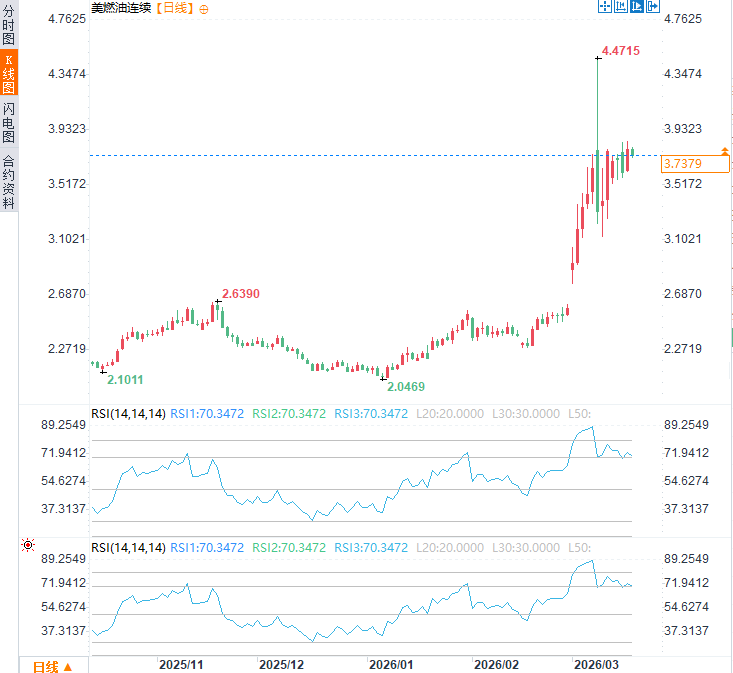
According to data from the automotive rights organization AAA, the average price of gasoline in the United States has risen to about $3.79 per gallon, an increase of more than 25% compared to pre-war levels, currently at $3.74 per gallon.
With jet fuel prices soaring, airlines have warned of rising travel costs; White House officials say the U.S. is seeking alternative sources of agricultural fertilizers.
The energy shock has spread from gasoline and jet fuel to transportation, chemicals, manufacturing, and agriculture, pushing up core inflation and the cost of living. Consumers may cancel large purchases or reduce overall consumption, and European trading partners face even more severe inflationary shocks.
The February jobs report showed an unexpected net loss of 92,000 non-farm payroll jobs in the United States, a rare negative growth in recent times. Key inflation indicators rebounded in January, coupled with soaring oil prices, reigniting inflationary pressures.
The Federal Reserve's dual mandate (price stability and full employment) is once again caught in a dilemma: weak employment requires easing support, while rising inflation requires tightening to anchor expectations. Maintaining the status quo is the simplest option in the short term, and hawkish signals can help prevent inflation expectations from spiraling out of control.
KPMG chief economist Diane Swonk said that now seems like the right time for the Federal Reserve to shift its latest forecast toward "stagflation".
She expects the Federal Reserve to raise its year-end inflation and unemployment forecasts, and policymakers' interest rate expectations will become more divergent: some will advocate for rate cuts to maintain job market stability, while others will prefer to maintain a tight policy and even hint at possible rate hikes and upward revisions to year-end interest rate expectations.
Swonk predicts the dot plot will show two directions: those advocating for rate cuts believe job growth is weak or even declining, and the Fed should not remain inactive; those advocating for hawks predict a possible rate hike before the end of the year.
The current situation is volatile, with the United States becoming a participant in the conflict, and a significant portion of global oil transportation disrupted. The Federal Reserve is less making predictions and more discussing different scenarios: a short-term benchmark versus a long-term standoff.
The head of research at Société Générale said that the economic outlook has become even more uncertain as the conflict continues.
The energy crisis is becoming the biggest source of uncertainty for the Federal Reserve. Sustained high oil prices will push up inflation expectations, limit room for interest rate cuts, and simultaneously suppress consumption and investment, amplifying the risk of an economic slowdown. If the conflict drags on, the probability of stagflation will increase significantly.
The Federal Reserve faces a difficult balancing act between persistent inflation and weak growth, and any hawkish shift would exacerbate tightening financial conditions. The futures market currently anticipates only one rate cut this year, by 25 basis points, in September, with the next cut not expected until the end of 2027.
Investors should be wary of changes in the meeting's statement and dot plot, and pay attention to officials' assessments of the persistence of the energy shock. Short-term volatility is extremely high, while the medium- to long-term outlook depends on the course of the conflict and the speed of supply recovery.
The Iran war has exacerbated concerns about stagflation among the Federal Reserve, which is expected to keep interest rates unchanged at this week's policy meeting. Gasoline prices have surged by over 25% in two weeks, with the energy shock pushing up inflation and suppressing growth, creating stagflationary pressures. February employment unexpectedly fell by 92,000, while inflation indicators rebounded in January, further complicating the Fed's dual mandate.
KPMG's Swonk forecasts a shift towards stagflation, with the dot plot potentially showing a two-way divergence. The energy crisis could be the final straw, exacerbating global economic uncertainty. Investors should pay close attention to policy statements, economic forecast summaries, the dot plot, and the tone of Powell's press conference; any hawkish signals could trigger further tightening of financial conditions.
1. Why is the Federal Reserve more likely to take a cautious or even hawkish stance this week?
The supply shock following the pandemic has prevented the Federal Reserve from achieving its 2% inflation target for five consecutive years. With international oil prices surging nearly 50% in two weeks, inflation is likely to rise further. Fed officials need to assess whether the conflict could lead to persistently high inflation or stagflation characterized by economic slowdown and rising prices. Given the uncertainty, maintaining the status quo is the simplest option, and hawkish signals would help anchor inflation expectations.
2. How much will rising oil prices affect inflation? Will the Federal Reserve raise interest rates?
A 10% increase in oil prices pushes up global inflation by about 40 basis points annually, while the current nearly 50% increase could contribute almost 1 percentage point to core inflation. Deutsche Bank points out that a rate hike in 2026 is now a possibility, but the threshold is extremely high: inflation expectations need to be significantly out of control, and a wage-price spiral is needed. Currently, the market is still mainly focused on "higher and longer," making a rate hike less likely unless inflation spirals out of control.
3. Why isn't the market buying into the Energy Minister's prediction that the war will end within weeks?
Wright predicted the conflict would end within weeks, with oil prices falling once supplies resumed. However, Trump lacked a clear objective and timeline, Iran refused to negotiate, the Revolutionary Guard continued its retaliation, and there were no signs of the Straits disruption being restored. The market lacked confidence in an "end within weeks" scenario, favoring a higher probability of a prolonged disruption, leading to continued high-level fluctuations in oil prices.
4. Where exactly does the Federal Reserve's current "dilemma" manifest itself?
The Federal Reserve needs to balance its dual mandate: price stability and full employment. The energy shock is pushing up inflation (requiring tightening), but simultaneously suppressing growth and employment (requiring easing). Too rapid easing could repeat the runaway inflation of 2021-2022; premature tightening would exacerbate the risk of an economic slowdown. Currently, a wait-and-see approach is preferred, and maintaining the status quo is the simplest option.
5. What is the worst-case scenario? How significant would its impact be on the global economy?
Worst-case scenario: The conflict becomes protracted, the Strait of Hormuz remains suspended, oil prices remain volatile at high levels, and global inflation spirals out of control, with a sharp increase in the risk of stagflation. The US economy enters a technical recession, the European energy crisis reignites, and growth slows in Asian importing countries. Capital outflows and currency depreciation intensify in emerging markets. The Federal Reserve faces a greater policy dilemma, and the global recovery process is severely hampered.
More importantly, in a new policy statement and economic forecast, they will elaborate on how they believe the ongoing conflict launched by President Trump against Iran, with no clear end in sight, has reshaped the outlook for the U.S. economy, inflation, and monetary policy.
The Federal Reserve needs to assess whether the conflict will disrupt growth, cause persistently high inflation, or create a complex stagflation scenario of "slowing growth + rising inflation." The post-pandemic supply shock has already prevented the Fed from achieving its 2% inflation target for five consecutive years, and the market expects it to adopt a more cautious or even hawkish stance this week.
Gasoline prices surge more than 25% in two weeks, reigniting inflationary pressures.
According to data from the automotive rights organization AAA, the average price of gasoline in the United States has risen to about $3.79 per gallon, an increase of more than 25% compared to pre-war levels, currently at $3.74 per gallon.
With jet fuel prices soaring, airlines have warned of rising travel costs; White House officials say the U.S. is seeking alternative sources of agricultural fertilizers.
The energy shock has spread from gasoline and jet fuel to transportation, chemicals, manufacturing, and agriculture, pushing up core inflation and the cost of living. Consumers may cancel large purchases or reduce overall consumption, and European trading partners face even more severe inflationary shocks.
Nonfarm payrolls unexpectedly fell by 92,000 in February, while inflation indicators rebounded in January.
The February jobs report showed an unexpected net loss of 92,000 non-farm payroll jobs in the United States, a rare negative growth in recent times. Key inflation indicators rebounded in January, coupled with soaring oil prices, reigniting inflationary pressures.
The Federal Reserve's dual mandate (price stability and full employment) is once again caught in a dilemma: weak employment requires easing support, while rising inflation requires tightening to anchor expectations. Maintaining the status quo is the simplest option in the short term, and hawkish signals can help prevent inflation expectations from spiraling out of control.
Stagflation concerns have resurfaced, with policymakers predicting a stagflation-oriented trend.
KPMG chief economist Diane Swonk said that now seems like the right time for the Federal Reserve to shift its latest forecast toward "stagflation".
She expects the Federal Reserve to raise its year-end inflation and unemployment forecasts, and policymakers' interest rate expectations will become more divergent: some will advocate for rate cuts to maintain job market stability, while others will prefer to maintain a tight policy and even hint at possible rate hikes and upward revisions to year-end interest rate expectations.
The dot plot may show a two-way divergence, with some hawks hinting at a possible rate hike.
Swonk predicts the dot plot will show two directions: those advocating for rate cuts believe job growth is weak or even declining, and the Fed should not remain inactive; those advocating for hawks predict a possible rate hike before the end of the year.
The current situation is volatile, with the United States becoming a participant in the conflict, and a significant portion of global oil transportation disrupted. The Federal Reserve is less making predictions and more discussing different scenarios: a short-term benchmark versus a long-term standoff.
The head of research at Société Générale said that the economic outlook has become even more uncertain as the conflict continues.
The energy crisis may be the final straw, exacerbating global economic uncertainty.
The energy crisis is becoming the biggest source of uncertainty for the Federal Reserve. Sustained high oil prices will push up inflation expectations, limit room for interest rate cuts, and simultaneously suppress consumption and investment, amplifying the risk of an economic slowdown. If the conflict drags on, the probability of stagflation will increase significantly.
The Federal Reserve faces a difficult balancing act between persistent inflation and weak growth, and any hawkish shift would exacerbate tightening financial conditions. The futures market currently anticipates only one rate cut this year, by 25 basis points, in September, with the next cut not expected until the end of 2027.
Investors should be wary of changes in the meeting's statement and dot plot, and pay attention to officials' assessments of the persistence of the energy shock. Short-term volatility is extremely high, while the medium- to long-term outlook depends on the course of the conflict and the speed of supply recovery.
Editor's Summary
The Iran war has exacerbated concerns about stagflation among the Federal Reserve, which is expected to keep interest rates unchanged at this week's policy meeting. Gasoline prices have surged by over 25% in two weeks, with the energy shock pushing up inflation and suppressing growth, creating stagflationary pressures. February employment unexpectedly fell by 92,000, while inflation indicators rebounded in January, further complicating the Fed's dual mandate.
KPMG's Swonk forecasts a shift towards stagflation, with the dot plot potentially showing a two-way divergence. The energy crisis could be the final straw, exacerbating global economic uncertainty. Investors should pay close attention to policy statements, economic forecast summaries, the dot plot, and the tone of Powell's press conference; any hawkish signals could trigger further tightening of financial conditions.
Frequently Asked Questions
1. Why is the Federal Reserve more likely to take a cautious or even hawkish stance this week?
The supply shock following the pandemic has prevented the Federal Reserve from achieving its 2% inflation target for five consecutive years. With international oil prices surging nearly 50% in two weeks, inflation is likely to rise further. Fed officials need to assess whether the conflict could lead to persistently high inflation or stagflation characterized by economic slowdown and rising prices. Given the uncertainty, maintaining the status quo is the simplest option, and hawkish signals would help anchor inflation expectations.
2. How much will rising oil prices affect inflation? Will the Federal Reserve raise interest rates?
A 10% increase in oil prices pushes up global inflation by about 40 basis points annually, while the current nearly 50% increase could contribute almost 1 percentage point to core inflation. Deutsche Bank points out that a rate hike in 2026 is now a possibility, but the threshold is extremely high: inflation expectations need to be significantly out of control, and a wage-price spiral is needed. Currently, the market is still mainly focused on "higher and longer," making a rate hike less likely unless inflation spirals out of control.
3. Why isn't the market buying into the Energy Minister's prediction that the war will end within weeks?
Wright predicted the conflict would end within weeks, with oil prices falling once supplies resumed. However, Trump lacked a clear objective and timeline, Iran refused to negotiate, the Revolutionary Guard continued its retaliation, and there were no signs of the Straits disruption being restored. The market lacked confidence in an "end within weeks" scenario, favoring a higher probability of a prolonged disruption, leading to continued high-level fluctuations in oil prices.
4. Where exactly does the Federal Reserve's current "dilemma" manifest itself?
The Federal Reserve needs to balance its dual mandate: price stability and full employment. The energy shock is pushing up inflation (requiring tightening), but simultaneously suppressing growth and employment (requiring easing). Too rapid easing could repeat the runaway inflation of 2021-2022; premature tightening would exacerbate the risk of an economic slowdown. Currently, a wait-and-see approach is preferred, and maintaining the status quo is the simplest option.
5. What is the worst-case scenario? How significant would its impact be on the global economy?
Worst-case scenario: The conflict becomes protracted, the Strait of Hormuz remains suspended, oil prices remain volatile at high levels, and global inflation spirals out of control, with a sharp increase in the risk of stagflation. The US economy enters a technical recession, the European energy crisis reignites, and growth slows in Asian importing countries. Capital outflows and currency depreciation intensify in emerging markets. The Federal Reserve faces a greater policy dilemma, and the global recovery process is severely hampered.
- Risk Warning and Disclaimer
- The market involves risk, and trading may not be suitable for all investors. This article is for reference only and does not constitute personal investment advice, nor does it take into account certain users’ specific investment objectives, financial situation, or other needs. Any investment decisions made based on this information are at your own risk.