Two months after the conflict, the first crude oil tanker was launched, raising alarms for oil prices to reach $110.
2026-04-28 19:59:36
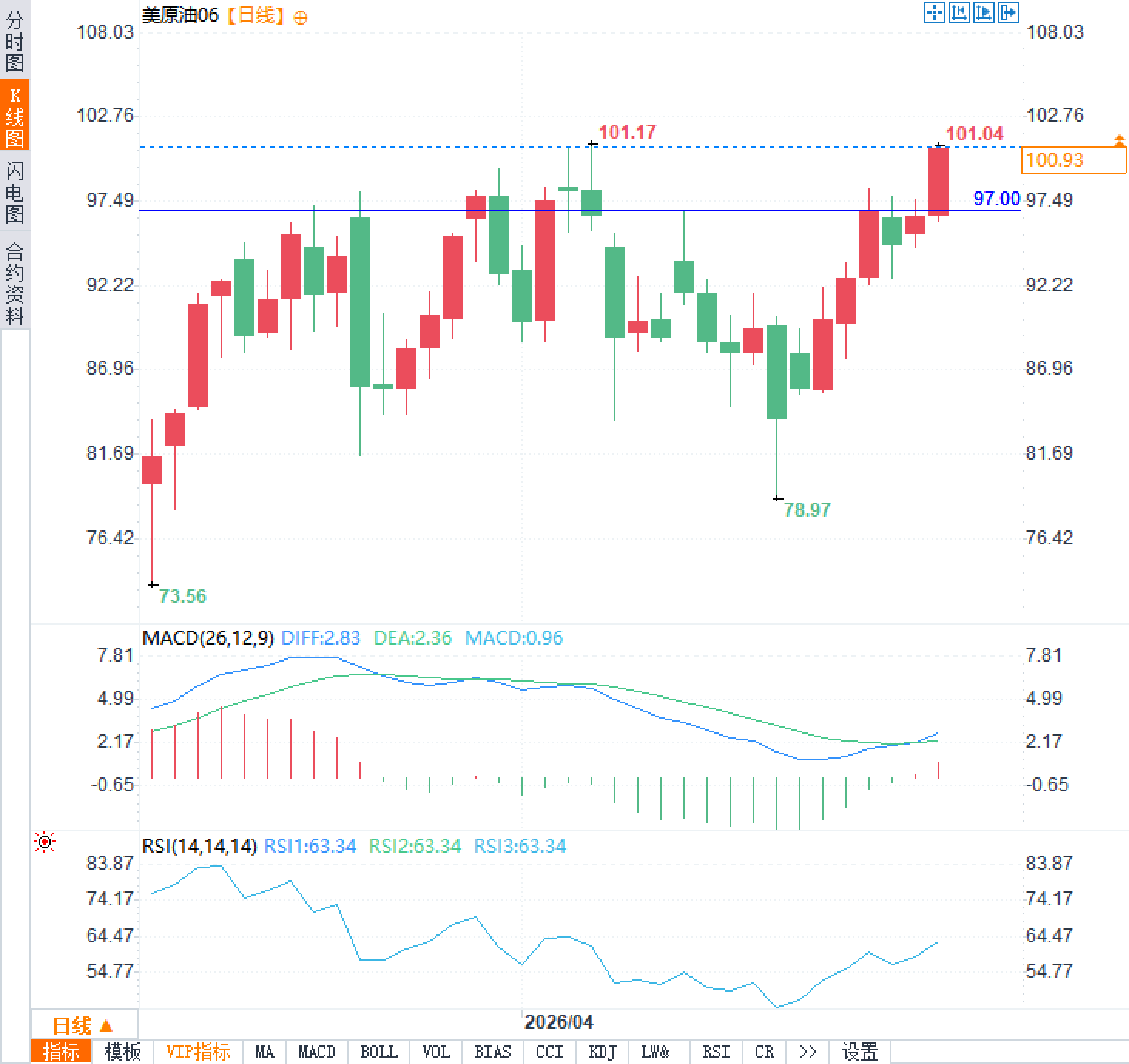
On Tuesday, April 28, geopolitical risks continued to escalate in the oil market. Brent crude oil for June delivery briefly touched $111.86 per barrel, currently trading around $111.50 per barrel, up 3.0% from the previous trading day. WTI crude oil for June delivery rose 4.7% in tandem, trading around $101 per barrel. The Strait of Hormuz, a vital waterway for approximately 20% of global oil and gas transport, is currently experiencing a significant contraction in shipping traffic. A Panamanian-flagged giant crude oil tanker, Idemitsu Maru, carrying 2 million barrels of Saudi crude oil, is attempting to transit the strait; this is the first oil shipment linked to Japan since the outbreak of the conflict.
Before the conflict, the number of ships passing through the strait daily remained stable at between 125 and 140. The latest ship tracking data shows that only two vessels were observed crossing in the past 24 hours: the Gulf King, a general cargo ship departing from the Iranian Bandar Abbas anchorage, and the sanctioned liquefied petroleum gas (LPG) tanker Axion I. Another LPG tanker, managed by the UAE National Oil Company, transited the strait on Monday and is currently approaching India. If its loading status is confirmed, it will become the first fully loaded LPG tanker since the conflict began.
The Idemitsu Maru, a giant crude oil tanker managed by a subsidiary of Japanese refiner Idemitsu Kosan, is currently 30 kilometers east of Larak Island, sailing eastward with its Automatic Identification System (AIS) activated. This attempt to cross the strait comes against the backdrop of a two-month-long conflict and significant disruptions to the regional energy supply chain. In early April, two LNG and LPG tankers affiliated with Mitsui & Co. successfully crossed the strait, but this is the first attempt by a crude oil tanker. Shipbrokerage firm BRS noted in a report this week that even if the strait reopens tomorrow, the tanker and crude oil markets will not return to near-normal levels until at least September.
The sharp decline in shipping traffic has directly hampered the export of crude oil and liquefied natural gas from the Middle East, and the market is rapidly absorbing this structural supply gap.
Before the conflict, Japan's crude oil imports were heavily reliant on the Middle East, with the majority transported through the Strait of Hormuz. Idemitsu Maru's attempt to cross the Strait highlights the urgency for Japanese companies to maintain supply chain stability. Idemitsu Kosan declined to comment on the individual vessel.
Tokyo Gas, Japan's largest city gas supplier, issued a profit warning on Tuesday, expecting its net profit for the fiscal year ending March 2027 to fall 40% year-on-year to 137 billion yen, a significant decrease from 226.9 billion yen the previous year. Chief Financial Officer Taku Minami stated that the conflict led to a tightening of the liquefied natural gas (LNG) market, driving up electricity procurement costs, which was the main reason for the profit decline. Slower gas sales and the disappearance of one-off gains from the previous fiscal year also contributed to the decline. Minami emphasized that 90% of the company's LNG procurement comes from long-term contracts, mainly from Australia and Malaysia, and not directly from Middle Eastern spot markets; therefore, there is no immediate concern about short-term fuel procurement.
Tokyo Gas's net profit tripled in the last fiscal year due to strong performance in its U.S. shale gas business and a one-off gain. The company also announced a share buyback program of up to 4.7% for ¥50 billion and raised its annual dividend from ¥80 to ¥110.
Oil prices have risen for the seventh consecutive trading day, reflecting continued market concerns about disruptions to key supply arteries. Rystad Energy analysis points out that oil prices breaking through $110 per barrel signifies a rapid reassessment of geopolitical risks in the market. With peace talks stalled and the path to reopening the Strait of Hormuz unclear, traders are pricing in long-term supply disruptions. Even a best-case scenario agreement may only result in a narrow, partial deal, making a complete resolution of the Strait issue unlikely; therefore, upside risks to oil prices remain.
PVM Oil Associates analysts believe that the disruption to daily crude oil and refined product transport in the Strait of Hormuz, amounting to approximately 10 million barrels, exceeds the buffer provided by declining consumption, and the market balance is rapidly tightening. While inflationary pressures and demand destruction may dampen some consumption, supply-side contraction is dominating the situation. Pre-conflict negotiations broke down last week, with US officials stating that Iran's latest proposals failed to adequately resolve the nuclear issue and the Gulf shipping dispute, dimming the prospects for peace talks.
Analysis of the Current Status of Shipping in the Strait of Hormuz
Before the conflict, the number of ships passing through the strait daily remained stable at between 125 and 140. The latest ship tracking data shows that only two vessels were observed crossing in the past 24 hours: the Gulf King, a general cargo ship departing from the Iranian Bandar Abbas anchorage, and the sanctioned liquefied petroleum gas (LPG) tanker Axion I. Another LPG tanker, managed by the UAE National Oil Company, transited the strait on Monday and is currently approaching India. If its loading status is confirmed, it will become the first fully loaded LPG tanker since the conflict began.
The Idemitsu Maru, a giant crude oil tanker managed by a subsidiary of Japanese refiner Idemitsu Kosan, is currently 30 kilometers east of Larak Island, sailing eastward with its Automatic Identification System (AIS) activated. This attempt to cross the strait comes against the backdrop of a two-month-long conflict and significant disruptions to the regional energy supply chain. In early April, two LNG and LPG tankers affiliated with Mitsui & Co. successfully crossed the strait, but this is the first attempt by a crude oil tanker. Shipbrokerage firm BRS noted in a report this week that even if the strait reopens tomorrow, the tanker and crude oil markets will not return to near-normal levels until at least September.
| period | Average number of ships crossing per day | Main impact |
|---|---|---|
| Before the conflict | 125-140 ships | Normal energy transportation |
| Recently | 2 ships | Supply disruptions worsen |
Japan's energy import chain is under pressure.
Before the conflict, Japan's crude oil imports were heavily reliant on the Middle East, with the majority transported through the Strait of Hormuz. Idemitsu Maru's attempt to cross the Strait highlights the urgency for Japanese companies to maintain supply chain stability. Idemitsu Kosan declined to comment on the individual vessel.
Tokyo Gas, Japan's largest city gas supplier, issued a profit warning on Tuesday, expecting its net profit for the fiscal year ending March 2027 to fall 40% year-on-year to 137 billion yen, a significant decrease from 226.9 billion yen the previous year. Chief Financial Officer Taku Minami stated that the conflict led to a tightening of the liquefied natural gas (LNG) market, driving up electricity procurement costs, which was the main reason for the profit decline. Slower gas sales and the disappearance of one-off gains from the previous fiscal year also contributed to the decline. Minami emphasized that 90% of the company's LNG procurement comes from long-term contracts, mainly from Australia and Malaysia, and not directly from Middle Eastern spot markets; therefore, there is no immediate concern about short-term fuel procurement.
Tokyo Gas's net profit tripled in the last fiscal year due to strong performance in its U.S. shale gas business and a one-off gain. The company also announced a share buyback program of up to 4.7% for ¥50 billion and raised its annual dividend from ¥80 to ¥110.
Crude oil price trends and geopolitical risk repricing
Oil prices have risen for the seventh consecutive trading day, reflecting continued market concerns about disruptions to key supply arteries. Rystad Energy analysis points out that oil prices breaking through $110 per barrel signifies a rapid reassessment of geopolitical risks in the market. With peace talks stalled and the path to reopening the Strait of Hormuz unclear, traders are pricing in long-term supply disruptions. Even a best-case scenario agreement may only result in a narrow, partial deal, making a complete resolution of the Strait issue unlikely; therefore, upside risks to oil prices remain.
PVM Oil Associates analysts believe that the disruption to daily crude oil and refined product transport in the Strait of Hormuz, amounting to approximately 10 million barrels, exceeds the buffer provided by declining consumption, and the market balance is rapidly tightening. While inflationary pressures and demand destruction may dampen some consumption, supply-side contraction is dominating the situation. Pre-conflict negotiations broke down last week, with US officials stating that Iran's latest proposals failed to adequately resolve the nuclear issue and the Gulf shipping dispute, dimming the prospects for peace talks.
Frequently Asked Questions
Question 1: What is the core significance of Idemitsu Maru's attempt to cross the Strait of Hormuz?
A: This marks the first attempt by a Japanese-linked crude oil tanker to resume transport along a critical route since the conflict began, highlighting the urgent need to restore Japan's energy import chain. Although shipping volumes remain extremely low, the ship's location and AIS activation indicate that some companies are testing the bottom line, signaling a potential recovery for the supply chain.
Question 2: Why did oil prices continue to rise after two months of supply disruptions?
A: The market has shifted from initial shock pricing to long-term risk pricing. The 10 million barrel per day supply gap far outpaces the rate of demand destruction, and traders are pricing in months of recovery. Brent crude's break above $110/barrel is a direct result of a comprehensive reassessment of geopolitical risk premiums, and the ongoing peace talks stalemate further reinforces this trend.
- Risk Warning and Disclaimer
- The market involves risk, and trading may not be suitable for all investors. This article is for reference only and does not constitute personal investment advice, nor does it take into account certain users’ specific investment objectives, financial situation, or other needs. Any investment decisions made based on this information are at your own risk.