The Federal Reserve faces its worst legal attack in 113 years: Powell remains a governor and confronts Trump, while Warsh, as chairman, faces a "dual pope" situation.
2026-04-30 06:58:34
Amid an unprecedented legal storm in the Federal Reserve's 113-year history, Federal Reserve Chairman Jerome Powell announced on the afternoon of April 29th local time that he would remain in his position as a member of the Federal Reserve Board of Governors after his term as chairman ends on May 15th. This decision not only reshapes the power structure of the Federal Reserve but also brings unprecedented governance challenges to Kevin Warsh, who will take over as chairman in mid-May.
On the same day, at its final policy meeting chaired by Jerome Powell, the Federal Open Market Committee (FOMC) of the Federal Reserve decided by a vote of 8 to 4 to maintain the target range for the federal funds rate at 3.50% to 3.75%. This marks the third consecutive time the rate has remained unchanged since early 2026. The vote was the most divided since 1992, with three members who believed the policy was too accommodative and one who advocated for a rate cut.
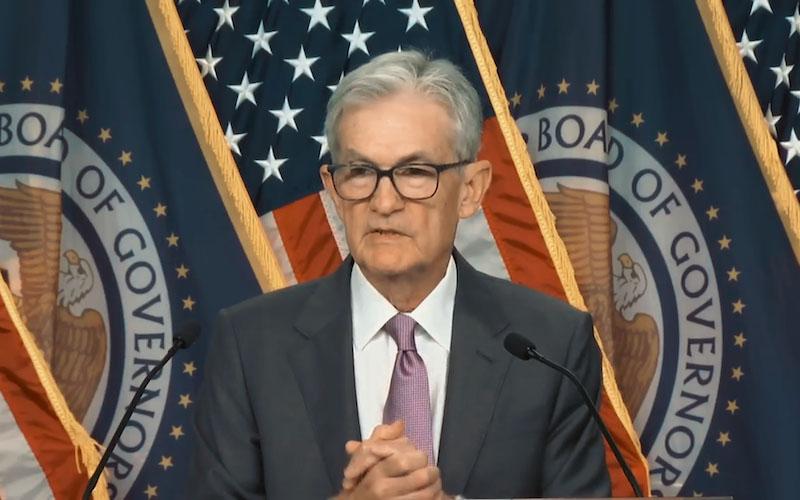
Powell made it clear on Wednesday that after his term as chairman ends on May 15, "I will continue to serve on the board for a period of time, the exact duration of which has not yet been determined." At a press conference, he emphasized that he has no intention of becoming a "high-profile dissident or similar figure," and pledged to maintain a low profile and support the new chairman's policies during his tenure on the board.
Powell's term as governor could theoretically extend to January 2028. He admitted that the core motivation for his decision to remain in office was concern that a series of legal attacks against the Federal Reserve were "severely damaging the institution" and jeopardizing its ability to implement monetary policy without considering political factors.
He stated at the press conference, "I will not leave the council until the investigation is truly and thoroughly concluded in a transparent and final manner."
The US unemployment rate remains low at 4.3%, but due to the global oil price increase and tariff policies triggered by the Middle East situation, the overall personal consumption expenditure price index rose by 3.5%, and the core PCE rose to 3.2%. Powell believes that the current interest rate is "very close" to his perceived neutral interest rate range (3% to 4%), and the Federal Reserve is confident in waiting for data guidance, with no predetermined path for monetary policy.
The core background to Powell's decision to remain in office was the multiple rounds of legal offensives launched by the Trump administration. On April 24, U.S. Attorney for the District of Columbia, Jeannée Piro, announced the termination of the criminal investigation into cost overruns at the Federal Reserve's Washington headquarters, transferring the case to the Fed's inspector general for internal review, but made it clear that she "would not hesitate to reopen the investigation." This move cleared a key hurdle for Warsh's confirmation by the Senate.
On April 29, the Senate Banking Committee approved the confirmation process for Warsh's nomination as Federal Reserve Chair by a 13-11 partisan vote. Previously, Republican Senator Thom Tillis had suspended his support for Warsh's nomination due to dissatisfaction with the Justice Department's investigation, but reversed his stance after the Justice Department shifted its investigation to internal review. Warsh is expected to receive full Senate confirmation before Chairman Powell's term expires on May 15.
Treasury Secretary Scott Bessant publicly expressed his dissatisfaction on Fox Business Network, calling Powell's decision to remain on the board "violates all Federal Reserve practices," a "unilateral departure from tradition," and describing it as "an insult to Warsh and current officials such as Michelle Bowman and Christopher Waller." Senior Democrats on the Senate Banking Committee warned that Piro's move to refer the case to the Federal Reserve Inspector General "opens the door to a renewed criminal investigation" and would not prevent future "unfounded investigations" against Federal Reserve officials.
Another important variable affecting Powell's continued tenure is the case of Trump's attempt to fire Federal Reserve Governor Lisa Cook. Trump announced Cook's dismissal in August 2025 on suspicion of mortgage fraud, but a judge in the U.S. District Court for the District of Columbia ruled last September to temporarily block the dismissal, a decision upheld by the U.S. Court of Appeals for the District of Columbia Circuit. The case is now being heard by the U.S. Supreme Court, where justices expressed doubt about the scope of a president's dismissal of a Federal Reserve governor during oral arguments on January 21.
Joseph Brusuelas of consulting firm RSM US said that Powell's continued tenure as a governor "increases the likelihood that central bank independence will survive in an era of economic and political populism."
Thomas Ryan of Capital Economics pointed out that Powell's continued tenure will shift the composition of the Federal Open Market Committee towards a more hawkish stance, making the task of pushing for interest rate cuts by incoming Chairman Warsh "more complicated" in the short term. Powell made a clear commitment at the press conference: "I will never do anything like being a shadow chairman... I plan to maintain a low profile during my tenure as a governor."
Powell emphasized that the Federal Reserve has been under attack from legal offensives, and "so far, we have been successful in defending the Federal Reserve," but everything is "not over yet."
Jerome Powell's decision to remain on the Board of Governors until 2028 is extremely rare in the Fed's century-long history. This decision is both a direct response to legal pressure from the Trump administration and a way to establish a complex power balance for incoming Chairman Warsh. US inflation data has not yet fallen back to the 2% target range, the Middle East situation is pushing up energy prices, and tariffs are causing a one-off price shock; these factors collectively constrain the Fed's policy space in the short term. The interest rate futures market currently prices a negligible probability of a rate cut in 2026. Powell's continued tenure means that two chair-level officials will work together on the Board, a situation that will test the effectiveness of the Fed's internal power distribution mechanism. The power struggle between the president and the central bank is far from over.
Q: Was Powell's decision to remain on the board legal? To what extent can he influence the future policy direction of the Federal Reserve?
Powell's term as a governor extends to January 2028, and his continued tenure is entirely legal. At the press conference, he explicitly pledged "never to be a shadow chairman," indicating he would maintain a low profile in support of his successor, Warsh. Analysts point out that even if Powell doesn't actively seek a prominent role, his voting power on the Federal Open Market Committee is enough to shift the direction of policy discussions. RSM US Chief Economist Brusuelas believes Powell's continued tenure increases the likelihood of the central bank's continued independence, while Ryan of Capital Economics points out that this will shift the composition of the Federal Open Market Committee towards a more hawkish stance.
Q: Why did the Justice Department's criminal investigation into the Federal Reserve suddenly end? Is it possible that it will be restarted?
On April 24, U.S. Attorney for the District of Columbia, Robert Piro, announced the termination of the investigation and referred the case to the Federal Reserve Inspector General for review. The investigation concerned billions of dollars in overruns in the construction costs of the Federal Reserve's Washington headquarters. In a statement, Piro explicitly stated that he would "not hesitate to reopen a criminal investigation if necessary." Senior Democrats on the Senate Banking Committee warned that this decision "opens the door to reopening a criminal investigation." Powell himself stated that the Justice Department had "guaranteed" the investigation was essentially closed, but noted that Piro also indicated he "would not hesitate to reopen the investigation."
Q: Will Kevin Warsh be officially confirmed as the Federal Reserve Chairman before May 15?
The Senate Banking Committee approved Warsh's confirmation process by a 13-11 partisan vote on April 29, clearing the final hurdle on his path to the chairmanship. Previously, Republican Senator Tillis had frozen the confirmation process for Warsh and other Federal Reserve nominees due to dissatisfaction with the Justice Department's investigation, but reversed course after the Justice Department terminated its criminal investigation. Warsh is expected to receive full Senate confirmation before Chairman Powell's term expires on May 15.
Q: What is the progress of the case regarding Trump's firing of Federal Reserve Governor Lisa Cook? What impact will it have on the independence of the Federal Reserve?
In August 2025, Trump announced the removal of Cook from office on suspicion of mortgage fraud. Both the U.S. District Court for the District of Columbia and the Court of Appeals for the District of Columbia Circuit blocked this move, and the case is now being heard by the U.S. Supreme Court. During oral arguments on January 21, 2026, the Supreme Court justices expressed doubts about the scope of the president's authority to dismiss Federal Reserve governors. The outcome of this case will directly affect the president's ability to intervene in Federal Reserve officials. Analysts point out that if Trump wins, it will jeopardize other Federal Reserve officials targeted by the president, further weakening the institutional independence of the central bank.
Q: How likely is it that the Federal Reserve will cut interest rates in 2026? What factors might prompt a policy shift?
The Federal Reserve's April 29th interest rate decision kept the target range for the federal funds rate unchanged at 3.50% to 3.75%, marking the third consecutive day of no change. During the press conference, Powell stated that current interest rates are "very close" to the neutral rate, and there is no need to rush to change interest rates or the dot plot guidance until inflation becomes clearer. He also noted that the impact of tariffs is expected to subside "over the next two quarters," and the impact of energy conflicts is within the Fed's patient observation range. The interest rate futures market has almost completely ruled out the possibility of a rate cut in 2026. However, if a substantial easing of tensions in the Middle East leads to a sharp drop in oil prices, or if the US job market experiences an unexpected deterioration, a repricing of the rate cut path will be inevitable.
On the same day, at its final policy meeting chaired by Jerome Powell, the Federal Open Market Committee (FOMC) of the Federal Reserve decided by a vote of 8 to 4 to maintain the target range for the federal funds rate at 3.50% to 3.75%. This marks the third consecutive time the rate has remained unchanged since early 2026. The vote was the most divided since 1992, with three members who believed the policy was too accommodative and one who advocated for a rate cut.
Powell pledged not to interfere with his successor and insisted on remaining in office as a warning against political interference.
Powell made it clear on Wednesday that after his term as chairman ends on May 15, "I will continue to serve on the board for a period of time, the exact duration of which has not yet been determined." At a press conference, he emphasized that he has no intention of becoming a "high-profile dissident or similar figure," and pledged to maintain a low profile and support the new chairman's policies during his tenure on the board.
Powell's term as governor could theoretically extend to January 2028. He admitted that the core motivation for his decision to remain in office was concern that a series of legal attacks against the Federal Reserve were "severely damaging the institution" and jeopardizing its ability to implement monetary policy without considering political factors.
He stated at the press conference, "I will not leave the council until the investigation is truly and thoroughly concluded in a transparent and final manner."
The US unemployment rate remains low at 4.3%, but due to the global oil price increase and tariff policies triggered by the Middle East situation, the overall personal consumption expenditure price index rose by 3.5%, and the core PCE rose to 3.2%. Powell believes that the current interest rate is "very close" to his perceived neutral interest rate range (3% to 4%), and the Federal Reserve is confident in waiting for data guidance, with no predetermined path for monetary policy.
The termination of the judicial investigation paved the way for Walsh, while Powell's continued tenure sparked controversy.
The core background to Powell's decision to remain in office was the multiple rounds of legal offensives launched by the Trump administration. On April 24, U.S. Attorney for the District of Columbia, Jeannée Piro, announced the termination of the criminal investigation into cost overruns at the Federal Reserve's Washington headquarters, transferring the case to the Fed's inspector general for internal review, but made it clear that she "would not hesitate to reopen the investigation." This move cleared a key hurdle for Warsh's confirmation by the Senate.
On April 29, the Senate Banking Committee approved the confirmation process for Warsh's nomination as Federal Reserve Chair by a 13-11 partisan vote. Previously, Republican Senator Thom Tillis had suspended his support for Warsh's nomination due to dissatisfaction with the Justice Department's investigation, but reversed his stance after the Justice Department shifted its investigation to internal review. Warsh is expected to receive full Senate confirmation before Chairman Powell's term expires on May 15.
Treasury Secretary Scott Bessant publicly expressed his dissatisfaction on Fox Business Network, calling Powell's decision to remain on the board "violates all Federal Reserve practices," a "unilateral departure from tradition," and describing it as "an insult to Warsh and current officials such as Michelle Bowman and Christopher Waller." Senior Democrats on the Senate Banking Committee warned that Piro's move to refer the case to the Federal Reserve Inspector General "opens the door to a renewed criminal investigation" and would not prevent future "unfounded investigations" against Federal Reserve officials.
The Cook case remains unresolved, and the "dual pope" structure tests the independence of the Federal Reserve.
Another important variable affecting Powell's continued tenure is the case of Trump's attempt to fire Federal Reserve Governor Lisa Cook. Trump announced Cook's dismissal in August 2025 on suspicion of mortgage fraud, but a judge in the U.S. District Court for the District of Columbia ruled last September to temporarily block the dismissal, a decision upheld by the U.S. Court of Appeals for the District of Columbia Circuit. The case is now being heard by the U.S. Supreme Court, where justices expressed doubt about the scope of a president's dismissal of a Federal Reserve governor during oral arguments on January 21.
Joseph Brusuelas of consulting firm RSM US said that Powell's continued tenure as a governor "increases the likelihood that central bank independence will survive in an era of economic and political populism."
Thomas Ryan of Capital Economics pointed out that Powell's continued tenure will shift the composition of the Federal Open Market Committee towards a more hawkish stance, making the task of pushing for interest rate cuts by incoming Chairman Warsh "more complicated" in the short term. Powell made a clear commitment at the press conference: "I will never do anything like being a shadow chairman... I plan to maintain a low profile during my tenure as a governor."
Powell emphasized that the Federal Reserve has been under attack from legal offensives, and "so far, we have been successful in defending the Federal Reserve," but everything is "not over yet."
Editor's Summary
Jerome Powell's decision to remain on the Board of Governors until 2028 is extremely rare in the Fed's century-long history. This decision is both a direct response to legal pressure from the Trump administration and a way to establish a complex power balance for incoming Chairman Warsh. US inflation data has not yet fallen back to the 2% target range, the Middle East situation is pushing up energy prices, and tariffs are causing a one-off price shock; these factors collectively constrain the Fed's policy space in the short term. The interest rate futures market currently prices a negligible probability of a rate cut in 2026. Powell's continued tenure means that two chair-level officials will work together on the Board, a situation that will test the effectiveness of the Fed's internal power distribution mechanism. The power struggle between the president and the central bank is far from over.
Frequently Asked Questions
Q: Was Powell's decision to remain on the board legal? To what extent can he influence the future policy direction of the Federal Reserve?
Powell's term as a governor extends to January 2028, and his continued tenure is entirely legal. At the press conference, he explicitly pledged "never to be a shadow chairman," indicating he would maintain a low profile in support of his successor, Warsh. Analysts point out that even if Powell doesn't actively seek a prominent role, his voting power on the Federal Open Market Committee is enough to shift the direction of policy discussions. RSM US Chief Economist Brusuelas believes Powell's continued tenure increases the likelihood of the central bank's continued independence, while Ryan of Capital Economics points out that this will shift the composition of the Federal Open Market Committee towards a more hawkish stance.
Q: Why did the Justice Department's criminal investigation into the Federal Reserve suddenly end? Is it possible that it will be restarted?
On April 24, U.S. Attorney for the District of Columbia, Robert Piro, announced the termination of the investigation and referred the case to the Federal Reserve Inspector General for review. The investigation concerned billions of dollars in overruns in the construction costs of the Federal Reserve's Washington headquarters. In a statement, Piro explicitly stated that he would "not hesitate to reopen a criminal investigation if necessary." Senior Democrats on the Senate Banking Committee warned that this decision "opens the door to reopening a criminal investigation." Powell himself stated that the Justice Department had "guaranteed" the investigation was essentially closed, but noted that Piro also indicated he "would not hesitate to reopen the investigation."
Q: Will Kevin Warsh be officially confirmed as the Federal Reserve Chairman before May 15?
The Senate Banking Committee approved Warsh's confirmation process by a 13-11 partisan vote on April 29, clearing the final hurdle on his path to the chairmanship. Previously, Republican Senator Tillis had frozen the confirmation process for Warsh and other Federal Reserve nominees due to dissatisfaction with the Justice Department's investigation, but reversed course after the Justice Department terminated its criminal investigation. Warsh is expected to receive full Senate confirmation before Chairman Powell's term expires on May 15.
Q: What is the progress of the case regarding Trump's firing of Federal Reserve Governor Lisa Cook? What impact will it have on the independence of the Federal Reserve?
In August 2025, Trump announced the removal of Cook from office on suspicion of mortgage fraud. Both the U.S. District Court for the District of Columbia and the Court of Appeals for the District of Columbia Circuit blocked this move, and the case is now being heard by the U.S. Supreme Court. During oral arguments on January 21, 2026, the Supreme Court justices expressed doubts about the scope of the president's authority to dismiss Federal Reserve governors. The outcome of this case will directly affect the president's ability to intervene in Federal Reserve officials. Analysts point out that if Trump wins, it will jeopardize other Federal Reserve officials targeted by the president, further weakening the institutional independence of the central bank.
Q: How likely is it that the Federal Reserve will cut interest rates in 2026? What factors might prompt a policy shift?
The Federal Reserve's April 29th interest rate decision kept the target range for the federal funds rate unchanged at 3.50% to 3.75%, marking the third consecutive day of no change. During the press conference, Powell stated that current interest rates are "very close" to the neutral rate, and there is no need to rush to change interest rates or the dot plot guidance until inflation becomes clearer. He also noted that the impact of tariffs is expected to subside "over the next two quarters," and the impact of energy conflicts is within the Fed's patient observation range. The interest rate futures market has almost completely ruled out the possibility of a rate cut in 2026. However, if a substantial easing of tensions in the Middle East leads to a sharp drop in oil prices, or if the US job market experiences an unexpected deterioration, a repricing of the rate cut path will be inevitable.
- Risk Warning and Disclaimer
- The market involves risk, and trading may not be suitable for all investors. This article is for reference only and does not constitute personal investment advice, nor does it take into account certain users’ specific investment objectives, financial situation, or other needs. Any investment decisions made based on this information are at your own risk.