April non-farm payrolls report tonight: Market expects 65,000 new jobs, leading indicators suggest a possible better-than-expected figure.
2026-05-08 10:28:58
The U.S. April non-farm payrolls report will be released on Friday (May 7) at 8:30 a.m. Eastern Time (8:30 p.m. Beijing Time). The market consensus is for 65,000 new jobs, a 0.3% month-over-month increase in average hourly earnings (3.8% year-over-year), and the unemployment rate remaining at 4.3%.
However, considering several leading indicators, there may be upside risks to this month's non-farm payrolls, with new jobs potentially falling within the 110,000-150,000 range. Meanwhile, after declining in the second half of April, the euro/dollar exchange rate has shown signs of stabilizing and rebounding over the past two weeks.

The pattern of low-cost recruitment and low-resignation continues
Despite headwinds such as the Iran war, soaring energy prices, and the impact of AI on employment since the beginning of the year, the US labor market has remained relatively healthy. The average monthly job growth this year is approximately 70,000, sufficient to maintain the unemployment rate at a historically low 4.3%. The market expects this report to continue the pattern of "low hiring, low layoffs": moderate job growth, a stable unemployment rate, and gradual wage increases.
Expectations for interest rate cuts have largely subsided.
With the Strait of Hormuz remaining closed and inflation accelerating above the Federal Reserve's 2% target, the market has largely erased expectations for further interest rate cuts this year. The CME FedWatch tool shows a greater than 70% probability of interest rates remaining unchanged this year. Even if Warsh, Trump's nominee for the next Federal Reserve Chairman, takes office, further rate cuts will face significant resistance in the short term.
Leading indicators point to better-than-expected results
We focus on four historically reliable leading indicators to forecast this report:
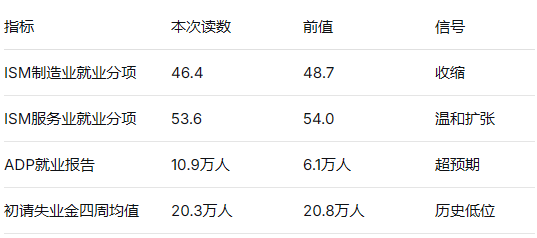
Based on the above data, leading indicators suggest that this month's non-farm payrolls may be higher than expected, with new jobs potentially falling between 110,000 and 150,000. However, it should be noted that monthly data fluctuations are difficult to predict precisely, and it is not advisable to rely excessively on any forecasts. Other indicators such as average hourly earnings and the unemployment rate are equally important.
The US dollar is currently trading near the bottom of its three-month range against major currencies, with safe-haven demand driven by Iran waning. Further easing of tensions could weigh on the dollar, regardless of this month's non-farm payroll data.
After a pullback in the second half of April, the euro/dollar pair has shown signs of stabilization and recovery over the past two weeks—shifting from a gradual decline to a gradual rise. A weaker-than-expected jobs report or the reopening of the Strait of Hormuz could push the euro/dollar to test the 10-week high near 1.1830. A decisive break above this level would target the psychological level of 1.1900 and 1.1940 (a long-term Fibonacci retracement level). Conversely, a strong jobs report or a renewed US-Iran conflict could put pressure on the euro/dollar, potentially leading to a retest of the 50% Fibonacci retracement level near 1.1650 next week.
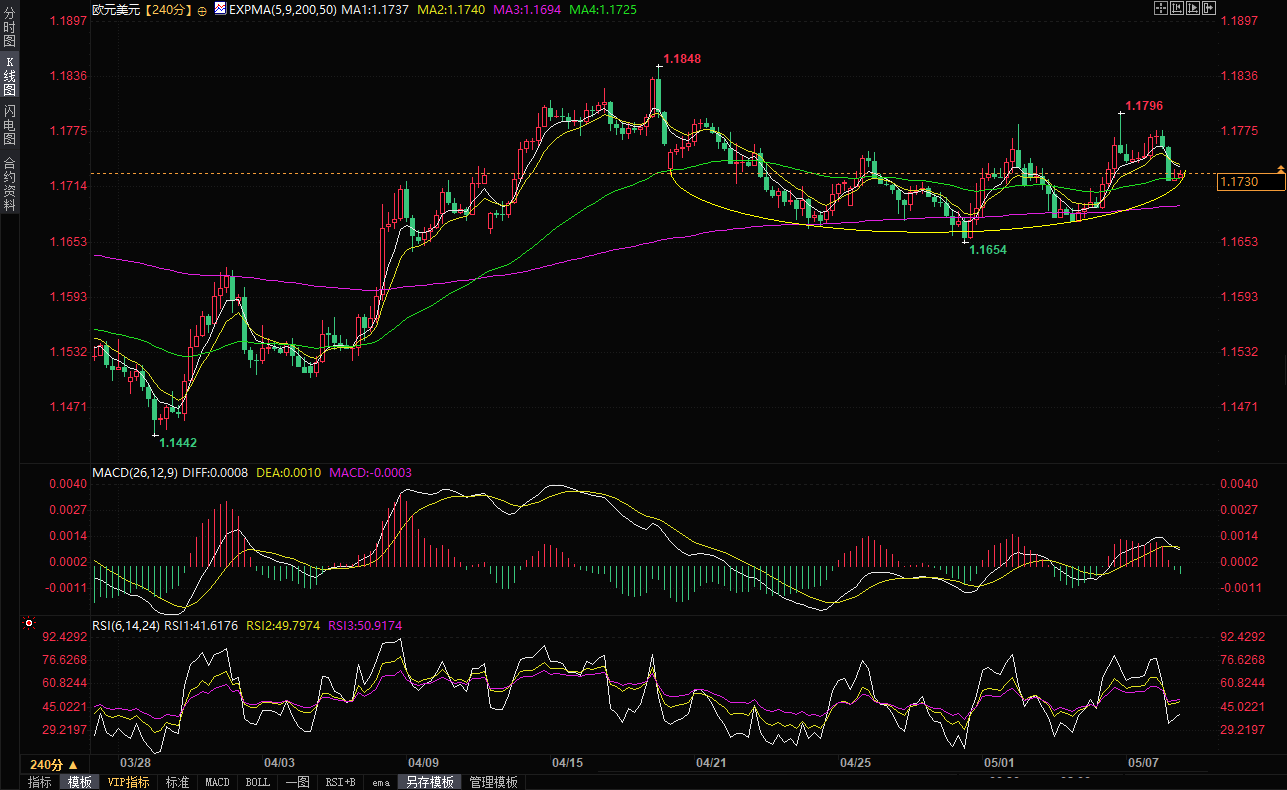
(EUR/USD 4-hour chart, source: FX678)
Analysts point out that a significant deterioration in the labor market may prompt the Federal Reserve to consider cutting interest rates, but given last month's strong jobs report, robust economic data, and persistently high inflation, even a weak monthly report is unlikely to alter the policy consensus on its own. Economist Hartman bluntly stated, "If the Fed cuts rates, it won't be because of good news on inflation data, but because of bad news on the labor market." Furthermore, this weakness needs to be reflected in multiple reports.
The thresholds for both raising and lowering interest rates by the Federal Reserve are currently high. Without a breakdown in the labor market, it's difficult to justify a rate cut; while with inflation remaining high, the rationale for maintaining current interest rates is ample.
The US job market remains resilient despite multiple headwinds, but market expectations for interest rate cuts have largely subsided. A stronger-than-expected non-farm payroll report would further reinforce the Federal Reserve's stance of maintaining a tight monetary policy, supporting the dollar; conversely, weak data could reignite expectations of a rate cut, pushing the euro/dollar exchange rate higher. Furthermore, the situation in the Strait of Hormuz remains a key variable influencing exchange rate movements. Investors should closely monitor the non-farm payroll data released tonight at 8:30 PM and its market reaction.
At 10:27 Beijing time, the euro was trading at 1.1729/30 against the US dollar.
However, considering several leading indicators, there may be upside risks to this month's non-farm payrolls, with new jobs potentially falling within the 110,000-150,000 range. Meanwhile, after declining in the second half of April, the euro/dollar exchange rate has shown signs of stabilizing and rebounding over the past two weeks.
The job market remains resilient, and expectations for interest rate cuts have largely subsided.
The pattern of low-cost recruitment and low-resignation continues
Despite headwinds such as the Iran war, soaring energy prices, and the impact of AI on employment since the beginning of the year, the US labor market has remained relatively healthy. The average monthly job growth this year is approximately 70,000, sufficient to maintain the unemployment rate at a historically low 4.3%. The market expects this report to continue the pattern of "low hiring, low layoffs": moderate job growth, a stable unemployment rate, and gradual wage increases.
Expectations for interest rate cuts have largely subsided.
With the Strait of Hormuz remaining closed and inflation accelerating above the Federal Reserve's 2% target, the market has largely erased expectations for further interest rate cuts this year. The CME FedWatch tool shows a greater than 70% probability of interest rates remaining unchanged this year. Even if Warsh, Trump's nominee for the next Federal Reserve Chairman, takes office, further rate cuts will face significant resistance in the short term.
Leading indicators point to better-than-expected results
We focus on four historically reliable leading indicators to forecast this report:
Based on the above data, leading indicators suggest that this month's non-farm payrolls may be higher than expected, with new jobs potentially falling between 110,000 and 150,000. However, it should be noted that monthly data fluctuations are difficult to predict precisely, and it is not advisable to rely excessively on any forecasts. Other indicators such as average hourly earnings and the unemployment rate are equally important.
Euro/Dollar stabilizes and rebounds
The US dollar is currently trading near the bottom of its three-month range against major currencies, with safe-haven demand driven by Iran waning. Further easing of tensions could weigh on the dollar, regardless of this month's non-farm payroll data.
After a pullback in the second half of April, the euro/dollar pair has shown signs of stabilization and recovery over the past two weeks—shifting from a gradual decline to a gradual rise. A weaker-than-expected jobs report or the reopening of the Strait of Hormuz could push the euro/dollar to test the 10-week high near 1.1830. A decisive break above this level would target the psychological level of 1.1900 and 1.1940 (a long-term Fibonacci retracement level). Conversely, a strong jobs report or a renewed US-Iran conflict could put pressure on the euro/dollar, potentially leading to a retest of the 50% Fibonacci retracement level near 1.1650 next week.
(EUR/USD 4-hour chart, source: FX678)
Without a breakdown in the labor market, there's no hope for interest rate cuts; without cooling inflation, there's no way to raise interest rates.
Analysts point out that a significant deterioration in the labor market may prompt the Federal Reserve to consider cutting interest rates, but given last month's strong jobs report, robust economic data, and persistently high inflation, even a weak monthly report is unlikely to alter the policy consensus on its own. Economist Hartman bluntly stated, "If the Fed cuts rates, it won't be because of good news on inflation data, but because of bad news on the labor market." Furthermore, this weakness needs to be reflected in multiple reports.
The thresholds for both raising and lowering interest rates by the Federal Reserve are currently high. Without a breakdown in the labor market, it's difficult to justify a rate cut; while with inflation remaining high, the rationale for maintaining current interest rates is ample.
Non-farm payroll data will determine the short-term direction.
The US job market remains resilient despite multiple headwinds, but market expectations for interest rate cuts have largely subsided. A stronger-than-expected non-farm payroll report would further reinforce the Federal Reserve's stance of maintaining a tight monetary policy, supporting the dollar; conversely, weak data could reignite expectations of a rate cut, pushing the euro/dollar exchange rate higher. Furthermore, the situation in the Strait of Hormuz remains a key variable influencing exchange rate movements. Investors should closely monitor the non-farm payroll data released tonight at 8:30 PM and its market reaction.
At 10:27 Beijing time, the euro was trading at 1.1729/30 against the US dollar.
- Risk Warning and Disclaimer
- The market involves risk, and trading may not be suitable for all investors. This article is for reference only and does not constitute personal investment advice, nor does it take into account certain users’ specific investment objectives, financial situation, or other needs. Any investment decisions made based on this information are at your own risk.