Losing 100 million barrels per week! Saudi Aramco CEO warns: If the Straits blockade continues, the oil market will be unlikely to return to normal before 2027.
2026-05-12 07:49:21
On May 10, Amin Nasser, president and CEO of Saudi Aramco, the world's largest oil producer, issued a stern warning: if shipping disruptions in the Strait of Hormuz continue beyond mid-June 2026, the global oil market may not return to normal until 2027, which would reverse the market's generally optimistic expectation that the "supply shock is short-term".
Nasser's remarks during Saudi Aramco's first-quarter earnings call came as international oil prices rebounded to high levels, driven by ongoing geopolitical risks.
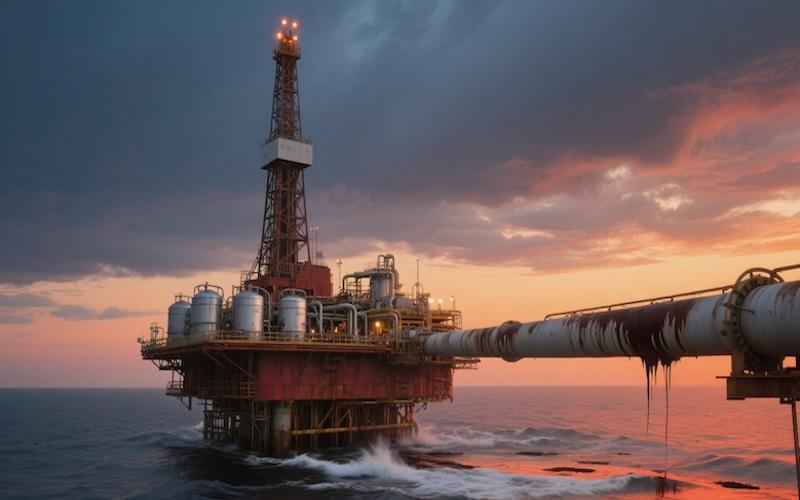
Since the escalation of the US-Iran conflict in late February 2026, the Strait of Hormuz, which carries approximately 20% of the world's seaborne oil shipments, has been virtually closed. Before the conflict, about 70 ships passed through the strait daily; currently, this number has dropped to only 2 to 5 ships per day.
Nasser disclosed that global oil supply has been reduced by more than 1 billion barrels due to the blockade of the Straits during the past two months. After accounting for factors such as Saudi Aramco's east-west pipeline for exports and the release of strategic reserves by various countries, the net loss is approximately 880 million barrels.
Nasser stated explicitly: "If the Strait of Hormuz opens today, it will still take months for the market to rebalance; if the opening is delayed by a few weeks, then the return to normal will take until 2027." This assessment greatly challenges the mainstream view in the market that the energy shock is a "short-term event."
Nasser pointed out that the biggest challenge facing the market at present is not a hard reduction in supply, but the serious chaos in the global tanker fleet. To date, more than 600 ships (the vast majority of which are large oil tankers and product tankers) are still stuck in the Gulf region, and about 240 giant oil tankers are anchored outside the strait waiting. Some ships have begun to leave the area due to the long delay.
“The current tanker fleet is in chaos, with a large number of tankers deployed in the wrong locations,” Nasser analyzed. “Even if the conflict ends in the short term, restoring the normal supply chain freight structure will require the redeployment of ships from all over the world, which is a time-consuming and complex undertaking.”
Before the war, the Strait of Hormuz carried 20% of the world's oil supply. To bypass the blocked strait, Saudi Aramco intensified the operation of the Petroline, a strategic backup energy infrastructure, a land pipeline connecting Saudi Arabia's oil fields along the Persian Gulf coast in the east to its re-export route to the Red Sea in the west.
The first-quarter financial report shows that this important pipeline is operating at full capacity, with a maximum capacity of 7 million barrels per day. Nasser commented: "This east-west pipeline has proven itself to be a key supply artery, helping to mitigate the impact of global energy shocks and providing strong support to Gulf customers affected by shipping restrictions."
Although the East-West pipeline provides considerable alternative transshipment capacity, Nasser's remarks have clearly sent a more serious signal to the market—even with alternative pipelines in operation, it is impossible to completely offset the system-wide impact of a strait disruption.
Supply disruptions from the Strait of Hormuz are continuing to put upward pressure on energy prices. As of May 12, the settlement price of WTI crude oil futures for June delivery reached $98.07 per barrel, and Brent crude oil futures for July delivery rose to $104.21 per barrel, both showing a daily increase of nearly 3%.
Goldman Sachs' commodities research team has significantly raised its oil price outlook in its latest forecast report. Goldman Sachs has drastically increased its Q4 2026 Brent crude oil average price forecast from $80 per barrel to $90 per barrel, and its WTI forecast from $75 per barrel to $83 per barrel. Furthermore, it has raised its 2027 Brent and WTI price forecasts from $80 and $75 per barrel to $85 and $80 per barrel, respectively.
The report further points out that the current rate of global inventory depletion is at a "historically extreme level." According to Goldman Sachs' model simulation, the global oil market will abruptly reverse from a supply surplus of 1.8 million barrels per day in 2025 to a historic supply deficit of 9.6 million barrels per day in the second quarter of 2026.
Nasser further pointed out that with the significant disruption to exports of Middle Eastern products, downstream refined product inventories are decreasing sharply, "especially core products such as gasoline and aviation fuel, which may fall to extremely low levels before the upcoming summer travel season," Nasser issued a forward-looking warning.
Goldman Sachs also estimates that the current price spread between spot and forward contracts for high-quality oil products has risen to an unprecedented level, clearly reflecting that extremely tight inventory constraints are pushing up spot premiums.
To date, no concrete progress has been made between the US and Iran in ending the conflict and reopening the Strait of Hormuz. It is understood that the prospects for a ceasefire agreement with Tehran have become extremely bleak after President Trump rejected several counter-proposals from Iran. Risk premiums across the energy market are expected to remain high.
For global energy consumers and investors, a clear fact is becoming the focus of attention: Nasser's view that "recovery will be delayed until 2027" is no longer an overreaction to short-term geopolitical conflicts, but a severe calculation based on multiple factors such as a huge inventory gap, structural mismatch of tankers, and limited alternative logistics.
Looking at the historically rapid rate of inventory depletion and the transmission chain of fuel shortages downstream, global real economy inflationary pressures, transportation and logistics costs, and living costs are all facing upward pressure. Nasser's prediction of "normalization until 2027" is actually a reminder to the oil market and macroeconomic policymakers that this energy supply shock is not a short-term impulsive event that can be absorbed, but may transform into a structural supply tightness cycle lasting several years.
Saudi Aramco CEO Nasser's prediction of a 2027 recovery window reveals deeper structural problems behind the Strait of Hormuz disruption. The current crisis has evolved from a short-term geopolitical shock into a triple whammy: a global tanker fleet mismatch, historically rapid inventory depletion, and peak alternative pipeline capacity. The core warning is that even if the strait reopens tomorrow, the disrupted energy supply chain will take months or even years to fully repair. More concerning is that downstream product inventories, such as gasoline and jet fuel, are nearing warning levels, and with the peak summer demand season approaching, this mismatch could trigger a new round of price volatility. Current oil price trends indicate that the market is pricing in an optimistic "short-term reopening," which differs significantly from the actual supply chain recovery cycle. This "expectation gap" represents the biggest market risk in the later stages.
Question 1: How much oil supply has been lost since the Strait of Hormuz was blocked?
A: Official data released by Saudi Aramco shows that before the war, approximately 20% of global oil supply passed through the Strait of Hormuz. Two months after the strait was closed, the global oil supply has suffered a net loss of over 1 billion barrels. After accounting for offsetting factors such as Saudi Arabia's east-west pipeline exports and the release of strategic reserves by various countries, the actual net loss is approximately 880 million barrels. For every week the strait is closed, the oil market suffers an additional supply loss of about 100 million barrels.
Question 2: Can Saudi Aramco's East-West pipeline completely replace the Strait of Hormuz?
A: The East-West Pipeline is currently operating at full capacity, carrying 7 million barrels per day, transporting crude oil from Saudi Arabia's eastern Gulf coast to its western Red Sea export destination. It successfully bypasses the blocked strait and has proven to be a crucial backup artery in the global energy supply chain. However, the problem lies in the fact that the strait blockade has severely hampered crude oil exports from the entire Middle East. The East-West Pipeline cannot fully compensate for the massive maritime transport gap caused by the strait disruption. Furthermore, with over 600 ships stranded in the Gulf, the global tanker dispatch system will require several months to return to normal operation.
Question 3: What is Goldman Sachs' latest oil price forecast?
A: In a report released in late April, Goldman Sachs' commodities research team raised its baseline forecast for the average Brent crude oil price in the fourth quarter of 2026 from $80 per barrel to $90, and its forecast for WTI crude oil in the same period from $75 per barrel to $83 per barrel; the average price forecasts for Brent and WTI crude oil in 2027 were raised to $85 and $80 per barrel, respectively. If the strait disruption continues for an extended period, there is a risk that these price expectations could rise further.
Question 4: Why does the CEO of Saudi Aramco believe that even if the Straits of Hormuz opens, the market will not return to normal until 2027?
A: Nasser's assessment is based on a comprehensive consideration of three factors: First, the closure of the Strait of Harmuz has already caused a historically extreme depletion of global commercial inventories, which is difficult to replenish in the short term; second, the presence of more than 600 oil tankers and a fleet of 240 ships anchored outside ports has created a "completely chaotic" global tanker configuration system, and even if the strait were opened immediately, it would take several months to readjust the supply chain from the "chaotic" state and restore the system to its original state; third, the alternative East-West pipeline is already operating at full capacity, with no redundancy to buffer any additional shocks.
Question 5: Why did the ceasefire agreement between the United States and Iran not lead to the reopening of the Strait of Hormuz?
A: Although a short ceasefire window was reached previously, substantial progress in political negotiations has been very limited. US President Trump has explicitly rejected Tehran's counter-proposals on ending the conflict, leading to the Gulf ceasefire agreement being described as being in a life-sustaining state. As long as there is no breakthrough in ceasefire negotiations, the Straits cannot be reopened at its source. Even if the situation eases somewhat, Iran's maritime blockade has not been completely lifted. Fundamentally, the way to end the Straits closure lies in the US and Iran reaching an enforceable agreement on key terms, but currently, the two countries still have significant differences on their core positions.
Nasser's remarks during Saudi Aramco's first-quarter earnings call came as international oil prices rebounded to high levels, driven by ongoing geopolitical risks.
The lifeline of maritime transport is nearly paralyzed.
Since the escalation of the US-Iran conflict in late February 2026, the Strait of Hormuz, which carries approximately 20% of the world's seaborne oil shipments, has been virtually closed. Before the conflict, about 70 ships passed through the strait daily; currently, this number has dropped to only 2 to 5 ships per day.
Nasser disclosed that global oil supply has been reduced by more than 1 billion barrels due to the blockade of the Straits during the past two months. After accounting for factors such as Saudi Aramco's east-west pipeline for exports and the release of strategic reserves by various countries, the net loss is approximately 880 million barrels.
Nasser stated explicitly: "If the Strait of Hormuz opens today, it will still take months for the market to rebalance; if the opening is delayed by a few weeks, then the return to normal will take until 2027." This assessment greatly challenges the mainstream view in the market that the energy shock is a "short-term event."
The tanker fleet is in "utter chaos".
Nasser pointed out that the biggest challenge facing the market at present is not a hard reduction in supply, but the serious chaos in the global tanker fleet. To date, more than 600 ships (the vast majority of which are large oil tankers and product tankers) are still stuck in the Gulf region, and about 240 giant oil tankers are anchored outside the strait waiting. Some ships have begun to leave the area due to the long delay.
“The current tanker fleet is in chaos, with a large number of tankers deployed in the wrong locations,” Nasser analyzed. “Even if the conflict ends in the short term, restoring the normal supply chain freight structure will require the redeployment of ships from all over the world, which is a time-consuming and complex undertaking.”
East-West pipelines provide key support
Before the war, the Strait of Hormuz carried 20% of the world's oil supply. To bypass the blocked strait, Saudi Aramco intensified the operation of the Petroline, a strategic backup energy infrastructure, a land pipeline connecting Saudi Arabia's oil fields along the Persian Gulf coast in the east to its re-export route to the Red Sea in the west.
The first-quarter financial report shows that this important pipeline is operating at full capacity, with a maximum capacity of 7 million barrels per day. Nasser commented: "This east-west pipeline has proven itself to be a key supply artery, helping to mitigate the impact of global energy shocks and providing strong support to Gulf customers affected by shipping restrictions."
Although the East-West pipeline provides considerable alternative transshipment capacity, Nasser's remarks have clearly sent a more serious signal to the market—even with alternative pipelines in operation, it is impossible to completely offset the system-wide impact of a strait disruption.
Soaring oil prices and rapid depletion of inventories
Supply disruptions from the Strait of Hormuz are continuing to put upward pressure on energy prices. As of May 12, the settlement price of WTI crude oil futures for June delivery reached $98.07 per barrel, and Brent crude oil futures for July delivery rose to $104.21 per barrel, both showing a daily increase of nearly 3%.
Goldman Sachs' commodities research team has significantly raised its oil price outlook in its latest forecast report. Goldman Sachs has drastically increased its Q4 2026 Brent crude oil average price forecast from $80 per barrel to $90 per barrel, and its WTI forecast from $75 per barrel to $83 per barrel. Furthermore, it has raised its 2027 Brent and WTI price forecasts from $80 and $75 per barrel to $85 and $80 per barrel, respectively.
The report further points out that the current rate of global inventory depletion is at a "historically extreme level." According to Goldman Sachs' model simulation, the global oil market will abruptly reverse from a supply surplus of 1.8 million barrels per day in 2025 to a historic supply deficit of 9.6 million barrels per day in the second quarter of 2026.
The transmission effect of tight inventory
Nasser further pointed out that with the significant disruption to exports of Middle Eastern products, downstream refined product inventories are decreasing sharply, "especially core products such as gasoline and aviation fuel, which may fall to extremely low levels before the upcoming summer travel season," Nasser issued a forward-looking warning.
Goldman Sachs also estimates that the current price spread between spot and forward contracts for high-quality oil products has risen to an unprecedented level, clearly reflecting that extremely tight inventory constraints are pushing up spot premiums.
Market Prospects and Risk Warnings
To date, no concrete progress has been made between the US and Iran in ending the conflict and reopening the Strait of Hormuz. It is understood that the prospects for a ceasefire agreement with Tehran have become extremely bleak after President Trump rejected several counter-proposals from Iran. Risk premiums across the energy market are expected to remain high.
For global energy consumers and investors, a clear fact is becoming the focus of attention: Nasser's view that "recovery will be delayed until 2027" is no longer an overreaction to short-term geopolitical conflicts, but a severe calculation based on multiple factors such as a huge inventory gap, structural mismatch of tankers, and limited alternative logistics.
Looking at the historically rapid rate of inventory depletion and the transmission chain of fuel shortages downstream, global real economy inflationary pressures, transportation and logistics costs, and living costs are all facing upward pressure. Nasser's prediction of "normalization until 2027" is actually a reminder to the oil market and macroeconomic policymakers that this energy supply shock is not a short-term impulsive event that can be absorbed, but may transform into a structural supply tightness cycle lasting several years.
Editor's Summary
Saudi Aramco CEO Nasser's prediction of a 2027 recovery window reveals deeper structural problems behind the Strait of Hormuz disruption. The current crisis has evolved from a short-term geopolitical shock into a triple whammy: a global tanker fleet mismatch, historically rapid inventory depletion, and peak alternative pipeline capacity. The core warning is that even if the strait reopens tomorrow, the disrupted energy supply chain will take months or even years to fully repair. More concerning is that downstream product inventories, such as gasoline and jet fuel, are nearing warning levels, and with the peak summer demand season approaching, this mismatch could trigger a new round of price volatility. Current oil price trends indicate that the market is pricing in an optimistic "short-term reopening," which differs significantly from the actual supply chain recovery cycle. This "expectation gap" represents the biggest market risk in the later stages.
Frequently Asked Questions
Question 1: How much oil supply has been lost since the Strait of Hormuz was blocked?
A: Official data released by Saudi Aramco shows that before the war, approximately 20% of global oil supply passed through the Strait of Hormuz. Two months after the strait was closed, the global oil supply has suffered a net loss of over 1 billion barrels. After accounting for offsetting factors such as Saudi Arabia's east-west pipeline exports and the release of strategic reserves by various countries, the actual net loss is approximately 880 million barrels. For every week the strait is closed, the oil market suffers an additional supply loss of about 100 million barrels.
Question 2: Can Saudi Aramco's East-West pipeline completely replace the Strait of Hormuz?
A: The East-West Pipeline is currently operating at full capacity, carrying 7 million barrels per day, transporting crude oil from Saudi Arabia's eastern Gulf coast to its western Red Sea export destination. It successfully bypasses the blocked strait and has proven to be a crucial backup artery in the global energy supply chain. However, the problem lies in the fact that the strait blockade has severely hampered crude oil exports from the entire Middle East. The East-West Pipeline cannot fully compensate for the massive maritime transport gap caused by the strait disruption. Furthermore, with over 600 ships stranded in the Gulf, the global tanker dispatch system will require several months to return to normal operation.
Question 3: What is Goldman Sachs' latest oil price forecast?
A: In a report released in late April, Goldman Sachs' commodities research team raised its baseline forecast for the average Brent crude oil price in the fourth quarter of 2026 from $80 per barrel to $90, and its forecast for WTI crude oil in the same period from $75 per barrel to $83 per barrel; the average price forecasts for Brent and WTI crude oil in 2027 were raised to $85 and $80 per barrel, respectively. If the strait disruption continues for an extended period, there is a risk that these price expectations could rise further.
Question 4: Why does the CEO of Saudi Aramco believe that even if the Straits of Hormuz opens, the market will not return to normal until 2027?
A: Nasser's assessment is based on a comprehensive consideration of three factors: First, the closure of the Strait of Harmuz has already caused a historically extreme depletion of global commercial inventories, which is difficult to replenish in the short term; second, the presence of more than 600 oil tankers and a fleet of 240 ships anchored outside ports has created a "completely chaotic" global tanker configuration system, and even if the strait were opened immediately, it would take several months to readjust the supply chain from the "chaotic" state and restore the system to its original state; third, the alternative East-West pipeline is already operating at full capacity, with no redundancy to buffer any additional shocks.
Question 5: Why did the ceasefire agreement between the United States and Iran not lead to the reopening of the Strait of Hormuz?
A: Although a short ceasefire window was reached previously, substantial progress in political negotiations has been very limited. US President Trump has explicitly rejected Tehran's counter-proposals on ending the conflict, leading to the Gulf ceasefire agreement being described as being in a life-sustaining state. As long as there is no breakthrough in ceasefire negotiations, the Straits cannot be reopened at its source. Even if the situation eases somewhat, Iran's maritime blockade has not been completely lifted. Fundamentally, the way to end the Straits closure lies in the US and Iran reaching an enforceable agreement on key terms, but currently, the two countries still have significant differences on their core positions.
- Risk Warning and Disclaimer
- The market involves risk, and trading may not be suitable for all investors. This article is for reference only and does not constitute personal investment advice, nor does it take into account certain users’ specific investment objectives, financial situation, or other needs. Any investment decisions made based on this information are at your own risk.