Supply risks in the Strait of Hormuz have delayed expectations of a Federal Reserve rate cut, keeping the dollar and US Treasury yields at high levels.
2026-05-19 15:58:38
Global financial markets' expectations regarding the Federal Reserve's policy path are undergoing a significant shift. John Willis and David Tan, strategists at BNY Mellon, recently stated that due to persistent risks to Middle Eastern energy supplies and the fact that the US labor market has not weakened as significantly as previously anticipated, market expectations for a Fed rate cut this year are rapidly cooling.

Previously, BNY Mellon had predicted that the Federal Reserve would cut interest rates twice before the end of this year, but has now largely abandoned this prediction. Analysts point out that the original logic for rate cuts was based on two core premises: first, that shipping through the Strait of Hormuz would return to normal by August; and second, that the US job market would gradually deteriorate. However, neither of these conditions has shown significant improvement so far.
The Strait of Hormuz handles approximately 20% of global seaborne crude oil transport . The persistent risks associated with energy transportation in the region keep international oil prices high, which in turn contributes to global inflation. Meanwhile, while the US job market has seen slower growth, it remains relatively stable overall, with the unemployment rate not showing a significant increase.
BNY Mellon predicts that if the current labor market conditions persist—namely, sluggish job growth without widespread unemployment—the US unemployment rate is likely to remain between 4.1% and 4.4%. In this environment, it would be difficult for the Federal Reserve to shift towards an easing policy.
Analysts point out that the US economy is currently in a unique balance: economic growth has slowed, but the job market has not yet deteriorated significantly; meanwhile, rising energy prices continue to push up inflation expectations. This combination of "high inflation + stable employment" is forcing the Federal Reserve to maintain high interest rates for a longer period .
The market is even beginning to reconsider the possibility of further interest rate hikes. BNY Mellon believes that if oil prices continue to rise while the job market remains stable, the Federal Reserve may have to reconsider further tightening policies.
Meanwhile, U.S. Treasury yields remained high. Long-term Treasury yields have recently approached their highest levels since 2023, indicating that market concerns about long-term inflation and fiscal deficits are still rising.
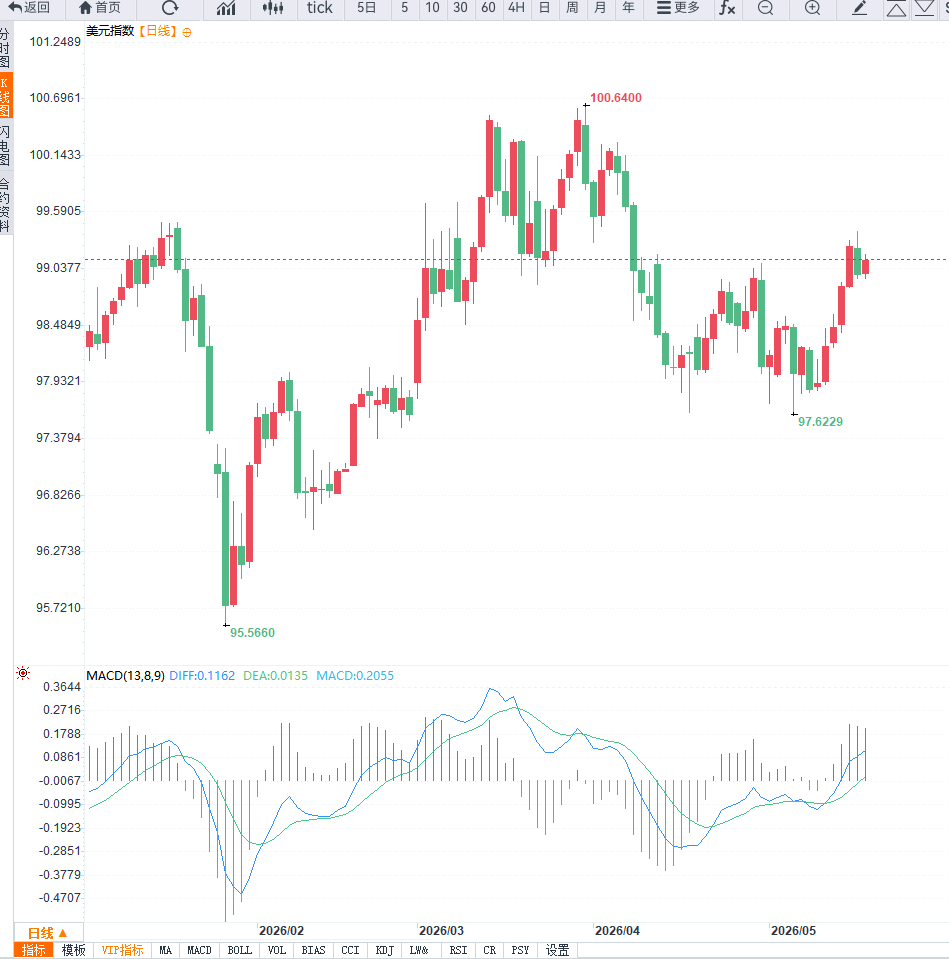
The high-yield environment continues to drive the US dollar's strength. The US dollar index has recently remained near 99, with global funds continuing to flow into dollar assets, thus putting pressure on gold, emerging market currencies, and risk assets.
However, BNY Mellon also stated that if Persian Gulf shipping returns to normal and international oil prices fall significantly, expectations for a Federal Reserve rate cut could resurface. However, currently, the market is still far from this scenario.
Market analysts say that as long as energy prices remain high and the U.S. job market does not deteriorate significantly, the Federal Reserve will find it difficult to signal a clear interest rate cut in the short term.
From a market perspective, global asset prices have begun to readjust to a longer period of high interest rates. Gold has been under continued pressure recently, valuation volatility in the US technology sector has intensified, while dollar-denominated assets continue to attract investment.
From a technical perspective, the US Dollar Index (DXY) continues to maintain a strong structure on the daily chart. The exchange rate is currently trading steadily above the 20-day and 50-day exponential moving averages (EMAs), indicating that the short-to-medium-term bullish trend remains dominant. The 20-day moving average continues to diverge upwards, further reinforcing the dollar's upward structure. The Relative Strength Index (RSI) is currently around 63; although it has not yet entered extreme overbought territory, it indicates that bullish momentum remains strong. The MACD indicator maintains a golden cross structure, suggesting that the overall upward trend of the US dollar has not yet ended.
Current technical indicators suggest that the key resistance level for the US dollar index lies in the 99.50 to 100.00 area; a decisive break above this level could open up further upside potential. Initial support is found around 98.20, while the 97.50 area, where the 20-day EMA is located, forms key medium-term support.
The yield on the 10-year US Treasury note also maintains a high-level consolidation pattern on the daily chart. The yield continues to trade above key moving averages, indicating that market expectations for a prolonged period of high interest rates remain strong.
Overall, the core logic of the current market has gradually shifted from "expectations of interest rate cuts" to "the long-term nature of high interest rates," and Middle East energy risks and the stability of the US job market have become important factors supporting this logic.
Editor's Summary : BNY Mellon's latest adjustment to its Federal Reserve forecasts reflects a global market reassessment of the sustainability of the high-inflation environment. Current energy supply risks have not eased significantly, and the resilient US job market leaves the Fed without the conditions to shift to an easing policy. In the medium to long term, global markets may be entering a new phase of "high interest rates persisting for longer," which will continue to influence the dollar, US Treasury yields, gold, and global risk assets. If international oil prices remain high, the market may even revisit the risks of interest rate hikes rather than the timetable for rate cuts.
Previously, BNY Mellon had predicted that the Federal Reserve would cut interest rates twice before the end of this year, but has now largely abandoned this prediction. Analysts point out that the original logic for rate cuts was based on two core premises: first, that shipping through the Strait of Hormuz would return to normal by August; and second, that the US job market would gradually deteriorate. However, neither of these conditions has shown significant improvement so far.
The Strait of Hormuz handles approximately 20% of global seaborne crude oil transport . The persistent risks associated with energy transportation in the region keep international oil prices high, which in turn contributes to global inflation. Meanwhile, while the US job market has seen slower growth, it remains relatively stable overall, with the unemployment rate not showing a significant increase.
BNY Mellon predicts that if the current labor market conditions persist—namely, sluggish job growth without widespread unemployment—the US unemployment rate is likely to remain between 4.1% and 4.4%. In this environment, it would be difficult for the Federal Reserve to shift towards an easing policy.
Analysts point out that the US economy is currently in a unique balance: economic growth has slowed, but the job market has not yet deteriorated significantly; meanwhile, rising energy prices continue to push up inflation expectations. This combination of "high inflation + stable employment" is forcing the Federal Reserve to maintain high interest rates for a longer period .
The market is even beginning to reconsider the possibility of further interest rate hikes. BNY Mellon believes that if oil prices continue to rise while the job market remains stable, the Federal Reserve may have to reconsider further tightening policies.
Meanwhile, U.S. Treasury yields remained high. Long-term Treasury yields have recently approached their highest levels since 2023, indicating that market concerns about long-term inflation and fiscal deficits are still rising.
The high-yield environment continues to drive the US dollar's strength. The US dollar index has recently remained near 99, with global funds continuing to flow into dollar assets, thus putting pressure on gold, emerging market currencies, and risk assets.
However, BNY Mellon also stated that if Persian Gulf shipping returns to normal and international oil prices fall significantly, expectations for a Federal Reserve rate cut could resurface. However, currently, the market is still far from this scenario.
Market analysts say that as long as energy prices remain high and the U.S. job market does not deteriorate significantly, the Federal Reserve will find it difficult to signal a clear interest rate cut in the short term.
From a market perspective, global asset prices have begun to readjust to a longer period of high interest rates. Gold has been under continued pressure recently, valuation volatility in the US technology sector has intensified, while dollar-denominated assets continue to attract investment.
From a technical perspective, the US Dollar Index (DXY) continues to maintain a strong structure on the daily chart. The exchange rate is currently trading steadily above the 20-day and 50-day exponential moving averages (EMAs), indicating that the short-to-medium-term bullish trend remains dominant. The 20-day moving average continues to diverge upwards, further reinforcing the dollar's upward structure. The Relative Strength Index (RSI) is currently around 63; although it has not yet entered extreme overbought territory, it indicates that bullish momentum remains strong. The MACD indicator maintains a golden cross structure, suggesting that the overall upward trend of the US dollar has not yet ended.
Current technical indicators suggest that the key resistance level for the US dollar index lies in the 99.50 to 100.00 area; a decisive break above this level could open up further upside potential. Initial support is found around 98.20, while the 97.50 area, where the 20-day EMA is located, forms key medium-term support.
The yield on the 10-year US Treasury note also maintains a high-level consolidation pattern on the daily chart. The yield continues to trade above key moving averages, indicating that market expectations for a prolonged period of high interest rates remain strong.
Overall, the core logic of the current market has gradually shifted from "expectations of interest rate cuts" to "the long-term nature of high interest rates," and Middle East energy risks and the stability of the US job market have become important factors supporting this logic.
Editor's Summary : BNY Mellon's latest adjustment to its Federal Reserve forecasts reflects a global market reassessment of the sustainability of the high-inflation environment. Current energy supply risks have not eased significantly, and the resilient US job market leaves the Fed without the conditions to shift to an easing policy. In the medium to long term, global markets may be entering a new phase of "high interest rates persisting for longer," which will continue to influence the dollar, US Treasury yields, gold, and global risk assets. If international oil prices remain high, the market may even revisit the risks of interest rate hikes rather than the timetable for rate cuts.
- Risk Warning and Disclaimer
- The market involves risk, and trading may not be suitable for all investors. This article is for reference only and does not constitute personal investment advice, nor does it take into account certain users’ specific investment objectives, financial situation, or other needs. Any investment decisions made based on this information are at your own risk.