Is oil price no longer determined by supply and demand? The "guiding force" for future oil flows may have changed.
2026-05-19 16:38:05
Rabobank analysts Michael Avery and Joe Delaura point out that a war with Iran could accelerate the shift in the global oil market from a unified pricing system to a fragmented “Balkanized” pricing and settlement landscape.
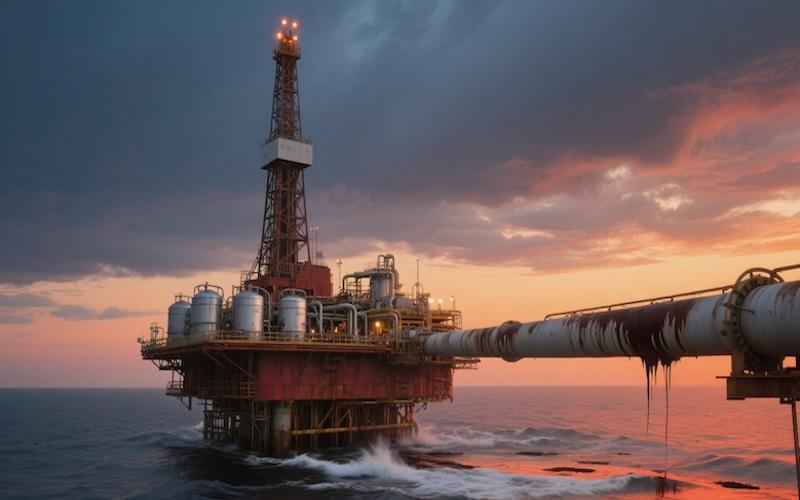
They reviewed historical precedents of fragmented oil and gas trade, highlighting the role of sanctions and swap lines, and warned that future oil flows may be driven by geopolitics, monetary systems, and security alliances, rather than purely market forces.
The global oil market is currently experiencing the largest supply disruption in modern history. A report released by the International Energy Agency (IEA) in May indicated that the war with Iran has brought nearly 15% of global oil production offline, and the de facto closure of the Strait of Hormuz has resulted in a cumulative supply loss of over 1 billion barrels per day for Middle Eastern oil-producing countries. Currently, over 14 million barrels of oil are out of production daily, representing an "unprecedented supply shock." Global oil inventories plummeted by 246 million barrels in March and April alone. Analysts warn that global oil inventories are declining rapidly and may not recover until December 2027, with Europe potentially facing a physical oil shortage by the end of this month.
The crisis has pushed Brent crude oil above the $100 per barrel mark, even hitting a four-year high of $126 in April. Supply disruptions have had a particularly severe impact on refined products—jet fuel and diesel prices have doubled since January, with EU diesel reaching a record high of €2.11 per liter in April. Meanwhile, nearly 9% of global refining capacity has been paralyzed by war-related attacks, further exacerbating the shortage of refined petroleum products.
The international oil pricing system has never been uniform. Historically, global oil pricing has evolved through five stages: from the colonial pricing system of multinational oil companies (before the 1960s), to the official OPEC pricing system, then to a diversified pricing system based on market supply and demand, and subsequently to a futures market-dominated pricing system (from 1986 to the present). Even in the futures era, price differences existed for a long time between benchmark oil prices in different regions (such as WTI and Brent).
Currently, a growing number of "conditional barrels" are emerging in the global crude oil supply—that is, crude oil that physically exists but cannot circulate freely due to sanctions, shipping restrictions, or geopolitical factors. Iran, Russia, and Venezuela are the three largest sources of this type of "conditional supply," each subject to different political and legal constraints. This challenges traditional supply and demand analysis frameworks: the market variable is no longer drilling decisions, but policy decisions.
Against this backdrop, Rabobank analysts stated, "Whether the US wins or loses the war with Iran, the energy supply chain has already been altered as a result, and this change is likely to intensify significantly after the war ends—we are simply reminding you that Balkanization is one of the risks we face in the future."
"In fact, economic history is full of cases of deep energy price and payment splits caused by geopolitics, sometimes lasting for years or even decades. The assumption of a 'single market price' is not always true, and therefore may not be true in the future."
"Therefore, we may be moving toward a world where energy is no longer a substitute number on a neutral global market screen flowing to the highest bidder, but a strategic asset whose flows are determined by geopolitically constrained supply chains, which are determined by security alliances, payment currencies, and swap lines—as many economies experienced for most of the 20th century, and as some others are still experiencing today."
Rabobank's view echoes the market's analysis of "conditional crude oil supply": when short-term supply variables depend more on political permission than on production capacity, market volatility will come more from changes in supply access conditions than from resource depletion itself.
In conclusion, Rabobank believes the Iran war is accelerating a structural shift in the global energy order. A unified global oil pricing system—established since the futures pricing era of the 1980s—may gradually disintegrate, replaced by fragmented structures based on political blocs, monetary systems, and bilateral agreements. Under this new order, energy will no longer be merely an economic commodity, but a strategic tool in geopolitical games. For investors and policymakers, understanding this trend is more important than predicting short-term oil prices. As analysts have pointed out, in a world where "conditional supply" is increasingly the norm, supply access risk is price risk.
They reviewed historical precedents of fragmented oil and gas trade, highlighting the role of sanctions and swap lines, and warned that future oil flows may be driven by geopolitics, monetary systems, and security alliances, rather than purely market forces.
The war with Iran has triggered an "unprecedented supply shock."
The global oil market is currently experiencing the largest supply disruption in modern history. A report released by the International Energy Agency (IEA) in May indicated that the war with Iran has brought nearly 15% of global oil production offline, and the de facto closure of the Strait of Hormuz has resulted in a cumulative supply loss of over 1 billion barrels per day for Middle Eastern oil-producing countries. Currently, over 14 million barrels of oil are out of production daily, representing an "unprecedented supply shock." Global oil inventories plummeted by 246 million barrels in March and April alone. Analysts warn that global oil inventories are declining rapidly and may not recover until December 2027, with Europe potentially facing a physical oil shortage by the end of this month.
The crisis has pushed Brent crude oil above the $100 per barrel mark, even hitting a four-year high of $126 in April. Supply disruptions have had a particularly severe impact on refined products—jet fuel and diesel prices have doubled since January, with EU diesel reaching a record high of €2.11 per liter in April. Meanwhile, nearly 9% of global refining capacity has been paralyzed by war-related attacks, further exacerbating the shortage of refined petroleum products.
The historical evolution from the "law of one price" to "conditional supply"
The international oil pricing system has never been uniform. Historically, global oil pricing has evolved through five stages: from the colonial pricing system of multinational oil companies (before the 1960s), to the official OPEC pricing system, then to a diversified pricing system based on market supply and demand, and subsequently to a futures market-dominated pricing system (from 1986 to the present). Even in the futures era, price differences existed for a long time between benchmark oil prices in different regions (such as WTI and Brent).
Currently, a growing number of "conditional barrels" are emerging in the global crude oil supply—that is, crude oil that physically exists but cannot circulate freely due to sanctions, shipping restrictions, or geopolitical factors. Iran, Russia, and Venezuela are the three largest sources of this type of "conditional supply," each subject to different political and legal constraints. This challenges traditional supply and demand analysis frameworks: the market variable is no longer drilling decisions, but policy decisions.
From a single fuel price to multiple fuel pricing mechanisms: History hasn't always been governed by a "one-price law".
Against this backdrop, Rabobank analysts stated, "Whether the US wins or loses the war with Iran, the energy supply chain has already been altered as a result, and this change is likely to intensify significantly after the war ends—we are simply reminding you that Balkanization is one of the risks we face in the future."
"In fact, economic history is full of cases of deep energy price and payment splits caused by geopolitics, sometimes lasting for years or even decades. The assumption of a 'single market price' is not always true, and therefore may not be true in the future."
Energy will no longer be a substitute commodity in a neutral market.
"Therefore, we may be moving toward a world where energy is no longer a substitute number on a neutral global market screen flowing to the highest bidder, but a strategic asset whose flows are determined by geopolitically constrained supply chains, which are determined by security alliances, payment currencies, and swap lines—as many economies experienced for most of the 20th century, and as some others are still experiencing today."
Rabobank's view echoes the market's analysis of "conditional crude oil supply": when short-term supply variables depend more on political permission than on production capacity, market volatility will come more from changes in supply access conditions than from resource depletion itself.
Geopolitics is reshaping the energy landscape, with market logic giving way to strategic logic.
In conclusion, Rabobank believes the Iran war is accelerating a structural shift in the global energy order. A unified global oil pricing system—established since the futures pricing era of the 1980s—may gradually disintegrate, replaced by fragmented structures based on political blocs, monetary systems, and bilateral agreements. Under this new order, energy will no longer be merely an economic commodity, but a strategic tool in geopolitical games. For investors and policymakers, understanding this trend is more important than predicting short-term oil prices. As analysts have pointed out, in a world where "conditional supply" is increasingly the norm, supply access risk is price risk.
- Risk Warning and Disclaimer
- The market involves risk, and trading may not be suitable for all investors. This article is for reference only and does not constitute personal investment advice, nor does it take into account certain users’ specific investment objectives, financial situation, or other needs. Any investment decisions made based on this information are at your own risk.