With the ECB's June rate hike almost a certainty, could the situation in the Middle East become a catalyst for a euro rebound?
2026-05-28 10:20:18
The euro fell slightly against the dollar during Asian trading hours on Thursday (May 28), currently trading at 1.1610.
The market has largely priced in a June rate hike by the European Central Bank, with pricing indicating a 95% probability of a 25 basis point increase on June 11. However, the real market focus has shifted to the Middle East geopolitical situation—if the conflict in Iran de-escalates and the Strait of Hormuz reopens, lower oil prices will alleviate inflationary and growth pressures in the Eurozone, while simultaneously reducing demand for the US dollar as a safe haven. In this scenario, the euro is likely to find support, while the dollar may weaken.
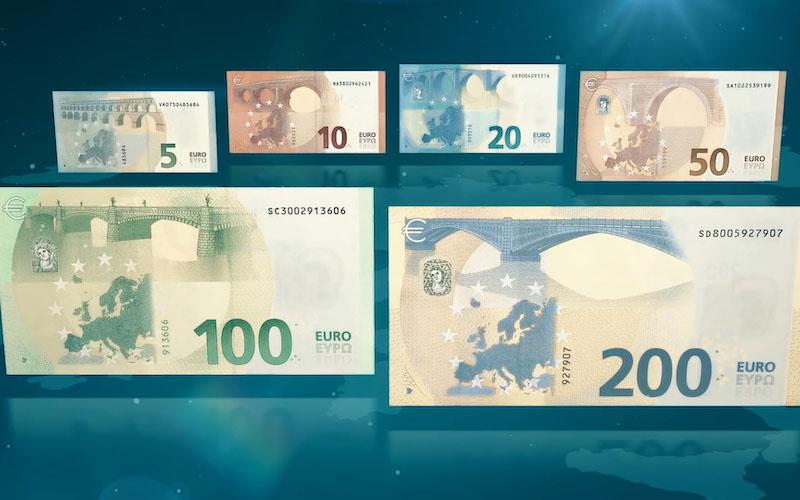
The market has largely priced in a June rate hike by the European Central Bank, viewing it more as a symbolic move than a surprise. With hopes for a resolution to the Iranian conflict rising, market expectations for further policy tightening later this year have softened.
The prospect of the Strait of Hormuz reopening in the coming days is considered insufficient to deter a June rate hike. In other words, even with positive geopolitical developments, the European Central Bank will proceed with its planned rate hike this month.
If the situation in the Middle East does not escalate further and a second wave of spillover effects fails to materialize, the European Central Bank is likely to pause its rate hikes after this one. Market focus is shifting from the magnitude of the rate increases to the central bank's response mechanism.
The implied interest rate hike is currently 25 basis points. Some argue that this limit restricts the scope for long-term repricing, which could potentially put pressure on the euro.
In the near term, the end of the Iran war is linked to three factors: a weaker dollar, increased confidence in growth in the Eurozone, and generally stable European Central Bank interest rate expectations.
Specifically, if the conflict in Iran ends, the resulting drop in oil prices will directly reduce energy costs in the Eurozone, thereby boosting confidence in economic growth. At the same time, the safe-haven demand for the US dollar will decrease, further supporting the euro.
The European Central Bank's expected rate hike on June 11 has already been fully priced in by the market. Overnight index swaps indicate a 95% probability of a 25 basis point rate hike, so the event itself is unlikely to trigger significant new volatility.
In the coming weeks, the market's real focus should be on developments in the Middle East geopolitical situation.
An end to the conflict in Iran would be the primary catalyst for a stronger euro. News of a possible reopening of the Strait of Hormuz has already pushed Brent crude prices down from above $115 a barrel to below $95.
The drop in oil prices will alleviate inflation and growth concerns in the energy-dependent Eurozone. This positive impact on the European economy is likely to attract investment to the region.
At the same time, de-escalation of the conflict will weaken the safe-haven appeal of the dollar—a dynamic with precedent. For example, after global tensions eased at the end of 2022, the dollar index fell by more than 8% in two months.
If a peace agreement is formally announced, the market will likely see a similar, but perhaps slightly smaller, movement. The decline of the US dollar and the rise of the euro are expected to occur in tandem.
From the daily chart, the euro rebounded from a low of 1.1410 against the US dollar in March, and once reached a high of 1.1848 at the end of April. However, the exchange rate has continued to fall recently and has now dropped to around 1.1610.
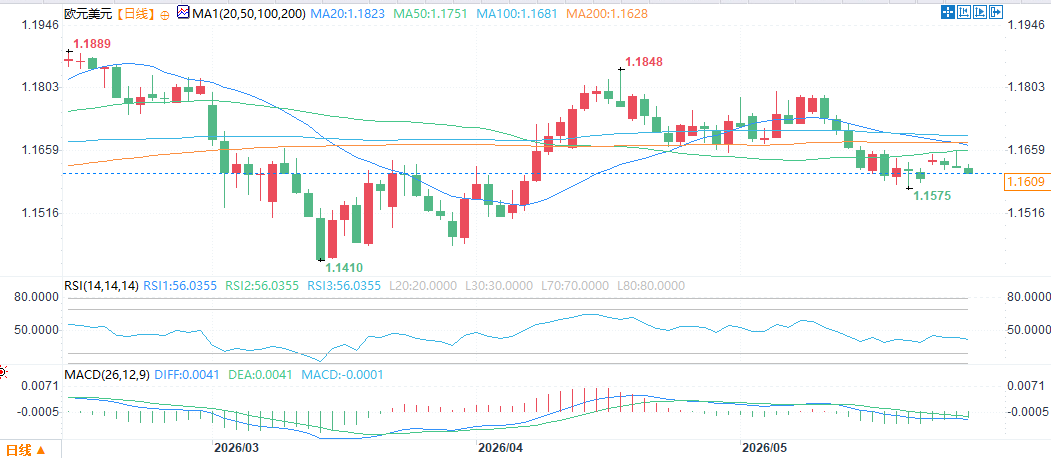
(Euro/USD daily chart, source: FX678)
The current RSI value is 56, above the 50 midline. This means that although the price has fallen from a high of 1.1848 to 1.1610 (a cumulative drop of approximately 2.8%), the RSI has not fallen below 50 in tandem, instead remaining in the bullish zone. This is typically seen in technical analysis as a bullish divergence signal—the downward momentum has not been confirmed by the RSI, and the price may be undergoing a healthy correction rather than a trend reversal.
Regarding the MACD indicator, the DIFF and DEA lines were previously completely converging at the 0.0041 level with near-zero momentum, indicating a clear sideways trend. With the price falling to 1.1610, the MACD has most likely formed a death cross, with the DIFF line crossing below the DEA line, and the MACD histogram turning negative and potentially expanding further, confirming the formation of a short-term downtrend.
In conclusion, the market has largely priced in the ECB's June rate hike, and it is unlikely to drive significant exchange rate fluctuations on its own. The real variable lies in the Middle East situation: if the conflict with Iran de-escalates, a drop in oil prices will benefit the Eurozone economy and weaken the safe-haven demand for the US dollar, thereby pushing the euro higher against the dollar. In the coming weeks, the market's core focus will be on the progress of reopening the Strait of Hormuz and the subsequent developments in the Iranian situation.
At 10:19 Beijing time on May 28, the euro was trading at 1.1611/12 against the US dollar.
The market has largely priced in a June rate hike by the European Central Bank, with pricing indicating a 95% probability of a 25 basis point increase on June 11. However, the real market focus has shifted to the Middle East geopolitical situation—if the conflict in Iran de-escalates and the Strait of Hormuz reopens, lower oil prices will alleviate inflationary and growth pressures in the Eurozone, while simultaneously reducing demand for the US dollar as a safe haven. In this scenario, the euro is likely to find support, while the dollar may weaken.
The market has already fully priced in the June rate hike.
The market has largely priced in a June rate hike by the European Central Bank, viewing it more as a symbolic move than a surprise. With hopes for a resolution to the Iranian conflict rising, market expectations for further policy tightening later this year have softened.
The prospect of the Strait of Hormuz reopening in the coming days is considered insufficient to deter a June rate hike. In other words, even with positive geopolitical developments, the European Central Bank will proceed with its planned rate hike this month.
If the situation does not escalate, the European Central Bank may only raise interest rates once.
If the situation in the Middle East does not escalate further and a second wave of spillover effects fails to materialize, the European Central Bank is likely to pause its rate hikes after this one. Market focus is shifting from the magnitude of the rate increases to the central bank's response mechanism.
The implied interest rate hike is currently 25 basis points. Some argue that this limit restricts the scope for long-term repricing, which could potentially put pressure on the euro.
Three avenues through which a ceasefire in Iran would benefit the euro.
In the near term, the end of the Iran war is linked to three factors: a weaker dollar, increased confidence in growth in the Eurozone, and generally stable European Central Bank interest rate expectations.
Specifically, if the conflict in Iran ends, the resulting drop in oil prices will directly reduce energy costs in the Eurozone, thereby boosting confidence in economic growth. At the same time, the safe-haven demand for the US dollar will decrease, further supporting the euro.
A June 11 interest rate hike is almost a certainty; attention should shift to geopolitics.
The European Central Bank's expected rate hike on June 11 has already been fully priced in by the market. Overnight index swaps indicate a 95% probability of a 25 basis point rate hike, so the event itself is unlikely to trigger significant new volatility.
In the coming weeks, the market's real focus should be on developments in the Middle East geopolitical situation.
An end to the conflict in Iran would be the primary catalyst for a stronger euro.
An end to the conflict in Iran would be the primary catalyst for a stronger euro. News of a possible reopening of the Strait of Hormuz has already pushed Brent crude prices down from above $115 a barrel to below $95.
The drop in oil prices will alleviate inflation and growth concerns in the energy-dependent Eurozone. This positive impact on the European economy is likely to attract investment to the region.
The decline in safe-haven demand will weaken the US dollar.
At the same time, de-escalation of the conflict will weaken the safe-haven appeal of the dollar—a dynamic with precedent. For example, after global tensions eased at the end of 2022, the dollar index fell by more than 8% in two months.
If a peace agreement is formally announced, the market will likely see a similar, but perhaps slightly smaller, movement. The decline of the US dollar and the rise of the euro are expected to occur in tandem.
EUR/USD Technical Analysis
From the daily chart, the euro rebounded from a low of 1.1410 against the US dollar in March, and once reached a high of 1.1848 at the end of April. However, the exchange rate has continued to fall recently and has now dropped to around 1.1610.
(Euro/USD daily chart, source: FX678)
The current RSI value is 56, above the 50 midline. This means that although the price has fallen from a high of 1.1848 to 1.1610 (a cumulative drop of approximately 2.8%), the RSI has not fallen below 50 in tandem, instead remaining in the bullish zone. This is typically seen in technical analysis as a bullish divergence signal—the downward momentum has not been confirmed by the RSI, and the price may be undergoing a healthy correction rather than a trend reversal.
Regarding the MACD indicator, the DIFF and DEA lines were previously completely converging at the 0.0041 level with near-zero momentum, indicating a clear sideways trend. With the price falling to 1.1610, the MACD has most likely formed a death cross, with the DIFF line crossing below the DEA line, and the MACD histogram turning negative and potentially expanding further, confirming the formation of a short-term downtrend.
In conclusion, the market has largely priced in the ECB's June rate hike, and it is unlikely to drive significant exchange rate fluctuations on its own. The real variable lies in the Middle East situation: if the conflict with Iran de-escalates, a drop in oil prices will benefit the Eurozone economy and weaken the safe-haven demand for the US dollar, thereby pushing the euro higher against the dollar. In the coming weeks, the market's core focus will be on the progress of reopening the Strait of Hormuz and the subsequent developments in the Iranian situation.
At 10:19 Beijing time on May 28, the euro was trading at 1.1611/12 against the US dollar.
- Risk Warning and Disclaimer
- The market involves risk, and trading may not be suitable for all investors. This article is for reference only and does not constitute personal investment advice, nor does it take into account certain users’ specific investment objectives, financial situation, or other needs. Any investment decisions made based on this information are at your own risk.