Middle East energy risks delay the Fed's easing cycle, and expectations for interest rate cuts slow down again.
2026-06-01 16:28:00
With ongoing tensions in the Middle East and persistently high energy prices, global financial markets' expectations for the Federal Reserve's future policy path have shifted again. A recent research report from Rabobank indicates that the Fed may begin its rate-cutting cycle later than previously anticipated.
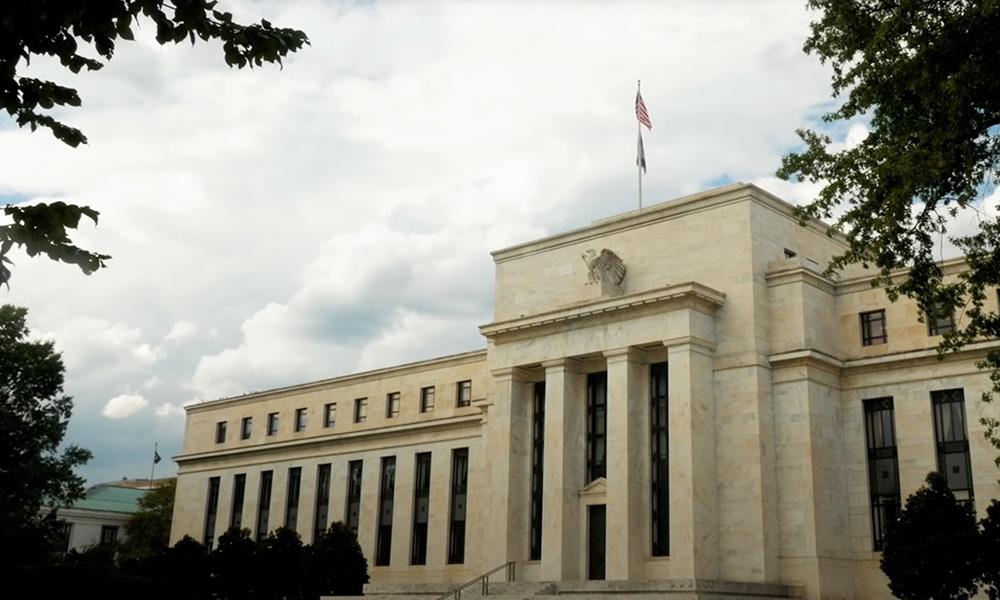
Philippe Marais, senior U.S. strategist at Rabobank, points out that there has been a significant shift in policy stance within the Federal Open Market Committee (FOMC) recently. Several policymakers have begun publicly expressing relatively cautious or even hawkish positions even before the new chairman, Warsh, chaired his first meeting.
This means that the focus of discussions within the Federal Reserve regarding the future direction of monetary policy is gradually shifting from when to cut interest rates to how to address the potential risk of recurring inflation. Recent signals from the Fed's policymakers indicate that its previous easing bias is gradually weakening, and the policy focus is shifting back to controlling inflation risks.
Meanwhile, developments in the Middle East have become a significant variable influencing global inflation expectations. Recent escalating regional conflicts have significantly increased market concerns about the stability of energy supplies. International oil prices have regained support after a previous correction. There are widespread market concerns that shipping risks in the Strait of Hormuz and uncertainties surrounding Middle Eastern energy exports could lead to a prolonged period of high global energy prices.
For the Federal Reserve, rising energy prices mean that the pace of inflation decline may slow in the future. Energy costs not only directly affect the Consumer Price Index, but also are transmitted to the entire economic system through the transportation, manufacturing, and service sectors.
Rabobank believes that the energy price increases caused by the Middle East situation are not a short-term phenomenon, but are likely to be a significant factor influencing inflation in the coming quarters. The institution predicts that US inflation will be "higher and more persistent" in the future, which will limit the Federal Reserve's room to initiate an earlier rate-cutting cycle.
According to its latest forecasts, Rabobank has adjusted its assessment of the Federal Reserve's future interest rate path. Previously, the institution predicted the Fed would implement its first rate cut in September 2026 and a second in December 2026. However, the latest forecasts show the first rate cut has been postponed to October 2026, and the second to January 2027. This change reflects a market reassessment of the future monetary policy environment.
"As our assessment of the inflation outlook becomes more bullish and persistent, and as FOMC members take a more defensive stance toward the new chairman, we have decided to adjust our expectations for Fed policy," said Rabobank strategist Marai. From a market perspective, the delayed Fed rate cuts mean that US interest rates may remain high for an extended period.
A high-interest-rate environment typically favors dollar-denominated assets, as higher yields attract international capital inflows into the US market. This is one of the key reasons for the recent strength of the US dollar index. At the same time, US Treasury yields are likely to remain high, putting pressure on non-interest-bearing assets such as gold and silver.
However, the market also needs to recognize that the Federal Reserve's maintenance of high interest rates is predicated on the continued relative resilience of the US economy. If economic growth slows significantly in the future, policymakers may still adjust their current stance. Therefore, employment, inflation, and consumption data released in the coming months will be crucial in determining market expectations.
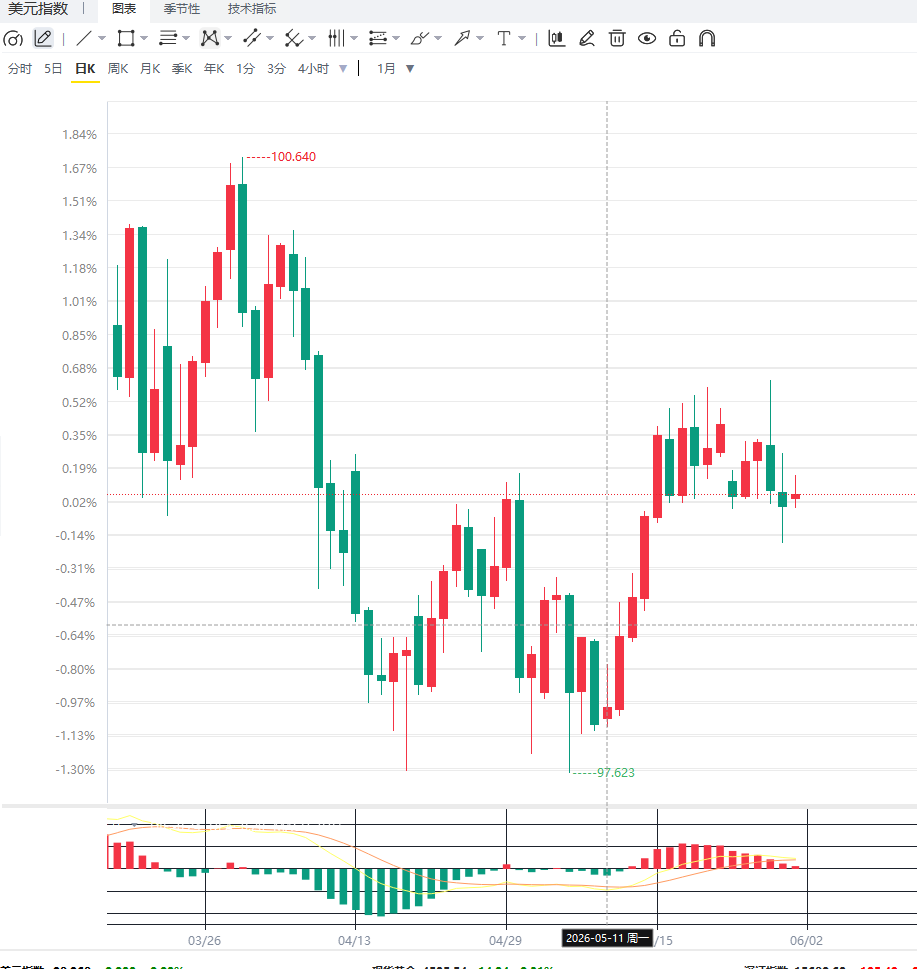
From the daily chart, the US dollar index has recently regained its footing above the 99 level and rebounded from near a two-week low. The overall structure indicates that market expectations for the Federal Reserve to maintain high interest rates are strengthening. The 98.50 area forms a key support level, while the 100.00 and 101.20 areas form key resistance levels. A break above the 100 level could open up further upside potential. The RSI indicator has risen to around 60, indicating improved market momentum. The MACD indicator maintains its golden cross structure, reflecting a still-strong medium-term trend for the US dollar.
Editor's Summary : Rabobank's latest forecast has further reinforced market expectations of "high interest rates lasting longer." The Middle East situation has kept energy prices high, posing new inflation challenges for the Federal Reserve, while recent hawkish signals from policymakers indicate a shift in policy focus. From a core market logic perspective, rising energy prices and increased inflation stickiness are jointly pushing back expectations of interest rate cuts. This means the dollar and US Treasury yields may be supported for a longer period. For investors, the market has shifted its focus from the timing of rate cuts to the duration of high interest rates. Future inflation data, energy price changes, and the performance of the US job market will be key variables determining the direction of market expectations. If the Middle East situation continues to push up energy prices while the US economy remains resilient, the Fed's first rate cut may be further delayed. Conversely, if economic growth slows significantly, market expectations for rate cuts may be brought forward again.
Philippe Marais, senior U.S. strategist at Rabobank, points out that there has been a significant shift in policy stance within the Federal Open Market Committee (FOMC) recently. Several policymakers have begun publicly expressing relatively cautious or even hawkish positions even before the new chairman, Warsh, chaired his first meeting.
This means that the focus of discussions within the Federal Reserve regarding the future direction of monetary policy is gradually shifting from when to cut interest rates to how to address the potential risk of recurring inflation. Recent signals from the Fed's policymakers indicate that its previous easing bias is gradually weakening, and the policy focus is shifting back to controlling inflation risks.
Meanwhile, developments in the Middle East have become a significant variable influencing global inflation expectations. Recent escalating regional conflicts have significantly increased market concerns about the stability of energy supplies. International oil prices have regained support after a previous correction. There are widespread market concerns that shipping risks in the Strait of Hormuz and uncertainties surrounding Middle Eastern energy exports could lead to a prolonged period of high global energy prices.
For the Federal Reserve, rising energy prices mean that the pace of inflation decline may slow in the future. Energy costs not only directly affect the Consumer Price Index, but also are transmitted to the entire economic system through the transportation, manufacturing, and service sectors.
Rabobank believes that the energy price increases caused by the Middle East situation are not a short-term phenomenon, but are likely to be a significant factor influencing inflation in the coming quarters. The institution predicts that US inflation will be "higher and more persistent" in the future, which will limit the Federal Reserve's room to initiate an earlier rate-cutting cycle.
According to its latest forecasts, Rabobank has adjusted its assessment of the Federal Reserve's future interest rate path. Previously, the institution predicted the Fed would implement its first rate cut in September 2026 and a second in December 2026. However, the latest forecasts show the first rate cut has been postponed to October 2026, and the second to January 2027. This change reflects a market reassessment of the future monetary policy environment.
"As our assessment of the inflation outlook becomes more bullish and persistent, and as FOMC members take a more defensive stance toward the new chairman, we have decided to adjust our expectations for Fed policy," said Rabobank strategist Marai. From a market perspective, the delayed Fed rate cuts mean that US interest rates may remain high for an extended period.
A high-interest-rate environment typically favors dollar-denominated assets, as higher yields attract international capital inflows into the US market. This is one of the key reasons for the recent strength of the US dollar index. At the same time, US Treasury yields are likely to remain high, putting pressure on non-interest-bearing assets such as gold and silver.
However, the market also needs to recognize that the Federal Reserve's maintenance of high interest rates is predicated on the continued relative resilience of the US economy. If economic growth slows significantly in the future, policymakers may still adjust their current stance. Therefore, employment, inflation, and consumption data released in the coming months will be crucial in determining market expectations.
From the daily chart, the US dollar index has recently regained its footing above the 99 level and rebounded from near a two-week low. The overall structure indicates that market expectations for the Federal Reserve to maintain high interest rates are strengthening. The 98.50 area forms a key support level, while the 100.00 and 101.20 areas form key resistance levels. A break above the 100 level could open up further upside potential. The RSI indicator has risen to around 60, indicating improved market momentum. The MACD indicator maintains its golden cross structure, reflecting a still-strong medium-term trend for the US dollar.
Editor's Summary : Rabobank's latest forecast has further reinforced market expectations of "high interest rates lasting longer." The Middle East situation has kept energy prices high, posing new inflation challenges for the Federal Reserve, while recent hawkish signals from policymakers indicate a shift in policy focus. From a core market logic perspective, rising energy prices and increased inflation stickiness are jointly pushing back expectations of interest rate cuts. This means the dollar and US Treasury yields may be supported for a longer period. For investors, the market has shifted its focus from the timing of rate cuts to the duration of high interest rates. Future inflation data, energy price changes, and the performance of the US job market will be key variables determining the direction of market expectations. If the Middle East situation continues to push up energy prices while the US economy remains resilient, the Fed's first rate cut may be further delayed. Conversely, if economic growth slows significantly, market expectations for rate cuts may be brought forward again.
- Risk Warning and Disclaimer
- The market involves risk, and trading may not be suitable for all investors. This article is for reference only and does not constitute personal investment advice, nor does it take into account certain users’ specific investment objectives, financial situation, or other needs. Any investment decisions made based on this information are at your own risk.