Japan's finance minister stated that he would decisively support the yen, but the room for intervention continues to narrow.
2026-06-05 14:11:54
On Friday (June 5), Japan's Finance Minister issued a strong statement, asserting that Japan retains the authority to intervene decisively in the event of abnormal exchange rate fluctuations, based on relevant bilateral agreements with the United States. With the yen continuing to languish around the 160 level, Japan's foreign exchange reserves saw their largest monthly decline on record in May. Behind this significant reduction in reserves, the market widely speculates that Japan has massively reduced its holdings of US Treasury bonds to raise funds for currency market intervention.
Amidst global bond market volatility, selling US Treasury bonds to intervene in the exchange rate could trigger a red line for the US, further restricting Japan's room for maneuver in supporting the yen. This puts Japan's exchange rate control in a difficult situation with multiple constraints.
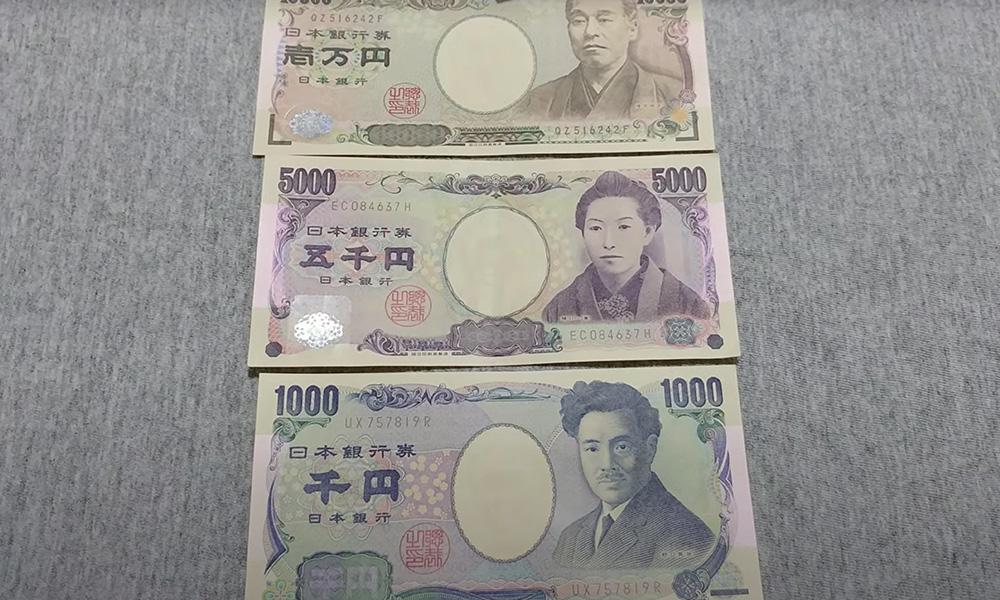
Japanese officials have stated that they reserve the authority to intervene decisively in the yen's exchange rate . The yen broke through the key 160 level against the dollar earlier in the session, reaching a new low, and the market is closely watching any moves by the Japanese government to intervene.
Japanese Finance Minister Satsuki Katayama stated during a parliamentary session on Friday that exchange rate movements are influenced by multiple macroeconomic factors, and that the sharp fluctuations in the yen exchange rate since the outbreak of the Middle East conflict in February were largely due to speculative capital manipulation.
She stated that Japanese and US regulators routinely exchange information on foreign exchange market conditions. Based on a previous joint statement signed by the two countries, Japan has the right to take decisive measures to stabilize the exchange rate should irrational and drastic fluctuations occur. Regulators will introduce corresponding control measures as needed based on market changes. The US-Japan bilateral agreement stipulates that the general direction of the exchange rate is determined by the market, and foreign exchange intervention is limited to situations involving irrational and drastic fluctuations.
Japanese Prime Minister Sanae Takaichi also addressed the Diet at the same time, stating that the fundamental solution to boosting the long-term value of the yen lies in increasing investment in high-quality growth industries and relying on industrial competitiveness to enhance the fundamental support of the currency.
Japan's official data on foreign exchange reserves for May showed a sharp decline of $77.1 billion, or 5.6%, to $1.306 trillion, marking the largest single-month drop in history. Overseas securities assets shrank by $75.6 billion, which was the core drag on the reserve decline.
Tsuyoshi Ueno, a senior economist at the NLI Institute for Basic Research, analyzed that, based on data characteristics, Japan most likely sold US Treasury bonds to obtain dollar liquidity, thereby supporting its yen-buying intervention. Japan has previously publicly stated that it does not rule out liquidating US Treasury bonds to raise funds for intervention. While Japanese Ministry of Finance officials did not directly confirm that the sale of US Treasury bonds was used for foreign exchange market intervention, they only explained that rising US Treasury yields led to a decrease in the book value of holdings, which also dragged down the valuation of foreign exchange reserves.
Industry analysts say that the global bond market is currently experiencing a period of extreme volatility, and the US's tolerance for large-scale overseas sales of US Treasury bonds has significantly decreased. If Japan continues to rely on selling US Treasury bonds to raise funds and intervene in the market on a large scale to support the yen, it could easily impact the US Treasury bond market, prompting a change in the US's attitude and forcing Japan to reduce the scale of its intervention.
Previously, Japan had used over $73 billion to buy yen in the market to stem its depreciation. This large-scale intervention has already depleted its massive foreign exchange reserves. Coupled with potential constraints from US policies, the difficulty for Japan to continue implementing significant exchange rate controls is constantly increasing.
In summary, Japan's intention to stabilize the yen in the short term is clear, and its intervention stance is relatively tough. However, the sharp decline in foreign exchange reserves, coupled with the diplomatic and market constraints brought about by the sell-off of US Treasury bonds, has significantly reduced the room for continued market intervention.
If the Japanese yen wants to escape its depreciation predicament, short-term reliance on foreign exchange market intervention will have limited effect. In the medium to long term, it still needs to rely on the country's real economy and industrial strength to improve its fundamentals.
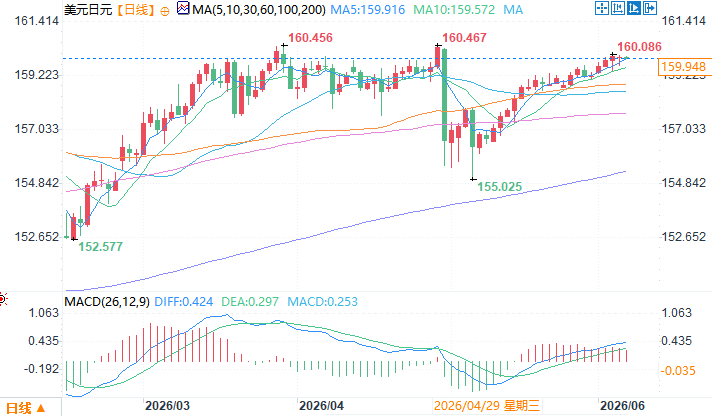
USD/JPY Daily Chart Source: EasyForex
At 14:11 Beijing time on June 5, the USD/JPY exchange rate was 159.94/95.
Amidst global bond market volatility, selling US Treasury bonds to intervene in the exchange rate could trigger a red line for the US, further restricting Japan's room for maneuver in supporting the yen. This puts Japan's exchange rate control in a difficult situation with multiple constraints.
Japanese officials have stated that they reserve the authority to intervene decisively in the yen's exchange rate . The yen broke through the key 160 level against the dollar earlier in the session, reaching a new low, and the market is closely watching any moves by the Japanese government to intervene.
Japanese Finance Minister Satsuki Katayama stated during a parliamentary session on Friday that exchange rate movements are influenced by multiple macroeconomic factors, and that the sharp fluctuations in the yen exchange rate since the outbreak of the Middle East conflict in February were largely due to speculative capital manipulation.
She stated that Japanese and US regulators routinely exchange information on foreign exchange market conditions. Based on a previous joint statement signed by the two countries, Japan has the right to take decisive measures to stabilize the exchange rate should irrational and drastic fluctuations occur. Regulators will introduce corresponding control measures as needed based on market changes. The US-Japan bilateral agreement stipulates that the general direction of the exchange rate is determined by the market, and foreign exchange intervention is limited to situations involving irrational and drastic fluctuations.
Japanese Prime Minister Sanae Takaichi also addressed the Diet at the same time, stating that the fundamental solution to boosting the long-term value of the yen lies in increasing investment in high-quality growth industries and relying on industrial competitiveness to enhance the fundamental support of the currency.
Foreign exchange reserves saw their largest drop in history in May, fueling speculation that the US government was reducing its holdings of US Treasury bonds.
Japan's official data on foreign exchange reserves for May showed a sharp decline of $77.1 billion, or 5.6%, to $1.306 trillion, marking the largest single-month drop in history. Overseas securities assets shrank by $75.6 billion, which was the core drag on the reserve decline.
Tsuyoshi Ueno, a senior economist at the NLI Institute for Basic Research, analyzed that, based on data characteristics, Japan most likely sold US Treasury bonds to obtain dollar liquidity, thereby supporting its yen-buying intervention. Japan has previously publicly stated that it does not rule out liquidating US Treasury bonds to raise funds for intervention. While Japanese Ministry of Finance officials did not directly confirm that the sale of US Treasury bonds was used for foreign exchange market intervention, they only explained that rising US Treasury yields led to a decrease in the book value of holdings, which also dragged down the valuation of foreign exchange reserves.
The constraints on the linkage between US and Chinese debt are intensifying, and Japan's room for further intervention continues to narrow.
Industry analysts say that the global bond market is currently experiencing a period of extreme volatility, and the US's tolerance for large-scale overseas sales of US Treasury bonds has significantly decreased. If Japan continues to rely on selling US Treasury bonds to raise funds and intervene in the market on a large scale to support the yen, it could easily impact the US Treasury bond market, prompting a change in the US's attitude and forcing Japan to reduce the scale of its intervention.
Previously, Japan had used over $73 billion to buy yen in the market to stem its depreciation. This large-scale intervention has already depleted its massive foreign exchange reserves. Coupled with potential constraints from US policies, the difficulty for Japan to continue implementing significant exchange rate controls is constantly increasing.
Summarize
In summary, Japan's intention to stabilize the yen in the short term is clear, and its intervention stance is relatively tough. However, the sharp decline in foreign exchange reserves, coupled with the diplomatic and market constraints brought about by the sell-off of US Treasury bonds, has significantly reduced the room for continued market intervention.
If the Japanese yen wants to escape its depreciation predicament, short-term reliance on foreign exchange market intervention will have limited effect. In the medium to long term, it still needs to rely on the country's real economy and industrial strength to improve its fundamentals.
USD/JPY Daily Chart Source: EasyForex
At 14:11 Beijing time on June 5, the USD/JPY exchange rate was 159.94/95.
- Risk Warning and Disclaimer
- The market involves risk, and trading may not be suitable for all investors. This article is for reference only and does not constitute personal investment advice, nor does it take into account certain users’ specific investment objectives, financial situation, or other needs. Any investment decisions made based on this information are at your own risk.