War risk premiums in the Strait of Hormuz have soared to 6% of the ship price, causing transit costs to increase 20-fold.
2026-07-10 14:18:48
In early July 2026, tensions in the Strait of Hormuz escalated again. Earlier that week, Iran's Islamic Revolutionary Guard Corps (IRGC) fired at least two missiles at merchant ships transiting the Strait of Hormuz. Three merchant ships—including a Qatari-flagged LNG carrier and a Saudi-flagged supertanker—were attacked in waters near the Gulf of Oman. The ships sustained significant damage, but no fatalities were reported. The United States subsequently launched multiple retaliatory airstrikes against Iran, citing the Iranian attack on the merchant ships as a response. U.S. Central Command stated that the strikes targeted more than 80 to 90 Iranian military targets, including air defense systems, coastal radar installations, and more than 60 IRGC small boats.
This round of military conflict marks the substantial breakdown of the interim ceasefire agreement reached between the US and Iran in June. Following the ceasefire agreement, market sentiment initially turned optimistic, and war risk premiums fell sharply in late June. However, within just a few weeks, geopolitical risk premiums rebounded rapidly as hostilities reignited.
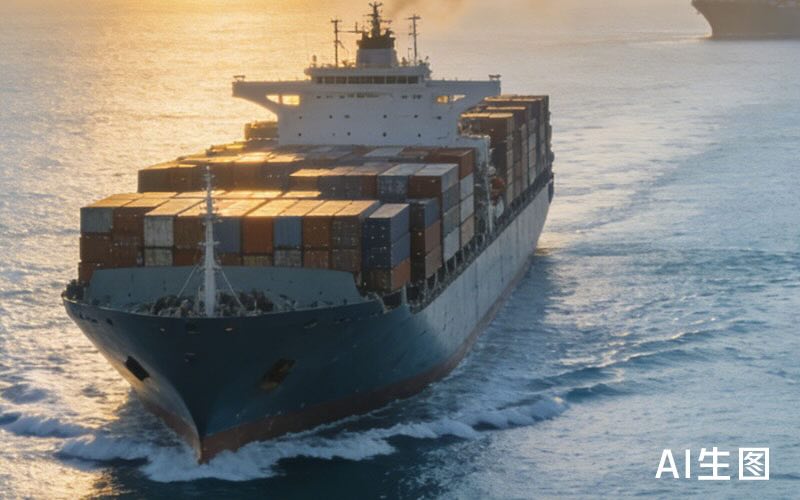
According to Marcus Baker, Global Head of Maritime Affairs at Marsh, the world's largest insurance brokerage firm, war risk premiums for ships transiting the Strait of Hormuz have now risen to 2% to 6% of the vessel's value. In peacetime, before the conflict, these premiums were only around 0.2% to 0.25% of the vessel's value. For example, a $100 million oil tanker would incur insurance costs of up to $6 million for a single transit through the Strait of Hormuz at a 6% rate.
During last week's ceasefire, rates had fallen from a peak of 5% to 10% of a vessel's value to around 2%. However, following the new round of attacks, rates quickly climbed from around 2% on Friday (July 3) to nearly 3% within 24 hours. Some insurers indicated that if the attacks continue, rates could rise further by 4% to 5%.
The fundamental reason for the rate fluctuations lies in the pricing mechanism of war risk insurance. War risk insurance is typically sold on a 7-day cycle and repriced every 24 to 48 hours. In the current situation, even a slight increase in the rate means hundreds of thousands of dollars in additional costs per day for large oil tankers.
Different vessels face differentiated insurance rates. According to industry reference data, owners of high-value vessels need to pay an additional premium equivalent to 1.5% to 3% of the hull value, while the rate for low-value vessels is between 3.5% and 5%; and vessels with ties to the United States, the United Kingdom, or Israel may face a weighted average rate of up to three times in some cases. However, a 50% no-claims bonus has now become quite common.
As military conflict escalates, the U.S. Navy-led Joint Maritime Information Center (JMIC) has raised the security threat level in the Strait of Hormuz from "substantial" to "severe," the first time since mid-June. This level implies a high probability of "deliberate hostile action" under current conditions.
Navigation data directly reflects the level of market panic. According to data from ship tracking agency Kpler, only two oil tankers risked passing through the Strait of Hormuz in the early morning of July 9. A report from Wenward Maritime Analysis shows that 51 passages were recorded in the strait on July 7, with 35 ships leaving the Persian Gulf; 35 passages were recorded on July 8, with only 2 of the 18 ships leaving via the southern route; and only 5 passages were recorded between the night of July 8 and the early morning of July 9. Before the conflict, the Strait of Hormuz saw an average of over 100 ships passing through daily.
Some war risk insurers have advised shipping companies to suspend voyages through the Strait of Hormuz, while others are reviewing their policy terms. Arsenio Dominguez, Secretary-General of the International Maritime Organization (IMO), stated that navigation through the Strait of Hormuz should be avoided when the safety of crew members cannot be guaranteed.
Ben Stone, head of marine hull insurance at Aon, points out that "underwriting intentions can be adjusted rapidly as the threat environment changes." The core unknown facing the market is whether passage through the strait can continue "reliably and safely."
Despite the continued availability of insurance—as one underwriter put it, “there will always be someone to underwrite you, but the rate will be at least 5%”—market confidence has been severely damaged. Marsh’s Baker bluntly stated, “This rollercoaster-like volatility is unlikely to subside unless a truly lasting ceasefire is maintained.”
Aon holds a similar view. Stephen Rudman, Aon's head of Asian maritime affairs, previously stated that a two-week ceasefire, from an insurance perspective, is insufficient to substantially change risk pricing or underwriting positions. Insurance companies need to see a prolonged period of stability in the region before considering the risk environment truly reduced. Therefore, even if a ceasefire were implemented immediately, it is unlikely to quickly reduce war risk rates or rapidly restore normal shipping volumes in the Strait.
From a broader perspective, while current war risk premiums in the Strait of Hormuz are lower than the peak of 10% during the height of the conflict in February and March, they are still dozens of times higher than peacetime rates. Industry insiders estimate that in normal years, this type of insurance accounts for less than 0.1% of a ship's value. Even if premiums have fallen from their peak, the current level is still about 20 times the normal premium.
War risk rates in the Strait of Hormuz experienced a rapid surge in early July, rising from 2% to nearly 3%, with the overall quote range expanding to 2% to 6% of the vessel's value. This change stemmed directly from the breakdown of the US-Iran ceasefire agreement and the renewed escalation of military conflict between the two sides. The upgrade of the threat level to "extremely serious," coupled with a sharp drop in traffic volume, reflects a fundamental reversal in the market's assessment of the regional security situation. From the perspective of the insurance market's operating logic, rates are unlikely to fall back to the low levels seen during the ceasefire in the short term, let alone pre-war levels—insurance companies need a verifiable period of safe navigation before they can reassess risk pricing. The IMO's official warning further reinforces the industry's consensus on the risks. Against the backdrop of continued geopolitical uncertainty, the shipping insurance market in the Strait of Hormuz will remain highly volatile.
Question 1: What is the current premium rate for war risk insurance in the Strait of Hormuz?
War risk insurance rates have now risen to between 2% and 6% of a vessel's value. Before the conflict, these rates were only around 0.2% to 0.25%. Rates vary depending on the type of vessel: high-value vessels are charged approximately 1.5% to 3%, low-value vessels approximately 3.5% to 5%, and vessels associated with the United States, the United Kingdom, or Israel may face weighted rates of up to three times higher. During last week's ceasefire, rates remained at around 2%.
Question 2: Why do war risk premiums fluctuate so much in a short period of time?
War risk insurance is typically sold on a 7-day cycle and repriced every 24 to 48 hours. This means that rates are extremely sensitive to geopolitical events. In the event of a new attack or military retaliation, insurers can adjust their quotes within hours. Furthermore, even a small increase in rates translates to hundreds of thousands of dollars in additional costs per day for large oil tankers, so rate changes are quickly reflected in shipping decisions.
Question 3: Are there still insurance companies willing to provide coverage for navigation in the Strait of Hormuz?
Insurance supply remains, but conditions are more stringent. One underwriter stated, "There will always be someone to underwrite you, but the rate will be at least 5%." Some war risk underwriters have advised shipping companies to suspend voyages through the Strait of Hormuz, while other underwriters are reviewing policy terms. The Lloyd's Market Association previously stated that war insurance remains available throughout the Lloyd's and London markets.
Question 4: What is the current navigation status of the Strait of Hormuz?
Traffic has decreased significantly. Only two oil tankers passed through the strait in the early morning of July 9; only five passages were recorded between the night of July 8 and the early morning of July 9. Before the conflict, the average daily passage exceeded 100 vessels. The Joint Maritime Information Center, led by the U.S. Navy, has raised the threat level to "extremely serious".
Question 5: When will the rates return to normal levels?
This is unlikely to happen in the short term. Insurers need to see a prolonged period of stability in the region before they can conclude that the risk environment has truly decreased. As Marcus Baker, Global Head of Maritime at Marsh, stated, "This rollercoaster-like volatility is unlikely to subside unless a truly lasting ceasefire is maintained." Even if an immediate ceasefire is achieved, it is unlikely to quickly reduce war risk rates or rapidly restore normal shipping volumes. Industry experts estimate that in normal years, war risk rates are less than 0.1% of the vessel's value, while current levels are still about 20 times the normal premium.
Question 6: What impact will this have on oil prices?
As of the close of trading on July 9, Brent crude futures were at $76.30 per barrel and WTI crude futures were at $72.08 per barrel, down 2.2% and 1.96% respectively on the day. Despite a sharp drop in traffic in the Strait of Hormuz and an upgrade in the threat level, oil prices did not continue to rise, but instead quickly fell back after a jump on Wednesday. The core reasons for the mild market reaction are: major oil-exporting countries have adjusted their shipping routes in recent months, and importing countries such as China have demonstrated the ability to quickly reduce demand; the large-scale release of crude oil during the ceasefire has created a certain supply buffer; and the US president has stated that the conflict will end soon, and oil supply is currently sufficient. However, several institutions warn that if the conflict continues to escalate and lasts for several months, oil prices may return to around $100 per barrel; if the ceasefire is restored, Brent may stabilize at its current level by the end of the year. In the short term, the upside potential for oil prices is limited by the supply buffer, but the geopolitical risk premium has not been completely eliminated.
At 14:17 Beijing time, US crude oil is currently trading at $71.69 per barrel.
This round of military conflict marks the substantial breakdown of the interim ceasefire agreement reached between the US and Iran in June. Following the ceasefire agreement, market sentiment initially turned optimistic, and war risk premiums fell sharply in late June. However, within just a few weeks, geopolitical risk premiums rebounded rapidly as hostilities reignited.
War risk rates return to high levels: What does the 2% to 6% range mean?
According to Marcus Baker, Global Head of Maritime Affairs at Marsh, the world's largest insurance brokerage firm, war risk premiums for ships transiting the Strait of Hormuz have now risen to 2% to 6% of the vessel's value. In peacetime, before the conflict, these premiums were only around 0.2% to 0.25% of the vessel's value. For example, a $100 million oil tanker would incur insurance costs of up to $6 million for a single transit through the Strait of Hormuz at a 6% rate.
During last week's ceasefire, rates had fallen from a peak of 5% to 10% of a vessel's value to around 2%. However, following the new round of attacks, rates quickly climbed from around 2% on Friday (July 3) to nearly 3% within 24 hours. Some insurers indicated that if the attacks continue, rates could rise further by 4% to 5%.
The fundamental reason for the rate fluctuations lies in the pricing mechanism of war risk insurance. War risk insurance is typically sold on a 7-day cycle and repriced every 24 to 48 hours. In the current situation, even a slight increase in the rate means hundreds of thousands of dollars in additional costs per day for large oil tankers.
Different vessels face differentiated insurance rates. According to industry reference data, owners of high-value vessels need to pay an additional premium equivalent to 1.5% to 3% of the hull value, while the rate for low-value vessels is between 3.5% and 5%; and vessels with ties to the United States, the United Kingdom, or Israel may face a weighted average rate of up to three times in some cases. However, a 50% no-claims bonus has now become quite common.
The threat level has been raised to "extremely serious," and air traffic has almost come to a standstill.
As military conflict escalates, the U.S. Navy-led Joint Maritime Information Center (JMIC) has raised the security threat level in the Strait of Hormuz from "substantial" to "severe," the first time since mid-June. This level implies a high probability of "deliberate hostile action" under current conditions.
Navigation data directly reflects the level of market panic. According to data from ship tracking agency Kpler, only two oil tankers risked passing through the Strait of Hormuz in the early morning of July 9. A report from Wenward Maritime Analysis shows that 51 passages were recorded in the strait on July 7, with 35 ships leaving the Persian Gulf; 35 passages were recorded on July 8, with only 2 of the 18 ships leaving via the southern route; and only 5 passages were recorded between the night of July 8 and the early morning of July 9. Before the conflict, the Strait of Hormuz saw an average of over 100 ships passing through daily.
Some war risk insurers have advised shipping companies to suspend voyages through the Strait of Hormuz, while others are reviewing their policy terms. Arsenio Dominguez, Secretary-General of the International Maritime Organization (IMO), stated that navigation through the Strait of Hormuz should be avoided when the safety of crew members cannot be guaranteed.
Underwriting willingness and market prospects: Short-term outlook is not optimistic.
Ben Stone, head of marine hull insurance at Aon, points out that "underwriting intentions can be adjusted rapidly as the threat environment changes." The core unknown facing the market is whether passage through the strait can continue "reliably and safely."
Despite the continued availability of insurance—as one underwriter put it, “there will always be someone to underwrite you, but the rate will be at least 5%”—market confidence has been severely damaged. Marsh’s Baker bluntly stated, “This rollercoaster-like volatility is unlikely to subside unless a truly lasting ceasefire is maintained.”
Aon holds a similar view. Stephen Rudman, Aon's head of Asian maritime affairs, previously stated that a two-week ceasefire, from an insurance perspective, is insufficient to substantially change risk pricing or underwriting positions. Insurance companies need to see a prolonged period of stability in the region before considering the risk environment truly reduced. Therefore, even if a ceasefire were implemented immediately, it is unlikely to quickly reduce war risk rates or rapidly restore normal shipping volumes in the Strait.
From a broader perspective, while current war risk premiums in the Strait of Hormuz are lower than the peak of 10% during the height of the conflict in February and March, they are still dozens of times higher than peacetime rates. Industry insiders estimate that in normal years, this type of insurance accounts for less than 0.1% of a ship's value. Even if premiums have fallen from their peak, the current level is still about 20 times the normal premium.
Editor's Summary
War risk rates in the Strait of Hormuz experienced a rapid surge in early July, rising from 2% to nearly 3%, with the overall quote range expanding to 2% to 6% of the vessel's value. This change stemmed directly from the breakdown of the US-Iran ceasefire agreement and the renewed escalation of military conflict between the two sides. The upgrade of the threat level to "extremely serious," coupled with a sharp drop in traffic volume, reflects a fundamental reversal in the market's assessment of the regional security situation. From the perspective of the insurance market's operating logic, rates are unlikely to fall back to the low levels seen during the ceasefire in the short term, let alone pre-war levels—insurance companies need a verifiable period of safe navigation before they can reassess risk pricing. The IMO's official warning further reinforces the industry's consensus on the risks. Against the backdrop of continued geopolitical uncertainty, the shipping insurance market in the Strait of Hormuz will remain highly volatile.
Frequently Asked Questions
Question 1: What is the current premium rate for war risk insurance in the Strait of Hormuz?
War risk insurance rates have now risen to between 2% and 6% of a vessel's value. Before the conflict, these rates were only around 0.2% to 0.25%. Rates vary depending on the type of vessel: high-value vessels are charged approximately 1.5% to 3%, low-value vessels approximately 3.5% to 5%, and vessels associated with the United States, the United Kingdom, or Israel may face weighted rates of up to three times higher. During last week's ceasefire, rates remained at around 2%.
Question 2: Why do war risk premiums fluctuate so much in a short period of time?
War risk insurance is typically sold on a 7-day cycle and repriced every 24 to 48 hours. This means that rates are extremely sensitive to geopolitical events. In the event of a new attack or military retaliation, insurers can adjust their quotes within hours. Furthermore, even a small increase in rates translates to hundreds of thousands of dollars in additional costs per day for large oil tankers, so rate changes are quickly reflected in shipping decisions.
Question 3: Are there still insurance companies willing to provide coverage for navigation in the Strait of Hormuz?
Insurance supply remains, but conditions are more stringent. One underwriter stated, "There will always be someone to underwrite you, but the rate will be at least 5%." Some war risk underwriters have advised shipping companies to suspend voyages through the Strait of Hormuz, while other underwriters are reviewing policy terms. The Lloyd's Market Association previously stated that war insurance remains available throughout the Lloyd's and London markets.
Question 4: What is the current navigation status of the Strait of Hormuz?
Traffic has decreased significantly. Only two oil tankers passed through the strait in the early morning of July 9; only five passages were recorded between the night of July 8 and the early morning of July 9. Before the conflict, the average daily passage exceeded 100 vessels. The Joint Maritime Information Center, led by the U.S. Navy, has raised the threat level to "extremely serious".
Question 5: When will the rates return to normal levels?
This is unlikely to happen in the short term. Insurers need to see a prolonged period of stability in the region before they can conclude that the risk environment has truly decreased. As Marcus Baker, Global Head of Maritime at Marsh, stated, "This rollercoaster-like volatility is unlikely to subside unless a truly lasting ceasefire is maintained." Even if an immediate ceasefire is achieved, it is unlikely to quickly reduce war risk rates or rapidly restore normal shipping volumes. Industry experts estimate that in normal years, war risk rates are less than 0.1% of the vessel's value, while current levels are still about 20 times the normal premium.
Question 6: What impact will this have on oil prices?
As of the close of trading on July 9, Brent crude futures were at $76.30 per barrel and WTI crude futures were at $72.08 per barrel, down 2.2% and 1.96% respectively on the day. Despite a sharp drop in traffic in the Strait of Hormuz and an upgrade in the threat level, oil prices did not continue to rise, but instead quickly fell back after a jump on Wednesday. The core reasons for the mild market reaction are: major oil-exporting countries have adjusted their shipping routes in recent months, and importing countries such as China have demonstrated the ability to quickly reduce demand; the large-scale release of crude oil during the ceasefire has created a certain supply buffer; and the US president has stated that the conflict will end soon, and oil supply is currently sufficient. However, several institutions warn that if the conflict continues to escalate and lasts for several months, oil prices may return to around $100 per barrel; if the ceasefire is restored, Brent may stabilize at its current level by the end of the year. In the short term, the upside potential for oil prices is limited by the supply buffer, but the geopolitical risk premium has not been completely eliminated.
At 14:17 Beijing time, US crude oil is currently trading at $71.69 per barrel.
- Risk Warning and Disclaimer
- The market involves risk, and trading may not be suitable for all investors. This article is for reference only and does not constitute personal investment advice, nor does it take into account certain users’ specific investment objectives, financial situation, or other needs. Any investment decisions made based on this information are at your own risk.