Oil prices are expected to end a four-week losing streak this week, but the prospects for US-Iran negotiations remain the biggest variable for oil prices.
2026-07-10 14:44:28
On Friday (July 10) during Asian trading hours, West Texas Intermediate crude oil stabilized after an overnight decline, currently trading around $72 per barrel. This week is expected to end a four-week losing streak.
Market participants are awaiting the latest developments in the Middle East crisis, with conflicting signals from the US and Iran keeping traders on the sidelines.
Geopolitical factors remained the core driver of oil price volatility this week. At the beginning of the week, the US launched a new round of strikes against Iran in retaliation for Iran's attack on merchant ships in the Strait of Hormuz, while Iran responded with retaliatory strikes against US targets in Bahrain and Kuwait.
Trump's announcement on Wednesday that the ceasefire agreement "has ended" further intensified market concerns about energy supply disruptions, driving oil prices up significantly in the first half of the week.
However, the situation took a dramatic turn on Thursday. Trump claimed that Iran had called seeking an agreement with the United States to stop the escalation of hostilities in the Middle East, a statement that significantly eased market anxiety. Subsequently, White House officials further stated that the United States remained committed to the memorandum of understanding with Iran—although this contradicted Trump's previous statements, it at least indicated that diplomatic channels were not completely closed.
This rapid shift from escalation to easing has led to highly volatile oil price movements. Currently, oil prices are consolidating around $71.75, reflecting a market reassessment of the reasonable level of geopolitical risk premiums.
Besides geopolitical factors, supply and demand fundamentals are also influencing oil prices. Data released by the U.S. Energy Information Administration showed that U.S. commercial crude oil inventories increased by 2.998 million barrels in the week ending July 3, significantly exceeding analysts' expectations and marking the first inventory increase in 11 weeks. This data has alleviated market concerns about tight supply to some extent.
Meanwhile, OPEC+'s decision to further increase production targets also put downward pressure on oil prices. Although the specific extent of OPEC+'s production adjustments is not yet fully clear, the direction of increased production is certain. Against the backdrop of diminishing geopolitical risk premiums, OPEC+'s decision to increase production may become a structural factor limiting further increases in oil prices.
The core issue currently facing the crude oil market is whether the tensions between the US and Iran will escalate further or be resolved through diplomatic channels.
There is a clear tension between Trump’s claim that “Iran has called to seek a deal” and the reality of the US military’s continued strikes against Iran, making it difficult for the market to form a unilateral expectation.
It's reasonable for traders to choose to wait and see in this environment. On the one hand, the return of geopolitical risk premiums means that the downside potential for oil prices is limited; on the other hand, the possibility of a diplomatic breakthrough restricts investors' willingness to go long at current levels.
From a weekly perspective, despite the significant volatility in oil prices this week, WTI is still on track for a modest weekly gain, ending its four-week losing streak. This provides a somewhat positive signal for the short-term technical outlook for oil prices.
However, the short-term direction remains unclear. On the upside, if the conflict between the US and Iran escalates again, oil prices could quickly rebound to above $75; on the downside, if there is a substantial breakthrough in diplomatic channels, coupled with the impact of increased OPEC+ production and rising inventories, oil prices could retest $70 or even lower levels.
In the current environment, market participants need to closely monitor two major variables: whether there is genuine progress in negotiations between the US and Iran (rather than just verbal statements), and the potential impact of next Tuesday's US CPI data on energy price expectations. The consolidation of oil prices around $71-72 may only be a temporary respite, and the next directional breakout may be accompanied by new geopolitical or economic catalysts.
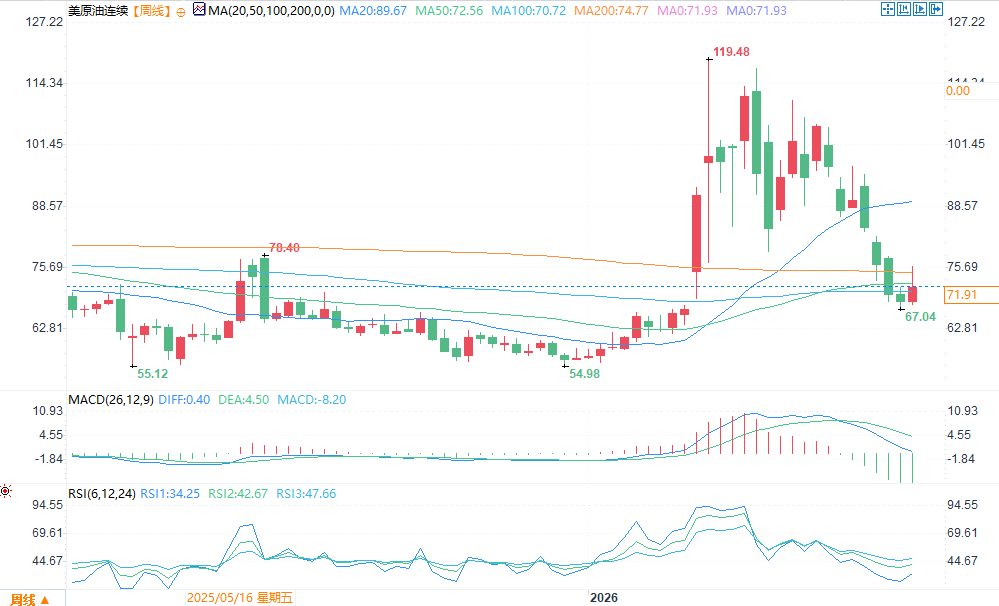
(US crude oil futures daily chart, source: FX678)
At 14:44 Beijing time on July 10, US crude oil futures were trading at $71.89 per barrel.
Market participants are awaiting the latest developments in the Middle East crisis, with conflicting signals from the US and Iran keeping traders on the sidelines.
Geopolitics: From escalating anxiety to easing expectations, oil prices fluctuate wildly with news.
Geopolitical factors remained the core driver of oil price volatility this week. At the beginning of the week, the US launched a new round of strikes against Iran in retaliation for Iran's attack on merchant ships in the Strait of Hormuz, while Iran responded with retaliatory strikes against US targets in Bahrain and Kuwait.
Trump's announcement on Wednesday that the ceasefire agreement "has ended" further intensified market concerns about energy supply disruptions, driving oil prices up significantly in the first half of the week.
However, the situation took a dramatic turn on Thursday. Trump claimed that Iran had called seeking an agreement with the United States to stop the escalation of hostilities in the Middle East, a statement that significantly eased market anxiety. Subsequently, White House officials further stated that the United States remained committed to the memorandum of understanding with Iran—although this contradicted Trump's previous statements, it at least indicated that diplomatic channels were not completely closed.
This rapid shift from escalation to easing has led to highly volatile oil price movements. Currently, oil prices are consolidating around $71.75, reflecting a market reassessment of the reasonable level of geopolitical risk premiums.
Supply and demand fundamentals: Increased inventories coupled with expectations of increased OPEC+ production limit upside potential for oil prices.
Besides geopolitical factors, supply and demand fundamentals are also influencing oil prices. Data released by the U.S. Energy Information Administration showed that U.S. commercial crude oil inventories increased by 2.998 million barrels in the week ending July 3, significantly exceeding analysts' expectations and marking the first inventory increase in 11 weeks. This data has alleviated market concerns about tight supply to some extent.
Meanwhile, OPEC+'s decision to further increase production targets also put downward pressure on oil prices. Although the specific extent of OPEC+'s production adjustments is not yet fully clear, the direction of increased production is certain. Against the backdrop of diminishing geopolitical risk premiums, OPEC+'s decision to increase production may become a structural factor limiting further increases in oil prices.
Market Sentiment: Conflicting Signals Suppress One-Sided Betting
The core issue currently facing the crude oil market is whether the tensions between the US and Iran will escalate further or be resolved through diplomatic channels.
There is a clear tension between Trump’s claim that “Iran has called to seek a deal” and the reality of the US military’s continued strikes against Iran, making it difficult for the market to form a unilateral expectation.
It's reasonable for traders to choose to wait and see in this environment. On the one hand, the return of geopolitical risk premiums means that the downside potential for oil prices is limited; on the other hand, the possibility of a diplomatic breakthrough restricts investors' willingness to go long at current levels.
Outlook: This week is expected to end the four-week losing streak, but the short-term direction remains unclear.
From a weekly perspective, despite the significant volatility in oil prices this week, WTI is still on track for a modest weekly gain, ending its four-week losing streak. This provides a somewhat positive signal for the short-term technical outlook for oil prices.
However, the short-term direction remains unclear. On the upside, if the conflict between the US and Iran escalates again, oil prices could quickly rebound to above $75; on the downside, if there is a substantial breakthrough in diplomatic channels, coupled with the impact of increased OPEC+ production and rising inventories, oil prices could retest $70 or even lower levels.
In the current environment, market participants need to closely monitor two major variables: whether there is genuine progress in negotiations between the US and Iran (rather than just verbal statements), and the potential impact of next Tuesday's US CPI data on energy price expectations. The consolidation of oil prices around $71-72 may only be a temporary respite, and the next directional breakout may be accompanied by new geopolitical or economic catalysts.
(US crude oil futures daily chart, source: FX678)
At 14:44 Beijing time on July 10, US crude oil futures were trading at $71.89 per barrel.
- Risk Warning and Disclaimer
- The market involves risk, and trading may not be suitable for all investors. This article is for reference only and does not constitute personal investment advice, nor does it take into account certain users’ specific investment objectives, financial situation, or other needs. Any investment decisions made based on this information are at your own risk.